


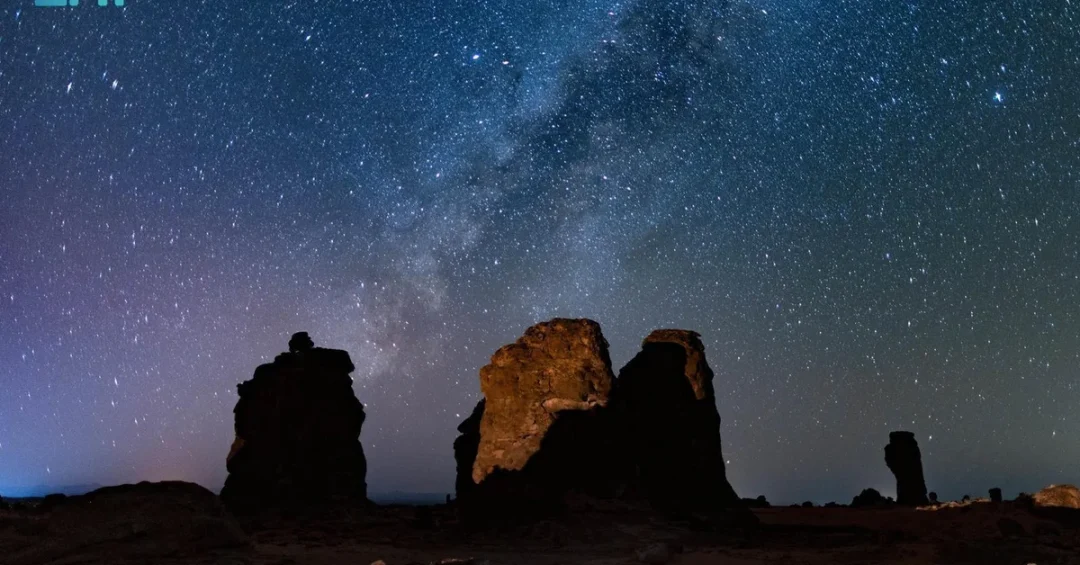
The Royal Commission for AlUla, through its AlUla Moments events programme, has announced that the AlUla Skies Festival 2025 will return from April 18 to 27, offering visitors a distinctive blend of astronomical discovery, cultural programming, and luxury desert tourism in north-west Saudi Arabia. The announcement, carried by the Saudi Press Agency, confirms that this year’s edition will build on the growing international reputation of AlUla as a premier destination for stargazing and astro-tourism, with a programme that combines the region’s pristine night skies with concerts, balloon flights, and guided desert experiences.
AlUla’s appeal as a night-sky destination rests on a rare combination of geography and deliberate conservation. The region’s desert climate produces exceptionally clear atmospheric conditions for much of the year, while long-standing efforts to limit light pollution have preserved the visibility of the Milky Way and faint celestial objects to a degree that is increasingly difficult to find elsewhere. The festival therefore represents more than a seasonal calendar event: it is a demonstration of how heritage, science, and tourism can be developed together, and it reflects the wider ambition of Saudi Arabia’s Vision 2030 to diversify the national economy and position the Kingdom as a global cultural and natural destination. For international travellers accustomed to heavily illuminated urban environments, the opportunity to see the night sky in something close to its natural state is a genuinely rare proposition.
Context and Background
Why has a desert region in north-west Saudi Arabia become one of the world’s most talked-about destinations for stargazing? The answer lies in a decade of careful investment in both infrastructure and environmental protection. AlUla is home to two locations that were among the first in the Middle East to receive official recognition as Dark Sky Sites from the International Dark-Sky Association, the international authority that certifies places where the night environment is protected for scientific, educational, and cultural reasons. The recognition of Gharameel and AlUla’s Beacon placed the region alongside a small group of globally significant dark-sky locations and gave it a unique position in the regional tourism market.
The AlUla Skies Festival was created to translate that natural asset into a structured visitor experience. By scheduling the event in April, organisers align it with favourable viewing conditions and pleasant desert temperatures, making the programme accessible to families, amateur astronomers, and specialist travellers alike. The festival also fits within the broader AlUla Moments calendar, a year-round series of events that includes heritage, arts, music, and wellness programming. This integrated approach allows visitors to combine night-sky activities with visits to archaeological sites such as Hegra, Saudi Arabia’s first UNESCO World Heritage property, and the dramatic sandstone formations of the surrounding landscape. It is a model that treats the sky itself as part of the region’s cultural inheritance, not merely as a backdrop.
The significance of the timing is also economic. April falls within a period of strong international travel demand, and the festival helps extend the tourism season beyond the cooler winter months. For a region that has invested heavily in hotels, transport links, and visitor facilities, a well-attended spring event supports local businesses, creates employment, and reinforces AlUla’s identity as a destination that can be visited at multiple points in the year. In this sense, the festival is both a cultural attraction and a practical instrument of regional development.
Key Details of the 2025 Programme
What exactly will visitors experience during the ten-day festival? The centrepiece remains the opportunity to observe the night sky from locations that have been formally protected for that purpose. At the Gharameel Reserve, visitors will be able to view the Milky Way with the naked eye, an experience that organisers describe as one of the clearest available anywhere in the region. The programme includes guided night walks, camping sessions, and grilled dinners served around campfires, allowing guests to spend extended time under the stars rather than making a brief evening visit. These activities are designed to be accessible to non-specialists while still offering depth for those with a serious interest in astronomy.
The festival also expands well beyond observation. Illuminated hot air balloon shows will light up the desert sky, while tethered-flight and free-flight balloon rides offer aerial views of AlUla’s iconic landmarks, including the rock formations and heritage sites that define the area’s visual character. Musical concerts will blend culture, exploration, and entertainment, giving the programme a festive dimension that complements its scientific content. For visitors seeking further information, the official Experience AlUla website, https://www.experiencealula.com/en, provides details on bookings, schedules, and available experiences.
Together, these elements reflect a deliberate design philosophy: the festival is not a single attraction but a layered experience. A visitor might spend the afternoon exploring heritage sites, the early evening watching balloons rise over the desert, and the night observing distant galaxies through a telescope or simply lying back to watch the Milky Way. That combination of activities distinguishes AlUla from conventional stargazing destinations and gives the festival a broad appeal across age groups and interests.
Astro-Tourism and Scientific Value
Why does the protection of dark skies matter beyond the tourism sector? Dark Sky certification is not solely a marketing designation; it reflects a commitment to limiting artificial light in ways that benefit scientific research, wildlife, and human wellbeing. Excessive night-time lighting disrupts the behaviour of nocturnal animals, affects plant cycles, and reduces the ability of both professional and amateur astronomers to study the universe. By maintaining certified dark-sky locations, AlUla contributes to an international effort to preserve natural darkness as a shared resource. The International Dark-Sky Association recognition of Gharameel and AlUla’s Beacon therefore carries scientific and environmental weight as well as touristic value.
For researchers and educators, the region offers opportunities for public outreach and citizen science. Astronomy is one of the most accessible sciences, requiring no specialised laboratory and appealing to a wide audience, and festivals of this kind can play a meaningful role in science communication. The AlUla Skies Festival provides a setting in which visitors can learn about constellations, planetary motion, and the history of celestial observation, including the ways in which ancient civilisations in the Arabian Peninsula used the stars for navigation, agriculture, and religious practice. That historical dimension connects the modern festival to the region’s deep past, reinforcing the idea that AlUla’s skies have been significant to human communities for thousands of years.
The educational potential extends to schools and universities, both within Saudi Arabia and internationally. Dark-sky sites are increasingly used as outdoor classrooms, and the visibility of the Milky Way at Gharameel makes it a compelling location for students to encounter astronomy directly rather than through screens. As the festival grows, it is likely to attract greater interest from academic institutions and science organisations, further strengthening AlUla’s position as a centre for both cultural and scientific tourism.
International and Regional Impact
How does a festival in north-west Saudi Arabia resonate beyond the Kingdom’s borders? The AlUla Skies Festival contributes to a broader regional conversation about sustainable tourism and the protection of natural environments. Across the Middle East, governments and destination managers are exploring ways to develop visitor economies without degrading the landscapes that attract travellers in the first place. AlUla’s approach, which pairs high-quality visitor experiences with formal environmental protections, offers a practical example of how that balance can be achieved. The presence of internationally recognised Dark Sky Sites gives the region a credible claim to leadership in this field.
For international visitors, the festival also represents a point of cultural exchange. Astronomy is a universal subject, and events that bring together travellers from different countries around a shared view of the night sky create opportunities for dialogue and mutual understanding. Saudi Arabia’s Vision 2030 places significant emphasis on welcoming international guests and presenting the Kingdom’s heritage and natural beauty to the world. The AlUla Skies Festival supports that objective by offering a distinctive, high-quality experience that is rooted in the region’s identity rather than imported from elsewhere. Regional neighbours with similar desert environments are also watching AlUla’s model closely, and the festival’s continued success may encourage further cooperation on dark-sky conservation across the Middle East.
Economic and Strategic Significance
What does the festival mean for Saudi Arabia’s economic diversification agenda? Tourism is one of the key sectors identified under Vision 2030 as a driver of job creation and non-oil revenue, and AlUla has become one of the flagship destinations in that strategy. The Royal Commission for AlUla has overseen substantial investment in hospitality, transport, and visitor infrastructure, and events such as the Skies Festival help ensure that this investment generates activity across the year. The ten-day programme supports hotels, restaurants, tour operators, and transport providers, while also creating opportunities for local residents through employment and small-business activity.
The strategic value extends beyond direct spending. Festivals of this kind build international awareness of Saudi Arabia as a destination for nature, culture, and science, complementing the Kingdom’s growing profile in sport, entertainment, and business tourism. They also demonstrate the viability of developing rural and remote regions in ways that respect local heritage and environments. By positioning AlUla as a global hub for astro-tourism, Saudi Arabia is creating a niche in which it can compete internationally on the strength of natural assets that cannot easily be replicated elsewhere. That distinctiveness is central to the long-term value of the destination.
Vision 2030 Alignment
How does the AlUla Skies Festival connect to the Kingdom’s long-term vision? Vision 2030 seeks to diversify the Saudi economy, enhance the quality of life for citizens and residents, and present the Kingdom as an open and welcoming destination. The festival contributes to all three objectives. It supports economic diversification by attracting international visitors and generating revenue in the tourism sector; it enriches quality of life by offering cultural and scientific experiences to domestic and international audiences; and it strengthens Saudi Arabia’s global image by showcasing AlUla’s heritage, landscapes, and commitment to environmental stewardship.
As the 2025 edition opens on April 18, the festival stands as a clear example of how Vision 2030 is being translated into tangible experiences on the ground. The combination of protected dark skies, world-class visitor programming, and deep cultural context gives AlUla a proposition that few destinations can match. For travellers seeking something genuinely different, and for a Kingdom pressing ahead with its transformation, the AlUla Skies Festival represents both an invitation and a statement of intent: that Saudi Arabia’s future is being built with respect for its past, its environment, and its place in the wider world.
20 Questions
Q1. What is the AlUla Skies Festival 2025?
A1. The AlUla Skies Festival 2025 is a ten-day event running from April 18 to 27, organised under the AlUla Moments programme. It celebrates the region’s protected dark skies with stargazing, balloon flights, concerts, and desert experiences.
Q2. Where does the festival take place?
A2. It takes place in AlUla, a region in north-west Saudi Arabia known for its desert landscapes, archaeological heritage, and internationally recognised Dark Sky Sites, including Gharameel and AlUla’s Beacon.
Q3. Why is AlUla suitable for stargazing?
A3. AlUla enjoys clear desert skies and low light pollution, allowing the Milky Way to be seen with the naked eye. Its dark-sky locations are among the first in the Middle East to receive official certification.
Q4. What is a Dark Sky Site?
A4. A Dark Sky Site is a location recognised by the International Dark-Sky Association for protecting the night environment. Certification requires measures to limit artificial light so that stars and celestial objects remain visible.
Q5. Which locations in AlUla hold Dark Sky recognition?
A5. Gharameel and AlUla’s Beacon are the two designated locations. They were among the first in the Middle East to receive recognition from the International Dark-Sky Association, reinforcing AlUla’s role in astro-tourism.
Q6. What can visitors do at Gharameel Reserve?
A6. Visitors can view the Milky Way with the naked eye, join guided night walks, take part in camping sessions, and enjoy grilled dinners around campfires in one of the clearest sky environments in the region.
Q7. Are there activities beyond stargazing?
A7. Yes. The programme includes illuminated hot air balloon shows, tethered and free-flight balloon rides over AlUla’s landmarks, and musical concerts that blend culture, exploration, and entertainment for a broad range of visitors.
Q8. When exactly does the festival run?
A8. The festival runs from April 18 to April 27, 2025. The spring timing offers comfortable desert temperatures and favourable conditions for night-sky observation during the ten-day programme.
Q9. Who organises the festival?
A9. It is organised through AlUla Moments, the events programme associated with the Royal Commission for AlUla. The announcement was carried by the Saudi Press Agency, reflecting official Saudi channels.
Q10. How can visitors get more information?
A10. Detailed information on schedules, bookings, and experiences is available on the official Experience AlUla website at https://www.experiencealula.com/en, which provides the authoritative guide to the festival programme.
Q11. Is the festival suitable for families?
A11. Yes. The programme includes activities designed for a wide range of ages, from guided night walks and campfire dinners to balloon displays and concerts, making it accessible to families as well as specialist travellers.
Q12. What is astro-tourism?
A12. Astro-tourism is travel focused on observing the night sky and learning about astronomy. It is a growing global segment, and AlUla has become a leading destination for it in the Middle East.
Q13. Why is dark-sky protection important?
A13. Limiting artificial light supports scientific observation, protects nocturnal wildlife, and preserves a natural resource that is increasingly rare worldwide. Certification encourages destinations to manage lighting responsibly and sustainably.
Q14. Does the festival support the local economy?
A14. Yes. The ten-day event supports hotels, restaurants, tour operators, and transport providers in AlUla, creating employment and business opportunities for local residents during the spring travel season.
Q15. How does the festival relate to Vision 2030?
A15. It supports Vision 2030 by boosting tourism, diversifying revenue beyond oil, enhancing quality of life, and presenting Saudi Arabia as an open and welcoming destination with distinctive natural and cultural assets.
Q16. Can visitors see the Milky Way without equipment?
A16. Yes. At locations such as Gharameel Reserve, the Milky Way is visible to the naked eye because of the exceptionally low levels of light pollution and the clarity of the desert atmosphere.
Q17. Are balloon rides available during the festival?
A17. Yes. The programme features both tethered-flight and free-flight balloon rides, along with illuminated balloon shows, offering aerial views of AlUla’s iconic rock formations and heritage landmarks.
Q18. What cultural elements are included?
A18. Musical concerts and campfire gatherings blend culture with exploration. The festival also connects to AlUla’s ancient heritage, including the region’s long history of using the stars for navigation and seasonal planning.
Q19. Is AlUla a UNESCO World Heritage location?
A19. AlUla is home to Hegra, Saudi Arabia’s first UNESCO World Heritage property. Visitors to the festival can combine night-sky activities with exploration of the region’s archaeological treasures.
Q20. What makes the 2025 edition notable?
A20. The 2025 edition builds on AlUla’s established reputation as a global astro-tourism hub, combining protected dark skies, expanded visitor experiences, and cultural programming that showcases the Kingdom’s heritage and natural beauty.
Reader Feedback
We value your thoughts. Please share your feedback on this article.
Your feedback helps us improve our coverage.
Related articles
 Saudi Ministries Open Hotels and Hospitality Expo in Riyadh
 AlUla to Host Inaugural Arabian Warrior Race in May 2025
 Saudi Licensed Hotel Rooms Hit 475,970 in 2024
 Fontana Water Circus Draws Crowds to Jeddah Season 2025
 Diriyah Season 2024-25 Concludes After 100+ Days
 Volcanic Rocks Meet White Sands on Red Sea’s Harrat Beach