


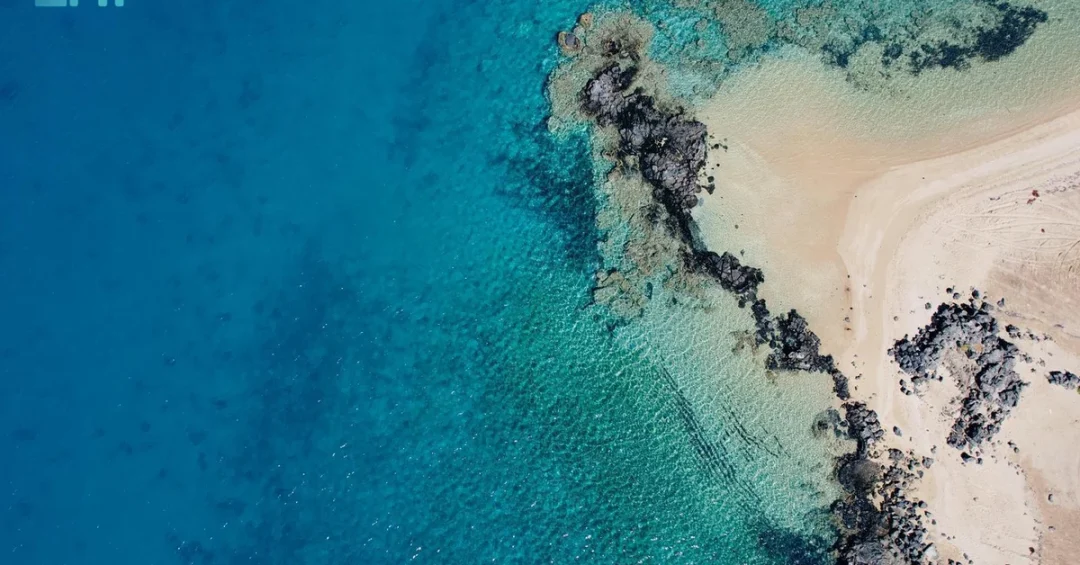
The northern Harrat beach in the Umluj Governorate of the Tabuk Region has emerged as one of the Red Sea coast’s most distinctive natural attractions, where soft white sands meet striking black volcanic rocks to form a landscape found nowhere else in the Kingdom. According to information released through the Saudi Press Agency (SPA), the site combines rare geological contrasts with a diverse marine environment, drawing visitors who seek both relaxation and adventure along Saudi Arabia’s fast-developing western shoreline.
The beach’s unusual character stems from the meeting of two very different natural worlds. Volcanic formations from the Harrat lava fields descend toward the water, while fine white sands line the shore, creating a visual and geological contrast that has captured the attention of nature lovers and photographers alike. Have you ever seen a coastline where fire-forged stone and pristine white beach exist side by side? The result is a setting that feels simultaneously rugged and serene, a combination that is increasingly rare on heavily developed coastlines around the world.
Context and Background
The Umluj Governorate, often described as the Maldives of Saudi Arabia for its turquoise waters and scattered islands, sits within the broader Tabuk Region on the Kingdom’s northwestern coast. The northern Harrat beach benefits from this location, positioned along a stretch of Red Sea shoreline that has remained largely undisturbed by large-scale construction. Why does this matter for travelers seeking authenticity? Because the relative absence of heavy development has preserved the beach’s natural rhythm, allowing visitors to experience an environment that feels genuinely untouched.
The Harrat volcanic fields themselves are among the most significant geological features of the Arabian Peninsula. Formed by ancient lava flows, these dark basalt formations give the beach its dramatic identity, standing in sharp contrast to the pale sands and bright water. The SPA report notes that the beach offers a diverse marine environment, transitioning from gentle, shallow waters perfect for safe swimming to deeper areas that beckon sea enthusiasts to explore. This variety appeals to a wide range of visitors, from families and casual swimmers to those craving more adventurous marine experiences.
What makes a beach truly memorable? Often it is the interplay between landscape and sea, and the northern Harrat beach delivers this in abundance. The rocky headlands stretching along the coastline create an exceptional setting for fly-fishing enthusiasts to indulge their passion amid the area’s natural beauty. These headlands also serve as natural vantage points, offering sweeping views of the Red Sea and the volcanic terrain behind the shore. For those who appreciate unspoiled nature and tranquil surroundings, the beach provides a serene escape from the energy of city life.
Key Details of the Destination
The defining feature of the northern Harrat beach is its visual contrast. Soft white sands meet striking black volcanic rocks, an aesthetic that photographers and nature documentarians find irresistible. The volcanic material, transported over millennia from the surrounding Harrat fields, has weathered into smooth and jagged forms alike, creating tide pools, small coves, and sheltered inlets. How often does a single beach offer both volcanic geology and powdery white sand? This pairing gives the site a distinctiveness that supports its growing reputation among domestic and international visitors.
The marine environment is equally notable. Shallow, calm waters near the shore make the beach suitable for safe swimming, a key consideration for families and less experienced swimmers. Farther out, the seabed drops into deeper zones that appeal to snorkelers, divers, and sea enthusiasts eager to explore the underwater world. The Red Sea’s renowned clarity and biodiversity add to the appeal, with coral formations and marine life populating the surrounding waters. Visitors can move from a relaxed swim to a more adventurous exploration within the same visit, a flexibility few destinations can match.
Fly-fishing has become a quiet draw for the area. The rocky headlands and their surrounding currents create conditions favored by anglers who practice the sport in coastal environments. The SPA report highlights these headlands as an exceptional setting for fly-fishing enthusiasts, and the combination of accessible shoreline and natural beauty makes the activity all the more attractive. Beyond fishing, the beach’s calm atmosphere suits walking, photography, and simply taking in the scenery, activities that align with the growing global appetite for nature-based travel.
International and Regional Impact
The northern Harrat beach reflects a broader shift in how the Red Sea coast is being positioned on the world stage. Saudi Arabia’s western shoreline is increasingly recognized as a destination for eco-conscious travelers seeking landscapes that remain close to their natural state. Does this mean the Kingdom is competing with established Mediterranean and Indian Ocean destinations? In many respects, yes, and the Red Sea’s combination of geological curiosity, marine richness, and cultural heritage gives it a distinct advantage in that competition.
Regionally, the beach sits within a corridor that connects Umluj with other emerging coastal destinations in Tabuk Region. As infrastructure improves and visitor services expand, the area is becoming more accessible to international travelers arriving through the Kingdom’s growing network of airports and entry points. The appeal is not limited to luxury tourism; the beach’s natural character also attracts independent travelers, nature enthusiasts, and domestic visitors exploring their own country. This breadth of appeal supports a sustainable tourism model in which different segments of the market can be served without overwhelming the environment.
Economic and Strategic Significance
Tourism along the Red Sea coast forms an important pillar of Saudi Arabia’s economic diversification strategy. The northern Harrat beach, with its unique geological identity, adds a distinctive asset to the Kingdom’s tourism portfolio, one that can be marketed internationally as a genuinely one-of-a-kind experience. Why should global travelers pay attention to a beach in northwestern Saudi Arabia? Because destinations with authentic natural character are increasingly scarce, and the Kingdom is deliberately preserving such sites as part of a long-term vision for responsible tourism development.
The strategic value extends beyond visitor numbers. Coastal attractions like the northern Harrat beach support local employment, encourage small-scale hospitality businesses, and create opportunities for guided tours, environmental education, and outdoor recreation. When managed with care, these activities generate economic benefits while reinforcing the case for conservation. The beach’s location within the Umluj Governorate also aligns with regional development priorities that seek to balance growth with the protection of natural heritage, ensuring that future generations can enjoy the same striking landscape that visitors encounter today.
Vision 2030 Alignment
The northern Harrat beach embodies several objectives of Saudi Vision 2030, the Kingdom’s national transformation plan. By showcasing natural wonders and encouraging sustainable tourism, the site contributes to the goal of diversifying the economy beyond oil and expanding the tourism sector’s share of national income. Vision 2030 places quality of life and the preservation of national heritage at its heart, and destinations like this one demonstrate how natural assets can be celebrated and protected at the same time. Will such sites help redefine how the world sees Saudi Arabia? The growing international interest in the Red Sea coast suggests the answer is already taking shape.
As the Kingdom continues to develop its western shoreline, the northern Harrat beach stands as a reminder that some of Saudi Arabia’s greatest attractions are not built but found. The meeting of white sands and black volcanic rocks is a natural signature that no architect could design, and its careful stewardship reflects the Vision 2030 commitment to balancing progress with preservation. For international audiences, the beach offers an invitation to discover a side of Saudi Arabia defined by geological wonder, marine beauty, and tranquil escape, all within a landscape that remains proudly and unmistakably Saudi.
20 Questions
Q1. Where is the northern Harrat beach located?
A1. It is located in the Umluj Governorate of the Tabuk Region, along Saudi Arabia’s northwestern Red Sea coast.
Q2. What makes the northern Harrat beach unique?
A2. The beach is distinguished by soft white sands meeting striking black volcanic rocks, creating a rare and captivating geological contrast.
Q3. Which official source reported on the beach?
A3. The Saudi Press Agency (SPA) reported on the beach, highlighting its natural beauty and diverse marine environment.
Q4. What kind of waters does the beach offer?
A4. It offers gentle, shallow waters ideal for safe swimming, alongside deeper areas that appeal to more adventurous sea enthusiasts.
Q5. Who is the beach suitable for?
A5. It appeals to a wide range of visitors, from those seeking relaxation to those craving adventure and marine exploration.
Q6. Why is the beach popular with nature lovers?
A6. It provides unspoiled nature and tranquil surroundings, offering a serene escape from the energy of city life.
Q7. What activity do the rocky headlands support?
A7. The rocky headlands stretching along the coastline create an exceptional setting for fly-fishing enthusiasts to pursue their passion.
Q8. What geological features give the beach its identity?
A8. Ancient volcanic formations from the surrounding Harrat lava fields give the beach its dramatic dark basalt character.
Q9. What is Umluj known for?
A9. Umluj is often described as the Maldives of Saudi Arabia for its turquoise waters and scattered islands.
Q10. How does the beach support the local economy?
A10. It supports employment, small hospitality businesses, and opportunities for guided tours, recreation, and environmental education.
Q11. Is the beach heavily developed?
A11. The stretch of shoreline has remained largely undisturbed by large-scale construction, preserving the beach’s natural rhythm.
Q12. What marine features surround the beach?
A12. The Red Sea’s clear waters and biodiversity, including coral formations and marine life, surround the beach and appeal to snorkelers and divers.
Q13. How does the beach connect to Vision 2030?
A13. It contributes to economic diversification, sustainable tourism growth, and the preservation of national natural heritage.
Q14. What makes the beach attractive to photographers?
A14. The dramatic contrast between black volcanic rocks, white sands, and bright water creates a visually striking and photogenic setting.
Q15. What recreational activities are available?
A15. Activities include swimming, snorkeling, diving, fly-fishing, walking, photography, and simply enjoying the scenery.
Q16. Why is the Red Sea coast significant for tourism?
A16. It is increasingly recognized as a destination for eco-conscious travelers seeking landscapes that remain close to their natural state.
Q17. What access improvements are benefiting the area?
A17. Improving infrastructure and expanding visitor services are making the area more accessible to international travelers through a growing network of airports.
Q18. Does the beach serve domestic visitors?
A18. Yes, it attracts domestic visitors exploring their own country, alongside independent travelers and international nature enthusiasts.
Q19. What is the strategic value of preserving such sites?
A19. Preservation balances growth with the protection of natural heritage, ensuring future generations can enjoy the same striking landscape.
Q20. What impression does the beach give international audiences?
A20. It invites the world to discover a side of Saudi Arabia defined by geological wonder, marine beauty, and tranquil escape.
Reader Feedback
We value your thoughts. Please share your feedback on this article.
Your feedback helps us improve our coverage.