


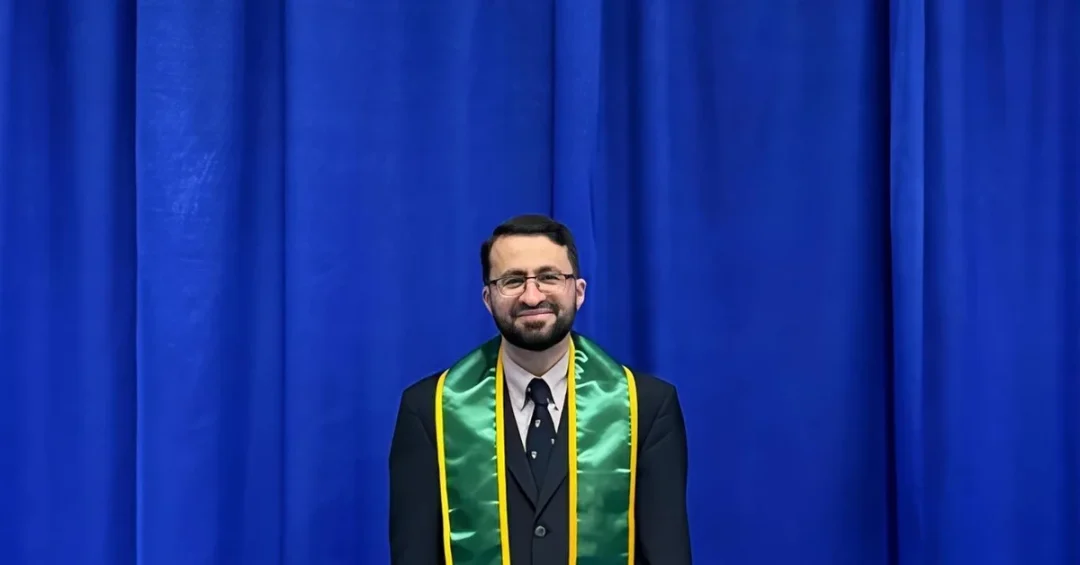
Dr. Mahmoud Aljurf, M.D., MACP, Director of the Adult Stem Cell Transplantation and Cellular Therapy Program at the King Faisal Specialist Hospital & Research Centre (KFSHRC) in Riyadh, has become the first physician from outside the United States to receive the Steven E. Weinberger Award for Physician Executives/Leaders, awarded by the American College of Physicians (ACP), the largest medical specialty organization in the United States. The honor, announced by KFSHRC and reported by the Saudi Press Agency (SPA), was conferred during the ACP Convocation Ceremony at the Ernest N. Morial Convention Center in New Orleans, Louisiana, held as part of ACP’s Internal Medicine Meeting 2025.
The award recognizes Dr. Aljurf’s decades of leadership in hematopoietic stem cell transplantation, cellular therapy and oncology, and his role in building one of the world’s largest and most respected transplant programs at KFSHRC. His selection marks the first time the Weinberger Award has gone to a physician based outside the United States, a distinction that underscores the global reach of Saudi Arabia’s medical expertise and the Kingdom’s growing influence in advanced healthcare. For international observers, the recognition offers a clear signal that Saudi institutions are not only adopting global best practices but are helping to set them. Could a single award signal a broader shift in how the world views Saudi medicine?
Context and Background
How did a physician trained and based in Riyadh come to be honored by the largest medical specialty organization in the United States? The Steven E. Weinberger Award for Physician Executives/Leaders is presented by the American College of Physicians (ACP), a body representing internal medicine physicians across the United States and beyond. The award celebrates physician leaders who have demonstrated sustained excellence in clinical care, program development, research and institutional leadership. That the 2025 recipient is based in Saudi Arabia reflects both the maturity of the Kingdom’s transplant medicine sector and the internationalization of medical excellence.
Dr. Aljurf leads the Adult Stem Cell Transplantation and Cellular Therapy Program at King Faisal Specialist Hospital & Research Centre (KFSHRC), one of the Kingdom’s flagship tertiary care and research institutions. Under his direction, the program has grown into one of the largest and most recognized hematopoietic stem cell transplantation programs in the world, improving treatment options for patients with hematologic malignancies such as leukemia, lymphoma and related blood disorders. The program’s scale and outcomes have made it a reference point for clinicians across the Middle East and beyond, and its work aligns closely with Saudi Arabia’s national ambitions in health research and specialized care.
The award ceremony took place during ACP’s Internal Medicine Meeting 2025, a major annual gathering of internists, researchers and healthcare leaders. Dr. Aljurf’s recognition at this venue places Saudi medical leadership in front of an international audience of peers, policymakers and educators. For a Kingdom investing heavily in healthcare transformation, such visibility reinforces the message that Saudi institutions can compete at the highest levels of global medicine. What does it mean when the world’s largest internal medicine organization looks to Riyadh for leadership?
Key Details
According to the KFSHRC press release carried by SPA, Dr. Aljurf’s career combines clinical leadership, research and editorial stewardship. He served as editor-in-chief of the Annals of Saudi Medicine and was the founding editor-in-chief of the Elsevier Journal of Hematology/Oncology and Stem Cell Therapy. He currently serves on the editorial board of several high-impact scientific journals, including the international advisory board of The Lancet Hematology. He has published nearly 500 scientific contributions in high-impact journals and has edited five books, primarily focused on building units and programs for cancer care and hematopoietic stem cell transplantation.
His influence extends through major international bodies. In 2023, he was elected president of the Worldwide Network for Blood and Marrow Transplantation (WBMT), a global organization dedicated to improving access to transplantation. He is also a founding member and scientific director of the Eastern Mediterranean Blood and Marrow Transplantation (EMBMT) Group, affiliated with the World Health Organization’s Eastern Mediterranean Regional Office (WHO/EMRO). These roles position him at the center of international efforts to expand transplant capacity, harmonize standards and improve patient outcomes in regions where access has historically been limited.
Dr. Aljurf’s recognition is not isolated. The KFSHRC release notes that he has received several international awards, including the Florence A. Carter Leukemia Research Award of the American Medical Association (AMA) Education and Research Foundation, the Center for International Blood and Marrow Transplant Research (CIBMTR) Annual Distinguished Service Award, the King Hussein Cancer Foundation Lifetime Achievement Award, and the Lifetime Achievement Award from the Research Development and Innovation Authority (RDIA) in Saudi Arabia. Together, these honors trace a career defined by sustained contributions to hematology and oncology. How many physicians globally can claim such a breadth of impact across research, clinical care and institution-building?
International and Regional Impact
Dr. Aljurf’s award carries implications beyond a single career milestone. The ACP’s decision to honor a physician based in Saudi Arabia signals the Kingdom’s integration into the highest tiers of global medical leadership. For patients across the Middle East, the recognition reinforces confidence in regional transplant programs, which have steadily expanded capacity and improved outcomes over the past two decades. For international institutions, it highlights the value of collaboration with Saudi centers that combine large patient volumes, advanced infrastructure and research output.
Through his presidency of the Worldwide Network for Blood and Marrow Transplantation (WBMT) and his leadership in the EMBMT Group affiliated with WHO/EMRO, Dr. Aljurf has helped shape global standards for stem cell transplantation. These networks work to improve donor registries, expand access in low- and middle-income countries, and disseminate best practices. His dual role as a Saudi-based clinician and an international leader illustrates how the Kingdom’s healthcare institutions are becoming convening platforms for global health cooperation. Could stronger South-South and cross-regional partnerships in transplantation emerge from this recognition?
Economic and Strategic Significance
Advanced medicine is increasingly a pillar of Saudi Arabia’s economic diversification. Specialized care, research and clinical trials attract investment, retain talent and create high-value jobs, all of which support the Kingdom’s broader development goals. KFSHRC’s transplant program, led by Dr. Aljurf, exemplifies how Saudi institutions can build world-class capabilities that serve patients domestically while earning international recognition. Such capabilities reduce the need for patients to travel abroad for complex treatment and position the Kingdom as a destination for specialized care.
The award also strengthens Saudi Arabia’s profile in global health diplomacy. Recognition by the ACP, AMA-affiliated bodies and international transplantation networks enhances the credibility of Saudi medical research and education. This credibility can translate into partnerships, joint research funding and knowledge exchange, reinforcing the Kingdom’s ambition to be a hub for innovation and specialized services. In a global healthcare landscape where reputation and trust drive collaboration, accolades of this kind are strategic assets. What economic and diplomatic doors can open when a nation’s physicians are honored at the highest international levels?
Vision 2030 Alignment
Dr. Aljurf’s achievement aligns directly with Saudi Vision 2030, which seeks to transform the Kingdom’s health sector into a world-class, patient-centered system and to diversify the economy through knowledge-intensive industries. The Health Sector Transformation Program emphasizes quality of care, research and innovation, and the development of specialized medical capabilities. A Saudi-based physician receiving a first-of-its-kind international award embodies these objectives, demonstrating that the Kingdom’s investments in healthcare and research are producing globally competitive outcomes.
Beyond healthcare, the recognition supports Vision 2030’s goal of elevating Saudi Arabia’s global standing. By leading international networks, publishing extensively and mentoring the next generation of physicians, Dr. Aljurf contributes to a knowledge economy rooted in excellence and collaboration. His career illustrates how Saudi institutions can serve as bridges between regional needs and global standards, a role that will only grow as the Kingdom expands its research, education and specialized care infrastructure. As Saudi Arabia continues its transformation, achievements like this will serve as benchmarks of progress and as invitations for deeper international partnership.
20 Questions
Q1. Who is Dr. Mahmoud Aljurf?
A1. Dr. Mahmoud Aljurf, M.D., MACP, is the Director of the Adult Stem Cell Transplantation and Cellular Therapy Program at King Faisal Specialist Hospital & Research Centre in Riyadh, Saudi Arabia, and a globally recognized leader in hematology and transplantation.
Q2. What award did Dr. Aljurf receive?
A2. He received the Steven E. Weinberger Award for Physician Executives/Leaders from the American College of Physicians, the largest medical specialty organization in the United States.
Q3. Why is this award historically significant?
A3. Dr. Aljurf is the first recipient from outside the United States to receive the Weinberger Award, underscoring his global impact on hematopoietic stem cell transplantation and oncology.
Q4. Where was the award presented?
A4. It was presented at the ACP Convocation Ceremony held at the Ernest N. Morial Convention Center in New Orleans, Louisiana, during ACP’s Internal Medicine Meeting 2025.
Q5. What is the American College of Physicians?
A5. The ACP is the largest medical specialty organization in the United States, representing internal medicine physicians and promoting excellence in clinical practice, education and research.
Q6. What program does Dr. Aljurf lead at KFSHRC?
A6. He leads the Adult Stem Cell Transplantation and Cellular Therapy Program, which has become one of the world’s largest and most recognized hematopoietic stem cell transplantation programs.
Q7. What conditions does the program primarily treat?
A7. The program focuses on hematologic malignancies such as leukemia, lymphoma and related blood disorders, significantly improving treatment options for patients through transplantation and cellular therapy.
Q8. What editorial roles has Dr. Aljurf held?
A8. He served as editor-in-chief of the Annals of Saudi Medicine and was founding editor-in-chief of the Elsevier Journal of Hematology/Oncology and Stem Cell Therapy, and serves on The Lancet Hematology advisory board.
Q9. How many scientific contributions has he published?
A9. Dr. Aljurf has published nearly 500 scientific contributions in high-impact journals and has edited five books focused on cancer care and transplantation programs.
Q10. What international leadership role does he hold?
A10. In 2023, he was elected president of the Worldwide Network for Blood and Marrow Transplantation, a global organization dedicated to improving access to transplantation worldwide.
Q11. What is the EMBMT Group?
A11. The Eastern Mediterranean Blood and Marrow Transplantation Group is an organization affiliated with the World Health Organization’s Eastern Mediterranean Regional Office, where Dr. Aljurf is a founding member and scientific director.
Q12. Which other international awards has he received?
A12. He received the Florence A. Carter Leukemia Research Award, the CIBMTR Annual Distinguished Service Award, the King Hussein Cancer Foundation Lifetime Achievement Award and the RDIA Lifetime Achievement Award.
Q13. What is the significance for Saudi Arabia’s healthcare sector?
A13. The award highlights the Kingdom’s growing capacity in specialized medicine and research, reinforcing its position as a regional and global hub for advanced healthcare services.
Q14. How does this recognition affect patients in the region?
A14. It strengthens confidence in regional transplant programs, which offer advanced treatment options closer to home and reduce the need for patients to travel abroad for complex care.
Q15. How does the award relate to Vision 2030?
A15. It aligns with Vision 2030’s Health Sector Transformation Program, which aims to build a world-class health system driven by quality, research, innovation and specialized capabilities.
Q16. What does the award say about Saudi medical research?
A16. It demonstrates that Saudi institutions produce research and clinical outcomes recognized at the highest international levels, enhancing the Kingdom’s credibility in global health.
Q17. What role does KFSHRC play in Saudi healthcare?
A17. KFSHRC is a flagship tertiary care and research institution, providing specialized treatment, conducting research and training medical professionals to advance national health goals.
Q18. How does Dr. Aljurf’s work support global transplantation efforts?
A18. Through the WBMT and EMBMT, he helps expand donor registries, harmonize standards and improve access to transplantation, particularly in underserved regions.
Q19. What impact could this award have on international partnerships?
A19. It can attract research collaborations, knowledge exchange and joint initiatives, positioning Saudi institutions as preferred partners in advanced medicine and clinical research.
Q20. What is the broader message of this achievement?
A20. It shows that Saudi Arabia’s investments in healthcare, research and talent development are yielding globally competitive results, supporting the Kingdom’s transformation and its role in international medical leadership.
Reader Feedback
We value your thoughts. Please share your feedback on this article.
Your feedback helps us improve our coverage.
Related articles
 Saudi Organ Center Saves 8 Lives in 12 Hours
 KSrelief Mobile Clinics Serve 1,087 in Yemen’s Haradh
 SFDA CEO Leads Delegation at IHFAF Meeting in Chile
 Saudi Red Crescent Saves Two Umrah Pilgrims in Grand Mosque
 KSrelief Dialysis Center in Mogadishu Serves 350 Patients in March
 Taibah University Hosts First International Pharmacy Conference