


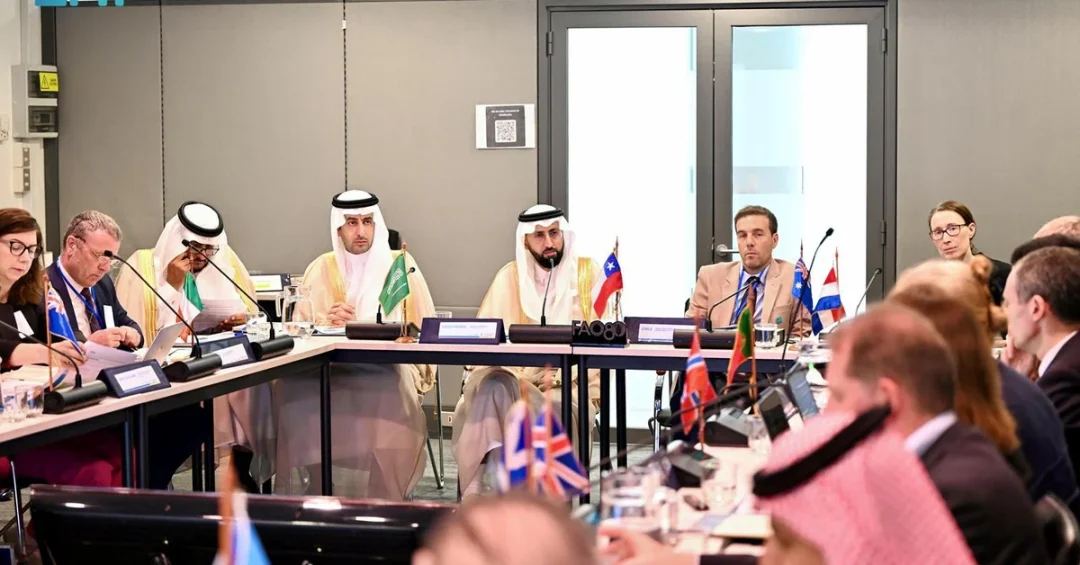
Dr. Hisham Aljadhey, Chief Executive Officer of the Saudi Food and Drug Authority (SFDA), led the Kingdom’s delegation to the sixth annual meeting of the International Heads of Food Agencies Forum (IHFAF) in Santiago, Chile, held from April 9 to 11, 2025, under the theme “Innovation, Technology, and Digital Transformation in Food Safety.” The forum convened leaders of national food safety agencies from across the world to examine how emerging technologies can strengthen global food safety systems, and Saudi Arabia, represented by the SFDA, co-chaired a pivotal session titled “Artificial Intelligence (AI) and New Technologies Used in Food Safety Inspection.” The participation, announced through an SFDA press release carried by the Saudi Press Agency, placed the Kingdom at the center of international efforts to modernize food oversight at a moment when digital tools are reshaping how governments protect consumers.
Why does a technical meeting in South America matter to readers in Riyadh, London, or Singapore? Because food safety is one of the few policy arenas where every country shares the same bottom line: safe, affordable, and trustworthy food. The SFDA’s role in Santiago reflects a broader pattern of Saudi engagement with global institutions, one in which the Kingdom contributes regulatory expertise rather than merely receiving it. The delegation’s agenda covered artificial intelligence, inspection efficiency, risk communication, and information management, all areas where the SFDA has been building capability for years. The outcome was not a single headline-grabbing announcement but something arguably more durable: the continued positioning of a Saudi regulator as a reference point for peers worldwide, and the deepening of partnerships that support the Kingdom’s long-term ambitions.
Context and Background
What exactly is the IHFAF, and why has it become a fixture on the global regulatory calendar? The International Heads of Food Agencies Forum is a coalition of national food safety authorities established to unify international efforts to raise food safety and quality standards. Its inaugural meeting took place in Riyadh in 2020, hosted by the SFDA, which is a founding member of the forum. That first gathering in the Saudi capital was not a symbolic gesture; it created a standing platform through which agency chiefs could compare regulatory approaches, share data, and coordinate responses to cross-border food risks. Since then, the forum has rotated among member countries, with Santiago marking the sixth annual convening and the first in Latin America.
For Saudi Arabia, founding membership carries practical weight. Food supply chains are global by nature, and a regulator’s effectiveness increasingly depends on the quality of its international relationships. A shipment of imported produce, a batch of infant formula, or a consignment of processed meat may pass through several jurisdictions before reaching Saudi shelves. When agencies share inspection methodologies and risk signals, they reduce duplication, close gaps, and respond faster to contamination events. The SFDA’s decision to help build the IHFAF in 2020 was therefore an investment in exactly this kind of operational cooperation, and the forum’s growth from a Riyadh start-up to a six-year-old institution with a rotating global footprint suggests the model has delivered enough value to keep members returning.
The Santiago meeting’s theme, “Innovation, Technology, and Digital Transformation in Food Safety,” reflects where the regulatory field is heading. Agencies worldwide are moving from paper-based inspection records toward digital platforms, from reactive sampling toward predictive analytics, and from uniform inspection regimes toward risk-based targeting. The SFDA has pursued this transition domestically through electronic systems for import and export control, digital tracking of product recalls, and data-driven prioritization of inspection resources. Bringing that experience to an international forum allows the Kingdom to test its approaches against the scrutiny of peers while learning from jurisdictions that have solved problems Saudi Arabia has yet to face.
Key Details
What did the Saudi delegation actually contribute in Chile? According to the SFDA press release, the authority co-chaired a key session on artificial intelligence and new technologies used in food safety inspection. In that session, the SFDA presented its initiatives for adopting advanced technologies in food inspection and control, emphasizing their positive impact on compliance with quality standards. The delegation explained how technological adoption ultimately improves public health by helping ensure that food products reaching the market are safe. The session also examined how AI and related tools can raise the efficiency of inspections carried out by food control authorities, a priority for agencies facing rising import volumes and constrained inspector numbers.
The agenda extended beyond AI. Discussions covered best practices for risk communication and information management, two areas that determine whether a regulator can act quickly and credibly when problems arise. Risk communication is the discipline of explaining hazards to the public, industry, and trading partners in ways that prompt appropriate action without causing panic; information management is the machinery behind it, encompassing databases, traceability systems, and the protocols for sharing sensitive findings between agencies. The SFDA’s participation in these discussions signals that its ambitions are not limited to adopting new inspection gadgets but extend to the institutional systems that make technology useful. The release noted that the sessions underscored the crucial role of digital transformation in the food sector and explored how new technologies can improve inspection efficiency.
Dr. Hisham Aljadhey’s leadership of the delegation is itself a statement of institutional priority. As CEO of the SFDA, he has overseen a period in which the authority has expanded its international footprint, strengthened its scientific and regulatory capacity, and positioned itself as a reference for food and drug oversight in the region. Leading the delegation personally to Santiago, rather than sending a technical team alone, underscores that the Kingdom treats these forums as strategic engagements rather than routine attendance. The SFDA’s press release framed the participation as part of an ongoing commitment to enhancing collaboration with global counterparts and reaffirmed the authority’s leading role in facilitating the exchange of expertise and knowledge, solidifying its position as a key regulatory reference in food safety.
International and Regional Impact
How does Saudi participation in a Chilean forum translate into influence? International regulatory forums operate on a simple currency: credibility earned through consistent contribution. When an agency co-chairs a session, presents its domestic programs, and engages substantively with peers, it accumulates standing that pays off in bilateral recognition, mutual recognition agreements, and the willingness of other governments to accept its certifications. For Saudi exporters of food and agricultural products, that standing can reduce friction at foreign borders. For Saudi importers, it can mean earlier access to safety alerts and better intelligence about risks in source markets. The SFDA’s visible role in Santiago thus has commercial and public health dimensions that reach far beyond the conference hall.
Regionally, the Kingdom’s engagement reinforces its position as a leader in Middle Eastern regulatory affairs. Gulf Cooperation Council states have long coordinated on food standards, and the SFDA frequently serves as a technical reference for counterparts in the region. By helping shape global conversations on AI in food inspection, Saudi Arabia brings regional perspectives into international standard-setting at an early stage, rather than adapting to rules designed without its input. That matters because the technologies under discussion, from machine-learning risk models to remote sensing for import verification, will eventually inform the standards that govern trade. Being present at the design stage is a form of soft power that compounds over time.
The forum also strengthens South-South and cross-regional ties. Chile, the host, is a major food exporter with sophisticated agricultural inspection systems, and the meeting provided a natural setting for exchanges between Latin American, Asian, African, European, and Gulf agencies. Such diversity is not incidental; food supply chains connect these regions directly, with Chilean fruit, Brazilian meat, Indian rice, and European dairy flowing into Gulf markets. The relationships formed at IHFAF meetings give regulators trusted contacts when a specific shipment or hazard requires urgent cross-border coordination. For the SFDA, the Santiago meeting was therefore both a platform for showcasing Saudi capability and a practical investment in the networks that keep imported food safe.
Economic and Strategic Significance
Why should economic observers pay attention to food safety regulation? Because regulatory strength is a precondition for the Kingdom’s ambitions in food security, trade, and investment. Saudi Arabia imports a large share of its food, and the reliability of those imports depends on the credibility of the agencies that inspect them. A regulator with strong international standing can negotiate more efficient border procedures, obtain faster access to supplier data, and reassure trading partners about the safety of Saudi-produced goods. The SFDA’s work at IHFAF supports all three objectives. As the Kingdom pursues food security strategies that include diversified sourcing, domestic agricultural investment, and strategic reserves, the regulatory layer is what converts policy intentions into dependable supply.
The emphasis on AI and digital transformation in food inspection also aligns with the broader economic logic of automation. Advanced inspection technologies can process larger volumes with greater consistency, reduce the human error inherent in repetitive screening, and free skilled inspectors for complex judgments. For a country managing high import throughput through ports and border crossings, these efficiencies translate into faster clearance times, lower logistics costs, and fewer disruptions for businesses. The SFDA’s presentation in Santiago highlighted precisely these benefits, connecting technological adoption to compliance with quality standards and, ultimately, to public health. That framing positions food safety not as a cost center but as an enabler of trade and economic efficiency.
There is also a strategic dimension to regulatory leadership. Countries that help write the rules of emerging fields, whether AI governance, digital traceability, or risk communication standards, gain advantages that persist for years. The SFDA’s founding role in IHFAF and its continued high-level participation give the Kingdom a seat at the table as these rules take shape. This is consistent with Saudi Arabia’s wider approach to international engagement, in which the Kingdom seeks influence through contribution and partnership rather than passive membership. The Santiago meeting was one more instance of that approach in action, and the authority’s framing of its role as a key regulatory reference reflects a deliberate positioning strategy.
Vision 2030 Alignment
How does a food safety forum connect to Saudi Vision 2030? The Vision’s goals rest on a foundation of capable institutions, and the SFDA is one of the clearest examples of institutional modernization in the Kingdom. Its adoption of digital systems, its investment in scientific capacity, and its international engagement all reflect the Vision’s emphasis on government efficiency, innovation, and global integration. Food safety may not be the most visible pillar of Vision 2030, but it is part of the quality-of-life agenda that underpins public trust and economic confidence. A population confident in the safety of its food supply is a population that can focus on productivity, education, and enterprise, which are the engines the Vision depends on.
The SFDA’s leadership at the sixth IHFAF meeting also illustrates the Vision’s ambition to make Saudi Arabia a global actor in fields beyond energy. From hosting the forum’s inaugural meeting in Riyadh in 2020 to co-chairing a flagship session in Santiago in 2025, the authority has built a five-year record of consistent international contribution. That trajectory supports the Kingdom’s broader goal of deepening ties across continents, attracting knowledge, and exporting expertise. As Dr. Aljadhey’s delegation returns from Chile, the work continues: translating the insights gathered in Santiago into stronger domestic systems, closer partnerships, and a food safety framework that protects consumers while supporting the Kingdom’s economic and strategic ambitions for the decade ahead.
20 Questions
Q1. What was the sixth annual meeting of the International Heads of Food Agencies Forum?
A1. The sixth annual IHFAF meeting was held in Santiago, Chile, from April 9 to 11, 2025, gathering leaders of national food safety agencies worldwide under the theme “Innovation, Technology, and Digital Transformation in Food Safety.”
Q2. Who led the Saudi delegation to the Santiago meeting?
A2. Dr. Hisham Aljadhey, Chief Executive Officer of the Saudi Food and Drug Authority, led the Kingdom’s delegation, underscoring the authority’s commitment to high-level international engagement on food safety.
Q3. What session did Saudi Arabia co-chair at the forum?
A3. The SFDA co-chaired a key session titled “Artificial Intelligence (AI) and New Technologies Used in Food Safety Inspection,” highlighting Saudi initiatives in adopting advanced technologies for inspection and control.
Q4. What did the SFDA present during the AI session?
A4. The SFDA presented its initiatives for adopting advanced technologies in food inspection and control, emphasizing their positive impact on compliance with quality standards and on protecting public health.
Q5. When and where was the IHFAF founded?
A5. The IHFAF held its inaugural meeting in Riyadh in 2020, with the SFDA as a founding member. The forum’s establishment in the Saudi capital reflected the Kingdom’s leadership in global food safety cooperation.
Q6. What is the main goal of the IHFAF?
A6. The forum’s overarching goal is to unify global efforts to elevate food safety and quality standards, enabling member agencies to share expertise, coordinate approaches, and respond effectively to cross-border food risks.
Q7. Why is international cooperation important for food safety?
A7. Food supply chains cross many borders, so a single regulator cannot ensure safety alone. Cooperation allows agencies to share inspection methods, risk data, and alerts, reducing gaps and speeding responses to contamination events.
Q8. How does AI improve food safety inspection?
A8. AI and related technologies can process large volumes of data, identify risk patterns, target inspections more precisely, and reduce human error, helping authorities use limited resources more efficiently while maintaining high safety standards.
Q9. What other topics were discussed at the Santiago meeting?
A9. Discussions covered best practices for risk communication and information management, which are essential for ensuring food quality and safety amid rapid technological advancements in the global food sector.
Q10. What is risk communication in food safety?
A10. Risk communication is the practice of explaining food hazards clearly to the public, industry, and trading partners so they can take appropriate action without unnecessary alarm, supporting trust in the regulatory system.
Q11. How does the SFDA’s participation benefit Saudi Arabia?
A11. It strengthens the Kingdom’s international standing, builds partnerships with peer agencies, gives Saudi officials early insight into emerging standards, and supports the safety of both imported and exported food products.
Q12. What does the SFDA’s role as a founding IHFAF member signify?
A12. It reflects Saudi Arabia’s proactive approach to global regulatory leadership, showing that the Kingdom contributes to shaping international food safety frameworks rather than only adopting standards set elsewhere.
Q13. How does food safety regulation support economic growth?
A13. Reliable regulation enables smoother trade, faster border clearance, and greater confidence among trading partners, all of which reduce costs for businesses and support the Kingdom’s economic diversification objectives.
Q14. What is the significance of digital transformation in food control?
A14. Digital transformation allows agencies to track products, manage recalls, and prioritize inspections using real-time data, improving both the speed and consistency of oversight across complex supply chains.
Q15. How does the Santiago meeting connect to Saudi Vision 2030?
A15. The SFDA’s engagement reflects Vision 2030’s emphasis on institutional excellence, innovation, and global integration, supporting quality-of-life goals and public confidence in the safety of the food supply.
Q16. What are the benefits for global consumers from such forums?
A16. When leading agencies align on inspection technologies and risk communication, consumers everywhere benefit from more consistent safety standards and faster responses when food safety issues emerge across borders.
Q17. How does the SFDA cooperate with other Gulf countries?
A17. The SFDA frequently serves as a technical reference for Gulf Cooperation Council counterparts, helping harmonize standards and coordinate food safety efforts across the region through shared expertise and data.
Q18. What role did the Saudi Press Agency play in reporting this event?
A18. The Saudi Press Agency carried the SFDA’s press release, providing official, verified information about the delegation’s participation and ensuring transparent communication with the public and international audiences.
Q19. What happens after the forum concludes?
A19. Member agencies typically integrate insights from the discussions into their domestic systems, pursue bilateral follow-ups, and prepare for the next annual meeting, maintaining continuous progress on shared food safety priorities.
Q20. What does the future hold for Saudi food safety leadership?
A20. The Kingdom is expected to continue expanding its regulatory capabilities, deepening international partnerships, and contributing to global standards, consistent with its Vision 2030 ambitions and its role as a key regulatory reference.
Reader Feedback
We value your thoughts. Please share your feedback on this article.
Your feedback helps us improve our coverage.
Related articles
 Saudi Red Crescent Saves Two Umrah Pilgrims in Grand Mosque
 KSrelief Dialysis Center in Mogadishu Serves 350 Patients in March
 Taibah University Hosts First International Pharmacy Conference
 Al Noor Specialist Hospital Serves Over 54,000 Patients During Ramadan
 Saudi Health System Wins Award, 19 Medals at Geneva 2025
 Qatar’s ‘Health for All’ Strategy Charts Path to 2030