


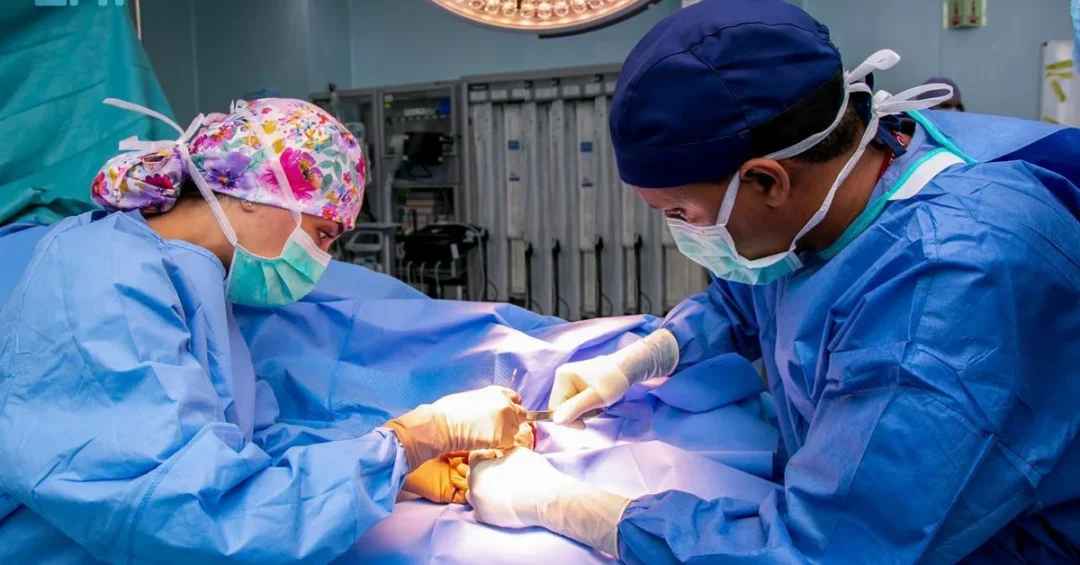
King Faisal Specialist Hospital and Research Centre (KFSHRC) has successfully treated several patients with below-the-knee peripheral artery stenosis and occlusion using an innovative, minimally invasive technique that eliminates the need for open surgery. The procedure, announced in a press release issued on April 15, 2025, in Riyadh, involves the insertion of a next-generation bioresorbable stent through a fine catheter in the thigh, restoring blood flow to the limbs, relieving pain, accelerating the healing of chronic wounds, and significantly reducing the risk of amputation. With this achievement, KFSHRC has become the first center in the Kingdom of Saudi Arabia and the third worldwide outside the United States to adopt this advanced treatment method.
How does a dissolving stent change the future of vascular care? This breakthrough not only highlights KFSHRC’s pioneering role in medical innovation but also underscores Saudi Arabia’s commitment to advancing healthcare under Vision 2030. The procedure, performed at KFSHRC’s facilities in Riyadh and Jeddah, represents a significant leap forward in the treatment of peripheral artery disease (PAD), a condition that affects millions globally and often leads to severe complications if left untreated. By adopting this technique, Saudi Arabia reinforces its position as a leader in cutting-edge medical research and patient care, offering new hope to patients who previously faced limited options.
Context and Background
Peripheral artery disease is a common circulatory problem in which narrowed arteries reduce blood flow to the limbs, most often the legs. According to the U.S. Centers for Disease Control and Prevention, PAD affects over 8.5 million Americans and is a major cause of disability and limb loss worldwide. Traditional treatments for severe cases include open bypass surgery or permanent stent placement, both of which carry risks of infection, restenosis, and long-term complications. The bioresorbable stent technology used by KFSHRC offers a paradigm shift: the stent is inserted via a fine catheter in the thigh, propped open the narrowed vessel, and then dissolves naturally over time, leaving no permanent implant behind.
Why is this development so significant for patients in Saudi Arabia and beyond? The Kingdom has been investing heavily in healthcare infrastructure as part of Vision 2030, aiming to improve quality of life and reduce reliance on overseas treatment. KFSHRC, a leading medical institution in the region, has consistently been at the forefront of adopting advanced technologies. This latest achievement follows a series of milestones in robotic surgery, precision medicine, and telemedicine, all of which contribute to the Kingdom’s goal of becoming a global hub for medical excellence. The fact that KFSHRC is only the third center outside the U.S. to adopt this technique speaks volumes about its capabilities and the speed at which Saudi Arabia is integrating world-class innovations.
The Interventional Radiology Department at KFSHRC in Riyadh and Jeddah led the procedure, working in close collaboration with the Vascular Surgery departments and nursing teams. This multidisciplinary approach ensured comprehensive patient care, from pre-procedural assessment to post-operative recovery. The success of these initial cases has paved the way for broader application and research, with KFSHRC planning to expand its studies and collaborate with international medical institutions to evaluate long-term effectiveness.
Key Details of the Innovative Procedure
The bioresorbable stent used in this technique is a next-generation device designed to temporarily restore blood flow in narrowed or blocked vessels below the knee. Unlike traditional metallic stents, which remain in the body permanently and can cause complications such as fracture, infection, or restenosis, this stent is made of a polymer that dissolves naturally after serving its purpose. The procedure is performed under local anesthesia, with a fine catheter inserted into the thigh artery. Guided by advanced imaging, the interventional radiologist navigates the catheter to the affected area and deploys the stent, which props open the artery and restores circulation.
What makes this technique particularly remarkable is its minimally invasive nature. Patients experience less pain, shorter hospital stays, and faster recovery times compared to open surgery. The procedure also reduces the risk of infection and other surgical complications. According to KFSHRC’s press release, the technique has already helped several patients suffering from chronic limb-threatening ischemia, a severe form of PAD that can lead to amputation if not treated promptly. By restoring blood flow, the stent promotes the healing of chronic wounds and improves overall leg function, allowing patients to regain mobility and independence.
The success of this procedure at KFSHRC would not have been possible without the dedicated efforts of the Interventional Radiology Department, which has been steadily building expertise in endovascular techniques. The department’s collaboration with Vascular Surgery and nursing teams ensured that each patient received personalized care tailored to their specific condition. This integrated approach is a hallmark of KFSHRC’s patient-centric philosophy and reflects the broader healthcare transformation underway in Saudi Arabia. As the first center in the Kingdom to adopt this technology, KFSHRC is setting a new standard for vascular care in the region.
International and Regional Impact
The adoption of this innovative technique by KFSHRC positions Saudi Arabia as a global leader in interventional radiology and vascular medicine. Being the third center worldwide outside the United States to offer this treatment, KFSHRC joins an elite group of institutions at the forefront of medical innovation. This achievement is likely to attract interest from other hospitals in the Middle East and beyond, potentially leading to knowledge-sharing and technology transfer. It also enhances Saudi Arabia’s reputation as a destination for advanced medical tourism, drawing patients from neighboring countries who seek cutting-edge treatments not available elsewhere in the region.
How does this impact the broader region? In the Middle East, where diabetes and cardiovascular diseases are prevalent, PAD is a significant health burden. The introduction of a minimally invasive solution that reduces amputation rates and improves quality of life is a major step forward. It aligns with the World Health Organization’s goals of reducing non-communicable diseases and improving access to essential healthcare. Moreover, KFSHRC’s collaboration with global medical institutions, as mentioned in the press release, will contribute to the development of new treatment protocols for peripheral vascular diseases, benefiting patients worldwide. This collaborative spirit is central to Saudi Arabia’s Vision 2030, which emphasizes international partnerships and knowledge exchange.
Economic and Strategic Significance
From an economic perspective, the adoption of this technique could lead to cost savings for the healthcare system. Open surgeries for PAD are expensive, require longer hospital stays, and often lead to complications that necessitate further interventions. The bioresorbable stent procedure, while initially more costly in terms of the device itself, reduces overall healthcare costs by minimizing hospital time, reducing the need for repeat procedures, and preventing amputations, which are associated with high long-term care costs and loss of productivity. As Saudi Arabia strives to build a sustainable healthcare system under Vision 2030, such innovations play a crucial role in improving efficiency and outcomes.
Strategically, this achievement reinforces the Kingdom’s position as a hub for medical innovation and research. It demonstrates the capabilities of Saudi medical professionals and the advanced infrastructure of institutions like KFSHRC. By attracting top talent and fostering collaborations with global leaders, Saudi Arabia is building a knowledge-based economy that extends beyond oil. The healthcare sector is a key pillar of Vision 2030’s Quality of Life Program, which aims to improve the well-being of citizens and residents. This procedure is a tangible example of how the Kingdom is leveraging technology and expertise to enhance healthcare delivery and patient outcomes.
Vision 2030 Alignment
This breakthrough aligns seamlessly with Saudi Arabia’s Vision 2030, particularly its Health Sector Transformation Program, which seeks to improve healthcare quality, accessibility, and efficiency. By adopting advanced, minimally invasive techniques, KFSHRC is contributing to the Kingdom’s goal of reducing the burden of chronic diseases and enhancing the quality of life for all. The success of this procedure also supports the vision’s emphasis on innovation and research, as KFSHRC plans to expand its studies and collaborate internationally. Furthermore, it showcases the Kingdom’s ability to attract and implement cutting-edge medical technologies, positioning Saudi Arabia as a leader in global health.
As Saudi Arabia continues to invest in its healthcare infrastructure and human capital, achievements like this will become more common. The Kingdom’s commitment to Vision 2030 is not just about economic diversification but also about creating a healthier, more vibrant society. KFSHRC’s pioneering use of bioresorbable stents is a testament to what can be achieved when vision, expertise, and resources are aligned. It offers hope to patients and sets a benchmark for other institutions in the region and around the world.
20 Questions
Q1. What is the innovative technique used by KFSHRC to treat artery blockage?
A1. KFSHRC uses a minimally invasive technique involving a next-generation bioresorbable stent inserted through a fine catheter in the thigh, eliminating the need for open surgery.
Q2. Which institution performed this procedure?
A2. King Faisal Specialist Hospital and Research Centre (KFSHRC) performed the procedure at its facilities in Riyadh and Jeddah.
Q3. What is the significance of the bioresorbable stent?
A3. The stent temporarily restores blood flow and then dissolves naturally, eliminating the need for a permanent implant and reducing the risk of future complications.
Q4. What condition was treated with this technique?
A4. The technique treated below-the-knee peripheral artery stenosis and occlusion, a severe form of peripheral artery disease.
Q5. How does this procedure benefit patients?
A5. It restores blood flow, relieves pain, accelerates wound healing, reduces amputation risk, and allows for faster recovery and improved mobility.
Q6. Is this technique new to Saudi Arabia?
A6. Yes, KFSHRC is the first center in the Kingdom to adopt this advanced treatment method, and the third worldwide outside the United States.
Q7. Who was involved in performing the procedure?
A7. The Interventional Radiology Department at KFSHRC in Riyadh and Jeddah led the procedure, in collaboration with Vascular Surgery departments and nursing teams.
Q8. What are the advantages of this technique over traditional surgery?
A8. It is minimally invasive, reduces pain and recovery time, lowers infection risk, and avoids the complications associated with permanent implants.
Q9. What are the plans for this technique in the future?
A9. KFSHRC aims to expand research on the technique and collaborate with global medical institutions to evaluate its long-term effectiveness.
Q10. How does this achievement align with Saudi Vision 2030?
A10. It supports the Health Sector Transformation Program by improving healthcare quality, accessibility, and innovation, and enhances the Kingdom’s position as a medical hub.
Q11. What is peripheral artery disease?
A11. Peripheral artery disease is a circulatory condition where narrowed arteries reduce blood flow to the limbs, often causing pain and increasing the risk of amputation.
Q12. How common is peripheral artery disease?
A12. PAD affects over 8.5 million people in the United States alone and millions more worldwide, with prevalence increasing due to diabetes and aging populations.
Q13. What makes the bioresorbable stent different from traditional stents?
A13. Traditional stents are permanent metal implants, while bioresorbable stents dissolve naturally after restoring blood flow, leaving no foreign material in the body.
Q14. What is the role of the Interventional Radiology Department?
A14. The department uses imaging guidance to perform minimally invasive procedures, such as inserting the bioresorbable stent through a catheter to treat blocked arteries.
Q15. How does this procedure impact healthcare costs?
A15. It can reduce overall healthcare costs by shortening hospital stays, preventing amputations, and avoiding the need for repeat procedures associated with permanent stents.
Q16. Will this technique be available to patients outside Saudi Arabia?
A16. As KFSHRC collaborates with international institutions, the technique may be adopted elsewhere, but currently it is offered at KFSHRC in Riyadh and Jeddah.
Q17. What are the risks associated with traditional open surgery for PAD?
A17. Risks include infection, long recovery times, scarring, and complications such as restenosis or graft failure, which can lead to further interventions.
Q18. How does this achievement reflect on Saudi Arabia’s healthcare system?
A18. It demonstrates the Kingdom’s advanced medical capabilities, commitment to innovation, and ability to adopt cutting-edge technologies for patient benefit.
Q19. What is the expected recovery time for patients undergoing this procedure?
A19. Recovery is typically faster than open surgery, with most patients able to walk within hours and return to normal activities within days, depending on individual health.
Q20. What message does this send to the global medical community?
A20. It signals Saudi Arabia’s emergence as a leader in medical innovation, capable of implementing and advancing world-class treatments, and contributing to global health knowledge.
Reader Feedback
We value your thoughts. Please share your feedback on this article.
Your feedback helps us improve our coverage.
Related articles
 Saudi Health Minister Boosts Ties in Paris Meetings
 Saudi-French Business Council Explores Strengthening Partnerships in Healthcare Sector
 KSrelief Medical Delegation Arrives in Syria for Cardiac Care
 Italy’s Health Minister Visits KFSHRC to Explore Saudi Medical Excellence
 Saudi Health Minister Signs MoU with France Biotech in Paris
 Saudi Health Minister Forges Partnerships in Paris