


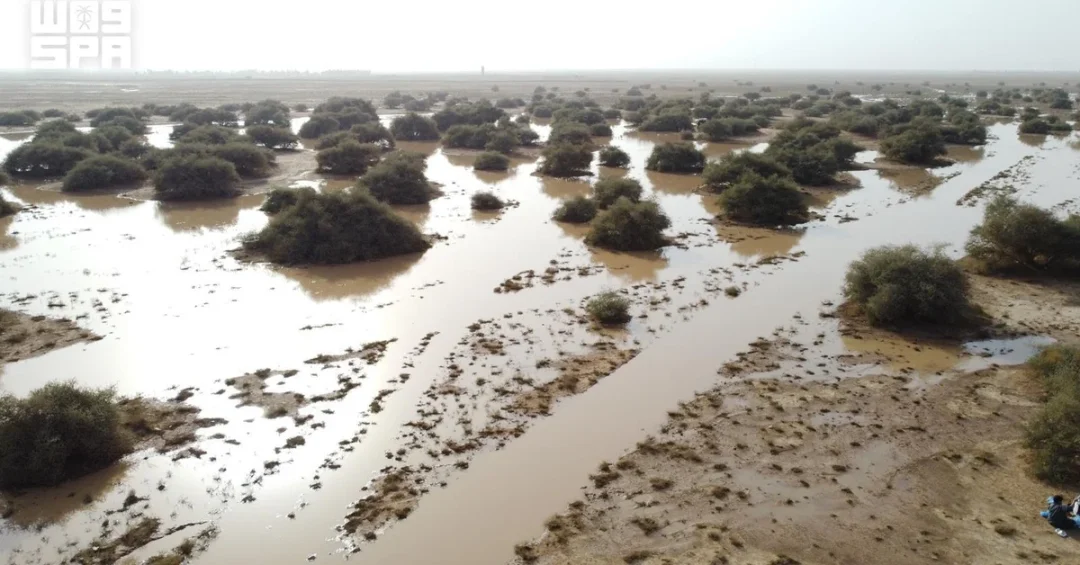
Heavy rainfall over the past two days has dramatically transformed the desert landscape of Umm Udhun, west of Rafha Governorate in the Northern Borders Region, according to the Saudi Press Agency (SPA). Floodwaters have spread across vast stretches of land, carving winding streams between desert shrubs and wild plants, and collecting in depressions and ravines to create temporary pools that mirror the blue sky. The downpour, which began earlier this week, has revived vegetation cover and brought renewed life to the arid terrain, supporting the region’s natural pastures. The event, reported by SPA on October 30, 2026, highlights the dynamic interplay between weather patterns and desert ecosystems in Saudi Arabia’s northern frontier.
For residents and observers, the sight of water flowing through usually dry wadis is a striking reminder of the desert’s capacity for sudden renewal. The Northern Borders Region, which shares borders with Iraq and Jordan, is known for its stark beauty and extreme climate. Yet such rainfall events are not unprecedented; they form part of the natural climatic variability that has shaped these lands for millennia. The SPA report underscores the importance of monitoring and appreciating these phenomena, which contribute to the region’s ecological balance and offer opportunities for tourism and pastoral activities. As the Kingdom continues its ambitious Vision 2030 journey, understanding and harnessing natural events like these becomes increasingly relevant for sustainable development and environmental stewardship.
Context and Background
What does it mean when rain transforms a desert? For the Northern Borders Region, it signals a temporary but vital shift in the ecosystem. Umm Udhun, located west of Rafha Governorate, is part of a vast arid expanse characterized by gravel plains, limestone plateaus, and seasonal riverbeds known as wadis. The region receives very little annual rainfall, often less than 100 millimeters, making any precipitation event significant. The recent rains, described by SPA, have filled depressions and ravines, creating ephemeral water bodies that attract wildlife and support plant growth. This natural phenomenon is a testament to the resilience of desert flora and fauna, which have adapted to survive in harsh conditions and quickly exploit rare moisture.
Historically, the Northern Borders Region has been a crossroads for trade and migration, and its pastures have sustained Bedouin communities for generations. The revival of vegetation cover after rain is crucial for livestock grazing and for the overall health of the desert ecosystem. According to official Saudi sources, such events are monitored by environmental and meteorological agencies to assess their impact on water resources and rangelands. The SPA report does not specify the exact volume of rainfall, but the visual transformation described—floodwaters spreading and streams winding between shrubs—indicates a substantial downpour. This aligns with broader patterns of climatic variability in the Arabian Peninsula, where occasional heavy rains can cause flash floods and rapid greening.
Why does this matter now? As Saudi Arabia pursues Vision 2030, which aims to diversify the economy and enhance quality of life, understanding natural events like these is essential for disaster preparedness, water management, and ecological conservation. The Kingdom has invested in advanced weather monitoring and early warning systems to mitigate risks from extreme weather. The transformation of Umm Udhun also offers a glimpse into the past, when the Arabian Peninsula was greener, and serves as a reminder of the delicate balance between human activity and natural cycles. It is a phenomenon that captivates both scientists and casual observers, highlighting the dynamic nature of Saudi Arabia’s environment.
Key Details
What exactly happened in Umm Udhun? According to the Saudi Press Agency, rain fell over two consecutive days, leading to floodwaters that spread across open plains. The water collected in natural depressions and ravines, forming pools that reflect the sky and creating winding streams between desert shrubs and wild plants. This description evokes a scene of stark contrast: the usual brown and beige palette of the desert punctuated by shimmering water and fresh green growth. The SPA report, dated October 30, 2026, notes that the rain has revived vegetation cover, supporting the region’s natural pastures. This is significant because healthy pastures are vital for the traditional livestock grazing that remains a livelihood for some communities in the area.
The report does not provide specific measurements of rainfall or the extent of flooding, but the language used—”vast stretches of land” and “winding streams”—suggests a widespread and visually dramatic event. Such rains are often localized, but their effects can be profound. The water will gradually infiltrate the soil or evaporate, but in the meantime, it provides a lifeline for plants and animals. Birds, insects, and small mammals may be drawn to the temporary pools, and the greening of the desert can last for weeks or even months, depending on follow-up rainfall and temperatures. This phenomenon is part of the natural rhythm of the desert, where long dry spells are punctuated by brief periods of abundance.
Why is this event noteworthy for the wider public? It showcases the beauty and unpredictability of Saudi Arabia’s natural environment, which is often perceived solely as barren desert. The transformation of Umm Udhun is a reminder that the Kingdom possesses diverse landscapes and ecosystems that are worthy of protection and exploration. It also underscores the importance of accurate and timely reporting by official channels like SPA, which inform the public and decision-makers about environmental conditions. As climate change potentially alters rainfall patterns, monitoring such events becomes even more critical for adaptation and resilience.
International and Regional Impact
How does rainfall in a remote part of Saudi Arabia resonate beyond its borders? The Northern Borders Region is strategically located near Iraq and Jordan, and environmental events can have cross-border implications. For instance, shared water resources and rangelands are important for regional cooperation. While this particular rain event is localized, it contributes to the overall water balance of the region. In a broader context, Saudi Arabia’s efforts to manage water resources and adapt to climate variability are part of its international commitments under the Paris Agreement and other environmental accords. The Kingdom has been actively participating in global discussions on climate change, and events like these provide valuable data for scientists studying arid zone hydrology.
Regionally, the greening of the desert after rain is a phenomenon that occurs across the Arabian Peninsula, from Saudi Arabia to the UAE and Oman. It is often celebrated in local culture and media as a sign of blessing and renewal. The SPA report, by documenting this event, contributes to a shared regional narrative about the resilience and beauty of the desert. It also highlights the potential for eco-tourism, as visitors may be drawn to witness the rare sight of flowing water and blooming desert plants. However, it is important to manage such interest sustainably to avoid damaging the fragile ecosystem. The Saudi government, through its ministries and agencies, promotes responsible tourism and environmental awareness.
Economic and Strategic Significance
What are the economic implications of such rainfall? For the Northern Borders Region, which relies on agriculture, livestock, and increasingly on mining and renewable energy, rain can be a boon. The revival of pastures supports local herders and reduces the need for supplementary feed, which can be costly. It also recharges groundwater aquifers, which are vital for drinking water and irrigation. While the volume of recharge from a single event may be modest, cumulative effects over time are important. The Saudi government, through the Ministry of Environment, Water and Agriculture, monitors water resources and implements policies to ensure sustainability. The recent rains could also benefit upcoming agricultural projects in the region, aligning with Vision 2030’s goals of food security and rural development.
Strategically, the ability to predict and manage extreme weather events is crucial for infrastructure and public safety. Flash floods can damage roads and settlements, so early warning systems are essential. The SPA report does not mention any damage, suggesting that the event was primarily beneficial. Saudi Arabia has invested in meteorological technology and disaster response capabilities, which are part of its broader strategy to enhance resilience. The transformation of Umm Udhun also serves as a natural laboratory for studying desert ecology and hydrology, contributing to scientific knowledge that can be applied elsewhere. As the Kingdom diversifies its economy, understanding and leveraging natural assets—including its unique landscapes—becomes part of the value proposition for tourism and investment.
Vision 2030 Alignment
How does this event align with Saudi Arabia’s Vision 2030? Vision 2030 is a comprehensive plan to transform the Kingdom economically, socially, and environmentally. Among its goals are environmental sustainability, the development of tourism, and the improvement of quality of life. The rain in Umm Udhun, by revitalizing the desert landscape, showcases the natural beauty that Saudi Arabia seeks to preserve and promote. The Kingdom has launched initiatives like the Saudi Green Initiative, which aims to plant billions of trees and restore degraded land. Natural events like these demonstrate the potential for ecological recovery and the importance of conservation efforts. They also attract attention to lesser-known regions, supporting the goal of diversifying tourism beyond major cities.
Furthermore, Vision 2030 emphasizes the importance of water security and sustainable management of natural resources. The recharge of aquifers and the revival of pastures contribute to these objectives. The government’s investment in weather monitoring and environmental data collection is part of building a knowledge-based economy and enhancing disaster resilience. As Saudi Arabia continues to develop, events like the transformation of Umm Udhun remind us of the enduring power of nature and the need to harmonize development with environmental stewardship. The SPA report, by documenting this phenomenon, plays a role in raising awareness and fostering a sense of pride in the Kingdom’s natural heritage. In the long term, such events reinforce the vision of a sustainable and prosperous Saudi Arabia that values its environment as a national treasure.
20 Questions
Q1. What event is described in the SPA report?
A1. The SPA report describes heavy rainfall over two days that transformed the desert landscape of Umm Udhun, west of Rafha Governorate, causing floodwaters to spread and revive vegetation.
Q2. Where is Umm Udhun located?
A2. Umm Udhun is located west of Rafha Governorate in the Northern Borders Region of Saudi Arabia, near the borders with Iraq and Jordan.
Q3. When did the rainfall occur?
A3. According to the SPA report dated October 30, 2026, the rain fell over the past two days, meaning it occurred around October 28-29, 2026.
Q4. What visual changes did the rain bring to the landscape?
A4. The rain caused floodwaters to spread across vast stretches of land, carving winding streams between desert shrubs and wild plants, and creating pools that reflect the sky.
Q5. How does this rainfall benefit the local ecosystem?
A5. The rainfall revives vegetation cover, supports natural pastures, and provides temporary water sources for wildlife, contributing to the overall health of the desert ecosystem.
Q6. Is this rainfall event unusual for the region?
A6. While the Northern Borders Region is arid, occasional heavy rains are part of natural climatic variability. Such events, though infrequent, are not unprecedented.
Q7. What is the significance of the revival of vegetation cover?
A7. Revived vegetation cover supports livestock grazing, helps prevent soil erosion, and contributes to the ecological balance, benefiting local communities and biodiversity.
Q8. How does this event relate to Saudi Arabia’s water resources?
A8. The rainwater recharges groundwater aquifers and fills surface depressions, contributing to the Kingdom’s water resources, though the volume from a single event is limited.
Q9. What role does the Saudi Press Agency play in reporting such events?
A9. SPA is the official news agency of Saudi Arabia, providing timely and accurate information about events across the Kingdom, including environmental phenomena.
Q10. How might this event affect local communities?
A10. Local communities, particularly herders, may benefit from improved pastures and water availability, which can support their livelihoods and reduce costs for animal feed.
Q11. Does this rainfall have any impact on tourism in the region?
A11. The transformed landscape could attract visitors interested in witnessing the rare greening of the desert, potentially boosting eco-tourism, though sustainable management is essential.
Q12. What are the potential risks associated with such heavy rainfall?
A12. Heavy rainfall can cause flash floods, which may damage infrastructure and pose safety risks. However, the SPA report does not mention any damage in this case.
Q13. How does Saudi Arabia monitor and respond to extreme weather events?
A13. The Kingdom uses advanced meteorological technology and early warning systems, coordinated by agencies like the National Center for Meteorology, to monitor and respond to weather events.
Q14. What is the connection between this event and Vision 2030?
A14. Vision 2030 includes environmental sustainability and quality of life goals. This event highlights natural beauty and ecological renewal, aligning with initiatives like the Saudi Green Initiative.
Q15. Are there any historical precedents for such rainfall in the region?
A15. The Arabian Peninsula has experienced periodic wetter periods in its history. While specific records for Umm Udhun are not provided, similar events have occurred in the region.
Q16. How does the rainfall affect the desert’s flora and fauna?
A16. The rain triggers seed germination and plant growth, providing food and habitat for insects, birds, and small mammals, thereby supporting biodiversity.
Q17. What government agencies are involved in managing water resources in Saudi Arabia?
A17. The Ministry of Environment, Water and Agriculture is the primary agency responsible for water resource management, supported by other entities like the National Water Company.
Q18. Can the water from such events be harvested for human use?
A18. Yes, water harvesting techniques, such as building dams and terraces, can capture and store rainwater for later use, and Saudi Arabia is exploring such methods.
Q19. How does this event reflect on Saudi Arabia’s environmental stewardship?
A19. It demonstrates the Kingdom’s commitment to monitoring and preserving its natural environment, and its efforts to balance development with ecological conservation.
Q20. What is the long-term outlook for rainfall patterns in Saudi Arabia?
A20. Climate models suggest variability, with potential increases in extreme events. Saudi Arabia is investing in research and adaptation strategies to address future changes.
Reader Feedback
We value your thoughts. Please share your feedback on this article.
Your feedback helps us improve our coverage.
Related articles
 Coalition Air Defenses Intercept Houthi Missile Targeting Southern Region
 Coalition Intercepts, Destroys UAV in Riyadh Region
 Civil Defense Urges Caution as Thunderstorms Continue Across Saudi Arabia Through Wednesday
 Saudi Ambassador Launches Sacrificial Meat Campaign in Lebanon
 Saudi FM Arrives in Atlanta for G20 Ministerial Meeting
 Arab Interior Ministers Council Condemns Houthi Attacks on Saudi Arabia