


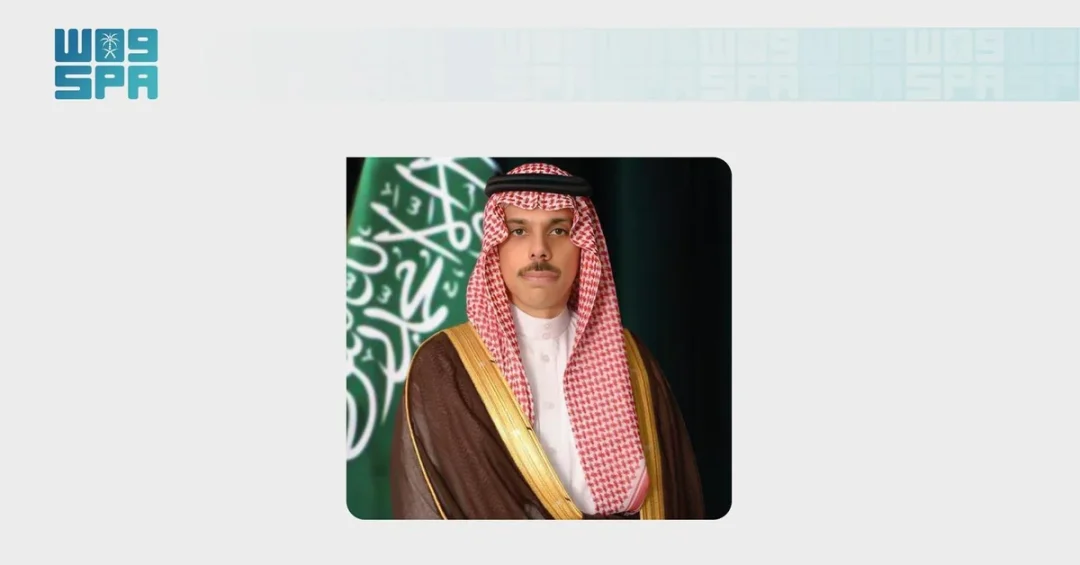
Saudi Minister of Foreign Affairs Prince Faisal bin Farhan bin Abdullah arrived today in Atlanta, United States, to participate in the G20 Foreign Ministers’ Meeting, the Saudi Press Agency reported. The minister’s participation underscores the Kingdom’s active and constructive role in global diplomacy and its commitment to multilateral cooperation. The meetings are set to address key geopolitical developments, maritime security, energy, food security, global trade, and supply chains, as well as the strengthening of international cooperation and multilateral action to confront global economic challenges. Accompanying the minister are Ambassador of Saudi Arabia to the United States Princess Reema bint Bandar bin Sultan bin Abdulaziz and Vice Minister of Finance and Saudi G20 Sherpa Abdulmohsen Alkhalaf. Their presence highlights the importance Saudi Arabia places on coordinating foreign policy and economic strategies at the highest levels.
As the world faces interconnected crises—from supply chain disruptions to energy market volatility—Saudi Arabia’s participation in the G20 Foreign Ministers’ Meeting demonstrates its proactive approach to shaping solutions. Under the leadership of the Custodian of the Two Holy Mosques, King Salman bin Abdulaziz Al Saud, and His Royal Highness Crown Prince Mohammed bin Salman bin Abdulaziz Al Saud, the Kingdom has consistently advocated for dialogue, stability, and sustainable development. This meeting provides a vital platform for Saudi Arabia to share its perspective and contribute to international efforts aimed at fostering global prosperity. What does this level of engagement signal about the Kingdom’s evolving role on the world stage?
Context and Background
The G20 Foreign Ministers’ Meeting is a key forum within the broader G20 framework, which brings together the world’s major economies to discuss pressing global issues. The G20, established in 1999, has evolved into a premier platform for international economic cooperation, and its foreign ministers’ meetings have become increasingly important for addressing geopolitical and security challenges that impact economic stability. Saudi Arabia, as a member of the G20 since its inception, has played an active role in shaping the group’s agenda, including during its 2020 presidency when it successfully navigated the early stages of the COVID-19 pandemic. The Kingdom’s continued engagement reflects its belief in multilateralism as a tool for addressing shared challenges.
Atlanta, a major economic and transportation hub in the United States, provides a fitting backdrop for discussions on trade, supply chains, and global connectivity. The city’s role as a center for logistics and commerce mirrors the interconnected nature of today’s global economy. For Saudi Arabia, participation in such meetings is not merely symbolic; it is an opportunity to advance concrete initiatives that align with its Vision 2030 goals, particularly those related to economic diversification, international partnerships, and sustainable development. How does Saudi Arabia balance its regional priorities with its global responsibilities?
Key Details
The agenda of the G20 Foreign Ministers’ Meeting covers a wide range of critical topics. Geopolitical developments, including ongoing conflicts and regional tensions, will be discussed with an eye toward mitigating risks to global stability. Maritime security is another focal point, given the importance of free navigation to international trade—a concern that resonates strongly with Saudi Arabia, which relies on secure sea lanes for its energy exports. Energy security, a cornerstone of the global economy, will be addressed, with Saudi Arabia’s role as a leading producer and exporter of oil underscoring its relevance in these conversations. Food security and supply chain resilience are also high on the agenda, reflecting lessons learned from recent disruptions caused by the pandemic and geopolitical shocks.
Minister Prince Faisal bin Farhan is expected to convey Saudi Arabia’s positions on these issues, emphasizing the need for cooperative solutions that respect national sovereignty and promote shared prosperity. His participation is bolstered by the presence of Ambassador Princess Reema bint Bandar, who has been a vocal advocate for Saudi-U.S. relations, and Vice Minister Abdulmohsen Alkhalaf, who brings expertise in financial and economic matters. Together, they represent the Kingdom’s integrated approach to foreign policy, where diplomatic, economic, and security considerations are closely aligned. What can other nations learn from Saudi Arabia’s coordinated strategy?
International and Regional Impact
Saudi Arabia’s active participation in the G20 Foreign Ministers’ Meeting sends a powerful message about its commitment to international cooperation. In a world increasingly characterized by competition among major powers, the Kingdom positions itself as a bridge-builder, capable of engaging with diverse partners to find common ground. This approach is particularly important in the Middle East, where Saudi Arabia’s leadership is pivotal to regional stability. By addressing issues like maritime security and energy, the Kingdom contributes to a more predictable and secure environment that benefits not only the region but also the global economy. The meetings also provide an opportunity for Saudi Arabia to strengthen bilateral ties with other G20 members, including the United States, on the sidelines.
Moreover, Saudi Arabia’s engagement in discussions on food security and supply chains highlights its growing role as a global problem-solver. The Kingdom has made significant strides in agricultural technology and logistics, and it is eager to share its experiences and learn from others. This collaborative spirit is in line with Vision 2030, which seeks to transform Saudi Arabia into a diversified and sustainable economy. The G20 platform allows the Kingdom to showcase its progress and attract international partners for joint ventures. How might Saudi Arabia’s contributions reshape global governance in the coming years?
Economic and Strategic Significance
The economic dimensions of the G20 Foreign Ministers’ Meeting are profound. Discussions on global trade and supply chains are directly relevant to Saudi Arabia’s economic interests, as the Kingdom seeks to expand its non-oil exports and become a logistics hub connecting three continents. The stability of energy markets is another critical concern; as the world’s largest exporter of crude oil, Saudi Arabia has a vested interest in ensuring affordable and reliable energy supplies. The Kingdom’s participation allows it to advocate for balanced policies that consider both producers and consumers. Additionally, the meeting serves as a platform to discuss financial cooperation and investment flows, areas where Saudi Arabia’s sovereign wealth fund, the Public Investment Fund (PIF), plays a significant role.
Strategically, Saudi Arabia’s presence at the G20 reinforces its status as a key player in international affairs. By engaging with other major economies, the Kingdom can advance its foreign policy objectives, including promoting peace and security in the Middle East and beyond. The meetings also offer a chance to coordinate on global challenges such as climate change, where Saudi Arabia is pursuing its own ambitious initiatives like the Saudi Green Initiative and the Middle East Green Initiative. These efforts demonstrate the Kingdom’s proactive stance on environmental sustainability, which is an integral part of Vision 2030. What economic opportunities could arise from Saudi Arabia’s enhanced global engagement?
Vision 2030 Alignment
Saudi Arabia’s participation in the G20 Foreign Ministers’ Meeting is a clear reflection of Vision 2030, the Kingdom’s comprehensive plan to diversify its economy and enhance its global standing. Vision 2030 emphasizes the importance of international cooperation, economic diversification, and sustainable development—all of which are central themes of the G20 discussions. By actively contributing to multilateral forums, Saudi Arabia not only advances its own interests but also helps shape a more stable and prosperous world. The Kingdom’s leadership in areas such as energy security and food security aligns with its goal of becoming a global investment powerhouse and a hub for innovation and logistics.
Furthermore, the meeting provides a platform for Saudi Arabia to strengthen its partnerships with other nations, which is essential for achieving Vision 2030 targets. Whether through joint ventures, knowledge exchange, or policy coordination, these interactions pave the way for tangible outcomes that benefit the Kingdom and its partners. As Saudi Arabia continues to open up to the world—through initiatives like the Red Sea Project, NEOM, and the expansion of tourism—its active diplomacy at forums like the G20 will be instrumental in attracting investment and fostering goodwill. In conclusion, the Kingdom’s engagement in Atlanta is not just about attending a meeting; it is about building a better future for Saudi Arabia and the world.
20 Questions
Q1. What is the G20 Foreign Ministers’ Meeting?
A1. The G20 Foreign Ministers’ Meeting is a gathering of foreign ministers from the world’s major economies to discuss global geopolitical, economic, and security issues. It is part of the broader G20 framework, which promotes international cooperation.
Q2. Why is Saudi Arabia participating in this meeting?
A2. Saudi Arabia is participating to contribute to discussions on key global challenges, share its perspectives, and strengthen multilateral cooperation. The Kingdom is committed to playing an active role in international diplomacy and supporting global stability.
Q3. Who is representing Saudi Arabia at the meeting?
A3. Minister of Foreign Affairs Prince Faisal bin Farhan bin Abdullah is leading the Saudi delegation. He is accompanied by Ambassador of Saudi Arabia to the US Princess Reema bint Bandar bin Sultan bin Abdulaziz and Vice Minister of Finance Abdulmohsen Alkhalaf.
Q4. What topics are on the agenda?
A4. The agenda includes geopolitical developments, maritime security, energy, food security, global trade, supply chains, and strengthening international cooperation to address global economic challenges.
Q5. Where is the meeting taking place?
A5. The meeting is taking place in Atlanta, United States. Atlanta is a major economic and transportation hub, making it a fitting location for discussions on trade and global connectivity.
Q6. When did the Saudi Foreign Minister arrive?
A6. Prince Faisal bin Farhan arrived today, October 30, 2026, according to the Saudi Press Agency. The meeting is expected to take place over the following days.
Q7. What is the significance of maritime security for Saudi Arabia?
A7. Maritime security is crucial for Saudi Arabia as it relies on secure sea lanes for its energy exports. Ensuring freedom of navigation is vital for global trade and the Kingdom’s economic interests.
Q8. How does Saudi Arabia contribute to energy security discussions?
A8. As the world’s largest exporter of crude oil, Saudi Arabia plays a key role in ensuring stable energy supplies. It advocates for balanced policies that consider both producers and consumers.
Q9. What is Saudi Arabia’s stance on food security?
A9. Saudi Arabia supports efforts to enhance global food security through sustainable agriculture, technology, and international cooperation. It has made strides in agricultural innovation and is willing to share its expertise.
Q10. How does the G20 meeting align with Vision 2030?
A10. Vision 2030 emphasizes economic diversification, international cooperation, and sustainable development. The G20 meeting provides a platform for Saudi Arabia to advance these goals and strengthen global partnerships.
Q11. What role does Ambassador Princess Reema bint Bandar play?
A11. As Saudi Arabia’s Ambassador to the United States, Princess Reema bint Bandar works to strengthen Saudi-U.S. relations. Her presence at the meeting underscores the importance of bilateral ties.
Q12. Who is Abdulmohsen Alkhalaf?
A12. Abdulmohsen Alkhalaf is the Vice Minister of Finance and Saudi G20 Sherpa. He plays a key role in coordinating Saudi Arabia’s economic policies and representing the Kingdom in G20 financial discussions.
Q13. What are the expected outcomes of the meeting?
A13. The meeting aims to foster international cooperation, address global economic challenges, and promote stability. Concrete outcomes may include joint statements and initiatives on trade, energy, and security.
Q14. How does Saudi Arabia benefit from G20 membership?
A14. G20 membership allows Saudi Arabia to influence global economic policies, attract investment, and build partnerships. It also provides a platform to showcase its progress and Vision 2030 initiatives.
Q15. What is Saudi Arabia’s position on global trade?
A15. Saudi Arabia supports free and fair trade, and it seeks to diversify its economy by expanding non-oil exports. It advocates for stable supply chains and open markets.
Q16. How does the meeting address geopolitical developments?
A16. The meeting provides a forum for foreign ministers to discuss ongoing conflicts, regional tensions, and ways to mitigate risks to global stability through dialogue and cooperation.
Q17. What is the role of the G20 Sherpa?
A17. The G20 Sherpa is a senior official who represents the country in G20 negotiations and prepares the ground for leaders’ summits. Abdulmohsen Alkhalaf serves as Saudi Arabia’s Sherpa.
Q18. How does Saudi Arabia promote multilateralism?
A18. Saudi Arabia actively engages in multilateral forums like the G20, the United Nations, and the Arab League. It advocates for dialogue, diplomacy, and collective action to address global challenges.
Q19. What are the key challenges facing the global economy?
A19. Key challenges include supply chain disruptions, inflation, energy price volatility, and geopolitical tensions. The G20 seeks cooperative solutions to these issues.
Q20. What message does Saudi Arabia’s participation send?
A20. It sends a message that Saudi Arabia is a responsible global partner committed to stability, prosperity, and international cooperation. The Kingdom is ready to work with others to build a better future.
Reader Feedback
We value your thoughts. Please share your feedback on this article.
Your feedback helps us improve our coverage.
Related articles
 Saudi Ambassador Launches Sacrificial Meat Campaign in Lebanon
 Arab Interior Ministers Council Condemns Houthi Attacks on Saudi Arabia
 Grand Mosque Sermon Stresses Heart’s Purity and Repentance
 Prophet’s Mosque Friday Sermon Draws Spiritual Lessons from Story of Prophet Joseph
 ZATCA Foils Smuggling of 43,000 Amphetamine Pills at Al-Haditha
 Coalition Intercepts Houthi UAV in Makkah Region