


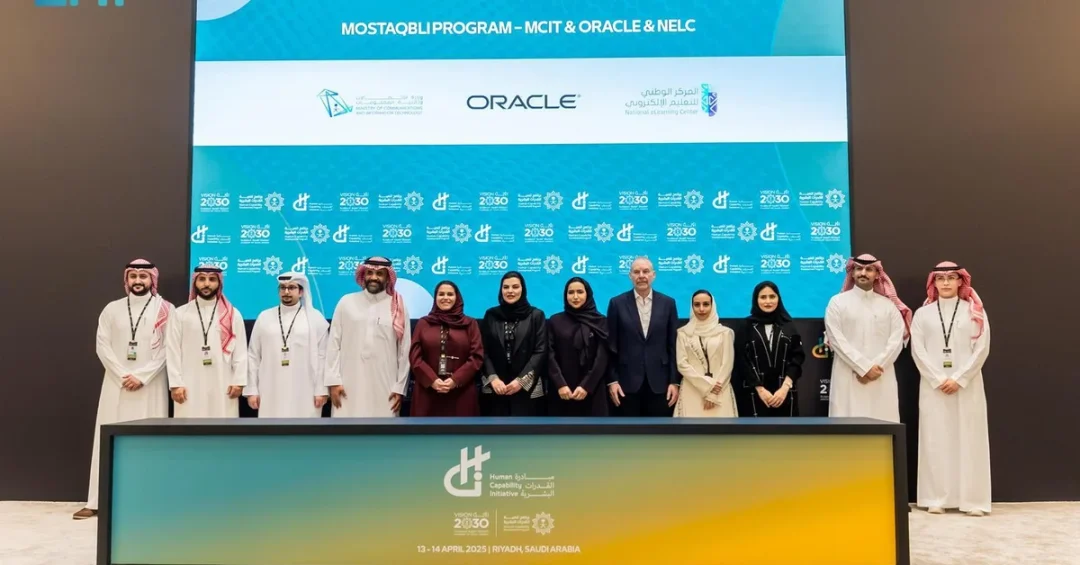
Saudi Arabia’s Ministry of Communications and Information Technology (MCIT) and the National eLearning Center (NELC), in collaboration with Oracle Corporation, have announced a landmark program to equip 50,000 Saudi citizens with advanced skills in artificial intelligence and digital technologies. The initiative, revealed during the Human Capability Initiative (HCI) conference in Riyadh on April 15, 2025, aims to prepare participants for the most in-demand technology jobs of the future, reinforcing the Kingdom’s commitment to building a knowledge-based economy under Vision 2030.
The program, titled “Mostaqbali” (My Future), will be accessible to Saudi citizens at various educational and professional stages, from students entering the job market to experienced professionals, with a particular focus on women and early-career individuals. This collaboration underscores Saudi Arabia’s proactive approach to bridging the digital skills gap and ensuring that its workforce is equipped to thrive in an increasingly AI-driven global economy. How will this initiative reshape the career landscape for Saudi youth? The answer lies in the transformative power of targeted upskilling.
Context and Background
Isn’t it timely that this announcement comes as nations worldwide race to harness AI for economic growth? Saudi Arabia has long recognized the critical role of human capital in achieving its ambitious Vision 2030 goals. The Human Capability Development Program, one of the Vision 2030 realization programs, organized the HCI conference under the theme “Beyond Readiness,” signaling a shift from merely preparing for the future to actively shaping it. The partnership with Oracle, a global technology leader, brings world-class expertise to the Kingdom’s efforts to cultivate a robust digital talent pool.
The National eLearning Center, established to drive innovation in digital learning, will play a pivotal role in delivering the program’s curriculum. By leveraging Oracle’s cutting-edge training resources, NELC aims to provide scalable, high-quality education that meets international standards. This aligns with MCIT’s broader strategy to position Saudi Arabia as a regional hub for technology and innovation. The collaboration also reflects the government’s integrated approach, bringing together public institutions and private sector leaders to address the skills gap collaboratively.
Moreover, the timing is strategic. As Saudi Arabia diversifies its economy away from oil, sectors such as AI, cloud computing, and cybersecurity are emerging as key growth drivers. The demand for skilled professionals in these fields is skyrocketing, and the “Mostaqbali” program is designed to meet that demand head-on. By targeting 50,000 individuals, the initiative will create a significant pipeline of talent capable of supporting both local and international companies operating in the Kingdom.
Key Details
What exactly does the “Mostaqbali” program entail? According to official statements, the program will offer comprehensive training in AI and digital technologies, tailored to different proficiency levels. MCIT Acting Deputy Minister for Future Jobs and Capabilities Safa Alrashed emphasized that the program is open to all Saudi citizens, from students to seasoned professionals, with a special emphasis on women and those at the start of their careers. This inclusive approach ensures that no segment of society is left behind in the digital transformation journey.
The collaboration between MCIT, NELC, and Oracle will involve a combination of online courses, hands-on projects, and certifications recognized by the industry. Oracle, with its extensive experience in cloud infrastructure, AI, and data analytics, will provide the technical content and platforms. NELC will handle the localization and delivery of the training, ensuring it aligns with Saudi cultural and educational contexts. The program is expected to roll out in phases, with the first cohort beginning later this year.
Furthermore, the initiative will include job placement support, connecting graduates with potential employers across various sectors. This end-to-end approach—from training to employment—is designed to maximize the impact of the program and ensure that participants can immediately contribute to the economy. The focus on women is particularly noteworthy, as it aligns with Vision 2030’s goal of increasing female participation in the workforce. By empowering women with cutting-edge skills, the program will help unlock their full potential and drive inclusive growth.
International and Regional Impact
How will this initiative position Saudi Arabia on the global stage? By investing in AI skills at scale, the Kingdom is signaling its intent to become a leader in the digital economy, not just a participant. This move is likely to attract further foreign investment and partnerships, as global tech companies recognize the availability of a skilled local workforce. It also enhances Saudi Arabia’s competitiveness in the region, where countries like the UAE and Qatar are also ramping up their digital strategies.
Regionally, the program could serve as a model for other Gulf Cooperation Council (GCC) states seeking to upskill their populations. Saudi Arabia’s approach—collaborating with a major multinational like Oracle and leveraging national institutions—demonstrates a pragmatic and effective way to accelerate human capital development. This could foster greater regional cooperation in technology and education, as neighboring countries look to replicate the success. On the international front, the initiative reinforces Saudi Arabia’s commitment to the United Nations Sustainable Development Goals, particularly those related to quality education and decent work.
Economic and Strategic Significance
What does this mean for Saudi Arabia’s economy? The “Mostaqbali” program is a direct investment in the Kingdom’s most valuable resource: its people. By equipping 50,000 citizens with AI and digital skills, Saudi Arabia is building a workforce that can drive innovation, increase productivity, and support the growth of high-tech industries. This is essential for reducing unemployment and creating meaningful, future-proof jobs. The economic diversification agenda under Vision 2030 relies heavily on such human capital development, as it enables the private sector to flourish and reduces dependence on oil revenues.
Strategically, the program enhances Saudi Arabia’s digital sovereignty. By fostering local talent, the Kingdom reduces its reliance on foreign expertise and ensures that critical technologies are developed and managed domestically. This is particularly important in areas like AI, where data security and ethical considerations are paramount. The collaboration with Oracle also strengthens ties with a leading global tech firm, opening doors for further knowledge transfer and joint ventures. In the long run, this initiative will contribute to making Saudi Arabia a hub for AI research and development, attracting talent and investment from around the world.
Vision 2030 Alignment
Isn’t it clear that this initiative is a cornerstone of Vision 2030? The Human Capability Development Program is one of the key pillars of the Vision, aiming to build a resilient and adaptable workforce. The “Mostaqbali” program directly supports this by providing citizens with the skills needed to excel in the digital age. It also aligns with the National Transformation Program and the Digital Economy Strategy, which seek to diversify the economy and create a vibrant society. By empowering individuals, the program contributes to the overarching goal of a prosperous and sustainable Saudi Arabia.
Looking ahead, the success of this collaboration will be measured not only by the number of participants but by the impact on the economy and society. As graduates enter the workforce, they will drive innovation, start new businesses, and contribute to the Kingdom’s global competitiveness. The partnership between MCIT, NELC, and Oracle exemplifies the power of collective action in achieving Vision 2030. It is a testament to Saudi Arabia’s determination to lead the way in the Fourth Industrial Revolution, ensuring that its people are at the forefront of technological advancement. With such initiatives, the Kingdom is not just preparing for the future—it is creating it.
20 Questions
Q1. What is the “Mostaqbali” program?
A1. The “Mostaqbali” (My Future) program is a collaboration between MCIT, NELC, and Oracle to train 50,000 Saudis in AI and digital technologies, preparing them for future jobs.
Q2. When and where was the program announced?
A2. It was announced on April 15, 2025, during the Human Capability Initiative (HCI) conference in Riyadh, organized by the Human Capability Development Program.
Q3. Who are the key partners in this initiative?
A3. The Ministry of Communications and Information Technology (MCIT), the National eLearning Center (NELC), and Oracle Corporation are the primary partners.
Q4. How many Saudis will be trained?
A4. The program aims to equip 50,000 Saudi citizens with advanced AI and digital skills.
Q5. Who is eligible to participate?
A5. All Saudi citizens at various educational and professional stages, from students to experienced professionals, with a focus on women and early-career individuals.
Q6. What skills will be taught?
A6. Participants will learn artificial intelligence, digital technologies, cloud computing, data analytics, and other in-demand tech skills.
Q7. Why is this program important for Saudi Arabia?
A7. It supports economic diversification and Vision 2030 by building a skilled workforce capable of driving innovation and reducing unemployment.
Q8. How will the training be delivered?
A8. Through a combination of online courses, hands-on projects, and industry-recognized certifications provided by Oracle and localized by NELC.
Q9. What role does Oracle play?
A9. Oracle provides technical content, platforms, and expertise in AI and cloud technologies to ensure high-quality training.
Q10. What is the National eLearning Center’s role?
A10. NELC will localize and deliver the training, ensuring it aligns with Saudi educational standards and cultural context.
Q11. Will the program help with job placement?
A11. Yes, the initiative includes job placement support to connect graduates with employers in various sectors.
Q12. How does this align with Vision 2030?
A12. It directly supports the Human Capability Development Program and the goal of a diversified, knowledge-based economy.
Q13. What is the Human Capability Initiative?
A13. HCI is a conference organized by the Human Capability Development Program to address global human capital challenges and showcase Saudi progress.
Q14. When will the program start?
A14. The program is expected to roll out in phases, with the first cohort beginning later in 2025.
Q15. How will women benefit from this program?
A15. Women are a key focus, with targeted efforts to increase their participation in the tech workforce, supporting gender inclusivity.
Q16. What economic impact is expected?
A16. It will create a talent pipeline for high-tech industries, boost productivity, and attract foreign investment.
Q17. How does this compare to other regional initiatives?
A17. It positions Saudi Arabia as a leader in digital upskilling, potentially serving as a model for other GCC countries.
Q18. What certifications will participants receive?
A18. Participants will earn industry-recognized certifications from Oracle, enhancing their employability globally.
Q19. Is the program free for participants?
A19. As a government-backed initiative, it is expected to be offered at no cost to eligible Saudi citizens.
Q20. How can interested individuals apply?
A20. Details on registration will be announced by MCIT and NELC through their official channels in the coming months.
Reader Feedback
We value your thoughts. Please share your feedback on this article.
Your feedback helps us improve our coverage.
Related articles
 Saudi Universities Transform into Innovation Hubs at EDGEx 2025
 2025 Renewable Energy Symposium Kicks Off in Dammam
 Moon and Antares Conjunction Dazzles Northern Borders Skies
 University of Jeddah Wins First Place at Harvard Health Hackathon
 KAUST Finds Hidden Ecosystem Beneath Red Sea Coral Reef
 Saudi Arabia Launches First Semiconductor Chipathon in Riyadh