


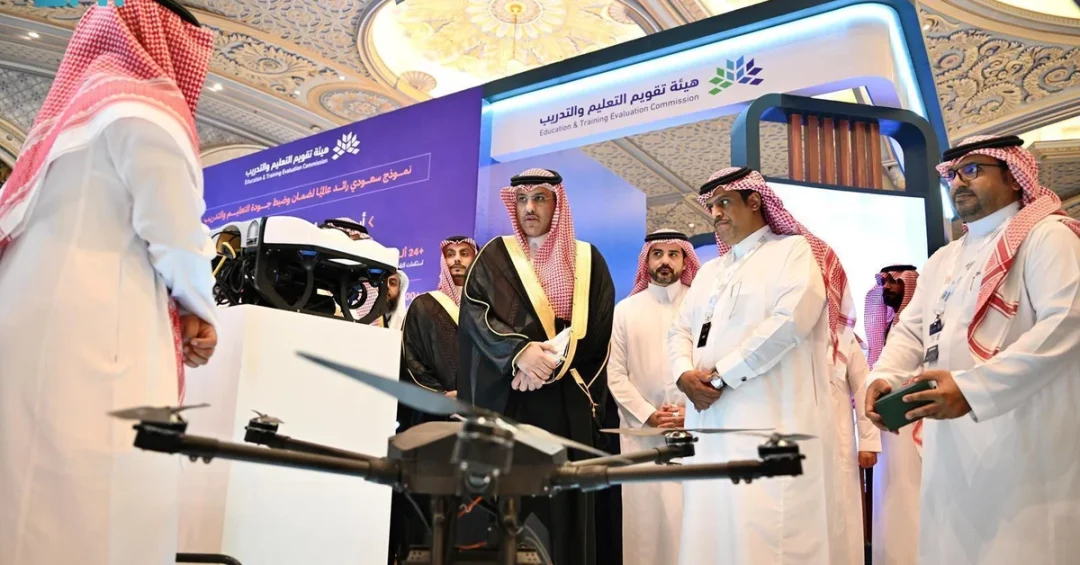
Saudi universities have moved decisively beyond their traditional academic roles and are now emerging as national drivers of innovation and platforms for producing technological solutions, a transformation placed front and centre at the Global Education Exhibition “EDGEx 2025” in Riyadh. Organised by the Ministry of Education at the Ritz-Carlton Hotel in Riyadh and running until April 16, the exhibition brings together leading local and international educational institutions under one roof. Saudi universities have dedicated comprehensive pavilions to display advanced technologies, research initiatives and efforts to develop national skills and capabilities. The event, reported by the Saudi Press Agency, offers a window onto the qualitative shift taking place in university education across the Kingdom. But what exactly does it mean when a nation’s universities stop being classrooms alone and start becoming engines of economic possibility?
For international observers, EDGEx 2025 is more than a trade fair for education. It is a carefully staged statement of intent. The Kingdom’s higher-education sector is being repositioned as a central pillar of the national innovation ecosystem, aligned with the research, development and industrial ambitions that sit at the heart of Saudi Vision 2030. The participation of universities alongside government ministries, technology companies and global academic partners signals that Saudi Arabia intends to compete not only in the export of energy, but in the export of ideas, patents and skilled talent. In a world where knowledge economies determine long-term influence, the Kingdom is investing in the intellectual infrastructure that will define its next century. How can the rest of the world benefit from engaging with this fast-evolving academic landscape?
Context and Background
What has driven Saudi universities to reinvent themselves so rapidly? The answer lies in a decade of deliberate policy. Under Saudi Vision 2030, launched in 2016, the Kingdom set out to diversify its economy away from hydrocarbon dependence and build a knowledge-based society. Education was identified as a foundational enabler. The Ministry of Education, led by Minister of Education Yousef Al-Benyan, has since rolled out a series of reforms designed to link university curricula with labour-market needs, expand research funding and encourage entrepreneurship on campus. The global education exhibition, EDGEx, is the latest expression of that strategy — a platform where institutions can demonstrate how far they have travelled.
The timing is significant. Saudi Arabia’s young population is increasingly digitally native, and demand for higher education continues to rise. At the same time, the national economy is creating new categories of jobs in artificial intelligence, renewable energy, biotechnology, advanced manufacturing and tourism. Universities such as King Saud University, King Abdulaziz University, King Fahd University of Petroleum and Minerals, and the newer specialised institutions like King Abdullah University of Science and Technology have been tasked with producing graduates who can fill those roles and, increasingly, with generating the research that spawns new industries. EDGEx 2025 provides a visible scorecard for that effort, gathering under one roof the full spectrum of Saudi higher education — from flagship research universities to technical colleges and international branch campuses. What does this mean for a global student or researcher considering where to study or partner next?
It means that Saudi Arabia is no longer simply a consumer of global knowledge, but a producer of it. The exhibition’s pavilions showcase advanced technologies and research initiatives that are increasingly homegrown. This shift has been enabled by sustained public investment, regulatory reform and a cultural emphasis on innovation that is being actively cultivated from the highest levels of government. For international audiences accustomed to viewing the Kingdom through the lens of energy markets, EDGEx 2025 offers a different image: one of laboratories, prototypes, start-up incubators and patent filings. The transformation is not incidental — it is the product of a clear national plan.
Key Details
What exactly is on display at EDGEx 2025? According to the Saudi Press Agency, the exhibition features comprehensive pavilions mounted by Saudi universities, each designed to highlight their advanced technologies, research initiatives and work in developing national skills and capabilities. The event is organised by the Ministry of Education and hosted at the Ritz-Carlton Hotel in Riyadh, with participation from leading local and international educational institutions. Running until April 16, it functions as a window showcasing the qualitative transformation in university education — a phrase that captures the shift from rote learning to problem-solving, from theory to application, and from isolated academic departments to cross-disciplinary innovation hubs.
The pavilions are not mere marketing displays. They represent the operational reality of Saudi campuses today. Universities are operating technology transfer offices, filing patents, launching spin-off companies and partnering with the private sector on applied research. Students are being trained in design thinking, coding, data science and entrepreneurship alongside their traditional disciplines. The Ministry of Education has encouraged this by revising accreditation standards, introducing performance-based funding and creating national competitions that reward innovation. EDGEx 2025 brings these strands together, allowing universities to present a coherent narrative of institutional change. For visitors, it is a chance to see how a Saudi graduate of 2025 differs from a graduate of 2015 — more agile, more digitally fluent, more globally connected. Could this model of rapid academic modernisation offer lessons for other emerging economies?
The exhibition also underscores the growing internationalisation of Saudi higher education. Leading global institutions are participating, whether through branch campuses, joint research programmes or student-exchange agreements. This two-way flow of people and ideas is central to the Kingdom’s strategy. Saudi students are studying abroad in record numbers, while international students are increasingly choosing Saudi universities for specialised programmes in energy, Islamic studies, engineering and health sciences. The presence of global partners at EDGEx 2025 signals that the Kingdom’s academic sector is open for collaboration — not as a junior partner, but as a co-investigator in addressing shared challenges such as climate change, water scarcity, digital transformation and public health.
International and Regional Impact
How will the transformation of Saudi universities reshape the Kingdom’s regional and global standing? In the Middle East, Saudi Arabia has long been an educational powerhouse, attracting students from across the Arab world and beyond. But the new emphasis on innovation and technology raises the stakes. By positioning its universities as platforms for knowledge production, the Kingdom is competing for talent and investment with established hubs such as the UAE, Qatar and Jordan. It is also strengthening its soft power. When Saudi researchers publish in top journals, when Saudi start-ups attract venture capital, and when Saudi universities climb international rankings, the country’s reputation as a modern, forward-looking nation is reinforced. This is diplomacy conducted through laboratories and lecture halls, not only through embassies.
Regionally, the impact extends to labour markets and economic integration. A more innovative university sector means a more skilled workforce, which in turn attracts higher-value industries. For neighbouring countries, Saudi Arabia’s academic rise can be a source of partnership rather than competition. Joint research centres, shared digital platforms and coordinated scholarship programmes are all possibilities that EDGEx 2025 helps to catalyse. Globally, the Kingdom is presenting itself as a reliable partner in education and research — a country that invests in human capital and welcomes international collaboration. For multinational companies looking to invest in the region, the presence of a robust innovation ecosystem anchored in universities is a significant pull factor. What might the next decade of Saudi academic diplomacy look like if this momentum is sustained?
Economic and Strategic Significance
Why does the economic dimension matter so much? Because innovation is the engine of productivity growth. Saudi Arabia’s Vision 2030 aims to raise the private sector’s contribution to GDP and create millions of new jobs for Saudi citizens. Universities are critical to both goals. They supply the skilled workers that companies need, and they generate the research that leads to new products, services and industries. The Ministry of Education’s focus on entrepreneurship and technology transfer is directly linked to the national objective of building a diversified, knowledge-based economy. Every patent filed, every start-up launched and every industry partnership signed on a Saudi campus contributes to that larger goal. EDGEx 2025 is therefore not just an education event; it is an economic development event.
Strategically, the transformation of universities also supports the Kingdom’s ambitions in sectors such as artificial intelligence, renewable energy, space and advanced manufacturing. These are fields where global competition is intense, and where success depends on a steady pipeline of talent and ideas. By turning universities into innovation platforms, Saudi Arabia is building that pipeline at home. The presence of the Ministry of Education at the helm of EDGEx 2025 ensures that the event is aligned with national priorities, not left to chance. It also signals to the private sector that the government is serious about creating an enabling environment for research and development. For international investors, this is a positive indicator: a country that invests in its intellectual infrastructure is a country that is serious about its economic future. How quickly can these academic initiatives translate into measurable commercial outcomes?
Vision 2030 Alignment
How does EDGEx 2025 connect to the broader Vision 2030 framework? It sits at the intersection of several strategic pillars. First, the Human Capability Development Programme, which seeks to equip Saudi citizens with the skills needed for the future economy, relies on universities to deliver high-quality, relevant education. Second, the National Industrial Development and Logistics Programme and the broader diversification agenda depend on research and innovation to create new industries. Third, the Kingdom’s global engagement strategy benefits from a vibrant academic sector that attracts international students and scholars. EDGEx 2025 showcases progress across all three fronts, presenting a unified narrative of a nation investing in its people and its future.
The exhibition also reflects the leadership’s consistent emphasis on education as a foundation for national progress. Under the guidance of the Custodian of the Two Holy Mosques, King Salman bin Abdulaziz Al Saud, and His Royal Highness Crown Prince Mohammed bin Salman bin Abdulaziz Al Saud, Saudi Arabia has made education a top priority. The Ministry of Education, under Minister Yousef Al-Benyan, has translated that priority into concrete programmes and events like EDGEx. For international audiences, the message is clear: Saudi Arabia is not only modernising its economy; it is modernising its minds. The universities on display in Riyadh are not just teaching students — they are building the future. As the exhibition runs until April 16, it offers a timely reminder that the Kingdom’s most valuable resource is its people, and that its ambition to lead in innovation and technology is backed by a serious, well-funded and increasingly successful academic system. The world is watching, and the doors are open for collaboration.
20 Questions
Q1. What is EDGEx 2025?
A1. EDGEx 2025 is the Global Education Exhibition organised by the Saudi Ministry of Education, held at the Ritz-Carlton Hotel in Riyadh from April 15 to April 16, 2025, showcasing educational innovations and university transformations.
Q2. Which Saudi entity organised EDGEx 2025?
A2. The exhibition was organised by the Ministry of Education, led by Minister Yousef Al-Benyan, as part of the Kingdom’s efforts to advance education and innovation in line with Saudi Vision 2030.
Q3. Where was EDGEx 2025 held?
A3. It took place at the Ritz-Carlton Hotel in Riyadh, Saudi Arabia, a venue that hosted leading local and international educational institutions, government officials, and technology experts.
Q4. What is the main purpose of EDGEx 2025?
A4. The exhibition serves as a platform to showcase the qualitative transformation in Saudi university education, highlighting advanced technologies, research initiatives, and efforts to develop national skills and capabilities.
Q5. How are Saudi universities changing their roles?
A5. Saudi universities are moving beyond traditional academic roles to become drivers of innovation and platforms for producing technological solutions, as demonstrated by their extensive participation in EDGEx 2025.
Q6. What did Saudi universities display at EDGEx 2025?
A6. They dedicated comprehensive pavilions to display advanced technologies, research initiatives, and efforts in developing national skills and capabilities, reflecting their new role as innovation hubs.
Q7. How does EDGEx 2025 reflect Saudi Vision 2030?
A7. It aligns with Vision 2030 by promoting a knowledge-based economy, enhancing human capability development, and strengthening the Kingdom’s global standing in education, research, and development.
Q8. Which international institutions participated in EDGEx 2025?
A8. Leading local and international educational institutions participated, though specific names were not detailed in the official announcement. The event underscored global collaboration in education and innovation.
Q9. What is the significance of Saudi universities as innovation hubs?
A9. They are becoming centres for knowledge and technology production, contributing to economic diversification, job creation, and the Kingdom’s competitiveness in global research and development.
Q10. How does EDGEx 2025 support national skills development?
A10. By showcasing university programmes that equip students with advanced technical and research skills, the exhibition highlights efforts to build a skilled workforce ready for future industries.
Q11. What role does the Ministry of Education play in this transformation?
A11. The Ministry of Education, under Minister Yousef Al-Benyan, drives reforms, organises events like EDGEx, and sets policies to link university education with labour market needs and innovation goals.
Q12. How does EDGEx 2025 enhance Saudi Arabia’s global standing?
A12. It presents the Kingdom as a modern, forward-looking nation investing in education and innovation, attracting international partners and showcasing its academic achievements on a global stage.
Q13. What technologies were highlighted at EDGEx 2025?
A13. While specific technologies were not detailed in the official report, the exhibition featured advanced technologies and research initiatives from Saudi universities across various fields.
Q14. How does EDGEx 2025 benefit Saudi students?
A14. It provides them with exposure to cutting-edge research, international academic partnerships, and opportunities to engage with industry leaders, enhancing their skills and career prospects.
Q15. What is the duration of EDGEx 2025?
A15. The exhibition runs until April 16, 2025, having opened on April 15, 2025, offering a two-day window for participants and visitors to explore educational innovations.
Q16. How does EDGEx 2025 promote international collaboration?
A16. By bringing together local and international educational institutions, it facilitates partnerships, knowledge exchange, and joint research initiatives that benefit Saudi Arabia and the global community.
Q17. What economic impact can EDGEx 2025 have?
A17. It supports economic diversification by promoting innovation, entrepreneurship, and a skilled workforce, which are essential for attracting investment and creating high-value jobs in Saudi Arabia.
Q18. How do Saudi universities contribute to research and development?
A18. They conduct applied research, file patents, launch start-ups, and partner with industry, driving technological advancement and contributing to the Kingdom’s R&D ecosystem.
Q19. What does the transformation of Saudi universities mean for the region?
A19. It positions Saudi Arabia as a regional leader in education and innovation, fostering partnerships, attracting talent, and contributing to the Middle East’s knowledge economy.
Q20. What is the future outlook for Saudi higher education?
A20. With continued government support and alignment with Vision 2030, Saudi universities are expected to further enhance their role as innovation platforms, driving national and global progress.
Reader Feedback
We value your thoughts. Please share your feedback on this article.
Your feedback helps us improve our coverage.
Related articles
 2025 Renewable Energy Symposium Kicks Off in Dammam
 Moon and Antares Conjunction Dazzles Northern Borders Skies
 University of Jeddah Wins First Place at Harvard Health Hackathon
 KAUST Finds Hidden Ecosystem Beneath Red Sea Coral Reef
 Saudi Arabia Launches First Semiconductor Chipathon in Riyadh
 CODE to Host ‘Your AI, Your Rules’ Workshop in Riyadh