


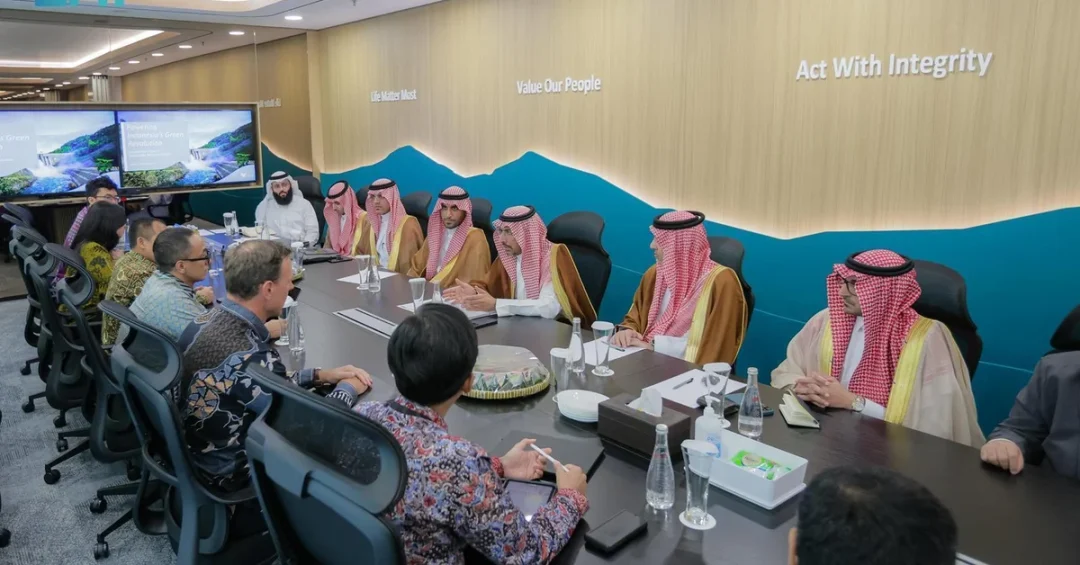
Saudi Arabia’s Minister of Industry and Mineral Resources, Bandar Alkhorayef, held high-level meetings in Jakarta on April 16, 2025, with executives from Indonesia’s leading mining companies, including MIND ID and PT Vale, to strengthen private-sector collaboration and unlock investment opportunities in critical minerals such as nickel, cobalt, and copper. The discussions, reported by the Saudi Press Agency (SPA), underscore the Kingdom’s commitment to building international partnerships that support its economic diversification goals and position mining as a third pillar of the Saudi economy alongside oil and petrochemicals. Could this meeting mark a turning point for Saudi-Indonesian cooperation in the global minerals race?
The talks focused on sharing best practices in mining, fostering joint ventures, and exchanging expertise in the extraction and processing of strategic minerals essential for the global energy transition. Indonesia, the world’s largest producer of nickel and a major supplier of cobalt and copper, is actively seeking foreign investment to develop downstream industries and strengthen clean energy supply chains. Saudi Arabia, with its vast untapped mineral reserves estimated at $2.5 trillion, sees Indonesia as a natural partner in advancing sustainable mining practices and securing access to critical raw materials. This collaboration aligns directly with Saudi Vision 2030, which aims to localize value chains, unlock mineral wealth, and establish the Kingdom as a global hub for mining innovation.
Context and Background
Why has Saudi Arabia turned its attention to Southeast Asia’s mining sector? The answer lies in the Kingdom’s ambitious economic transformation strategy, which seeks to reduce dependence on oil revenues by developing new industries. Under Vision 2030, Saudi Arabia has identified mining as a key growth sector, with the Ministry of Industry and Mineral Resources leading efforts to attract foreign investment and build domestic capabilities. The visit to Jakarta by Minister Alkhorayef is part of a broader diplomatic and economic outreach to countries rich in natural resources and technological expertise.
Indonesia, for its part, has emerged as a global powerhouse in the mining of nickel, cobalt, and copper—minerals that are indispensable for electric vehicle batteries, renewable energy storage, and advanced electronics. The Indonesian government has implemented policies to encourage downstream processing, aiming to move away from raw material exports and build a domestic value chain. This creates a fertile ground for Saudi-Indonesian partnerships that combine Saudi capital and Indonesia’s resource base and technical know-how. The meetings with MIND ID, a state-owned mining holding company, and PT Vale, a subsidiary of Brazil’s Vale S.A., signal a mutual interest in leveraging each other’s strengths.
The timing of the visit is significant. Global demand for critical minerals is surging, driven by the transition to clean energy and the rapid adoption of electric vehicles. Countries around the world are racing to secure supply chains, and Saudi Arabia is positioning itself as a reliable partner and investor. By engaging with Indonesian mining leaders, the Kingdom is not only seeking to secure access to these minerals but also to learn from Indonesia’s experience in developing a robust mining sector. This knowledge exchange is expected to accelerate Saudi Arabia’s own mining ambitions, including the development of its $2.5 trillion mineral reserves.
Key Details of the Meetings
What exactly was discussed behind closed doors in Jakarta? According to official Saudi sources, Minister Alkhorayef’s talks with MIND ID executives centered on sharing best practices in mining operations, environmental stewardship, and community engagement. The two sides explored potential joint ventures in mineral exploration, extraction, and processing, with a focus on nickel, cobalt, and copper. They also discussed how to align their efforts with sustainable development goals, ensuring that mining activities benefit local communities and minimize environmental impact.
In separate meetings with PT Vale, the conversation shifted to the role of technology and innovation in advancing the mining sector. PT Vale, which operates one of the world’s largest integrated nickel mining and processing operations in Indonesia, shared insights on automation, digitalization, and efficient resource management. The Saudi minister expressed interest in adopting advanced technologies to enhance the competitiveness of the Kingdom’s mining industry. These discussions are expected to pave the way for future collaboration in research and development, as well as in the deployment of cutting-edge mining solutions.
The meetings also touched on the broader economic relationship between Saudi Arabia and Indonesia. Bilateral trade has been growing, and both countries are members of the G20, providing a platform for cooperation on global economic issues. The mining sector is seen as a key area where the two nations can deepen their ties, creating jobs, fostering innovation, and contributing to global supply chain resilience. Minister Alkhorayef emphasized the importance of private-sector collaboration, noting that Saudi companies are eager to invest in Indonesia’s mining industry and that Indonesian firms are welcome to participate in Saudi Arabia’s mining transformation.
International and Regional Impact
How will this partnership resonate beyond the two countries? The Saudi-Indonesian mining collaboration has the potential to reshape global supply chains for critical minerals. As the world transitions to renewable energy, demand for nickel, cobalt, and copper is expected to skyrocket. By joining forces, Saudi Arabia and Indonesia can ensure a stable and sustainable supply of these minerals, reducing reliance on any single source and supporting the global energy transition. This is particularly important as geopolitical tensions and trade disputes threaten to disrupt supply chains.
Regionally, the partnership strengthens Saudi Arabia’s ties with Southeast Asia, a region of growing economic importance. Indonesia is the largest economy in ASEAN and a key player in the Indo-Pacific. By deepening engagement with Jakarta, Riyadh is signaling its intent to be a proactive player in Asian affairs, not just a spectator. This aligns with Saudi Arabia’s broader foreign policy objectives of building bridges with emerging powers and diversifying its alliances. For Indonesia, partnering with Saudi Arabia offers access to capital, technology, and markets, helping it achieve its own goal of becoming a high-income country by 2045.
The collaboration also has implications for the global mining industry. Saudi Arabia’s entry as a major investor and partner could lead to increased competition and innovation, driving efficiency and sustainability. The Kingdom’s focus on responsible mining practices, as outlined in its mining strategy, could set a benchmark for others. Moreover, the exchange of expertise between Saudi and Indonesian professionals will help build human capital, which is essential for the long-term success of the mining sector in both countries.
Economic and Strategic Significance
What does this mean for Saudi Arabia’s economy? The mining sector is poised to become a significant contributor to the Kingdom’s GDP, with the government targeting $100 billion in mining investment by 2030. The partnership with Indonesia is a step toward achieving that goal, providing Saudi companies with opportunities to invest in profitable mining projects and secure access to critical minerals. It also supports the development of downstream industries within Saudi Arabia, such as battery manufacturing and electric vehicle production, which are key components of Vision 2030’s industrial strategy.
Strategically, the alliance helps Saudi Arabia diversify its economic partnerships and reduce its reliance on traditional markets. Indonesia is a member of the G20 and a rising economic power, and closer ties can open doors to other ASEAN markets. For Indonesia, Saudi investment can accelerate the development of its mining downstream sector, create jobs, and boost export revenues. The synergy between Saudi capital and Indonesian resources is a classic win-win scenario, with both countries leveraging their comparative advantages to achieve shared prosperity.
Furthermore, the partnership aligns with Saudi Arabia’s efforts to position itself as a leader in the global energy transition. By securing supplies of critical minerals, the Kingdom can support the production of clean energy technologies and electric vehicles, both domestically and internationally. This enhances Saudi Arabia’s reputation as a responsible global citizen and a reliable partner in addressing climate change. It also complements the Kingdom’s existing strengths in oil and gas, creating a diversified energy portfolio that is resilient to market shifts.
Vision 2030 Alignment
How does this collaboration fit into Saudi Vision 2030? Mining is one of the key sectors identified in Vision 2030 to drive economic diversification and job creation. The strategy aims to increase mining’s contribution to GDP from $17 billion to $64 billion by 2030, creating over 200,000 jobs. The partnership with Indonesia directly supports these goals by attracting foreign investment, transferring knowledge, and developing local talent. It also reinforces the Kingdom’s commitment to sustainable development and responsible resource management.
Vision 2030 envisions Saudi Arabia as a global hub for mining innovation, and international partnerships are essential to realizing that vision. By collaborating with Indonesian mining leaders, Saudi Arabia can learn from their experience, adopt best practices, and integrate advanced technologies. This will enhance the competitiveness of the Saudi mining sector and attract further investment. Ultimately, the success of this partnership will be measured by its contribution to the Kingdom’s economic transformation and its ability to create a lasting legacy of prosperity for future generations.
In conclusion, the meetings between Minister Alkhorayef and Indonesian mining executives represent a significant milestone in Saudi Arabia’s journey to become a mining powerhouse. They demonstrate the Kingdom’s proactive approach to securing critical minerals, fostering international cooperation, and advancing Vision 2030. As Saudi Arabia continues to build bridges with global partners, its mining sector is set to play a pivotal role in shaping a sustainable and prosperous future. Could this be the beginning of a new era of Saudi-Indonesian collaboration that benefits not only both nations but the entire world?
20 Questions
Q1. Who is the Saudi Minister of Industry and Mineral Resources?
A1. Bandar Alkhorayef is the Saudi Minister of Industry and Mineral Resources. He led the recent meetings in Jakarta to strengthen ties with Indonesia’s mining sector.
Q2. Which Indonesian companies did the Saudi minister meet with?
A2. Minister Alkhorayef met with executives from MIND ID, a state-owned mining holding company, and PT Vale, a major nickel producer in Indonesia.
Q3. What are the key minerals discussed during the meetings?
A3. The discussions focused on critical minerals such as nickel, cobalt, and copper, which are essential for the global energy transition and electric vehicle batteries.
Q4. Why is Indonesia important in the global mining industry?
A4. Indonesia is the world’s largest producer of nickel and a significant supplier of cobalt and copper, making it a key player in global mineral supply chains.
Q5. How does this partnership align with Saudi Vision 2030?
A5. It supports Vision 2030 by helping localize value chains, unlock mineral wealth, and position Saudi Arabia as a global hub for mining innovation.
Q6. What is the estimated value of Saudi Arabia’s mineral reserves?
A6. Saudi Arabia’s mineral reserves are estimated at $2.5 trillion, representing a vast untapped resource that the Kingdom aims to develop.
Q7. What was the main goal of the minister’s visit to Jakarta?
A7. The visit aimed to strengthen private-sector collaboration, foster investment opportunities, and exchange expertise in critical minerals between Saudi Arabia and Indonesia.
Q8. How does the partnership benefit Indonesia?
A8. It provides access to Saudi capital, technology, and markets, helping Indonesia develop its downstream mining industries and create jobs.
Q9. What role does technology play in the mining collaboration?
A9. Technology and innovation were key topics, with discussions on automation, digitalization, and efficient resource management to enhance mining operations.
Q10. What are the global implications of this partnership?
A10. It could help stabilize global supply chains for critical minerals, support the energy transition, and reduce reliance on any single source.
Q11. How does this partnership affect Saudi Arabia’s economy?
A11. It supports economic diversification by developing the mining sector, attracting investment, and creating jobs, reducing dependence on oil revenues.
Q12. What is MIND ID’s role in Indonesia’s mining sector?
A12. MIND ID is a state-owned holding company that manages Indonesia’s mining assets and is a key player in the country’s mineral industry.
Q13. What is PT Vale’s expertise in mining?
A13. PT Vale is a subsidiary of Brazil’s Vale S.A. and operates one of the world’s largest integrated nickel mining and processing operations in Indonesia.
Q14. How does the partnership support sustainable development?
A14. The discussions included sharing best practices in environmental stewardship and community engagement to ensure mining benefits local communities.
Q15. What are the targets for Saudi Arabia’s mining sector by 2030?
A15. Saudi Arabia aims to increase mining’s contribution to GDP from $17 billion to $64 billion by 2030 and create over 200,000 jobs.
Q16. How does this collaboration fit into Saudi Arabia’s foreign policy?
A16. It reflects Saudi Arabia’s efforts to build bridges with emerging powers, diversify alliances, and strengthen ties with Southeast Asia.
Q17. What is the significance of the timing of this visit?
A17. It comes as global demand for critical minerals surges, and Saudi Arabia seeks to secure supply chains and position itself as a reliable partner.
Q18. How will the exchange of expertise benefit Saudi Arabia?
A18. It allows Saudi Arabia to learn from Indonesia’s experience in developing a robust mining sector and adopt advanced technologies and best practices.
Q19. What is the expected outcome of the meetings?
A19. The meetings are expected to pave the way for joint ventures, investment opportunities, and enhanced bilateral trade in the mining sector.
Q20. How does this partnership reflect Saudi Arabia’s global role?
A20. It showcases Saudi Arabia’s proactive approach to international cooperation, economic diversification, and leadership in the global energy transition.
Reader Feedback
We value your thoughts. Please share your feedback on this article.
Your feedback helps us improve our coverage.
Related articles
 Saudi NCP Showcases PPP Investment Landscape at P3C 2025
 Weqaa Joins 4th Middle East Poultry Expo in Riyadh
 Saudi Arabia’s Arab League Trade Exceeds SAR87 Billion in Q4 2024
 Saudi Exports Development Authority Concludes Trade Mission to Nigeria
 SASO Asian Tour Bolsters Trade, Product Safety in Indonesia
 Taif Roses: 960 Million Blooms Annually