


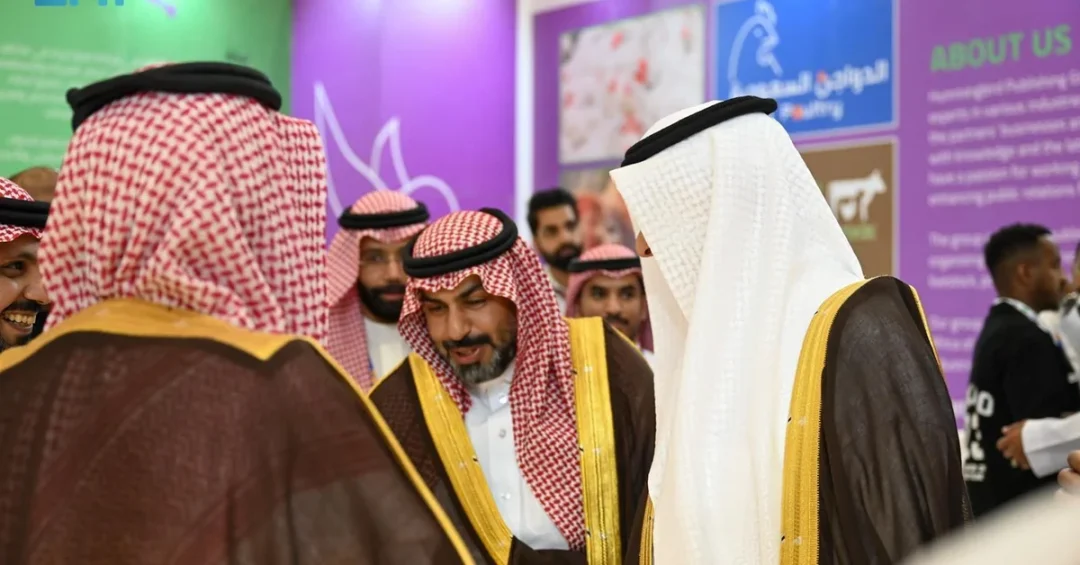
The National Center for the Prevention and Control of Plant Pests and Animal Diseases (Weqaa) participated in the fourth edition of the Middle East Poultry Expo, held in Riyadh from April 14 to 16, 2025, as announced by the Saudi Press Agency. The center set up an expanded booth at the exhibition to showcase its role in the prevention and control of plant pests and animal diseases, highlight its services for beneficiaries, and shed light on its efforts to prevent and combat poultry diseases. The event, which attracted industry leaders, experts, and stakeholders from across the region, underscored Saudi Arabia’s commitment to advancing agricultural sustainability and food security in line with Vision 2030.
Weqaa’s participation reflects its strategic mission to unify efforts among public and private entities to ensure the sustainability of the agricultural sector and to strengthen food security in the Kingdom. As the national authority responsible for plant and animal health, Weqaa plays a critical role in safeguarding the Kingdom’s agricultural resources, protecting public health, and facilitating trade. The Middle East Poultry Expo, a premier event in the region’s poultry industry, provided an ideal platform for Weqaa to engage with stakeholders, share expertise, and demonstrate its contributions to a resilient and sustainable food system. Could this collaboration signal a new era of innovation and self-sufficiency in Saudi agriculture?
Context and Background
What does it take to build a sustainable agricultural sector in one of the world’s most challenging climates? Saudi Arabia has long recognized that food security is a cornerstone of national stability and economic diversification. The Kingdom imports a significant portion of its food, but under Vision 2030, it aims to boost domestic production through smart farming, biosecurity, and sustainable practices. The National Center for the Prevention and Control of Plant Pests and Animal Diseases (Weqaa) was established in 2019 to protect the Kingdom’s plant and animal wealth, enhance agricultural productivity, and prevent the spread of pests and diseases that threaten food security.
Weqaa operates under the Ministry of Environment, Water and Agriculture and is tasked with implementing national strategies for pest and disease control, conducting surveillance, and providing extension services to farmers and breeders. Its work aligns with the National Agriculture Strategy 2030, which seeks to achieve food security, improve the efficiency of agricultural production, and increase the sector’s contribution to the national economy. The Middle East Poultry Expo, now in its fourth edition, has become a key gathering for the poultry industry, which is a vital component of Saudi Arabia’s food security agenda. The expo brings together producers, suppliers, regulators, and researchers to discuss trends, challenges, and opportunities in poultry production, processing, and trade.
Over the past decade, Saudi Arabia’s poultry sector has grown rapidly, driven by rising demand for protein, government support, and private sector investment. The Kingdom aims to produce 100% of its poultry needs domestically by 2030, up from around 60% today. This ambitious target requires robust biosecurity measures, advanced disease prevention, and strong collaboration between government entities and industry players. Weqaa’s participation in the expo is therefore not just a showcase but a strategic move to reinforce its pivotal role in achieving these national goals. How can a single agency influence an entire industry’s trajectory? By setting standards, sharing knowledge, and building partnerships that empower every link in the value chain.
Key Details
At the fourth Middle East Poultry Expo, Weqaa set up an expanded booth designed to engage visitors and exhibitors alike. The booth featured interactive displays, informational materials, and expert staff who explained the center’s services, including disease surveillance, rapid response to outbreaks, veterinary quarantine, and phytosanitary certification. Weqaa highlighted its efforts to prevent and combat poultry diseases such as avian influenza, Newcastle disease, and salmonella, which pose significant threats to both animal health and public health. The center also showcased its role in regulating the import and export of live poultry, eggs, and poultry products, ensuring they meet stringent health and safety standards.
Visitors to the booth learned about Weqaa’s integrated electronic platform, which allows farmers and breeders to report suspected disease cases, request veterinary services, and access guidelines on biosecurity. The platform is part of the center’s digital transformation strategy, which aims to enhance the speed and accuracy of disease detection and response. Weqaa also used the expo to announce new initiatives, including expanded training programs for veterinarians and poultry farmers, and partnerships with international organizations to share best practices in disease prevention. These efforts are critical as the Kingdom ramps up poultry production to meet domestic demand and reduce reliance on imports.
The expo itself featured a wide range of exhibitors, from feed manufacturers and hatcheries to equipment suppliers and pharmaceutical companies. Weqaa’s presence allowed it to engage directly with these stakeholders, understand their challenges, and offer solutions. For example, the center provided guidance on biosecurity protocols for large-scale farms, discussed the importance of vaccination programs, and explored ways to streamline regulatory processes without compromising safety. By fostering dialogue, Weqaa aims to create a unified front against animal diseases, ensuring that the entire poultry sector operates under high health standards. Isn’t it remarkable how a single exhibition can catalyze such comprehensive collaboration?
International and Regional Impact
How does Saudi Arabia’s leadership in poultry health resonate beyond its borders? The Middle East Poultry Expo attracts participants from across the Gulf Cooperation Council (GCC) and the wider Middle East, making it a regional hub for knowledge exchange. Weqaa’s participation underscores the Kingdom’s role as a leader in agricultural biosecurity and food safety. By sharing its expertise and regulatory frameworks, Weqaa helps neighboring countries enhance their own disease prevention capabilities, contributing to regional food security and trade stability. This is particularly important given the transboundary nature of many poultry diseases, which can spread quickly across borders and disrupt supply chains.
Moreover, Weqaa’s engagement with international organizations and foreign exhibitors at the expo strengthens Saudi Arabia’s ties with global agricultural institutions. The center’s efforts align with international standards set by the World Organisation for Animal Health (WOAH) and the Food and Agriculture Organization (FAO), facilitating safe trade and positioning Saudi poultry products as trusted and high-quality. As the Kingdom seeks to expand its agricultural exports, such international recognition is invaluable. The expo also provided a platform for Weqaa to learn from other countries’ experiences, bringing back insights that can further improve Saudi Arabia’s biosecurity systems. In a world where food safety knows no borders, Saudi Arabia is stepping up as a responsible global partner.
Economic and Strategic Significance
Why does poultry health matter for Saudi Arabia’s economy? The poultry sector is a major contributor to the Kingdom’s agricultural GDP and employs thousands of people across production, processing, and distribution. By preventing disease outbreaks, Weqaa helps protect this economic engine, ensuring that farms remain productive and that consumer prices stay stable. A single outbreak of avian influenza, for instance, can devastate flocks, lead to culling, and disrupt supply, causing significant financial losses and potentially driving up food prices. Weqaa’s proactive surveillance and rapid response mechanisms are therefore essential economic safeguards.
Furthermore, a robust poultry industry reduces Saudi Arabia’s reliance on imported poultry products, which enhances national security and saves foreign currency. The Kingdom currently imports billions of riyals worth of poultry annually, but with improved domestic production, these funds can be redirected to other sectors. Weqaa’s work supports this shift by creating the conditions for healthy, high-yield flocks. The center also facilitates export opportunities by certifying Saudi poultry products for international markets, opening new revenue streams for the agricultural sector. Strategically, a self-sufficient poultry sector is a pillar of food security, ensuring that the Kingdom can withstand global supply chain disruptions. In an uncertain world, such resilience is priceless.
Vision 2030 Alignment
How does Weqaa’s participation in the Middle East Poultry Expo advance Saudi Vision 2030? Vision 2030 aims to diversify the economy, reduce dependence on oil, and enhance the quality of life for all citizens. A thriving agricultural sector, underpinned by strong biosecurity and food safety, is integral to these goals. Weqaa’s mission directly supports the Vision’s objective of ensuring food security by protecting plant and animal health, which in turn boosts domestic production and reduces imports. The center’s emphasis on innovation, digital transformation, and public-private partnerships mirrors the Vision’s call for a modern, efficient, and sustainable economy.
By uniting efforts among government entities, the private sector, and international partners, Weqaa exemplifies the collaborative spirit that Vision 2030 champions. Its work at the expo—showcasing services, sharing knowledge, and forging partnerships—is a microcosm of the Kingdom’s broader journey toward a prosperous future. As Saudi Arabia continues to invest in agriculture, technology, and human capital, entities like Weqaa will be at the forefront, turning ambitious goals into tangible realities. The fourth Middle East Poultry Expo was not just an event; it was a testament to Saudi Arabia’s determination to lead by example in food security and agricultural excellence. With every such initiative, the Kingdom moves closer to a future where it not only feeds its people but also contributes to global food stability.
20 Questions
Q1. What is Weqaa and what is its main mission?
A1. Weqaa is the National Center for the Prevention and Control of Plant Pests and Animal Diseases. Its mission is to protect Saudi Arabia’s plant and animal wealth by preventing and controlling pests and diseases, thereby ensuring agricultural sustainability and food security.
Q2. When and where was the fourth Middle East Poultry Expo held?
A2. The fourth Middle East Poultry Expo was held in Riyadh, Saudi Arabia, from April 14 to 16, 2025. It brought together industry leaders, experts, and stakeholders from across the region.
Q3. What did Weqaa showcase at its booth during the expo?
A3. Weqaa showcased its role in preventing and controlling plant pests and animal diseases, highlighted its services for beneficiaries, and shed light on its efforts to prevent and combat poultry diseases through interactive displays and expert staff.
Q4. Why is poultry disease prevention important for Saudi Arabia?
A4. Poultry disease prevention is crucial for protecting the Kingdom’s poultry industry, ensuring food security, safeguarding public health, and supporting economic stability by preventing outbreaks that could devastate flocks and disrupt supply chains.
Q5. How does Weqaa support Saudi Arabia’s food security goals?
A5. Weqaa supports food security by implementing surveillance, rapid response, and biosecurity measures that keep poultry and crops healthy, thereby boosting domestic production and reducing reliance on imports.
Q6. What is the significance of the Middle East Poultry Expo for the region?
A6. The expo serves as a premier platform for knowledge exchange, networking, and showcasing innovations in the poultry sector. It attracts participants from across the Middle East, fostering regional collaboration and trade.
Q7. How does Weqaa collaborate with the private sector?
A7. Weqaa collaborates with private entities by providing guidance on biosecurity, offering training programs, facilitating regulatory compliance, and partnering on disease surveillance and response initiatives to ensure industry-wide health standards.
Q8. What are some common poultry diseases that Weqaa works to prevent?
A8. Weqaa works to prevent diseases such as avian influenza, Newcastle disease, and salmonella. These diseases can cause significant economic losses and pose risks to human health if not controlled.
Q9. How does Weqaa use technology in its operations?
A9. Weqaa uses an integrated electronic platform for disease reporting, service requests, and access to guidelines. This digital transformation enhances the speed and accuracy of disease detection and response.
Q10. What role does Weqaa play in regulating poultry imports and exports?
A10. Weqaa regulates imports and exports by enforcing veterinary quarantine and phytosanitary certification, ensuring that live poultry, eggs, and poultry products meet stringent health and safety standards before entering or leaving the Kingdom.
Q11. How does Weqaa’s work align with Saudi Vision 2030?
A11. Weqaa’s work aligns with Vision 2030 by enhancing food security, supporting economic diversification, promoting innovation, and fostering public-private partnerships that contribute to a sustainable and prosperous agricultural sector.
Q12. What impact does Weqaa’s participation have on international trade?
A12. Weqaa’s participation helps build trust in Saudi poultry products by demonstrating adherence to international health standards, thereby facilitating exports and opening new markets for Saudi agricultural goods.
Q13. How does Weqaa engage with international organizations?
A13. Weqaa engages with organizations like the World Organisation for Animal Health (WOAH) and the Food and Agriculture Organization (FAO) to align with global standards, share best practices, and enhance regional and international cooperation.
Q14. What are the economic benefits of a strong domestic poultry sector?
A14. A strong domestic poultry sector reduces import costs, creates jobs, stabilizes food prices, and enhances national security by ensuring a reliable supply of protein for the population.
Q15. How does Weqaa respond to disease outbreaks?
A15. Weqaa has rapid response mechanisms in place, including surveillance teams, emergency protocols, and coordination with stakeholders to contain and eliminate outbreaks swiftly, minimizing damage to flocks and the economy.
Q16. What training programs does Weqaa offer?
A16. Weqaa offers training programs for veterinarians, poultry farmers, and industry workers on biosecurity, disease recognition, and best management practices to enhance skills and awareness across the sector.
Q17. How can farmers benefit from Weqaa’s services?
A17. Farmers can benefit from Weqaa’s services by accessing disease surveillance, veterinary support, biosecurity guidelines, and training, which help them maintain healthy flocks and improve productivity.
Q18. What is the National Agriculture Strategy 2030?
A18. The National Agriculture Strategy 2030 is a comprehensive plan to achieve food security, improve agricultural efficiency, and increase the sector’s contribution to the economy through sustainable practices and innovation.
Q19. How does Weqaa ensure the sustainability of the agricultural sector?
A19. Weqaa ensures sustainability by preventing pests and diseases that threaten crops and livestock, promoting responsible practices, and supporting research and innovation that enhance long-term productivity.
Q20. What can we expect from Weqaa in the future?
A20. Weqaa will continue to expand its digital platforms, strengthen partnerships, and enhance surveillance and response capabilities, all aimed at safeguarding Saudi Arabia’s agricultural resources and advancing Vision 2030 goals.
Reader Feedback
We value your thoughts. Please share your feedback on this article.
Your feedback helps us improve our coverage.
Related articles
 Saudi Arabia’s Arab League Trade Exceeds SAR87 Billion in Q4 2024
 Saudi Exports Development Authority Concludes Trade Mission to Nigeria
 SASO Asian Tour Bolsters Trade, Product Safety in Indonesia
 Taif Roses: 960 Million Blooms Annually
 Saudi Date Exports Surpass SAR1.695 Billion amid Global Expansion
 Saudi Arabia, Indonesia Boost Cooperation in Mining Sector