


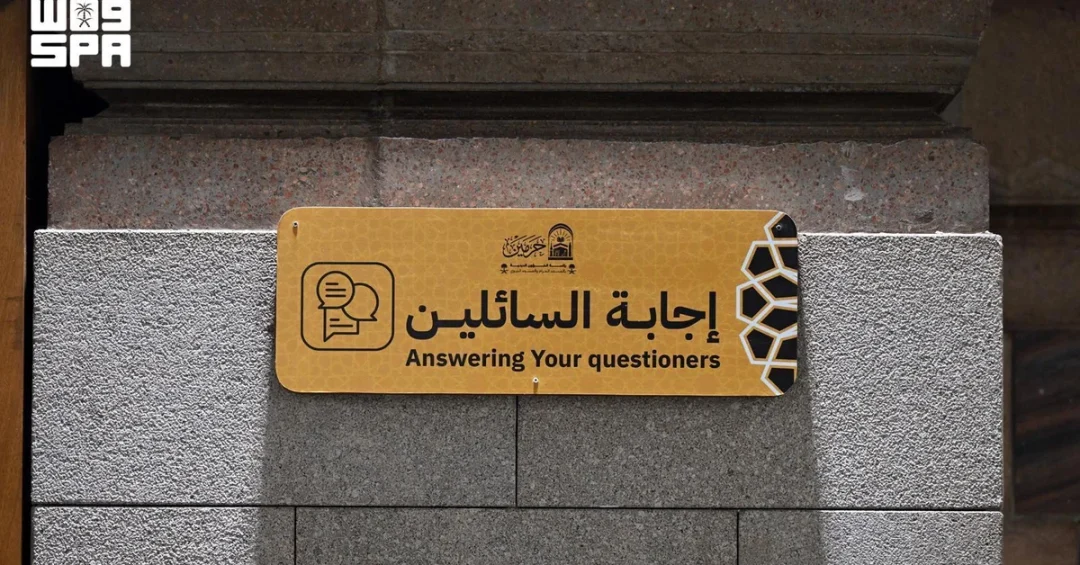
The General Authority for the Care of the Affairs of the Grand Mosque and the Prophet’s Mosque has implemented an integrated navigational signage network across the Prophet’s Mosque in Madinah, featuring more than 370 directional panels and digital screens designed to streamline crowd movement for the millions of worshippers and visitors who pass through the sacred site each year. The network, announced via the Saudi Press Agency, comprises over 270 static signs and more than 100 electronic screens that deliver real-time navigational guidance, awareness instructions, and gate entry updates. A standardized color-coding framework has also been introduced to clearly delineate zones and destinations, allowing pilgrims to orient themselves quickly and move with greater ease through one of the most visited religious sites in the world.
How does a site that welcomes millions of worshippers from every corner of the globe manage to keep them moving safely and comfortably? The answer, according to Saudi officials, lies in a carefully engineered system that combines traditional wayfinding with modern digital technology. The new signage network represents a significant upgrade to the visitor experience at the Prophet’s Mosque, reflecting the Kingdom’s broader commitment to serving the Guests of God with efficiency and dignity. As the number of pilgrims continues to rise year after year, such infrastructure improvements have become essential to maintaining the mosque’s spiritual atmosphere while ensuring the safety and convenience of all who enter.
Context and Background
The Prophet’s Mosque, known in Arabic as Al-Masjid an-Nabawi, is the second holiest site in Islam and has long been a focal point of religious devotion, drawing millions of pilgrims annually for Hajj and Umrah, as well as year-round visitation. In recent years, the Kingdom of Saudi Arabia has undertaken a series of expansive projects to expand the mosque’s capacity and enhance the services provided to worshippers. These efforts are part of a larger national strategy to improve the pilgrimage experience, which is a central pillar of Saudi Arabia’s Vision 2030 reform agenda. The General Authority for the Care of the Affairs of the Grand Mosque and the Prophet’s Mosque, established to oversee the management and development of these two holy sites, has been at the forefront of these initiatives.
Why is wayfinding so critical in a place of worship? At the Prophet’s Mosque, the sheer volume of visitors—particularly during peak seasons such as Ramadan and the Hajj pilgrimage—can create congestion that poses logistical challenges. Worshippers come from diverse linguistic and cultural backgrounds, and many are first-time visitors unfamiliar with the mosque’s layout. Without clear guidance, they may struggle to find their way to designated prayer areas, exits, or facilities. The new signage system addresses this by providing visual cues that transcend language barriers, using universally understood symbols, colors, and digital displays. This approach not only improves the flow of foot traffic but also enhances the overall spiritual experience by reducing confusion and stress.
Moreover, the introduction of digital screens that display real-time updates on gate capacities and access routes marks a technological leap forward. These screens allow worshippers to make informed decisions about which entrances to use, thereby distributing crowds more evenly and preventing bottlenecks. The system is designed to be dynamic, responding to changing conditions throughout the day and during special events. This level of sophistication demonstrates Saudi Arabia’s commitment to leveraging technology for the betterment of religious observance, aligning with the Kingdom’s reputation as a leader in smart infrastructure and public service innovation.
Key Details of the Navigational Network
The network’s core consists of more than 270 static directional signs strategically placed throughout the mosque’s expansive grounds. These signs are complemented by over 100 electronic screens that provide dynamic, real-time information. The electronic screens are particularly innovative: they display current gate capacities, indicating which entrances are less congested, and suggest optimal routes for entry and exit. This real-time data enables worshippers to navigate the mosque efficiently, reducing wait times and improving safety. The screens also relay awareness instructions, such as reminders about prayer times, etiquette, and emergency procedures, ensuring that visitors are well-informed throughout their visit.
A key feature of the system is its standardized color-coding framework. Each zone within the mosque and its surrounding areas is assigned a specific color, which is consistently used across all signs and screens. This color-coded approach simplifies navigation: for example, a worshipper looking for a particular gate can follow the color associated with that gate, even if they do not speak Arabic or English. The system is designed to be intuitive, minimizing the need for verbal instructions and allowing for a seamless flow of movement. The colors are also used to distinguish between different functional areas, such as prayer halls, ablution facilities, and exit routes, further enhancing clarity.
How does the system handle the diversity of visitors? The signage incorporates universally recognized icons and symbols alongside text in multiple languages, ensuring that people from all backgrounds can understand the guidance. The electronic screens can also display messages in several languages, rotating content to cater to the international audience. This inclusivity is a hallmark of Saudi Arabia’s approach to hosting pilgrims, reflecting the Kingdom’s role as the custodian of the Two Holy Mosques and its dedication to providing a welcoming environment for all Muslims. The system’s design was informed by extensive studies of crowd dynamics and visitor behavior, ensuring that it meets the practical needs of those it serves.
International and Regional Impact
The implementation of this advanced navigational network at the Prophet’s Mosque has implications that extend beyond the immediate improvement of crowd flow. For the international Muslim community, it signals Saudi Arabia’s unwavering commitment to facilitating the pilgrimage experience. Pilgrims from countries across Asia, Africa, Europe, and the Americas will benefit from a more organized and efficient visit, which in turn enhances the spiritual fulfillment of their journey. The positive experiences of these visitors are likely to be shared widely, reinforcing Saudi Arabia’s standing as a gracious and capable host. This soft power effect is invaluable, as it strengthens cultural and religious ties between the Kingdom and the global Muslim ummah.
Regionally, the project serves as a model for other major religious and cultural sites in the Middle East and beyond. The use of real-time data and color-coded wayfinding is a best practice that can be adapted to other crowded venues, such as the Grand Mosque in Makkah, which also receives millions of pilgrims. The success of this initiative could inspire similar upgrades at other holy sites, promoting a culture of innovation in crowd management across the region. Furthermore, it demonstrates how technology can be harnessed to preserve and enhance religious traditions, a balance that many societies strive to achieve. Saudi Arabia’s leadership in this area is a testament to its forward-thinking approach to heritage management.
What does this mean for the future of pilgrimage? As the number of pilgrims continues to grow, expected to reach unprecedented levels in the coming years, the need for smart infrastructure will only intensify. The Prophet’s Mosque signage network is a precursor to even more advanced systems that could integrate artificial intelligence, mobile applications, and predictive analytics to further optimize crowd flow. Saudi Arabia is already exploring such technologies as part of its Vision 2030 goals, which emphasize digital transformation and smart city development. The lessons learned from this project will inform future expansions and upgrades, ensuring that the Kingdom remains at the forefront of pilgrimage management.
Economic and Strategic Significance
While the primary purpose of the signage network is to enhance the spiritual experience of worshippers, it also carries significant economic and strategic weight. The pilgrimage sector is a major contributor to Saudi Arabia’s economy, generating revenue through travel, accommodation, and related services. By improving the efficiency of crowd movement, the new system helps to increase the capacity of the Prophet’s Mosque to accommodate more visitors comfortably, thereby supporting the growth of the pilgrimage economy. This aligns with Vision 2030’s objective to diversify revenue streams and increase the number of Umrah and Hajj pilgrims to 30 million annually by 2030. A smoother experience encourages repeat visits and positive word-of-mouth, which are essential for achieving these targets.
Strategically, the project reinforces Saudi Arabia’s position as the global leader in pilgrimage services. The Kingdom has invested heavily in expanding the infrastructure of the Two Holy Mosques, including the ongoing expansion of the Grand Mosque in Makkah and the development of new transportation links such as the Haramain High-Speed Railway. These investments are part of a holistic approach to managing the pilgrimage journey from arrival to departure. The signage network is a crucial component of this ecosystem, ensuring that once pilgrims arrive at the Prophet’s Mosque, they can move efficiently and focus on their worship. This integrated approach enhances Saudi Arabia’s reputation for excellence in service delivery and operational management.
How does this project contribute to the Kingdom’s global image? By showcasing its ability to implement complex, technology-driven solutions in a culturally sensitive manner, Saudi Arabia demonstrates its capacity for innovation and its respect for religious traditions. This combination is powerful in shaping international perceptions. The project also underscores the Kingdom’s commitment to the safety and well-being of all visitors, a message that resonates with governments and communities worldwide. As Saudi Arabia continues to open up to the world through Vision 2030 initiatives, such projects serve as tangible examples of the progress being made and the benefits it brings to people of all nations.
Vision 2030 Alignment
The navigational signage network at the Prophet’s Mosque is a direct reflection of Vision 2030’s core themes: enhancing the quality of life for citizens and visitors, fostering economic diversification, and leveraging technology for public good. Vision 2030 aims to transform Saudi Arabia into a global hub for tourism and religious pilgrimage, and the seamless management of crowds is fundamental to that ambition. By investing in smart infrastructure at the Two Holy Mosques, the Kingdom is not only improving the pilgrimage experience but also creating a model for sustainable urban management that can be applied to other sectors. This project exemplifies how Vision 2030 is being translated into tangible improvements on the ground, benefiting millions of people each year.
Furthermore, the emphasis on real-time data and digital displays aligns with the Vision’s goal of building a digital economy and smart nation. The skills and technologies developed through such projects contribute to the growth of Saudi Arabia’s technology sector and create opportunities for local talent. The General Authority for the Care of the Affairs of the Grand Mosque and the Prophet’s Mosque is thus playing a vital role in advancing the Kingdom’s modernization agenda while preserving the sanctity of the holy sites. As Saudi Arabia continues to welcome the world, initiatives like this will ensure that the pilgrimage remains a spiritually enriching and logistically smooth experience for all. The Kingdom’s leadership in this domain is a source of pride and a testament to its unwavering dedication to serving Islam and Muslims globally.
20 Questions
Q1. What is the purpose of the new navigational signage at the Prophet’s Mosque?
A1. The signage network is designed to facilitate smooth navigation and crowd movement for worshippers and visitors. It provides clear directional guidance, awareness instructions, and real-time gate entry updates, enhancing the overall visitor experience at the sacred site.
Q2. How many signs and screens are part of this network?
A2. The network comprises over 270 static directional signs and more than 100 electronic screens, totaling over 370 units. These are strategically placed throughout the mosque to ensure comprehensive coverage and easy visibility for all visitors.
Q3. Who implemented this navigational system?
A3. The system was implemented by the General Authority for the Care of the Affairs of the Grand Mosque and the Prophet’s Mosque. This government body is responsible for managing and developing the two holy sites in Makkah and Madinah.
Q4. What kind of information do the electronic screens display?
A4. The electronic screens display real-time updates on gate capacities and access routes. They also show awareness instructions and gate entry updates, helping worshippers choose the least congested paths and navigate efficiently.
Q5. What is the color-coding framework mentioned?
A5. The color-coding framework assigns specific colors to different zones and destinations within the mosque. This standardized system helps visitors quickly identify their location and the direction they need to go, regardless of language barriers.
Q6. How does the system help with crowd management?
A6. By providing real-time information on gate capacities, the system allows worshippers to distribute themselves more evenly across entrances. This reduces bottlenecks and streamlines pedestrian flow, especially during peak times.
Q7. Is the signage available in multiple languages?
A7. Yes, the signage incorporates universally recognized icons and symbols alongside text in multiple languages. The electronic screens can also rotate messages in several languages to cater to the diverse international audience.
Q8. When was this system announced?
A8. The system was announced by the Saudi Press Agency on October 31, 2026. It represents a recent upgrade to the infrastructure of the Prophet’s Mosque.
Q9. What is the significance of the Prophet’s Mosque?
A9. The Prophet’s Mosque is the second holiest site in Islam, located in Madinah. It attracts millions of pilgrims annually for Hajj, Umrah, and year-round visitation, making efficient crowd management essential.
Q10. How does this project align with Vision 2030?
A10. The project aligns with Vision 2030 by enhancing the pilgrimage experience, leveraging technology for public service, and supporting the goal of increasing pilgrim numbers. It reflects the Kingdom’s commitment to modernizing infrastructure while preserving religious heritage.
Q11. What are the benefits for worshippers?
A11. Worshippers benefit from reduced confusion, shorter wait times, and a more spiritually focused visit. The clear guidance allows them to move confidently through the mosque and find their desired destinations quickly.
Q12. How does the system handle emergencies?
A12. The electronic screens can display emergency instructions and alerts, guiding visitors to safe exits. The color-coded system also helps in directing people during evacuations, enhancing overall safety.
Q13. Are there similar systems in other holy sites?
A13. The Grand Mosque in Makkah also employs advanced crowd management systems. The success of the Prophet’s Mosque network could serve as a model for further enhancements at other sites.
Q14. What technology is used in the electronic screens?
A14. The screens utilize digital display technology capable of real-time updates. They are connected to a central system that monitors gate capacities and other relevant data to provide accurate information.
Q15. How does the system accommodate people with disabilities?
A15. The signage includes accessible features such as high-contrast colors and symbols. The electronic screens can also display text in large fonts, and the color-coding helps those with visual impairments navigate more easily.
Q16. What was the process for designing the signage?
A16. The design was informed by studies of crowd dynamics and visitor behavior. The goal was to create an intuitive system that transcends language and cultural barriers, ensuring ease of use for all.
Q17. How does this project reflect Saudi Arabia’s leadership?
A17. It demonstrates Saudi Arabia’s commitment to serving pilgrims with excellence and innovation. The Kingdom’s investment in such infrastructure highlights its role as a global leader in pilgrimage management and its dedication to Vision 2030.
Q18. Will the system be expanded in the future?
A18. As pilgrimage numbers grow, further enhancements are likely. The current system provides a foundation that can be expanded with additional screens, signs, and advanced technologies like AI and mobile integration.
Q19. What impact does this have on the local economy?
A19. By improving the pilgrimage experience, the system supports the growth of the pilgrimage economy, which benefits local businesses in hospitality, retail, and transportation. This aligns with Vision 2030’s economic diversification goals.
Q20. How can visitors provide feedback on the new system?
A20. Visitors can share their experiences through official channels of the General Authority for the Care of the Affairs of the Grand Mosque and the Prophet’s Mosque. Feedback is valued and used to continuously improve services.
Reader Feedback
We value your thoughts. Please share your feedback on this article.
Your feedback helps us improve our coverage.
Related articles
 Saudi Air Defenses Intercept Hostile UAV in Riyadh Region
 Coalition Intercepts Houthi UAV in Southern Region
 Saudi FM Meets Russian FM at G20 in Atlanta
 Saudi FM Meets U.S. Secretary of State; U.S. Joins Expo 2030 Riyadh
 Saudi Arabia Weather Forecast for Saturday: Thunderstorms and Fog
 Saudi Vice Minister Meets EU Gulf Envoy in Manama