


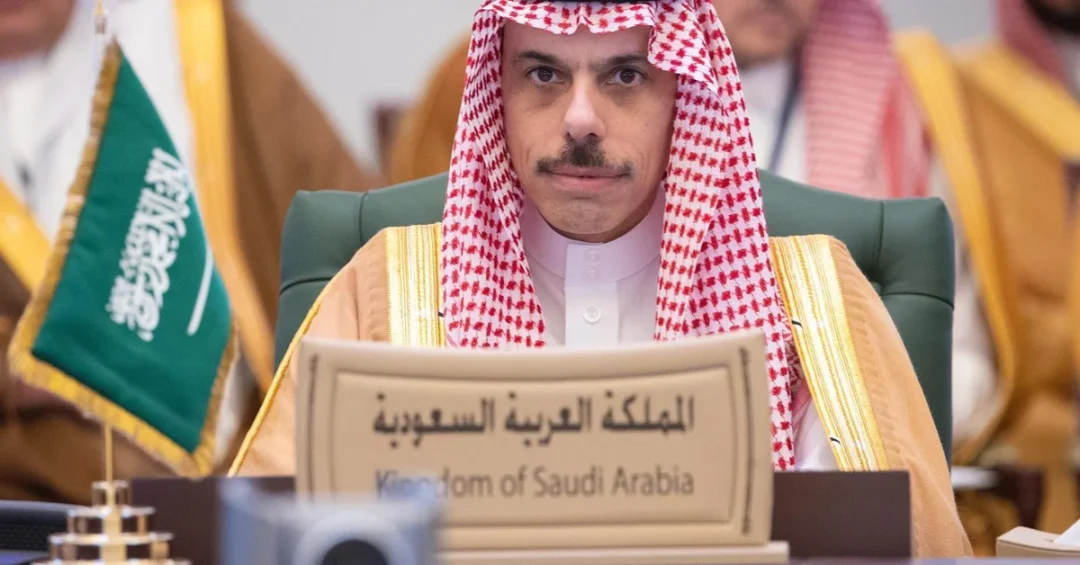
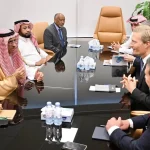
Saudi Minister of Foreign Affairs Prince Faisal bin Farhan bin Abdullah participated in the Third Ministerial Meeting of the Gulf Cooperation Council-Central Asia Strategic Dialogue, hosted by Kuwait on April 16, 2025, reaffirming the Kingdom’s commitment to deepening ties between the Gulf region and Central Asia. The meeting, held in Kuwait City, brought together foreign ministers from the six GCC member states and their counterparts from the five Central Asian nations to advance a joint action plan covering political, economic, cultural, and tourism cooperation. The discussions also reviewed preparations for the upcoming GCC-Central Asia summit in Samarkand, Uzbekistan, scheduled for next month, which follows the inaugural summit hosted by Saudi Arabia in 2023.
This high-level gathering underscores Saudi Arabia’s proactive diplomacy under the leadership of the Custodian of the Two Holy Mosques, King Salman bin Abdulaziz Al Saud, and His Royal Highness Crown Prince Mohammed bin Salman bin Abdulaziz Al Saud, Prime Minister. By participating in this strategic dialogue, the Kingdom continues to build bridges between the Gulf and Central Asia, fostering partnerships that align with Vision 2030’s goals of economic diversification and enhanced international engagement. The meeting in Kuwait represents another step in a sustained effort to create a stable, prosperous, and interconnected region.
Context and Background
Why has the GCC-Central Asia Strategic Dialogue become such a vital platform for regional cooperation? Launched in 2022, the dialogue was established to strengthen ties between the Gulf Cooperation Council and the five Central Asian republics—Kazakhstan, Kyrgyzstan, Tajikistan, Turkmenistan, and Uzbekistan. The inaugural summit, held in Jeddah, Saudi Arabia, in July 2023, set the stage for a new era of partnership, with leaders agreeing to enhance cooperation across multiple sectors. The second ministerial meeting took place in Tashkent, Uzbekistan, in 2024, further solidifying the framework for joint action.
Saudi Arabia has been a driving force behind this initiative, recognizing the strategic importance of Central Asia as a bridge between East and West. The region is rich in natural resources, shares historical and cultural ties with the Gulf, and offers significant opportunities for trade and investment. The Kingdom’s leadership in hosting the first summit demonstrated its commitment to fostering dialogue and collaboration. The third ministerial meeting in Kuwait builds on this momentum, focusing on concrete steps to implement the joint action plan and prepare for the Samarkand summit.
The timing of this meeting is particularly significant. As global geopolitical dynamics shift, the GCC and Central Asia are seeking to strengthen their economic and political resilience. The dialogue provides a platform for addressing shared challenges, from security to sustainable development, while exploring new avenues for cooperation. Saudi Arabia’s active participation reflects its broader foreign policy objectives, which emphasize stability, prosperity, and mutual respect among nations.
Key Details of the Third Ministerial Meeting
What specific outcomes emerged from the Third Ministerial Meeting? According to the Saudi Press Agency, the meeting focused on enhancing the strong relations between the GCC and Central Asian countries and discussed a joint action plan to advance cooperation in the political, economic, cultural, and tourism sectors. The ministers reviewed preparations for the upcoming summit in Samarkand, scheduled for next month, which will bring together heads of state to endorse the joint action plan and set new targets for collaboration.
Prince Faisal bin Farhan bin Abdullah, Saudi Arabia’s Minister of Foreign Affairs, highlighted the importance of collective action in his remarks. The meeting also addressed recent international developments and the ongoing efforts in response, underscoring the need for coordinated positions on global issues. While specific details of these discussions were not disclosed, the fact that they were on the agenda reflects the dialogue’s growing role as a forum for political consultation.
The joint action plan under discussion covers a wide range of areas. In the political sphere, it aims to enhance diplomatic coordination and support for multilateralism. Economically, it seeks to boost trade, investment, and connectivity, including through infrastructure projects and energy cooperation. Culturally, it promotes people-to-people exchanges, educational partnerships, and heritage preservation. In tourism, it aims to facilitate travel, share best practices, and develop joint tourism products. These pillars are designed to create a comprehensive partnership that benefits all participants.
International and Regional Impact
How will this dialogue shape the broader regional landscape? The GCC-Central Asia Strategic Dialogue represents a significant shift in regional geopolitics, creating a new axis of cooperation that spans from the Arabian Peninsula to the heart of Asia. For Saudi Arabia, this aligns with its Vision 2030 goal of diversifying partnerships and reducing dependence on traditional allies. By engaging Central Asia, the Kingdom gains access to new markets, energy resources, and transit routes, while offering its own expertise in finance, technology, and logistics.
The dialogue also has implications for global powers. As China and Russia deepen their presence in Central Asia, the GCC’s engagement offers an alternative model of partnership based on mutual benefit and non-interference. For the United States and Europe, the dialogue complements their own efforts to engage the region, potentially creating opportunities for trilateral cooperation. Saudi Arabia’s leadership in this initiative enhances its standing as a responsible global actor and a bridge-builder between different regions.
For Central Asian countries, the dialogue provides a platform to diversify their foreign relations and attract investment from the Gulf. The region’s landlocked geography makes it dependent on transit routes, and cooperation with the GCC can help unlock new trade corridors, including through Afghanistan and Pakistan. Moreover, the cultural and historical ties between the Gulf and Central Asia—rooted in the Silk Road and Islamic heritage—provide a solid foundation for trust and understanding.
Economic and Strategic Significance
What economic benefits can be expected from this enhanced cooperation? The GCC-Central Asia partnership holds immense economic potential. Central Asia is rich in natural resources, including oil, gas, uranium, and rare earth minerals, which are critical for the global energy transition. The Gulf states, with their capital surpluses and advanced infrastructure, are natural investors. Joint ventures in energy, mining, agriculture, and logistics could generate billions of dollars in trade and investment.
For Saudi Arabia, the economic dimension is closely tied to Vision 2030. The Kingdom aims to increase non-oil exports, attract foreign investment, and position itself as a logistics hub connecting three continents. Central Asia offers a gateway to markets in China, Russia, and South Asia, and Saudi companies can play a key role in developing infrastructure, such as railways, ports, and digital networks. The joint action plan likely includes measures to facilitate trade, protect investments, and promote private sector collaboration.
Strategically, the dialogue enhances Saudi Arabia’s energy security and food security. Central Asia can supply agricultural products and minerals, while the Gulf can provide energy and petrochemicals. Cooperation in renewable energy, such as solar and wind, is also promising, as both regions seek to diversify their energy mixes. By working together, they can create resilient supply chains and reduce vulnerability to external shocks.
Vision 2030 Alignment
How does Saudi Arabia’s participation in this dialogue advance Vision 2030? Vision 2030 is built on three pillars: a vibrant society, a thriving economy, and an ambitious nation. The GCC-Central Asia Strategic Dialogue directly supports all three. By fostering cultural and tourism exchanges, it enriches society and promotes mutual understanding. By expanding trade and investment, it drives economic diversification and job creation. By enhancing diplomatic engagement, it strengthens Saudi Arabia’s role as a regional and global leader.
Under the leadership of Crown Prince Mohammed bin Salman, Saudi Arabia has pursued an active foreign policy that prioritizes partnerships and dialogue. The Kingdom’s hosting of the inaugural GCC-Central Asia summit in 2023 was a milestone, and its continued participation in the ministerial meetings demonstrates its long-term commitment. The upcoming Samarkand summit will be another opportunity to showcase Saudi Arabia’s vision of a connected, prosperous, and peaceful world. As the Kingdom moves toward 2030, such initiatives will be crucial in realizing its ambitions and contributing to global stability.
20 Questions
Q1. What was the Third Ministerial Meeting of the GCC-Central Asia Strategic Dialogue?
A1. It was a meeting hosted by Kuwait on April 16, 2025, bringing together foreign ministers from GCC and Central Asian countries to discuss cooperation and prepare for the upcoming Samarkand summit.
Q2. Who represented Saudi Arabia at the meeting?
A2. Saudi Minister of Foreign Affairs Prince Faisal bin Farhan bin Abdullah represented the Kingdom, reaffirming Saudi Arabia’s commitment to strengthening ties between the Gulf and Central Asia.
Q3. What sectors were discussed for cooperation?
A3. The meeting focused on political, economic, cultural, and tourism sectors, with a joint action plan aimed at enhancing collaboration across these areas.
Q4. When and where is the next GCC-Central Asia summit?
A4. The next summit is scheduled to take place in Samarkand, Uzbekistan, next month, following the inaugural summit held in Saudi Arabia in 2023.
Q5. Why is the GCC-Central Asia Strategic Dialogue important?
A5. It provides a platform for political consultation, economic cooperation, and cultural exchange, helping to build a stable and prosperous region connecting the Gulf and Central Asia.
Q6. How does Saudi Arabia benefit from this dialogue?
A6. Saudi Arabia gains access to new markets, energy resources, and transit routes, while enhancing its role as a bridge-builder and advancing Vision 2030 goals.
Q7. What is the joint action plan?
A7. It is a comprehensive framework to advance cooperation in political, economic, cultural, and tourism sectors, designed to create a long-term partnership between the GCC and Central Asia.
Q8. Which countries are part of the GCC?
A8. The GCC comprises Saudi Arabia, UAE, Qatar, Kuwait, Bahrain, and Oman.
Q9. Which countries are in Central Asia?
A9. Central Asia includes Kazakhstan, Kyrgyzstan, Tajikistan, Turkmenistan, and Uzbekistan.
Q10. What was the outcome of the first summit in Saudi Arabia?
A10. The inaugural summit in 2023 established the framework for the strategic dialogue and set the stage for enhanced cooperation across various sectors.
Q11. How does this dialogue align with Vision 2030?
A11. It supports Vision 2030 by promoting economic diversification, international engagement, and cultural exchange, all of which are key pillars of the Kingdom’s transformation plan.
Q12. What role did Kuwait play in hosting the meeting?
A12. Kuwait hosted the third ministerial meeting, demonstrating its commitment to regional diplomacy and facilitating discussions among GCC and Central Asian foreign ministers.
Q13. What international developments were addressed?
A13. The meeting discussed recent international developments and ongoing efforts in response, reflecting the dialogue’s role as a forum for political coordination on global issues.
Q14. How will the Samarkand summit build on previous meetings?
A14. The Samarkand summit will bring together heads of state to endorse the joint action plan and set new targets, further institutionalizing cooperation between the GCC and Central Asia.
Q15. What economic opportunities exist for Saudi companies?
A15. Saudi companies can invest in energy, mining, agriculture, logistics, and infrastructure projects in Central Asia, leveraging the Kingdom’s capital and expertise.
Q16. How does this dialogue affect regional security?
A16. By fostering political dialogue and economic interdependence, the dialogue contributes to stability and security in both regions, reducing the risk of conflicts.
Q17. What cultural ties exist between the Gulf and Central Asia?
A17. Historical ties date back to the Silk Road, and both regions share Islamic heritage, providing a strong foundation for cultural and people-to-people exchanges.
Q18. What is Saudi Arabia’s role in the dialogue?
A18. Saudi Arabia has been a driving force, hosting the first summit and actively participating in ministerial meetings to shape the agenda and promote cooperation.
Q19. How does this initiative compare to other regional dialogues?
A19. It is unique in bridging the Gulf and Central Asia, complementing other platforms like the Shanghai Cooperation Organization and offering a model based on mutual benefit.
Q20. What can we expect from future GCC-Central Asia meetings?
A20. Future meetings are likely to focus on implementing the joint action plan, expanding cooperation in new areas like technology and renewable energy, and deepening people-to-people ties.
Reader Feedback
We value your thoughts. Please share your feedback on this article.
Your feedback helps us improve our coverage.
Related articles
 JIAT Clears Coalition Forces of Zinjibar Building Strike Allegation
 Saudi, South African Diplomats Meet in Jeddah
 KSrelief Delivers Emergency Medical Aid to UNRWA in Gaza
 KSrelief Launches Saudi Noor Volunteer Program in Aden
 KSrelief, WFP Discuss Cooperation on Food Security
 Elm Showcases Innovative Tech Solutions at Umrah and Ziyarah Forum