


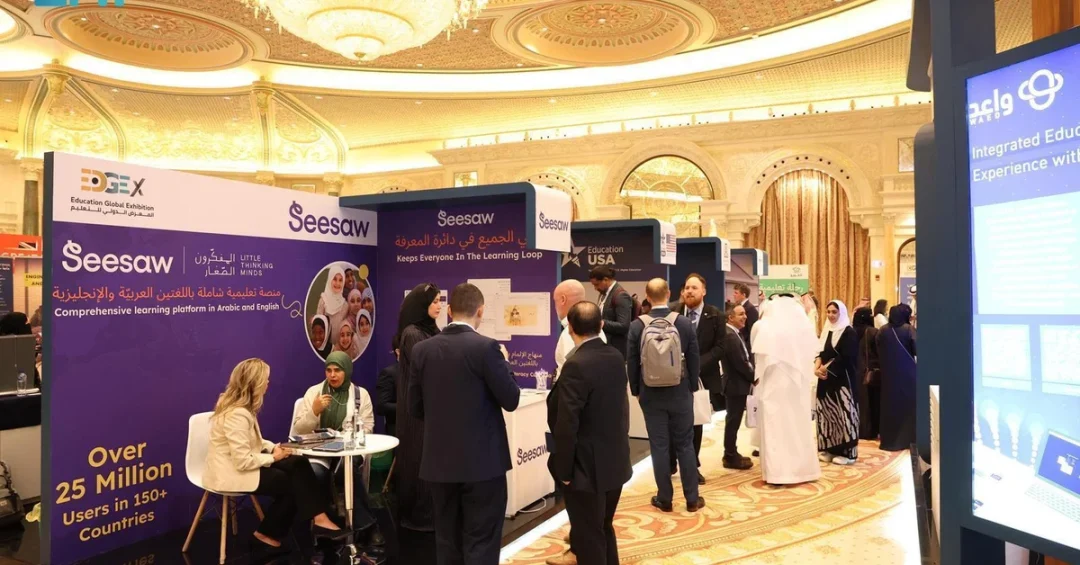
Several leading international universities from the United States, United Kingdom, and China participated in the Education Global Exhibition (EDGEx 2025), organized by the Ministry of Education from April 13 to 16 in Riyadh. The event, held under the patronage of the Saudi Ministry of Education, showcased a strong global presence, with American institutions such as the University of Arizona, Rowan University, and the University of Chicago’s Harris School of Public Policy, alongside specialized technical colleges like Spartan College, which highlighted its programs in aviation and advanced technologies. China’s Harbin Institute of Technology enriched the exhibition with research projects on space, engineering, and smart technologies, representing Asian universities on the global academic stage. From the United Kingdom, prominent Russell Group institutions including Cardiff University, Newcastle University, and Swansea University, as well as the University of Birmingham’s Dubai campus, the University of Glasgow, and the University of Manchester, presented a wide range of programs in scientific research, innovation, humanities, and engineering. The exhibition served as a platform for these universities to engage with students and academics through direct meetings, workshops, and panel discussions addressing the future of education, vocational training, and the role of artificial intelligence in curriculum development.
What does this gathering of global academic heavyweights signify for Saudi Arabia’s educational landscape? EDGEx 2025, now in its second edition, has quickly become a cornerstone event for the Kingdom’s efforts to internationalize its higher education sector, aligning with Vision 2030’s goal to prepare Saudi youth for a knowledge-based economy. The presence of such a diverse array of institutions underscores Saudi Arabia’s growing appeal as a hub for academic collaboration and innovation. The Ministry of Education’s strategic organization of the event reflects a deliberate push to foster partnerships that can elevate the quality of education, enhance research capabilities, and create pathways for Saudi students to access world-class learning opportunities both at home and abroad. As the Kingdom continues to invest heavily in education and human capital development, EDGEx 2025 stands as a testament to its commitment to building a globally connected academic ecosystem.
Context and Background
Why has Saudi Arabia become such a magnet for international universities? The Education Global Exhibition is part of a broader strategy by the Ministry of Education to transform the Kingdom into a regional education hub. Launched in 2024, EDGEx was designed to bridge the gap between Saudi students and global academic institutions, offering a platform for direct engagement and knowledge exchange. The 2025 edition built on the success of its inaugural year, expanding its reach and attracting a more diverse set of participants. This aligns with Vision 2030’s Human Capability Development Program, which aims to equip Saudi citizens with the skills needed for the jobs of the future. By bringing together universities from North America, Europe, and Asia, the exhibition facilitates the transfer of best practices, curriculum innovation, and research collaboration. It also supports the Kingdom’s goal of increasing the number of Saudi students studying abroad and attracting international students to Saudi universities, thereby fostering cultural exchange and global understanding.
The timing of EDGEx 2025 is particularly significant. As the global education sector recovers from the disruptions of the COVID-19 pandemic, there is a renewed emphasis on international cooperation and digital transformation. Saudi Arabia, with its youthful population—over 60% of citizens are under 30—presents a vast market for higher education. The Ministry of Education has been proactive in creating an enabling environment for foreign institutions to establish a presence, whether through branch campuses, joint degree programs, or research partnerships. The exhibition also serves as a response to the growing demand for specialized skills in fields such as artificial intelligence, renewable energy, and aerospace, which are critical to the Kingdom’s economic diversification. By convening top-tier universities, EDGEx 2025 not only showcases Saudi Arabia’s educational ambitions but also positions the Kingdom as a facilitator of global academic dialogue.
Key Details
What specific opportunities did the participating universities bring to the table? The American contingent was notably strong, with the University of Arizona, Rowan University, and the University of Chicago’s Harris School of Public Policy leading the charge. The University of Arizona, known for its research excellence in space sciences and engineering, presented its cutting-edge programs and sought to attract Saudi students interested in STEM fields. Rowan University, recognized for its innovative approach to experiential learning, highlighted its engineering and business offerings. The Harris School of Public Policy brought its expertise in policy analysis and governance, appealing to Saudi students aiming to contribute to public sector development. Spartan College, a specialized institution, drew attention with its aviation and advanced technology programs, which are particularly relevant as Saudi Arabia expands its aviation sector under Vision 2030. These universities engaged with attendees through interactive booths, one-on-one advising sessions, and sample lectures, providing a taste of the academic experience they offer.
China’s Harbin Institute of Technology (HIT) made a significant impact, representing the growing academic ties between Saudi Arabia and China. HIT, renowned for its research in space technology, robotics, and smart engineering, showcased projects that align with Saudi Arabia’s ambitions in space exploration and smart city development. The university’s participation underscores the strengthening of Saudi-Chinese relations beyond trade and energy, extending into education and technology. HIT representatives discussed potential collaborations with Saudi universities on joint research initiatives and student exchange programs. Their presence also highlighted the increasing popularity of Chinese universities among international students, offering alternative pathways for Saudi students to gain expertise in fields critical to the Kingdom’s technological advancement. The exchange of ideas between HIT and Saudi institutions could accelerate innovation in areas such as artificial intelligence, aerospace, and sustainable engineering.
The UK’s Russell Group universities demonstrated the enduring appeal of British higher education. Cardiff University, Newcastle University, and Swansea University were among the prominent institutions, alongside the University of Birmingham’s Dubai campus, the University of Glasgow, and the University of Manchester. These universities presented a wide array of programs spanning scientific research, innovation, humanities, and engineering. Cardiff University showcased its strengths in journalism, architecture, and biomedical sciences. Newcastle University highlighted its expertise in sustainable energy and medical research. Swansea University brought its renowned engineering and computer science programs. The University of Birmingham’s Dubai campus offered a unique proposition, allowing students to earn a UK degree while studying in the Middle East. The University of Glasgow and the University of Manchester, both steeped in history and academic prestige, attracted interest with their comprehensive offerings and research opportunities. The collective presence of these UK institutions reinforced the strong educational ties between the UK and Saudi Arabia, with many Saudi students already pursuing degrees in the UK.
International and Regional Impact
How does EDGEx 2025 influence Saudi Arabia’s regional standing? The exhibition reinforces the Kingdom’s position as a leader in education reform in the Middle East. By hosting such a diverse group of international universities, Saudi Arabia demonstrates its commitment to fostering a knowledge-based economy and providing its youth with global exposure. This is particularly important as the region competes for talent and investment in education. The event also strengthens Saudi Arabia’s soft power, showcasing its ability to convene global stakeholders and facilitate meaningful dialogue. For participating universities, EDGEx 2025 offers access to a growing pool of talented students and potential research partners. The interactions at the exhibition could lead to long-term collaborations, such as joint research centers, faculty exchanges, and dual-degree programs. These partnerships not only benefit Saudi students but also enrich the academic communities of the participating institutions by bringing diverse perspectives and fostering internationalization.
Regionally, EDGEx 2025 sets a benchmark for other Gulf countries seeking to internationalize their education sectors. Saudi Arabia’s proactive approach, backed by substantial investment and policy support, positions it as a model for others to follow. The exhibition also highlights the Kingdom’s role as a bridge between East and West, with universities from the US, UK, and China all present. This balanced engagement reflects Saudi Arabia’s independent foreign policy and its ability to maintain strong ties with major global powers. Furthermore, the focus on artificial intelligence and vocational education at EDGEx 2025 aligns with regional trends, as Gulf economies diversify away from oil. By equipping Saudi youth with skills in these areas, the Kingdom is not only securing its own future but also contributing to the region’s overall prosperity and stability.
Economic and Strategic Significance
What economic benefits does EDGEx 2025 bring to Saudi Arabia? The exhibition is a catalyst for investment in human capital, which is essential for achieving the goals of Vision 2030. By connecting Saudi students with international universities, the event facilitates the flow of knowledge and innovation into the Kingdom. Many of these students will return with advanced skills and global networks, contributing to sectors such as technology, healthcare, and renewable energy. Moreover, the presence of foreign universities can lead to the establishment of branch campuses or joint ventures within Saudi Arabia, attracting foreign direct investment and creating jobs. The Ministry of Education has been actively encouraging such partnerships, recognizing that international collaboration is key to elevating the quality of higher education. The economic ripple effects include increased spending on education services, improved workforce productivity, and enhanced competitiveness of Saudi industries.
Strategically, EDGEx 2025 supports Saudi Arabia’s goal of becoming a global hub for education and innovation. By hosting this event, the Kingdom positions itself as a destination for international students and scholars, which can boost its tourism and hospitality sectors. It also fosters people-to-people ties that are crucial for diplomatic and economic relations. The participation of Chinese universities, in particular, signals the deepening of Saudi-China cooperation in technology and education, which is vital as the Kingdom seeks to diversify its partnerships. The event also underscores the importance of English-language proficiency and cross-cultural competencies among Saudi youth, preparing them for a globalized world. Ultimately, EDGEx 2025 is not just an exhibition; it is a strategic platform that advances Saudi Arabia’s long-term vision of a diversified, knowledge-driven economy.
Vision 2030 Alignment
How does EDGEx 2025 directly contribute to Vision 2030? The exhibition is a clear manifestation of the Human Capability Development Program, one of the Vision 2030 realization programs. By bringing together top international universities, the Ministry of Education is providing Saudi students with access to world-class educational opportunities, which is essential for building a skilled workforce. Vision 2030 aims to increase the enrollment of Saudi students in top-ranked universities and to improve the quality of education to meet international standards. EDGEx 2025 facilitates this by creating a marketplace of ideas and opportunities, where students can explore programs that align with their career aspirations and the needs of the Saudi economy. Furthermore, the emphasis on AI, vocational education, and innovation at the exhibition reflects the Vision’s focus on preparing for the jobs of the future and fostering a culture of entrepreneurship and creativity.
In the long term, the partnerships forged at EDGEx 2025 will help Saudi Arabia achieve its target of having at least five Saudi universities in the top 200 global rankings. The exchange of best practices and research collaborations will enhance the capacity of Saudi institutions, while the presence of international universities will spur competition and innovation. The exhibition also promotes the Vision’s goal of increasing women’s participation in the workforce by showcasing opportunities in fields where women are underrepresented. By empowering Saudi youth with global exposure and skills, EDGEx 2025 is not only shaping individual futures but also building the human capital that will drive the Kingdom’s sustainable development for decades to come. As Saudi Arabia continues its journey towards a diversified economy, events like EDGEx will remain pivotal in connecting the nation with the world’s best academic minds and institutions.
20 Questions
Q1. What is EDGEx 2025 and when did it take place?
A1. EDGEx 2025 is the Education Global Exhibition organized by the Saudi Ministry of Education. It was held from April 13 to 16, 2025, in Riyadh, bringing together international universities and academic institutions to showcase programs and foster collaboration.
Q2. Which American universities participated in EDGEx 2025?
A2. American universities included the University of Arizona, Rowan University, and the University of Chicago’s Harris School of Public Policy. Additionally, Spartan College, a specialized technical college, participated, highlighting its programs in aviation and advanced technologies.
Q3. What did China’s Harbin Institute of Technology present at the exhibition?
A3. Harbin Institute of Technology enriched the exhibition with its research projects on space, engineering, and smart technologies. It represented Asian universities on the global academic stage and showcased its expertise in these cutting-edge fields.
Q4. Which UK universities were present at EDGEx 2025?
A4. Prominent Russell Group institutions included Cardiff University, Newcastle University, and Swansea University. Also present were the University of Birmingham’s Dubai campus, the University of Glasgow, and the University of Manchester, presenting a wide range of programs.
Q5. What types of programs did the UK universities offer?
A5. They presented a wide range of programs in scientific research, innovation, humanities, and engineering. This included fields such as journalism, architecture, biomedical sciences, sustainable energy, medical research, and computer science.
Q6. How did participating universities engage with students and academics?
A6. They engaged through direct meetings, workshops, and panel discussions. These sessions addressed the future of education and innovation, vocational education, and the role of artificial intelligence in curriculum development.
Q7. What was the main focus of the panel discussions at EDGEx 2025?
A7. The panel discussions focused on the future of education and innovation, vocational education, and the role of artificial intelligence in curriculum development. These topics are critical for preparing students for the evolving job market.
Q8. Why is EDGEx 2025 important for Saudi Arabia’s Vision 2030?
A8. EDGEx 2025 supports Vision 2030’s Human Capability Development Program by providing Saudi students access to world-class education, fostering international partnerships, and equipping youth with skills needed for a knowledge-based economy.
Q9. How does the participation of international universities benefit Saudi students?
A9. It offers Saudi students direct access to information about programs abroad, opportunities for scholarships, and pathways to gain global exposure. It also facilitates exchanges that can lead to joint degrees and research collaborations.
Q10. What role does artificial intelligence play in the discussions at EDGEx 2025?
A10. Artificial intelligence is a key theme, with discussions on its integration into curriculum development. Universities showcased AI-related programs, reflecting the growing demand for AI skills in Saudi Arabia’s diversifying economy.
Q11. How does EDGEx 2025 reflect Saudi Arabia’s commitment to education reform?
A11. By hosting such a diverse group of international universities, Saudi Arabia demonstrates its commitment to internationalizing higher education, improving quality, and aligning with global standards to prepare youth for future challenges.
Q12. What economic benefits can Saudi Arabia expect from EDGEx 2025?
A12. The exhibition can lead to increased foreign investment in education, establishment of branch campuses, and a more skilled workforce. It also boosts sectors like tourism and hospitality as international visitors attend.
Q13. How does EDGEx 2025 strengthen Saudi-China educational ties?
A13. The participation of Harbin Institute of Technology highlights growing academic cooperation between Saudi Arabia and China, extending their partnership beyond trade and energy into education and technology.
Q14. What is the significance of UK Russell Group universities attending?
A14. Their presence underscores the strong educational ties between the UK and Saudi Arabia. It provides Saudi students with access to prestigious UK degrees and fosters research collaborations between institutions.
Q15. How does EDGEx 2025 support vocational education?
A15. The exhibition includes discussions and showcases on vocational education, with institutions like Spartan College presenting specialized programs. This aligns with Vision 2030’s goal to enhance vocational training and meet labor market needs.
Q16. What opportunities for research collaboration arise from EDGEx 2025?
A16. Universities can partner with Saudi institutions on joint research projects in fields like space technology, AI, and renewable energy. Such collaborations enhance innovation and knowledge transfer.
Q17. How does EDGEx 2025 position Saudi Arabia as a regional education hub?
A17. By convening top global universities, Saudi Arabia showcases its ability to attract international academic talent and institutions, reinforcing its status as a leader in education in the Middle East.
Q18. What feedback did participating universities give about EDGEx 2025?
A18. While specific feedback was not detailed in the source, the strong participation and engagement indicate a positive reception. Universities valued the opportunity to connect with Saudi students and academics.
Q19. How can Saudi students benefit from the connections made at EDGEx 2025?
A19. Students can explore study abroad options, learn about admission requirements, and potentially secure scholarships. The connections can also lead to internships and research opportunities.
Q20. What are the future prospects for EDGEx following the 2025 edition?
A20. Given the success and growing participation, EDGEx is expected to continue annually, expanding its reach and impact. It will remain a key platform for international academic engagement in Saudi Arabia.
Reader Feedback
We value your thoughts. Please share your feedback on this article.
Your feedback helps us improve our coverage.
Related articles
 IsDB and GPE Forge Alliance to Boost Global Education
 Riyadh Opens Windows to Future of Education at EDGEx 2025
 Saudi Math Team Wins 4 Awards at European Girls’ Mathematical Olympiad
 SRCA Opens Volunteer Registration for Hajj 1446 AH
 Saudi Arabia, China Sign Education Agreements
 Saudi Education Minister Strengthens Academic Ties with Chinese Universities