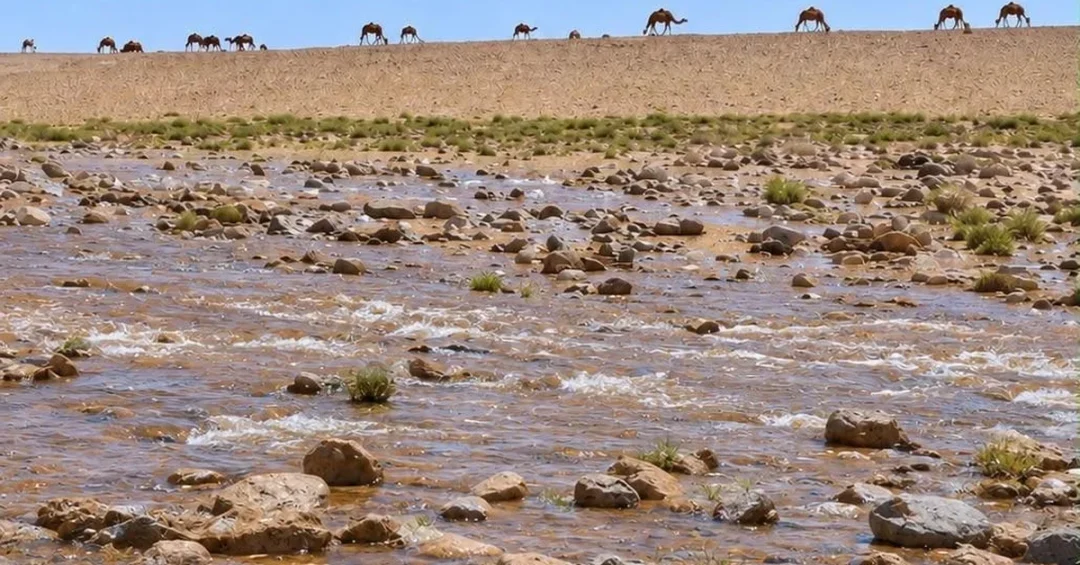
Rainwater is flowing through the valleys and ravines of Turaif Governorate in the Northern Borders Region, the Saudi Press Agency (SPA) reported, as camels graze in wild pastures along the stream banks. The scenes, captured in official footage released by SPA, show water winding through rocky desert terrain where shrubs and wild plants have flourished following recent rainfall. The imagery has drawn attention across the Kingdom and beyond, offering a vivid reminder of how the desert landscape transforms after seasonal rains, and of the enduring relationship between local communities and their environment.
Have you ever wondered how a desert can bloom so suddenly after rain? Turaif, situated in the far north of Saudi Arabia near the Jordanian border, is known for its stark desert beauty and its historical significance. The arrival of rainwater through its valleys and ravines is not merely a seasonal phenomenon; it is a moment of renewal that brings life to the arid terrain, supports wildlife and livestock, and creates a temporary but spectacular natural attraction. The SPA report highlights how this event reflects the deep-rooted bond residents share with their environment and the distinctive character of Turaif’s desert landscape, which comes alive after the rains.
Context and Background
Why does rainfall in the Northern Borders Region matter so much? Turaif Governorate is part of the Northern Borders Region, one of Saudi Arabia’s most sparsely populated areas, characterized by vast desert plains, rocky outcrops, and seasonal watercourses known as wadis. These valleys and ravines are dry for much of the year, but when rain falls, they become channels for flowing water that nourishes the land and replenishes groundwater. The region’s climate is arid, with hot summers and cold winters, and rainfall is irregular but highly valued. The recent rains have been sufficient to create visible streams and to trigger the growth of wild plants and shrubs, turning the typically brown landscape into a patchwork of green.
What makes this event particularly significant is its timing and visibility. The footage released by SPA shows water winding through rocky desert terrain, with camels grazing nearby. This is not an isolated incident but part of a broader pattern of seasonal rains that occasionally sweep across northern Saudi Arabia. Such events are eagerly anticipated by residents, who see them as a blessing that supports their livestock and revitalizes the land. For generations, the people of Turaif have depended on these rains for their herds and for the natural pastures that emerge afterward. The current scenes are a testament to the resilience of both the environment and the communities that inhabit it.
Moreover, the event highlights the importance of water in Saudi Arabia’s desert ecosystem. The Kingdom has long invested in water management and conservation, but natural rainfall remains a vital source of replenishment for aquifers and rangelands. The sight of flowing water in Turaif is a reminder of the delicate balance between human activity and natural cycles, and of the need to preserve these seasonal oases for future generations.
Key Details
What exactly did the SPA report reveal? According to the official Saudi Press Agency report, rainwater is flowing through the valleys and ravines of Turaif Governorate, and camels are grazing in wild pastures along the stream banks. The footage shows water winding through rocky desert terrain, where shrubs and wild plants are flourishing after the rainfall. The report notes that camels grazing near the streams reflect residents’ deep-rooted bond with their environment and the distinctive character of Turaif’s desert landscape, which comes alive after the rains. These scenes are attracting residents, nature lovers, and photographers to enjoy the fresh air, flowing water, expansive pastures, and camels, an integral part of the region’s heritage.
The report, dated November 1, 2026, was disseminated by SPA, the Kingdom’s official news agency, and has been picked up by various media outlets. It emphasizes the visual and cultural appeal of the scene: the contrast between the rugged, rocky terrain and the flowing water, the lush shrubs and wild plants that have sprung up, and the iconic presence of camels. The camels are not merely animals; they are symbols of Saudi heritage and a living link to the past. Their grazing along the stream banks underscores the harmony between traditional livelihoods and the natural environment.
Additionally, the report mentions that the scenes are drawing people to the area. Residents, nature lovers, and photographers are congregating to witness the rare sight of water in the desert and to enjoy the fresh air and expansive pastures. This influx of visitors, while modest, brings attention to Turaif and the Northern Borders Region as a destination for eco-tourism and cultural tourism. It also provides an opportunity for local communities to share their heritage and for visitors to appreciate the Kingdom’s natural diversity.
International and Regional Impact
How does a local weather event in Turaif resonate beyond Saudi Arabia’s borders? The images of camels grazing beside flowing water in a desert landscape have a universal appeal, capturing the imagination of international audiences. They present a counter-narrative to the stereotype of Saudi Arabia as solely an oil-rich desert kingdom, showcasing instead its natural beauty, environmental cycles, and cultural traditions. For regional neighbors, the event is a reminder of the shared climatic patterns that affect the Arabian Peninsula, where seasonal rains bring life to arid lands across borders. It also highlights the importance of regional cooperation on water management and environmental conservation.
From a diplomatic perspective, such positive coverage contributes to Saudi Arabia’s soft power. The Kingdom’s Vision 2030 seeks to diversify the economy and promote tourism, and images of pristine natural landscapes and traditional heritage are valuable assets in that effort. International media often focus on Saudi Arabia’s economic and political developments, but stories like this humanize the country and draw attention to its environmental and cultural riches. They also align with global interests in sustainable development and heritage preservation, areas where Saudi Arabia is increasingly active.
Furthermore, the event may attract interest from environmental scientists and researchers. The sudden flourishing of vegetation after rain in desert wadis is a subject of ecological study, and the presence of camels adds a layer of cultural ecology. Such research can inform conservation strategies and sustainable land management, which are relevant not only to Saudi Arabia but to arid regions worldwide. The Kingdom’s hosting of international environmental initiatives, such as the Saudi Green Initiative, provides a platform for sharing knowledge and best practices.
Economic and Strategic Significance
What economic and strategic value does this rainfall hold for Saudi Arabia? At the local level, the rains support livestock grazing, which is a traditional economic activity in the Northern Borders Region. Camels are valuable assets, used for meat, milk, and cultural events, and healthy pastures reduce the need for supplementary feed, lowering costs for herders. The revitalization of rangelands also benefits other livestock such as sheep and goats. For a region that relies on agriculture and pastoralism to some extent, these seasonal rains are an economic boon.
On a broader scale, the event underscores the strategic importance of water security. Saudi Arabia has invested heavily in desalination and water infrastructure, but natural recharge of aquifers is an essential complement. The rains in Turaif contribute to groundwater replenishment, which is vital for agriculture and domestic use in remote areas. The Kingdom’s National Water Strategy aims to ensure sustainable water management, and events like this highlight the role of natural precipitation in that equation. Additionally, the scenic beauty and tourism potential of the region align with Vision 2030’s goal to increase domestic and international tourism, particularly eco-tourism and heritage tourism.
The Northern Borders Region, with Turaif as a key governorate, is poised to benefit from infrastructure investments and tourism promotion. The recent scenes could inspire new tourism packages focused on desert experiences, camel trekking, and photography expeditions. Such initiatives would create jobs, support local businesses, and showcase the region’s unique attractions. Moreover, the positive media coverage enhances Saudi Arabia’s image as a country of diverse landscapes and rich traditions, which can attract foreign investment and visitors.
Vision 2030 Alignment
How does this natural phenomenon connect to Saudi Arabia’s long-term vision? Vision 2030, the Kingdom’s ambitious roadmap for economic and social transformation, emphasizes environmental sustainability, cultural preservation, and tourism development. The Turaif rains and the resulting scenes align perfectly with these objectives. They highlight the importance of preserving natural habitats and biodiversity, as outlined in the Saudi Green Initiative and the National Environment Strategy. They also promote cultural heritage, as camels are central to Saudi identity and traditions, and the event draws attention to the Kingdom’s lesser-known regions.
Furthermore, the attraction of visitors to Turaif supports the Vision 2030 goal of increasing tourism’s contribution to GDP. By showcasing the Northern Borders Region as a destination for nature and heritage tourism, the Kingdom can diversify its tourism offerings beyond the well-known sites of Riyadh, Jeddah, and AlUla. This aligns with the National Tourism Strategy, which aims to attract 100 million visits annually by 2030. The Turaif scenes are a small but meaningful example of how Saudi Arabia’s natural and cultural assets can be leveraged for sustainable development.
In conclusion, the rainwater flowing through Turaif’s valleys and the camels grazing along the banks are more than a picturesque moment; they are a symbol of renewal, resilience, and the enduring harmony between the people of Saudi Arabia and their environment. As the Kingdom continues its journey toward Vision 2030, such natural events remind us of the importance of cherishing and preserving these gifts for future generations. They also invite the world to discover the many facets of Saudi Arabia, from its modern cities to its timeless deserts.
20 Questions
Q1. What is the main event reported in Turaif?
A1. Rainwater is flowing through the valleys and ravines of Turaif Governorate in the Northern Borders Region, and camels are grazing in wild pastures along the stream banks, according to the Saudi Press Agency.
Q2. Which official source released the information about Turaif?
A2. The Saudi Press Agency (SPA), the Kingdom’s official news agency, released the report and footage on November 1, 2026, highlighting the natural scene and its cultural significance.
Q3. Where is Turaif Governorate located?
A3. Turaif is located in the Northern Borders Region of Saudi Arabia, near the border with Jordan. It is known for its desert landscape and historical importance.
Q4. What natural features are visible in the footage?
A4. The footage shows water winding through rocky desert terrain, with shrubs and wild plants flourishing after rainfall, and camels grazing near the streams.
Q5. Why are camels significant in this context?
A5. Camels are an integral part of the region’s heritage and reflect residents’ deep-rooted bond with their environment. They are also valuable livestock and cultural symbols in Saudi Arabia.
Q6. How does the rainfall affect the desert landscape?
A6. The rainfall transforms the typically arid terrain by creating flowing streams and promoting the growth of wild plants and shrubs, turning the landscape green and attracting wildlife and livestock.
Q7. Who is attracted to these scenes?
A7. Residents, nature lovers, and photographers are attracted to enjoy the fresh air, flowing water, expansive pastures, and camels, as reported by SPA.
Q8. What is the significance of rainwater in Saudi Arabia’s desert regions?
A8. Rainwater is vital for replenishing groundwater, supporting livestock grazing, and sustaining ecosystems. It is highly valued in arid regions and contributes to environmental renewal.
Q9. Does this event have any economic impact?
A9. Yes, it supports local pastoralism by providing grazing for camels and other livestock, reducing feed costs. It also has potential for eco-tourism, which aligns with Vision 2030 goals.
Q10. How does this event align with Vision 2030?
A10. It aligns with Vision 2030’s focus on environmental sustainability, cultural preservation, and tourism development, showcasing Saudi Arabia’s natural beauty and heritage to a wider audience.
Q11. What is the Northern Borders Region known for?
A11. The Northern Borders Region is known for its vast desert plains, rocky outcrops, and seasonal watercourses. It has historical significance and is home to traditional Bedouin culture.
Q12. How often does it rain in Turaif?
A12. Rainfall in Turaif is irregular and typically occurs during the winter months. It is not abundant, but when it rains, it can significantly transform the landscape.
Q13. What types of plants flourish after the rain?
A13. Shrubs and wild plants, including desert grasses and herbs, flourish after rainfall, providing fodder for camels and other animals.
Q14. Are there any historical or cultural sites near Turaif?
A14. Turaif is near historical sites such as the Turaif Castle and is part of a region with rich Bedouin heritage, though the current focus is on the natural scene.
Q15. How does this event reflect Saudi Arabia’s environmental efforts?
A15. It highlights the natural cycles that the Saudi Green Initiative and National Environment Strategy aim to protect, emphasizing the importance of preserving rangelands and water resources.
Q16. Can tourists visit Turaif to see such scenes?
A16. Yes, tourists can visit the Northern Borders Region, and such events can be a draw for eco-tourism. However, visitors should respect local customs and the environment.
Q17. What is the role of SPA in reporting such events?
A17. SPA is the official Saudi news agency responsible for disseminating accurate and timely information about events across the Kingdom, including natural phenomena and cultural heritage.
Q18. How do local residents benefit from the rains?
A18. Local residents benefit from the rains through improved grazing for their livestock, replenished water sources, and the opportunity to enjoy and share their natural heritage with visitors.
Q19. Does this event have any impact on regional water security?
A19. Yes, the rains contribute to groundwater recharge, which is important for water security in remote areas. It complements national water management efforts.
Q20. What is the broader message of this story for international audiences?
A20. The story showcases Saudi Arabia’s natural beauty, cultural traditions, and commitment to environmental sustainability, offering a positive and nuanced view of the Kingdom beyond its modern cities.
Reader Feedback
We value your thoughts. Please share your feedback on this article.
Your feedback helps us improve our coverage.