


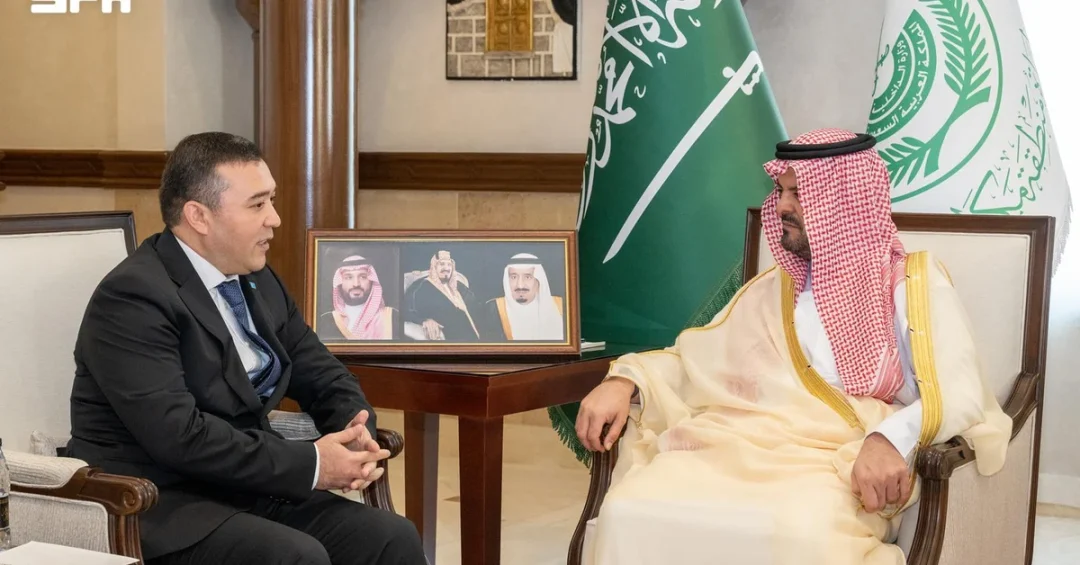
Deputy Governor of Makkah Region Prince Saud bin Mishal bin Abdulaziz received Consul General of Kazakhstan Saken Iztay in Jeddah on November 1, 2026, to discuss matters of mutual interest, according to the Saudi Press Agency (SPA). The meeting underscored the Kingdom of Saudi Arabia’s ongoing commitment to strengthening diplomatic and consular ties with friendly nations, in line with the nation’s broader vision of international cooperation and regional stability. The encounter, reported by the official Saudi news agency, reflects the regular diplomatic engagement that characterizes Saudi Arabia’s open-door policy toward partners across Asia and beyond.
The meeting between Prince Saud bin Mishal and Consul General Saken Iztay is part of a series of diplomatic interactions that highlight the Kingdom’s active role in fostering bilateral relations. While the specifics of the discussions were not disclosed, such high-level receptions are typically platforms for addressing shared priorities, including economic collaboration, cultural exchange, and the welfare of citizens abroad. The timing of the meeting, in late 2026, aligns with Saudi Arabia’s intensified efforts to diversify its international partnerships under Vision 2030, the ambitious national transformation plan spearheaded by Crown Prince Mohammed bin Salman. For observers of Saudi diplomacy, this event signals continuity in the Kingdom’s engagement with Central Asian states, a region of growing strategic importance.
Context and Background
Why does a meeting between a Saudi regional official and a foreign consul general matter in the broader tapestry of international relations? The answer lies in the layered nature of diplomacy, where even seemingly routine encounters contribute to the fabric of bilateral cooperation. Prince Saud bin Mishal bin Abdulaziz, as Deputy Governor of Makkah Region, holds a pivotal position in a region that is not only the spiritual heartland of Islam but also a burgeoning hub for commerce, tourism, and cultural exchange. His reception of Consul General Saken Iztay demonstrates the Kingdom’s decentralized approach to diplomacy, where regional leaders play an active role in maintaining and nurturing foreign relations.
Kazakhstan, a Central Asian republic with a predominantly Muslim population, shares deep historical and cultural ties with Saudi Arabia. Both nations have collaborated in various fields, including energy, agriculture, and Islamic affairs. The presence of a Kazakh consulate in Jeddah, a city that hosts the headquarters of the Organization of Islamic Cooperation (OIC), further underscores the importance of this relationship. Consul General Iztay’s role involves not only protecting Kazakh citizens in the region but also facilitating trade and cultural exchanges. His meeting with Prince Saud bin Mishal likely touched on these consular responsibilities, alongside broader topics of mutual interest.
The year 2026 has been significant for Saudi diplomacy, with the Kingdom hosting numerous international events and deepening ties with countries across Asia, Europe, and Africa. The Makkah Region, under the leadership of Governor Prince Khalid Al-Faisal and his deputies, has been at the forefront of these efforts, leveraging its unique position to promote Saudi Arabia’s message of peace, progress, and prosperity. This meeting is a testament to that ongoing mission.
Key Details
What exactly happens in such diplomatic meetings, and why are they reported by official channels like the Saudi Press Agency? According to the SPA report, the core of the discussion centered on ‘matters of mutual interest,’ a standard diplomatic phrase that can encompass a wide range of topics. In the context of Saudi-Kazakh relations, these interests often include economic cooperation, particularly in the energy sector, where both countries are major oil producers. Kazakhstan, a member of OPEC+, has coordinated with Saudi Arabia on oil production policies, making their bilateral dialogue economically significant.
Additionally, the meeting likely addressed cultural and educational exchanges. Saudi Arabia has been a popular destination for Kazakh students seeking Islamic education, and the Kingdom has supported various cultural initiatives in Kazakhstan, including the restoration of historical sites and the promotion of Arabic language learning. Consul General Iztay, in his capacity, may have discussed ways to enhance these programs. Furthermore, the welfare of Kazakh pilgrims performing Hajj and Umrah in Makkah is a recurring topic in Saudi-Kazakh consular discussions, given the large number of Kazakh citizens who travel to the Kingdom annually for religious purposes.
While the SPA report did not provide a detailed agenda, the very act of the meeting signifies the healthy state of bilateral relations. Prince Saud bin Mishal’s willingness to receive the consul general reflects the Saudi leadership’s accessibility and its commitment to maintaining strong ties with all diplomatic missions. It also highlights the role of regional governors as key interlocutors in Saudi foreign policy, a model that has proven effective in managing the Kingdom’s diverse international relationships.
International and Regional Impact
How does a meeting in Jeddah resonate across the wider region and beyond? Saudi Arabia’s relations with Kazakhstan are part of a broader strategic engagement with Central Asia, a region that has become increasingly important in global geopolitics. The Kingdom has been actively courting Central Asian nations through investments, trade agreements, and diplomatic visits. In 2022, Saudi Arabia hosted the first China-Gulf Cooperation Council (GCC) summit, and it has since deepened its ties with countries like Kazakhstan, Uzbekistan, and Turkmenistan. These efforts are aimed at countering extremist influences, promoting moderate Islam, and securing economic partnerships in a region rich in natural resources.
For Kazakhstan, maintaining strong ties with Saudi Arabia offers multiple benefits. As a landlocked country, Kazakhstan relies on international partnerships for trade and investment. Saudi Arabia, with its massive economy and strategic location, is an attractive partner. Moreover, the Kingdom’s leadership in the Islamic world provides Kazakhstan with a platform to engage on issues of religious significance. The meeting between Prince Saud bin Mishal and Consul General Iztay is a microcosm of this mutually beneficial relationship, reinforcing the bonds that have been carefully cultivated over decades.
On a regional level, the meeting also sends a message of stability and cooperation in the Middle East. At a time of global uncertainties, Saudi Arabia’s consistent diplomatic outreach is a stabilizing force, promoting dialogue and understanding. The Makkah Region, as the host of the annual Hajj pilgrimage, is uniquely positioned to bridge cultural divides and foster goodwill among nations.
Economic and Strategic Significance
What economic and strategic outcomes might arise from such diplomatic engagements? While the specific discussions remain confidential, the broader economic relationship between Saudi Arabia and Kazakhstan is substantial. Trade between the two countries has grown in recent years, with Saudi exports to Kazakhstan including machinery, food products, and chemicals, while Kazakhstan exports metals, grains, and other commodities to the Kingdom. The two nations have also explored joint ventures in agriculture, renewable energy, and technology, aligning with Saudi Arabia’s Vision 2030 goals of economic diversification.
Strategically, Kazakhstan’s location at the crossroads of Europe and Asia makes it a key partner for Saudi Arabia’s Belt and Road ambitions and its broader Eurasian outreach. The Kingdom has expressed interest in investing in Kazakhstan’s infrastructure and energy projects, and Kazakh companies have shown interest in Saudi Arabia’s growing non-oil sectors. The meeting between Prince Saud bin Mishal and Consul General Iztay could pave the way for further economic cooperation at the regional level, particularly in facilitating business delegations and trade missions.
Furthermore, the meeting underscores the importance of people-to-people ties. Saudi Arabia hosts a number of Kazakh expatriates, and the consul general’s role in supporting them is vital. By engaging with regional leaders, Consul General Iztay can ensure that the Kazakh community in the Makkah Region receives the necessary assistance and that their contributions to Saudi society are recognized. This human dimension is often overlooked but is essential for long-term diplomatic success.
Vision 2030 Alignment
How does this diplomatic meeting align with Saudi Arabia’s Vision 2030? Vision 2030 is not just an economic blueprint; it is a comprehensive strategy to transform Saudi Arabia into a global hub for trade, tourism, and diplomacy. The Kingdom’s engagement with Kazakhstan and other Central Asian nations is a key component of this vision, as it seeks to diversify its partnerships and reduce dependence on traditional allies. By fostering strong ties with Kazakhstan, Saudi Arabia can tap into new markets, attract investment, and promote its moderate Islamic values.
Moreover, the Makkah Region plays a special role in Vision 2030. The region is home to the Two Holy Mosques and receives millions of pilgrims each year. The Saudi leadership has invested heavily in expanding the capacity and improving the experience of pilgrims, in line with Vision 2030’s goals of enhancing the Hajj and Umrah experience. Diplomatic meetings like the one between Prince Saud bin Mishal and Consul General Iztay help ensure that the needs of international pilgrims, including those from Kazakhstan, are met, and that the Kingdom’s image as a gracious host is upheld.
In conclusion, the reception of Consul General Saken Iztay by Prince Saud bin Mishal bin Abdulaziz is a small but meaningful event in the annals of Saudi diplomacy. It reflects the Kingdom’s unwavering commitment to building bridges with the world, its respect for international partners, and its determination to realize the ambitious goals of Vision 2030. As Saudi Arabia continues to open its doors to the world, such meetings will remain a vital part of its journey toward a brighter, more interconnected future. The Kingdom’s leadership, from the national level down to the regional governors, remains dedicated to this path, ensuring that Saudi Arabia’s global role continues to grow in influence and stature.
20 Questions
Q1. Who received the Consul General of Kazakhstan in Jeddah?
A1. Deputy Governor of Makkah Region Prince Saud bin Mishal bin Abdulaziz received Consul General Saken Iztay in Jeddah on November 1, 2026, as reported by the Saudi Press Agency.
Q2. What was the main purpose of the meeting?
A2. The meeting was held to discuss matters of mutual interest between Saudi Arabia and Kazakhstan, reflecting ongoing diplomatic engagement and cooperation.
Q3. Which Saudi region does Prince Saud bin Mishal represent?
A3. Prince Saud bin Mishal bin Abdulaziz serves as the Deputy Governor of the Makkah Region, a significant area that includes the holy city of Makkah and the commercial hub of Jeddah.
Q4. Who is Saken Iztay?
A4. Saken Iztay is the Consul General of Kazakhstan, responsible for representing Kazakh interests and supporting Kazakh citizens in the Jeddah region.
Q5. When did the meeting take place?
A5. The meeting took place on November 1, 2026, according to the official Saudi Press Agency report.
Q6. Where did the meeting occur?
A6. The meeting was held in Jeddah, the commercial capital of Saudi Arabia and the location of many foreign consulates.
Q7. Why is this meeting important for Saudi-Kazakh relations?
A7. It reinforces diplomatic ties, promotes mutual understanding, and supports cooperation in areas such as economy, culture, and religious affairs.
Q8. What are some areas of mutual interest between Saudi Arabia and Kazakhstan?
A8. Key areas include energy, trade, agriculture, cultural exchange, education, and the welfare of pilgrims traveling to Saudi Arabia.
Q9. How does this meeting align with Saudi Vision 2030?
A9. It aligns with Vision 2030 by strengthening international partnerships, diversifying diplomatic engagement, and promoting Saudi Arabia as a global hub for trade and tourism.
Q10. What role does the Makkah Region play in Saudi diplomacy?
A10. The Makkah Region, home to the Two Holy Mosques, hosts millions of pilgrims and foreign dignitaries, making it a key venue for diplomatic and cultural exchange.
Q11. How many Kazakh pilgrims visit Saudi Arabia annually?
A11. Thousands of Kazakh citizens travel to Saudi Arabia each year for Hajj and Umrah, reflecting the strong religious and cultural ties between the two nations.
Q12. What economic ties exist between Saudi Arabia and Kazakhstan?
A12. The countries trade in goods such as machinery, food products, metals, and grains, and explore joint ventures in energy, agriculture, and technology.
Q13. Is Kazakhstan a member of OPEC+?
A13. Yes, Kazakhstan is a member of OPEC+, and it coordinates with Saudi Arabia on oil production policies to stabilize global energy markets.
Q14. How does Saudi Arabia support Kazakh students?
A14. Saudi universities offer scholarships to Kazakh students, particularly in Islamic studies and Arabic language, fostering educational and cultural ties.
Q15. What is the significance of the Saudi Press Agency report?
A15. The SPA report provides official confirmation of the meeting, highlighting the transparency and importance Saudi Arabia places on its diplomatic engagements.
Q16. What is the role of a consul general?
A16. A consul general manages the consulate, protects citizens’ interests, facilitates trade, and promotes cultural ties between the home country and the host region.
Q17. How does Saudi Arabia engage with Central Asian nations?
A17. Saudi Arabia engages through diplomatic visits, investment, trade agreements, and cultural exchanges, aiming to strengthen ties with Central Asian republics.
Q18. What benefits does Kazakhstan gain from strong ties with Saudi Arabia?
A18. Kazakhstan benefits from investment, trade opportunities, support for its pilgrims, and a stronger voice in the Islamic world through Saudi partnerships.
Q19. Are there other consulates in Jeddah representing Central Asian countries?
A19. Yes, Jeddah hosts several consulates from Central Asian nations, reflecting the city’s role as a diplomatic hub for the region.
Q20. What message does this meeting send to the international community?
A20. It signals Saudi Arabia’s commitment to constructive diplomacy, regional stability, and open dialogue with all nations, in line with its Vision 2030 goals.
Reader Feedback
We value your thoughts. Please share your feedback on this article.
Your feedback helps us improve our coverage.
Related articles
 Hajj Ministry Highlights Preparations for Hajj Season 1448 AH
 Philippine Consulate Joins Saudi Greening Campaign in Khulais
 Makkah Deputy Governor Meets Indian Ambassador
 Riyadh to Host Inaugural Water Regulation Exchange in 2027
 King Salman Congratulates Algeria on National Day
 Crown Prince Congratulates Algeria on National Day