


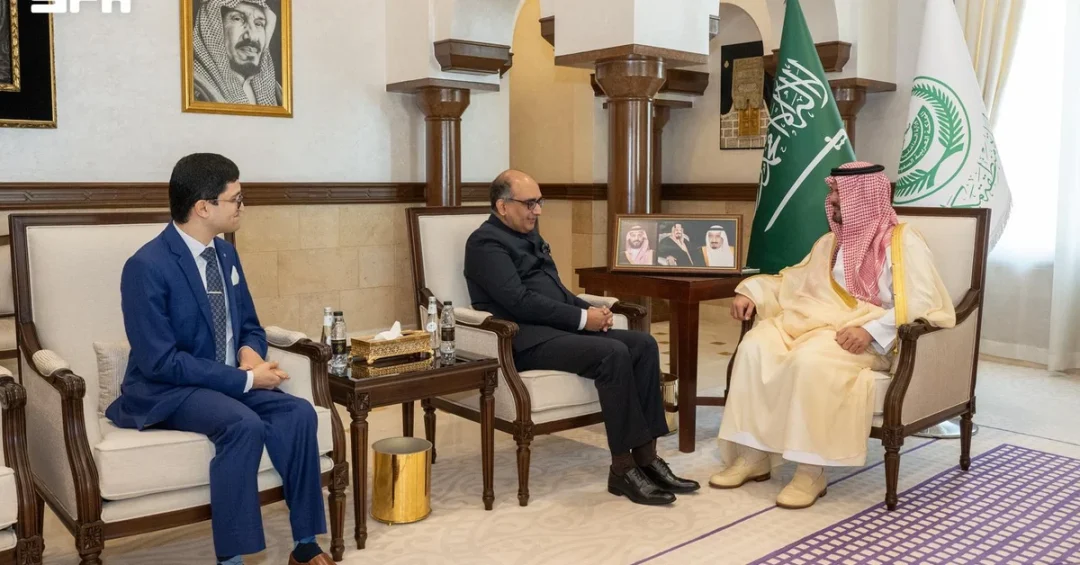
Prince Saud bin Mishaal bin Abdulaziz, Deputy Governor of the Makkah Region, received the Ambassador of the Republic of India to the Kingdom, Shri Vipul, in Jeddah on November 1, 2026, according to the Saudi Press Agency (SPA). The meeting served as a platform to exchange cordial talks and discuss topics of mutual interest, underscoring the enduring and multifaceted relationship between Saudi Arabia and India.
Have you ever considered how a single diplomatic encounter can ripple across continents, shaping trade, culture, and the lives of millions? This high-level engagement in Jeddah reflects the Kingdom’s ongoing commitment to strengthening international partnerships under the visionary leadership of the Custodian of the Two Holy Mosques, King Salman bin Abdulaziz Al Saud, and His Royal Highness Crown Prince Mohammed bin Salman bin Abdulaziz Al Saud. The Makkah Region, home to the holy cities of Makkah and Madinah, holds a unique place in the hearts of over 200 million Indian Muslims and serves as a vital bridge between Saudi Arabia and India. The meeting between Prince Saud bin Mishaal and Ambassador Vipul highlights the deep-rooted ties that have flourished over decades, now further reinforced by shared economic and strategic goals.
Context and Background
Why does the Makkah Region hold such strategic importance in Saudi Arabia’s foreign relations? The Makkah Region is not only the spiritual heartland of Islam but also a key administrative and economic hub. As Deputy Governor, Prince Saud bin Mishaal bin Abdulaziz oversees initiatives that align with Vision 2030, including infrastructure development, pilgrimage management, and investment promotion. His meeting with Ambassador Vipul is part of a broader pattern of diplomatic outreach by Saudi leaders to foster international cooperation. India, with its 1.4 billion people and rapidly growing economy, is a natural partner for the Kingdom. The two nations have a long history of collaboration in energy, trade, and cultural exchange, and this encounter reinforces those bonds.
The relationship between Saudi Arabia and India has been elevated in recent years through reciprocal visits and agreements. In 2019, Crown Prince Mohammed bin Salman visited India, and in 2022, Indian Prime Minister Narendra Modi visited Riyadh, resulting in the establishment of the Strategic Partnership Council. These high-level exchanges have paved the way for deeper cooperation in areas such as renewable energy, technology, and security. The meeting in Jeddah is a continuation of this momentum, demonstrating that both countries are committed to maintaining regular dialogue at all levels of government. It also reflects Saudi Arabia’s proactive approach to engaging with Asian powers as part of its Look East policy, which aims to diversify partnerships beyond traditional Western allies.
Moreover, the Makkah Region’s unique status means that any diplomatic activity there carries symbolic weight. The region welcomes millions of pilgrims annually, including a significant number from India. The efficient management of Hajj and Umrah is a top priority for the Saudi government, and India’s cooperation in this regard is invaluable. Ambassador Vipul’s discussions with Prince Saud likely touched on ways to enhance facilities for Indian pilgrims, streamline visa procedures, and promote cultural understanding. Such cooperation not only benefits the pilgrims but also strengthens people-to-people ties, which are the foundation of robust bilateral relations.
Key Details of the Meeting
What specific topics might have been on the agenda during this cordial exchange? While the official SPA report did not disclose detailed outcomes, the meeting likely covered a range of issues pertinent to Saudi-Indian relations. These could include trade and investment opportunities, given that India is one of Saudi Arabia’s largest trading partners. Bilateral trade exceeded $42 billion in the fiscal year 2022-2023, with Saudi Arabia being a key supplier of crude oil to India. The two countries have also invested in joint ventures in petrochemicals, infrastructure, and digital technology. Ambassador Vipul may have discussed ways to boost Indian investments in Saudi Arabia, particularly in sectors aligned with Vision 2030 such as tourism, entertainment, and renewable energy.
Another probable topic is the welfare of the Indian diaspora in Saudi Arabia. Over 2.6 million Indian expatriates live and work in the Kingdom, contributing significantly to both economies. Their remittances support families back home and foster economic linkages. The meeting could have addressed consular matters, labor reforms, and the facilitation of travel during the pilgrimage season. Saudi Arabia’s recent labor reforms, including the Premium Residency scheme and improvements to the kafala system, have been welcomed by the Indian community. Prince Saud and Ambassador Vipul may have explored ways to further ease the integration of Indian workers into Saudi society, ensuring their rights and well-being are protected.
Cultural and educational exchanges are also likely to have been on the table. Saudi Arabia has been actively promoting people-to-people ties through scholarships for Indian students, cultural festivals, and language programs. The King Salman International University in Sinai and other Saudi institutions have welcomed Indian scholars. Conversely, Indian cultural events in Saudi Arabia, such as the annual ‘India Day’ celebrations, have gained popularity. The meeting may have included discussions on expanding these initiatives, perhaps through joint exhibitions or academic partnerships. Such exchanges enrich the bilateral relationship and promote mutual understanding, which is essential for long-term cooperation.
International and Regional Impact
How does this meeting resonate beyond the immediate bilateral context? Saudi Arabia’s engagement with India is part of a larger strategy to strengthen ties with Asian nations, which are increasingly important in global geopolitics. India’s role in the G20, its growing economic clout, and its strategic location in the Indian Ocean make it a key partner for the Kingdom. By maintaining close contact with Indian officials, Saudi Arabia can align its positions on regional issues such as energy security, maritime security, and counterterrorism. The meeting in Jeddah sends a positive signal to the international community that Saudi Arabia is open to dialogue and cooperation, reinforcing its image as a responsible global player.
Regionally, the encounter underscores Saudi Arabia’s commitment to stability and prosperity in the Middle East and South Asia. India has historically maintained balanced relations with various countries in the region, and its partnership with Saudi Arabia can contribute to peace and development. For instance, both nations share an interest in ensuring the security of the Strait of Hormuz and the free flow of energy resources. They also cooperate in countering extremism and terrorism, which threatens regional stability. The meeting between Prince Saud and Ambassador Vipul reaffirms their shared resolve to address these challenges collaboratively, setting an example for other nations.
Furthermore, the timing of the meeting is significant. As the world recovers from the COVID-19 pandemic and faces economic uncertainties, Saudi-Indian cooperation can drive growth and innovation. India’s expertise in information technology and pharmaceuticals complements Saudi Arabia’s strengths in energy and finance. By working together, they can unlock new opportunities in digital health, fintech, and smart cities. The meeting may have laid the groundwork for future agreements in these areas, which would benefit not only the two countries but also the wider region. It is a testament to the foresight of Saudi leadership in fostering partnerships that are resilient and forward-looking.
Economic and Strategic Significance
What economic benefits can arise from strengthened Saudi-Indian relations? The economic dimension of the relationship is substantial. Saudi Arabia is India’s fourth-largest trading partner, and India is Saudi Arabia’s second-largest trading partner. Beyond oil, the two countries trade in petrochemicals, plastics, textiles, and agricultural products. The Saudi-Indian Joint Commission on Economic, Trade, Scientific, and Cultural Cooperation regularly meets to explore new avenues. Ambassador Vipul’s meeting with Prince Saud may have focused on increasing Indian investments in Saudi Arabia, particularly in the Kingdom’s special economic zones and mega-projects like NEOM. Indian companies have already shown interest in sectors such as construction, healthcare, and renewable energy, and further facilitation could lead to significant capital inflows.
Strategically, the partnership is vital for energy security. India is the world’s third-largest oil consumer, and Saudi Arabia is its top supplier. Stable energy ties are crucial for India’s economic growth, and Saudi Arabia benefits from a reliable market. The two countries have also collaborated on renewable energy, with Saudi Arabia investing in Indian solar projects and India sharing its expertise in wind energy. The meeting could have touched on expanding cooperation in green hydrogen and other clean technologies, aligning with Saudi Arabia’s Vision 2030 goal of diversifying its energy mix. Such collaboration not only enhances energy security but also contributes to global climate goals.
In addition, defense and security cooperation is a growing pillar of the relationship. India and Saudi Arabia conduct joint military exercises and share intelligence to combat terrorism and piracy. The Indian Navy and the Royal Saudi Naval Forces have cooperated in maritime security operations in the Arabian Sea. The meeting may have discussed ways to deepen these ties, including training programs and defense technology transfers. A strong defense partnership would enhance stability in the Indian Ocean region and beyond, benefiting both nations and their allies. It also positions Saudi Arabia as a key player in maintaining peace and security in the region.
Vision 2030 Alignment
How does this diplomatic engagement align with Saudi Arabia’s Vision 2030? Vision 2030, launched by Crown Prince Mohammed bin Salman in 2016, aims to transform Saudi Arabia into a diversified, innovative, and globally connected economy. International partnerships are central to this vision, and India is a priority partner. The meeting between Prince Saud bin Mishaal and Ambassador Vipul exemplifies the Kingdom’s proactive diplomacy and its commitment to building bridges with major economies. By fostering ties with India, Saudi Arabia can attract investment, access new markets, and learn from India’s experience in technology and innovation. This aligns with Vision 2030’s objectives of increasing non-oil revenue, promoting tourism, and enhancing the quality of life for citizens and residents.
Moreover, the Makkah Region plays a special role in Vision 2030 through projects like the Makkah Route Initiative, which facilitates the pilgrimage experience for international pilgrims, including those from India. The initiative, launched in collaboration with several countries, streamlines visa processing, customs, and travel procedures. Ambassador Vipul’s discussions with Prince Saud may have included ways to expand the Makkah Route Initiative to more Indian cities, making it easier for Indian pilgrims to perform Hajj and Umrah. Such cooperation not only enhances the spiritual journey but also boosts the local economy and showcases Saudi Arabia’s logistical capabilities. It is a concrete example of how Vision 2030 is improving services for millions of Muslims worldwide.
In conclusion, the meeting between Prince Saud bin Mishaal bin Abdulaziz and Ambassador Shri Vipul is a significant diplomatic event that reinforces the strong and growing partnership between Saudi Arabia and India. It reflects the Kingdom’s active engagement with global partners and its dedication to Vision 2030’s goals of prosperity, openness, and innovation. As Saudi Arabia continues to expand its international footprint, such meetings will remain crucial in shaping a future of shared success. The bond between the two nations, built on mutual respect and common interests, is set to deepen further, contributing to peace, stability, and economic growth in the region and beyond. Isn’t it inspiring to see how diplomacy can create opportunities for millions?
20 Questions
Q1. Who received the Indian Ambassador in Jeddah?
A1. Prince Saud bin Mishaal bin Abdulaziz, Deputy Governor of the Makkah Region, received Ambassador Shri Vipul of India in Jeddah on November 1, 2026, as reported by the Saudi Press Agency.
Q2. What was the main purpose of the meeting?
A2. The meeting aimed to exchange cordial talks and discuss topics of mutual interest, strengthening the diplomatic and cooperative ties between Saudi Arabia and India.
Q3. Where did the meeting take place?
A3. The meeting took place in Jeddah, the commercial hub of Saudi Arabia and the gateway to the Makkah Region, highlighting the region’s importance in international diplomacy.
Q4. Who is Prince Saud bin Mishaal bin Abdulaziz?
A4. Prince Saud bin Mishaal bin Abdulaziz is the Deputy Governor of the Makkah Region, a key administrative position overseeing the holy cities and major development initiatives aligned with Vision 2030.
Q5. Who is Ambassador Shri Vipul?
A5. Ambassador Shri Vipul is the Ambassador of the Republic of India to the Kingdom of Saudi Arabia, representing India’s interests and fostering bilateral relations between the two nations.
Q6. What is the significance of the Makkah Region in Saudi-Indian relations?
A6. The Makkah Region hosts the holy cities of Makkah and Madinah, which are of great spiritual significance to Indian Muslims. It also serves as a hub for pilgrimage management and economic cooperation.
Q7. How many Indian expatriates live in Saudi Arabia?
A7. Over 2.6 million Indian expatriates reside in Saudi Arabia, contributing to the Kingdom’s economy and maintaining strong people-to-people ties between the two countries.
Q8. What are the key areas of Saudi-Indian cooperation?
A8. Key areas include energy, trade, investment, defense, counterterrorism, cultural exchange, and pilgrimage management, all of which are vital for regional stability and prosperity.
Q9. What is the volume of bilateral trade between Saudi Arabia and India?
A9. Bilateral trade exceeded $42 billion in the fiscal year 2022-2023, with Saudi Arabia being a major supplier of crude oil to India and both countries investing in joint ventures.
Q10. How does this meeting align with Saudi Vision 2030?
A10. The meeting supports Vision 2030 by promoting international partnerships, attracting investment, and enhancing cooperation in sectors like technology, tourism, and renewable energy, which are key to economic diversification.
Q11. What is the Makkah Route Initiative?
A11. The Makkah Route Initiative is a Saudi program that streamlines pilgrimage procedures for international pilgrims, including those from India, by facilitating visa processing and travel logistics.
Q12. Did the meeting address the welfare of Indian pilgrims?
A12. While specific details were not disclosed, discussions likely included ways to enhance facilities and services for Indian pilgrims, reflecting Saudi Arabia’s commitment to improving the Hajj and Umrah experience.
Q13. What role does India play in Saudi Arabia’s Look East policy?
A13. India is a key partner in Saudi Arabia’s Look East policy, which aims to diversify partnerships and strengthen ties with Asian nations for economic and strategic cooperation.
Q14. Are there joint military exercises between Saudi Arabia and India?
A14. Yes, the two countries conduct joint military exercises and share intelligence to combat terrorism and ensure maritime security in the Arabian Sea and Indian Ocean region.
Q15. How does the meeting impact regional stability?
A15. The meeting reinforces Saudi-Indian cooperation on security, energy, and counterterrorism, contributing to stability in the Middle East and South Asia and promoting peace.
Q16. What cultural exchanges exist between Saudi Arabia and India?
A16. Cultural exchanges include scholarships for Indian students, participation in cultural festivals, and academic partnerships, which foster mutual understanding and people-to-people ties.
Q17. What economic opportunities does the meeting create?
A17. The meeting may lead to increased Indian investments in Saudi mega-projects like NEOM, as well as cooperation in renewable energy, healthcare, and digital technology, boosting economic growth.
Q18. How does Saudi Arabia support Indian workers’ rights?
A18. Saudi Arabia has implemented labor reforms, including the Premium Residency scheme and improvements to the kafala system, to protect the rights and well-being of Indian expatriates.
Q19. What is the Strategic Partnership Council?
A19. The Strategic Partnership Council, established in 2019, is a high-level framework between Saudi Arabia and India to enhance cooperation across political, economic, and security domains.
Q20. What future steps can be expected from this meeting?
A20. Future steps may include follow-up agreements on trade, investment, and pilgrimage facilitation, as both nations continue to build on their strong partnership in line with Vision 2030.
Reader Feedback
We value your thoughts. Please share your feedback on this article.
Your feedback helps us improve our coverage.
Related articles
 Riyadh to Host Inaugural Water Regulation Exchange in 2027
 King Salman Congratulates Algeria on National Day
 Crown Prince Congratulates Algeria on National Day
 NWC Completes SAR55M Water Network in Al-Qunfudhah
 Religious Affairs Presidency Holds Course on Protecting Homelands and Holy Sites
 GCC Secretary-General Underscores Importance of Empowering Young Leaders