


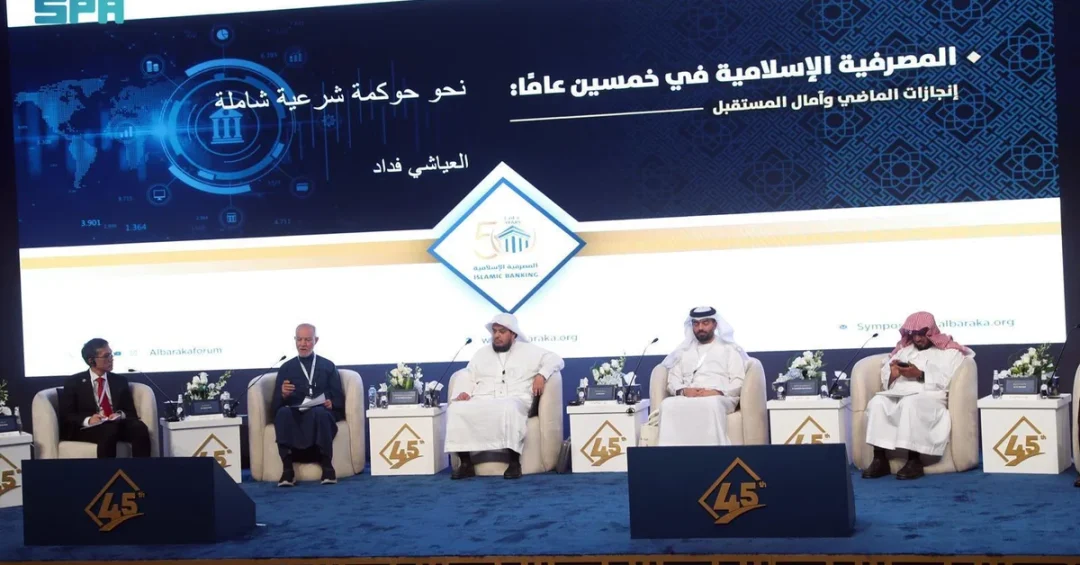
The 45th AlBaraka Islamic Economics Symposium in Madinah convened its second and third sessions, bringing together specialists and experts from several countries to discuss banking growth and challenges, with a focus on innovative approaches for Islamic banks’ expansion. The symposium, a cornerstone in the development of Islamic economics within the banking sector, was held under the patronage of the Saudi leadership, underscoring the Kingdom’s commitment to advancing Sharia-compliant finance as part of its broader economic modernization.
Have you ever wondered how Islamic finance is reshaping global banking? The second session, titled “Innovative Approaches for the Islamic Banks’ Growth: Islamic Windows and Acquisitions as Expansion Strategies,” delved into the origins, motivations, and regulatory frameworks behind conventional banks establishing Islamic windows. Experts explored how these windows help maintain Sharia identity, the importance of independence and oversight, and the role of central banks in ensuring compliance with Sharia standards. The third session continued the momentum, addressing emerging challenges and opportunities in the sector.
Context and Background
The AlBaraka Islamic Economics Symposium has long been a pivotal platform for dialogue among scholars, bankers, and regulators. Now in its 45th edition, it reflects the enduring commitment of the AlBaraka Banking Group to foster knowledge exchange and innovation in Islamic finance. The event in Madinah, a city of profound historical and religious significance, adds a layer of spiritual and cultural weight to the proceedings, aligning with Saudi Arabia’s vision to position itself as a global hub for Islamic finance.
Islamic finance has grown exponentially over the past decades, with assets exceeding trillions of dollars globally. The symposium’s focus on Islamic windows—divisions within conventional banks that offer Sharia-compliant services—highlights a pragmatic strategy for expanding access to Islamic financial products. This approach allows conventional banks to cater to customers seeking ethical, interest-free banking without establishing separate Islamic subsidiaries, thereby bridging traditional and Islamic finance ecosystems.
But what drives conventional banks to adopt Islamic windows? According to discussions at the symposium, legal, regulatory, and economic motivations are paramount. Regulatory frameworks in many Muslim-majority countries encourage such windows to deepen financial inclusion. Economically, they tap into a growing demand for Sharia-compliant products, while legally, they offer a flexible entry point into the Islamic finance market. The session underscored that these windows must operate with clear separation from conventional operations to maintain Sharia integrity, a point emphasized by central bank guidelines.
Key Details from the Sessions
During the second session, Chairman of Bursa Malaysia Tan Sri Abdul Wahid Omar shared valuable insights from Malaysia’s experience. He noted that 46 percent of financing in the Malaysian banking system is Islamic, while 63 percent of local sukuk issuances comply with Islamic Sharia. These figures illustrate the significant penetration of Islamic finance in a dual-system economy and serve as a benchmark for other nations. Omar discussed how Islamic financial services contribute to reducing reliance on interest-based revenues, thereby promoting sustainable growth. His remarks resonated with the symposium’s theme, highlighting Malaysia as a model for integrating Islamic windows successfully.
The session also covered the origins of the concept of Islamic windows, tracing their evolution from simple service counters to sophisticated divisions with dedicated Sharia boards. Experts explored the legal and regulatory motivations behind conventional banks’ shift toward establishing these windows, including the desire to serve Muslim customers who avoid interest-based transactions. However, they also addressed key challenges: ensuring Sharia compliance while fulfilling innovation requirements. This balance is delicate, as innovation in product design must not compromise religious principles. The role of central banks in regulating Islamic windows was a focal point, with emphasis on the need for robust oversight to maintain market confidence and Sharia authenticity.
What are the critical success factors for Islamic windows? Discussions emphasized independence and oversight. Islamic windows must have separate Sharia supervisory boards and maintain distinct accounting and risk management practices to avoid commingling of funds. This independence ensures that profits are not tainted by interest-based income. The symposium highlighted that central banks, such as those in Saudi Arabia, Malaysia, and the UAE, have issued guidelines to standardize practices, fostering a level playing field and protecting consumers. These measures are essential for sustainable growth and for upholding the integrity of Islamic finance.
International and Regional Impact
The insights from the AlBaraka Symposium have far-reaching implications for the global Islamic finance industry. With participants from several countries, the event facilitated cross-border learning and harmonization of practices. For Saudi Arabia, which hosts the largest Islamic finance market in the world, the symposium reinforces its leadership role in setting standards and promoting innovation. The Kingdom’s Vision 2030 includes ambitious targets to grow the Islamic finance sector, and events like this provide a platform to share best practices and attract foreign expertise.
Regionally, the Gulf Cooperation Council (GCC) countries are witnessing a surge in Islamic banking, driven by regulatory support and consumer demand. The symposium’s discussions on Islamic windows can guide policymakers in the GCC as they refine their frameworks. Moreover, the focus on acquisitions as an expansion strategy signals a maturing market where consolidation and strategic partnerships are becoming common. This trend can enhance efficiency and reach, allowing Islamic banks to compete more effectively with conventional counterparts.
How does this symposium impact the broader Islamic economy? By addressing challenges and showcasing success stories, it builds confidence among investors and stakeholders. The presence of international experts, such as Tan Sri Abdul Wahid Omar, underscores the global relevance of the topics. The symposium also strengthens Madinah’s status as a center for Islamic knowledge and finance, complementing its religious significance. This aligns with Saudi Arabia’s efforts to diversify its economy and promote religious tourism, as outlined in Vision 2030.
Economic and Strategic Significance
Islamic finance is not just a niche market; it is a vital component of the global financial system, with assets estimated at over $3 trillion. The growth strategies discussed at the symposium—Islamic windows and acquisitions—are pivotal for expanding this asset base. For Saudi Arabia, a robust Islamic finance sector supports economic diversification by attracting foreign investment and creating jobs. The Kingdom’s banking sector, already a regional leader, can leverage these strategies to enhance its global competitiveness.
The strategic significance extends to financial stability. Islamic banks, with their asset-backed and risk-sharing principles, demonstrated resilience during global financial crises. By promoting Sharia-compliant growth, the symposium contributes to a more stable financial ecosystem. Furthermore, the emphasis on reducing reliance on interest-based revenues aligns with the ethical foundations of Islamic finance, which prioritize real economic activity over speculative gains. This approach can foster sustainable development and social welfare.
What role do central banks play in this growth? Central banks are crucial in setting regulatory standards that ensure Sharia compliance and market integrity. The symposium highlighted that proactive regulation can facilitate innovation while safeguarding consumers. In Saudi Arabia, the Saudi Central Bank (SAMA) has been instrumental in developing a robust Islamic finance framework, supporting the Kingdom’s Vision 2030 goals. By sharing experiences, symposium participants can help shape global regulatory practices that balance innovation with tradition.
Vision 2030 Alignment
The 45th AlBaraka Islamic Economics Symposium directly supports Saudi Arabia’s Vision 2030 by advancing the Islamic finance sector, a key pillar of the Kingdom’s economic diversification strategy. Vision 2030 aims to increase the contribution of Islamic finance to the economy, enhance financial inclusion, and establish Saudi Arabia as a global hub for Islamic finance. The symposium’s discussions on innovative growth strategies, such as Islamic windows and acquisitions, provide actionable insights for achieving these objectives.
Moreover, by hosting such events in Madinah, Saudi Arabia showcases its ability to blend tradition with modernity. The Kingdom is investing in educational and financial infrastructure to nurture talent and attract international partnerships. The AlBaraka Symposium serves as a testament to Saudi Arabia’s leadership in fostering dialogue and innovation in Islamic economics. As the Kingdom continues its journey toward Vision 2030, platforms like this will be instrumental in driving sustainable growth and reinforcing Saudi Arabia’s role as a beacon of Islamic finance excellence.
20 Questions
Q1. What is the AlBaraka Islamic Economics Symposium?
A1. The AlBaraka Islamic Economics Symposium is an annual event that brings together experts to discuss developments in Islamic finance. The 45th edition was held in Madinah, focusing on banking growth and challenges.
Q2. What were the main topics of the second and third sessions?
A2. The second session focused on innovative approaches for Islamic banks’ growth, including Islamic windows and acquisitions. The third session continued discussions on challenges and opportunities in the sector.
Q3. Who is Tan Sri Abdul Wahid Omar?
A3. Tan Sri Abdul Wahid Omar is the Chairman of Bursa Malaysia. He shared Malaysia’s experience in Islamic finance, noting that 46 percent of financing in Malaysia’s banking system is Islamic.
Q4. What are Islamic windows?
A4. Islamic windows are divisions within conventional banks that offer Sharia-compliant financial services. They allow banks to cater to customers seeking Islamic finance without establishing separate Islamic subsidiaries.
Q5. Why do conventional banks establish Islamic windows?
A5. Conventional banks establish Islamic windows for legal, regulatory, and economic reasons. They aim to tap into the growing demand for Sharia-compliant products and enhance financial inclusion.
Q6. What challenges are associated with Islamic windows?
A6. Key challenges include ensuring Sharia compliance while fostering innovation. Maintaining independence and oversight is crucial to avoid commingling of funds and uphold Sharia integrity.
Q7. How do central banks regulate Islamic windows?
A7. Central banks issue guidelines and standards to ensure Islamic windows operate in accordance with Sharia principles. They provide oversight to maintain market confidence and protect consumers.
Q8. What is the significance of Madinah as the symposium venue?
A8. Madinah is a city of profound religious and historical significance. Hosting the symposium there adds cultural weight and aligns with Saudi Arabia’s efforts to promote Islamic knowledge and finance.
Q9. How does Islamic finance contribute to sustainable growth?
A9. Islamic finance reduces reliance on interest-based revenues and promotes risk-sharing and asset-backed transactions. This fosters ethical investment and sustainable economic development.
Q10. What percentage of Malaysia’s banking financing is Islamic?
A10. According to Tan Sri Abdul Wahid Omar, 46 percent of financing in the Malaysian banking system is Islamic, and 63 percent of local sukuk issuances comply with Sharia.
Q11. What are sukuk?
A11. Sukuk are Islamic financial certificates, similar to bonds, that comply with Sharia law. They represent ownership in tangible assets or projects, avoiding interest-based returns.
Q12. How does the symposium support Saudi Vision 2030?
A12. The symposium advances Islamic finance, a key pillar of Vision 2030. It facilitates knowledge exchange and innovation, helping Saudi Arabia become a global hub for Islamic finance.
Q13. What is the role of the AlBaraka Banking Group?
A13. The AlBaraka Banking Group is a leading international Islamic bank that organizes the symposium. It promotes dialogue and innovation in Islamic economics and finance.
Q14. What are acquisitions as an expansion strategy for Islamic banks?
A14. Acquisitions allow Islamic banks to expand their market presence by purchasing other banks or financial institutions. This strategy can enhance efficiency and reach.
Q15. How does Sharia compliance affect innovation in Islamic finance?
A15. Sharia compliance requires that financial products avoid interest and excessive uncertainty. Innovation must align with these principles, balancing modern needs with religious guidelines.
Q16. What is the size of the global Islamic finance industry?
A16. The global Islamic finance industry holds assets exceeding $3 trillion. It is one of the fastest-growing segments of the global financial system.
Q17. Which countries were represented at the symposium?
A17. The symposium featured specialists and experts from several countries, including Malaysia and Saudi Arabia. It facilitates cross-border learning and harmonization of practices.
Q18. How does Islamic finance promote financial inclusion?
A18. Islamic finance offers Sharia-compliant products that appeal to Muslim customers who avoid interest-based banking. This expands access to financial services for underserved populations.
Q19. What is the significance of the symposium’s 45th edition?
A19. The 45th edition marks a long-standing tradition of addressing contemporary issues in Islamic economics. It reflects the enduring commitment to advancing the sector.
Q20. How can the outcomes of the symposium benefit the global economy?
A20. The symposium shares best practices and fosters innovation, which can enhance the stability and growth of Islamic finance globally. This contributes to a more inclusive and ethical financial system.
Reader Feedback
We value your thoughts. Please share your feedback on this article.
Your feedback helps us improve our coverage.
Related articles
 ICIEC Holds Credit Risk Management Workshop
 Tabuk Citrus Farms Boost Saudi Agricultural Growth
 Najran’s Year-Round Strawberry Success Boosts Food Security
 ITFC Joins Uzbekistan Trade Finance Conference 2025
 Saudi Arabia Extends Deadline for Mining Exploration Program
 Jazan Fish: Daily Treasure Thriving in Al-Kannah Season