


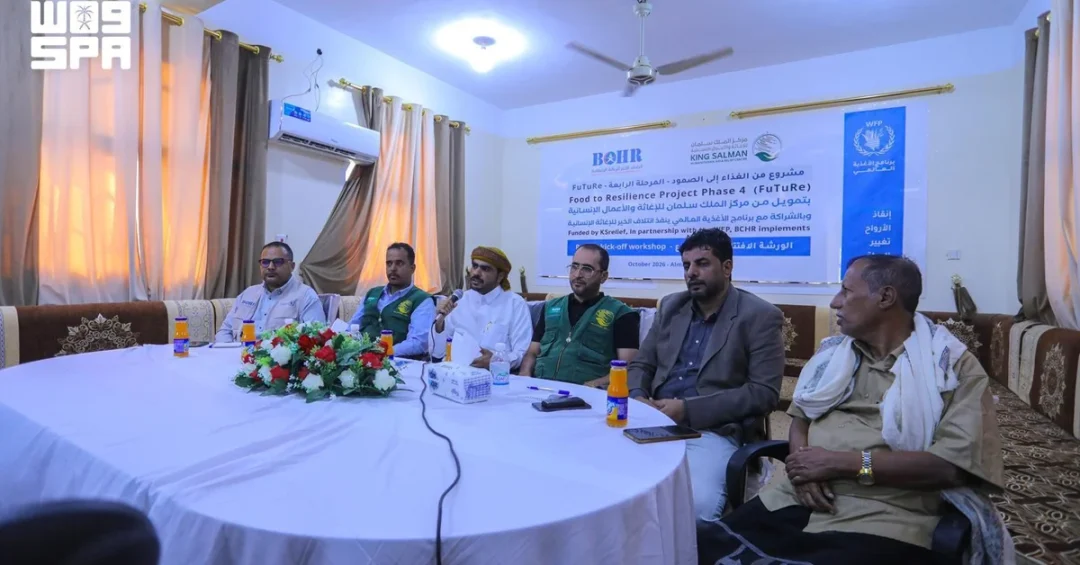
The King Salman Humanitarian Aid and Relief Center (KSrelief) held a workshop on Friday for the fourth phase of the “Food to Resilience (FuTuRe)” project in Al-Masilah District, Al-Mahra Governorate, Yemen, in cooperation with the World Food Programme (WFP) and the project’s implementing partner, the Benevolence Coalition for Humanitarian Relief. The workshop marked the launch of a comprehensive set of activities aimed at strengthening food security and improving livelihoods for vulnerable communities in the district. It brought together local officials, representatives of agricultural and fisheries associations, and the KSrelief team to discuss the project’s objectives and implementation plans. How does such a collaborative effort transform the lives of those who depend on the land and sea for their daily sustenance?
The fourth phase of the FuTuRe project represents a significant expansion of Saudi Arabia’s humanitarian commitment to Yemen, focusing on sustainable solutions that go beyond immediate relief. By rehabilitating critical infrastructure and providing training, the project seeks to empower local communities to achieve long-term resilience. This approach aligns with KSrelief’s broader strategy of delivering aid that creates lasting impact, ensuring that beneficiaries can eventually support themselves and their families. The workshop served as a platform to coordinate efforts among all partners, reinforcing the importance of joint action in addressing food insecurity.
Context and Background
Why has Al-Mahra Governorate become a focal point for Saudi humanitarian efforts in Yemen? Al-Mahra, located in eastern Yemen, has long been a region where agriculture and fisheries form the backbone of the local economy. However, years of conflict and economic instability have severely undermined these sectors, leaving many families without reliable income or food sources. The FuTuRe project, now in its fourth phase, builds on the successes of previous interventions that have already made a tangible difference in the lives of fishermen and farmers. The project’s integrated approach addresses multiple dimensions of food security, from production to market access.
The King Salman Humanitarian Aid and Relief Center has been at the forefront of Saudi Arabia’s humanitarian response in Yemen, delivering aid across various sectors including food, health, education, and infrastructure. The center operates in close partnership with United Nations agencies and local organizations to ensure that assistance reaches those most in need. In Al-Mahra, KSrelief’s collaboration with the World Food Programme and the Benevolence Coalition for Humanitarian Relief exemplifies the power of coordinated action. This partnership leverages the strengths of each organization: WFP’s logistical expertise, the Benevolence Coalition’s local knowledge, and KSrelief’s resources and commitment.
The FuTuRe project is designed to transition beneficiaries from dependency on food aid to self-reliance through productive assets and skills development. Each phase has progressively expanded its scope, and the fourth phase introduces new elements such as climate-smart agriculture training and solar-powered irrigation. These components reflect a forward-looking strategy that anticipates the challenges of climate change and resource scarcity. By investing in sustainable infrastructure and human capital, the project aims to create a lasting legacy of resilience in Al-Mahra.
Key Details of the Fourth Phase
What specific improvements will the fourth phase bring to Al-Masilah District? The project includes the rehabilitation and upgrading of the fish landing center in Rakhut, a vital facility for local fishermen. This upgrade will include the establishment of an ice production unit, which will help preserve catches and reduce post-harvest losses. More than 600 fishermen are expected to benefit directly from these improvements, enhancing their ability to sell fresh fish at competitive prices. The ice production unit is particularly important in a region where high temperatures can quickly spoil perishable goods.
In addition to fisheries, the fourth phase addresses agricultural challenges by restoring approximately 3,000 meters of irrigation canals. These canals are essential for distributing water efficiently to farmlands, and their rehabilitation will improve water management and increase crop yields. The project also involves reclaiming 10 hectares of farmland that has fallen into disuse, bringing it back into productive use. Two water wells will be rehabilitated, and five solar-powered irrigation systems will be installed, serving 28 hectares of agricultural land. These solar systems reduce reliance on expensive and polluting diesel pumps, offering a sustainable solution for irrigation.
Farmers will also receive training in climate-smart agricultural practices, equipping them with knowledge to adapt to changing weather patterns and optimize water usage. This training covers techniques such as crop rotation, drought-resistant seeds, and efficient irrigation methods. By combining physical infrastructure with capacity building, the project ensures that farmers can maximize the benefits of the improved assets. The ultimate goal is to strengthen food security for the most vulnerable families by developing productive assets in agriculture, fisheries, and water, while also providing conditional cash assistance to bridge immediate needs.
International and Regional Impact
How does this project reflect Saudi Arabia’s broader role in regional stability and development? The FuTuRe project is part of Saudi Arabia’s ongoing humanitarian and relief efforts, delivered through KSrelief, to support the Yemeni people and strengthen food security in the country. Saudi Arabia has been a leading donor to Yemen, providing billions of dollars in aid over the years. This commitment is rooted in the Kingdom’s belief in the importance of helping neighboring countries achieve stability and prosperity. The project also aligns with international efforts to address food insecurity, particularly in conflict-affected regions.
The collaboration with the World Food Programme, a specialized UN agency, underscores the international recognition of KSrelief’s effectiveness and reliability as a humanitarian partner. By working with WFP, KSrelief ensures that its interventions are coordinated with global standards and reach the intended beneficiaries efficiently. The involvement of the Benevolence Coalition for Humanitarian Relief, a local implementing partner, adds a layer of community trust and cultural sensitivity that is crucial for the project’s success. This multi-stakeholder approach is a model for humanitarian action in complex environments.
Regionally, the project contributes to stability in Al-Mahra by addressing the root causes of food insecurity and economic vulnerability. When communities have reliable sources of income and food, they are less susceptible to extremist influences and more likely to support peacebuilding efforts. Saudi Arabia’s investment in Yemen’s agricultural and fisheries sectors is thus not only a humanitarian gesture but also a strategic contribution to regional security. The Kingdom’s leadership in this area has been widely acknowledged by international organizations and donor countries.
Economic and Strategic Significance
What economic benefits will the project generate for Al-Mahra and beyond? By rehabilitating the fish landing center and establishing an ice production unit, the project will enhance the efficiency of the local fisheries value chain. Fishermen will be able to preserve their catch for longer periods, access larger markets, and reduce waste. This increased productivity can lead to higher incomes for fishing families and stimulate related businesses such as transportation, packaging, and retail. The fisheries sector has the potential to become a major driver of economic growth in Al-Mahra if properly supported.
Similarly, the restoration of irrigation canals and the introduction of solar-powered irrigation systems will boost agricultural output. Farmers will be able to cultivate more land and grow higher-value crops, increasing their household incomes. The reclamation of 10 hectares of farmland adds to the available arable land, while the rehabilitation of water wells ensures a reliable water supply. These improvements not only benefit individual farmers but also contribute to the overall food supply in the district, reducing dependence on imported food. The conditional cash assistance component provides a safety net for the most vulnerable while they work to build their assets.
Strategically, the project supports Saudi Arabia’s Vision 2030 by promoting sustainable development and economic diversification in the region. While Vision 2030 primarily focuses on the Kingdom’s domestic transformation, its principles of empowering communities and fostering resilience extend to Saudi Arabia’s international partnerships. By helping Yemen achieve food security, Saudi Arabia contributes to a more stable and prosperous neighborhood, which in turn benefits regional trade and investment. The project also showcases Saudi expertise in humanitarian aid and development, enhancing the Kingdom’s soft power and global standing.
Vision 2030 Alignment
How does the FuTuRe project embody the spirit of Saudi Vision 2030? Vision 2030 is a comprehensive plan to diversify Saudi Arabia’s economy, empower its citizens, and enhance its global role. A key pillar of the vision is the Kingdom’s commitment to being a responsible and influential member of the international community. Through KSrelief, Saudi Arabia is translating this commitment into action by providing humanitarian assistance to those in need, particularly in Yemen. The FuTuRe project’s focus on sustainable livelihoods, capacity building, and food security mirrors the vision’s emphasis on long-term planning and self-reliance.
Moreover, the project reflects the vision’s goal of fostering partnerships and innovation. By collaborating with the World Food Programme and local organizations, KSrelief leverages global expertise and local knowledge to achieve better outcomes. The introduction of solar-powered irrigation systems demonstrates a commitment to renewable energy and environmental sustainability, which are also central to Vision 2030. As Saudi Arabia continues to advance its own development, it remains dedicated to supporting its neighbors and contributing to a more stable and prosperous region. The fourth phase of the FuTuRe project is a testament to the Kingdom’s enduring humanitarian spirit and its vision for a better future for all.
20 Questions
Q1. What is the “Food to Resilience” (FuTuRe) project?
A1. The FuTuRe project is a humanitarian initiative by KSrelief, in cooperation with the World Food Programme and the Benevolence Coalition for Humanitarian Relief, aimed at strengthening food security and livelihoods in Yemen’s Al-Mahra Governorate.
Q2. Where was the workshop for the fourth phase held?
A2. The workshop was held in Al-Masilah District, Al-Mahra Governorate, Yemen, bringing together local officials, KSrelief representatives, and agricultural and fisheries associations.
Q3. Which organizations are partnering on this project?
A3. The project is implemented by the King Salman Humanitarian Aid and Relief Center (KSrelief) in cooperation with the World Food Programme (WFP) and the Benevolence Coalition for Humanitarian Relief.
Q4. What are the main components of the fourth phase?
A4. The fourth phase includes rehabilitating the fish landing center in Rakhut, establishing an ice production unit, restoring irrigation canals, reclaiming farmland, rehabilitating water wells, and installing solar-powered irrigation systems.
Q5. How many fishermen will benefit from the project?
A5. More than 600 fishermen are expected to benefit from the rehabilitation of the fish landing center and the establishment of the ice production unit, improving their livelihoods.
Q6. What is the purpose of the ice production unit?
A6. The ice production unit will help preserve fish catches, reduce post-harvest losses, and enable fishermen to sell fresh fish at better prices, enhancing their income.
Q7. How many meters of irrigation canals will be restored?
A7. Approximately 3,000 meters of irrigation canals will be restored to improve water efficiency and support agricultural activities in the district.
Q8. How much farmland will be reclaimed?
A8. The project will reclaim 10 hectares of farmland, bringing it back into productive use for cultivation and improving local food production.
Q9. How many water wells will be rehabilitated?
A9. Two water wells will be rehabilitated to ensure a reliable water supply for irrigation and domestic use, benefiting local farmers and communities.
Q10. What are solar-powered irrigation systems and how many will be installed?
A10. Five solar-powered irrigation systems will be installed, serving 28 hectares of land. These systems use solar energy to pump water, reducing costs and environmental impact.
Q11. What kind of training will farmers receive?
A11. Farmers will receive training in climate-smart agricultural practices, including efficient water use, crop rotation, and drought-resistant techniques to adapt to changing climate conditions.
Q12. How does the project provide immediate assistance?
A12. The project provides conditional cash assistance to the most vulnerable families, offering a safety net while they work to build productive assets and improve their livelihoods.
Q13. Who praised KSrelief and WFP for their support?
A13. Director-General of Al-Masilah District Fadl Al-Duhaimi praised KSrelief and WFP for backing the district’s agricultural and fisheries sectors, noting the positive impact of previous phases.
Q14. What did the district director-general do on the sidelines of the workshop?
A14. He visited the project sites accompanied by officials from relevant entities and the KSrelief team, in the presence of representatives of agricultural and fisheries associations.
Q15. How does this project fit into Saudi Arabia’s humanitarian efforts?
A15. The project is part of Saudi Arabia’s ongoing humanitarian and relief efforts, delivered through KSrelief, to support the Yemeni people and strengthen food security in cooperation with UN agencies.
Q16. What is the significance of the project for Al-Mahra’s economy?
A16. By improving fisheries and agriculture, the project boosts local incomes, creates jobs, and enhances food security, contributing to the overall economic stability of Al-Mahra.
Q17. How does the project support Vision 2030?
A17. The project aligns with Vision 2030 by promoting sustainable development, empowering communities, and enhancing Saudi Arabia’s global role as a responsible humanitarian actor.
Q18. What role does the Benevolence Coalition for Humanitarian Relief play?
A18. The Benevolence Coalition for Humanitarian Relief is the local implementing partner, ensuring community engagement and effective on-the-ground execution of the project’s activities.
Q19. How will the solar-powered irrigation systems benefit farmers?
A19. They provide a sustainable and cost-effective water source, reducing reliance on diesel pumps and lowering operational costs for farmers, while also being environmentally friendly.
Q20. What is the expected long-term impact of the FuTuRe project?
A20. The project aims to create lasting resilience by developing productive assets, improving skills, and strengthening food security, enabling communities to thrive independently in the long term.
Reader Feedback
We value your thoughts. Please share your feedback on this article.
Your feedback helps us improve our coverage.
Related articles
 Coalition Air Defenses Intercept Houthi Missile Targeting Southern Saudi Arabia
 Coalition Intercepts Houthi UAV Targeting Southern Saudi Arabia
 Abdulaziz Alnowaiser Appointed CEO of Insurance Authority
 Saudi Arabia Condemns Attack on Qatar’s LNG Carrier Al Mayeda
 Eastern Region Municipality Marks World Cities Day in Al-Khobar
 Saudi Vice Foreign Minister Meets UK Minister in Riyadh