


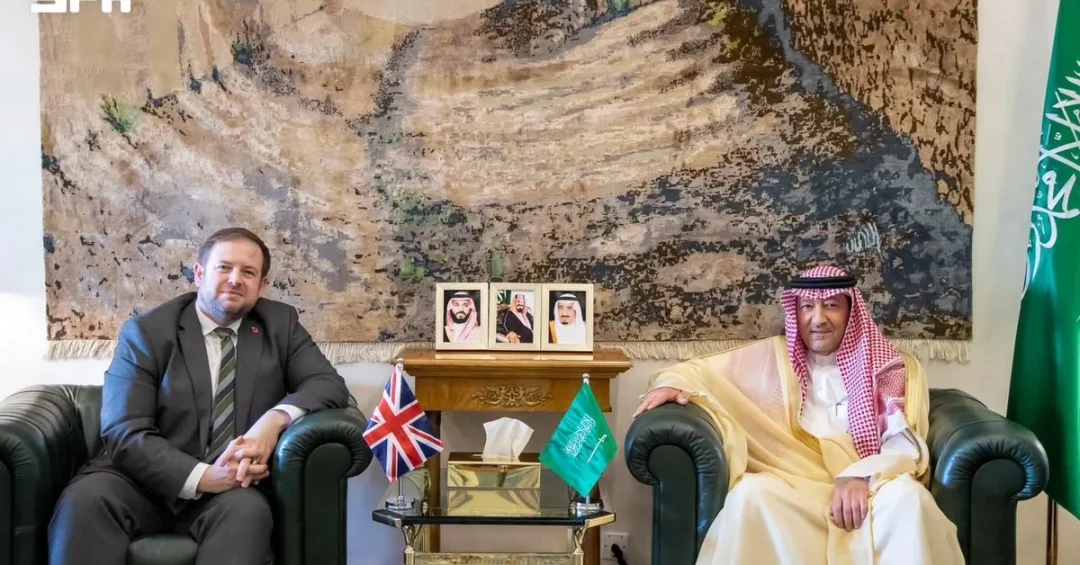
Saudi Vice Minister of Foreign Affairs Waleed Elkhereiji received UK Minister of State for the Middle East and North Africa Stephen Doughty at the Ministry of Foreign Affairs headquarters in Riyadh on Sunday, in a meeting that underscored the enduring strength of Saudi-British relations and the two nations’ shared commitment to regional stability and prosperity. The talks, announced by the Saudi Press Agency, reviewed the breadth of bilateral cooperation and addressed a range of regional and international developments, reinforcing the Kingdom’s role as a pivotal diplomatic hub and a reliable partner in addressing shared challenges.
How does a single diplomatic encounter in Riyadh resonate across London, the wider Middle East, and the global economy? The answer lies in the depth of the Saudi-UK partnership, which spans trade, investment, security, and cultural exchange, and in Saudi Arabia’s growing convening power under the leadership of the Custodian of the Two Holy Mosques, King Salman bin Abdulaziz Al Saud, and His Royal Highness Crown Prince Mohammed bin Salman. As the Kingdom advances its Vision 2030 transformation, high-level engagements such as this serve as both a testament to its international standing and a mechanism for translating shared interests into concrete outcomes. The meeting between Vice Minister Elkhereiji and Minister Doughty is therefore more than a routine diplomatic courtesy; it is a working session that helps set the tone for the next phase of a relationship that has endured for more than a century.
Context and Background
What historical foundations support the close ties between Riyadh and London today? The Saudi-British relationship dates back to the early twentieth century and has evolved into a strategic partnership encompassing political dialogue, defense cooperation, energy security, and people-to-people links. The United Kingdom is one of Saudi Arabia’s oldest and most consistent international partners, and the two countries maintain regular consultations at the ministerial and leadership levels. The establishment of the UK-Saudi Strategic Partnership Council in 2018 further institutionalized this cooperation, providing a structured framework for joint work on economic, social, and security issues. Sunday’s meeting between Vice Minister Elkhereiji and Minister Doughty fits within this established pattern of frequent, substantive engagement.
The timing of the talks is significant. The Middle East is navigating a period of both opportunity and uncertainty, with ongoing conflicts, humanitarian crises, and shifting geopolitical alignments demanding coordinated responses. Saudi Arabia has positioned itself as a leading voice for de-escalation, dialogue, and sustainable development, and its diplomatic outreach is aimed at reducing tensions and creating conditions for economic growth. The United Kingdom, for its part, shares an interest in regional stability that supports global energy markets, trade routes, and counterterrorism efforts. By meeting in Riyadh, the two officials signaled their intent to align their approaches on these pressing matters and to ensure that the Saudi-UK partnership remains fit for purpose in a changing world.
Key Details of the Meeting
What exactly did the two officials discuss, and what makes this encounter noteworthy? According to the official Saudi Press Agency report, Vice Minister Elkhereiji and Minister Doughty reviewed Saudi-British relations and explored ways to strengthen and develop them across various fields. The conversation also covered regional and international developments and the efforts being made to address them. While the specific agenda items were not disclosed in detail, the scope of the discussion reflects the multidimensional nature of the relationship, which includes diplomatic coordination, economic collaboration, and security cooperation.
The meeting took place at the Ministry of Foreign Affairs headquarters in Riyadh, a venue that has hosted numerous high-level diplomatic engagements in recent months. Vice Minister Elkhereiji, a seasoned diplomat who has represented the Kingdom in various capacities, including as ambassador to several countries, is a key figure in Saudi Arabia’s foreign policy apparatus. Minister Doughty, who was appointed UK Minister of State for the Middle East and North Africa in 2024, brings extensive experience in international affairs and has been actively engaged in strengthening Britain’s ties with Gulf partners. Their encounter is part of a sustained rhythm of consultations that keeps both capitals informed and aligned.
The readout from the Saudi Press Agency emphasized the positive and forward-looking nature of the talks, consistent with the Kingdom’s preference for constructive diplomacy. No joint statement or agreement was announced, which is typical for such working meetings, but the exchange itself is a valuable component of the ongoing strategic dialogue. It allows both sides to take stock of progress, identify new opportunities, and coordinate positions on issues of mutual concern. In the world of diplomacy, these regular, low-profile interactions often lay the groundwork for more visible achievements, such as trade deals, defense contracts, or joint humanitarian initiatives.
International and Regional Impact
Why should the international community pay attention to a meeting between a Saudi vice minister and a British minister of state? The answer lies in the weight that Saudi Arabia and the United Kingdom carry in regional and global affairs. Saudi Arabia is the world’s largest oil exporter, the custodian of Islam’s holiest sites, and a central player in Middle Eastern politics. The United Kingdom is a permanent member of the United Nations Security Council, a leading European economy, and a close ally of the United States. When these two countries coordinate, their combined influence can shape outcomes on issues ranging from Yemen’s fragile peace process to Iran’s nuclear program, from maritime security in the Red Sea to the reconstruction of Gaza.
Moreover, the meeting reflects a broader trend of intensified diplomacy in the Gulf region. Saudi Arabia has hosted a series of high-level talks in recent months, welcoming officials from Europe, Asia, and the Americas. This diplomatic activity is not merely reactive; it is part of a deliberate strategy to position the Kingdom as a global hub for problem-solving and a bridge between East and West. For the United Kingdom, engaging with Saudi Arabia is essential for maintaining its post-Brexit global role and for advancing its economic interests in the Gulf, where British companies are deeply involved in sectors such as defense, healthcare, education, and renewable energy. The Riyadh meeting thus contributes to a stable and prosperous regional order that benefits both nations and the wider world.
Economic and Strategic Significance
What economic and strategic dividends could flow from closer Saudi-UK coordination? Bilateral trade between Saudi Arabia and the United Kingdom is already substantial, valued at billions of pounds annually, and both governments have expressed a desire to increase it further. The UK is a major investor in Saudi Arabia, with prominent firms active in finance, infrastructure, and technology, while Saudi Arabia’s Public Investment Fund (PIF) has made significant investments in the UK, including in renewable energy, real estate, and technology startups. The meeting between Vice Minister Elkhereiji and Minister Doughty helps sustain the political momentum behind these commercial ties, signaling to businesses on both sides that the relationship is stable and supported at the highest levels.
Strategically, the two countries share a commitment to countering terrorism, preventing the proliferation of weapons of mass destruction, and ensuring the free flow of energy and trade. The UK relies on Saudi Arabia as a reliable energy partner, and Saudi Arabia values the UK’s expertise in defense and intelligence. In the context of Vision 2030, the Kingdom is seeking to diversify its economy away from oil, and British know-how in sectors such as artificial intelligence, clean energy, and advanced manufacturing can help accelerate that transition. The meeting in Riyadh is a reminder that diplomacy and economics are intertwined; political trust creates the conditions for investment, and investment deepens political trust.
Vision 2030 Alignment
How does this diplomatic engagement fit into Saudi Arabia’s long-term vision for itself and the world? Vision 2030, the ambitious reform blueprint championed by Crown Prince Mohammed bin Salman, aims to transform Saudi Arabia into a diversified, knowledge-based economy and a global investment powerhouse. A key pillar of the vision is to strengthen international partnerships that bring expertise, capital, and markets to the Kingdom. The United Kingdom is a natural partner in this endeavor, with world-class capabilities in education, healthcare, technology, and finance. By maintaining close diplomatic ties, Vice Minister Elkhereiji and his counterparts ensure that the political framework exists to support the vision’s economic and social objectives.
Furthermore, Vision 2030 seeks to enhance Saudi Arabia’s role as a global leader in diplomacy and conflict resolution. The Kingdom has mediated in regional disputes, hosted peace talks, and provided humanitarian aid to countries in need. Meetings such as the one with Minister Doughty reinforce Saudi Arabia’s image as a responsible international actor committed to stability and cooperation. As the Kingdom continues its transformation, its partnerships with countries like the United Kingdom will be instrumental in achieving the vision’s targets, from increasing non-oil exports to attracting foreign investment and creating jobs for Saudi youth. The Riyadh meeting is a small but meaningful step on that journey, demonstrating that Saudi diplomacy is active, engaged, and focused on a prosperous future for the Kingdom and its friends.
20 Questions
Q1. Who received UK Minister of State for the Middle East and North Africa Stephen Doughty in Riyadh?
A1. Saudi Vice Minister of Foreign Affairs Waleed Elkhereiji received Minister Doughty at the Ministry of Foreign Affairs headquarters in Riyadh on Sunday, according to the Saudi Press Agency.
Q2. Where did the meeting between the Saudi and UK officials take place?
A2. The meeting took place at the Ministry of Foreign Affairs headquarters in Riyadh, Saudi Arabia, as reported by the official Saudi Press Agency.
Q3. What topics were discussed during the meeting?
A3. The officials reviewed Saudi-British relations and ways to strengthen them across various fields, as well as regional and international developments and efforts to address them.
Q4. When did the meeting occur?
A4. The meeting occurred on Sunday, as reported by the Saudi Press Agency, which published the news on November 1, 2026, at 17:15 local time.
Q5. What is the significance of this meeting for Saudi-British relations?
A5. It reflects the enduring strength of the strategic partnership between the two countries and provides an opportunity to coordinate on mutual interests and regional challenges.
Q6. Who is Waleed Elkhereiji?
A6. Waleed Elkhereiji is the Vice Minister of Foreign Affairs of Saudi Arabia, a senior diplomat who has served in various capacities, including as ambassador to several countries.
Q7. Who is Stephen Doughty?
A7. Stephen Doughty is the UK Minister of State for the Middle East and North Africa, appointed in 2024, with extensive experience in international affairs and a focus on strengthening ties with Gulf partners.
Q8. What is the history of Saudi-UK relations?
A8. Saudi-UK relations date back to the early twentieth century and have evolved into a strategic partnership covering political dialogue, defense, energy, and cultural exchange, formalized by the UK-Saudi Strategic Partnership Council in 2018.
Q9. How does this meeting align with Saudi Arabia’s Vision 2030?
A9. It supports Vision 2030 by strengthening international partnerships that bring expertise, capital, and markets to the Kingdom, and by enhancing Saudi Arabia’s role as a global diplomatic leader.
Q10. What regional developments might have been on the agenda?
A10. Likely topics included ongoing conflicts, humanitarian crises, and efforts to promote de-escalation and stability in the Middle East and North Africa region.
Q11. Did the meeting produce any agreements or joint statements?
A11. No specific agreements or joint statements were announced, which is typical for working meetings that focus on reviewing relations and coordinating positions.
Q12. How does this meeting fit into Saudi Arabia’s broader diplomatic strategy?
A12. It is part of a sustained pattern of high-level engagements that position the Kingdom as a global hub for diplomacy and a bridge between East and West.
Q13. What economic ties exist between Saudi Arabia and the UK?
A13. Bilateral trade is valued at billions of pounds annually, with UK firms active in finance, infrastructure, and technology, and Saudi Arabia’s PIF investing in UK renewable energy and tech.
Q14. What strategic interests do Saudi Arabia and the UK share?
A14. Both countries share commitments to counterterrorism, nonproliferation, energy security, and ensuring the free flow of trade and maritime navigation in key waterways.
Q15. How does the UK benefit from engaging with Saudi Arabia?
A15. The UK benefits from Saudi Arabia’s role as a reliable energy partner, a major investor, and a key ally in addressing regional security challenges and advancing economic interests in the Gulf.
Q16. What is the UK-Saudi Strategic Partnership Council?
A16. Established in 2018, it is a structured framework for joint work on economic, social, and security issues, institutionalizing cooperation between the two countries.
Q17. How often do Saudi and UK officials meet?
A17. They meet regularly at ministerial and leadership levels, with consultations occurring multiple times a year to review relations and coordinate on regional and international issues.
Q18. What message does this meeting send to the international community?
A18. It signals that Saudi Arabia and the UK are actively coordinating on regional stability and that their partnership remains strong and forward-looking.
Q19. What role does the Saudi Press Agency play in reporting such meetings?
A19. The Saudi Press Agency is the official news agency of Saudi Arabia, providing authoritative and timely reports on government activities and diplomatic engagements.
Q20. What can we expect next in Saudi-UK relations?
A20. Continued high-level dialogue, expanded trade and investment, and joint efforts on regional security and humanitarian issues, all aligned with Saudi Arabia’s Vision 2030 and the UK’s global engagement strategy.
Reader Feedback
We value your thoughts. Please share your feedback on this article.
Your feedback helps us improve our coverage.
Related articles
 Coalition Strikes Houthi Resources in Precision Operation
 Deputy Governor of Makkah Receives Kazakh Consul General
 Hajj Ministry Highlights Preparations for Hajj Season 1448 AH
 Philippine Consulate Joins Saudi Greening Campaign in Khulais
 Makkah Deputy Governor Meets Indian Ambassador
 Riyadh to Host Inaugural Water Regulation Exchange in 2027