


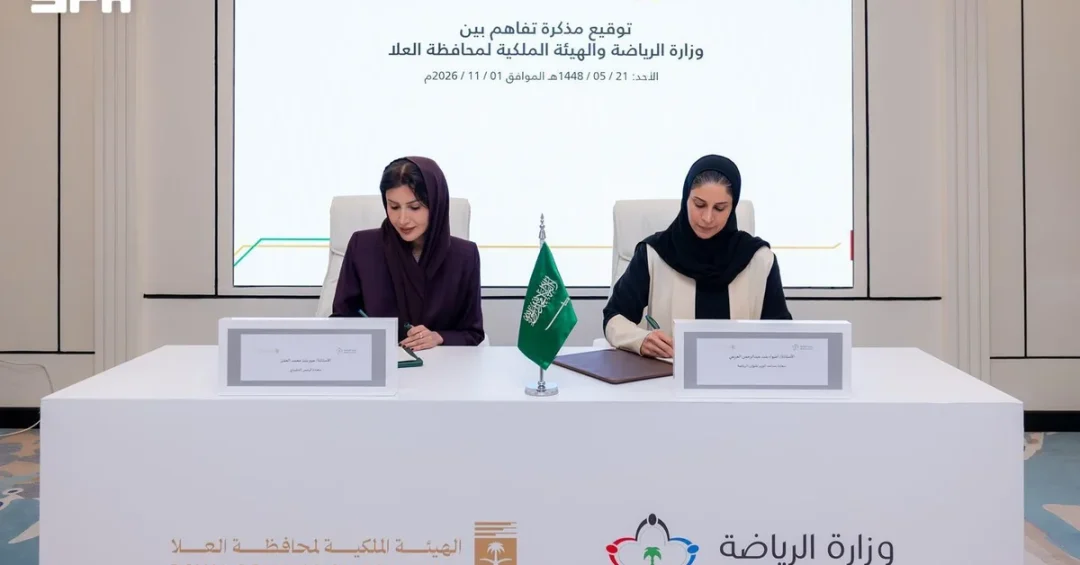
The Ministry of Sport and the Royal Commission for AlUla signed a memorandum of understanding (MoU) on Sunday to strengthen cooperation in developing the sports sector in AlUla Governorate and advancing sports initiatives, the Saudi Press Agency reported. The agreement, announced from Riyadh, establishes a formal framework for collaboration between two key Saudi institutions driving forward the Kingdom’s ambitious development agenda. It aims to support comprehensive development objectives and enhance coordination in areas of mutual interest, marking another step in Saudi Arabia’s efforts to diversify its economy and promote active lifestyles nationwide.
Have you ever wondered how Saudi Arabia is transforming its vast and historic regions into hubs of modern activity? This MoU represents precisely such a transformation, focusing on AlUla, a governorate renowned for its archaeological wonders and natural beauty. By integrating sports into AlUla’s development, the agreement seeks to advance the sports sector through targeted initiatives, support for community sports activities, and the exchange of knowledge and expertise. It also aims to make use of both parties’ resources and services to achieve shared objectives, reflecting a holistic approach to regional growth. This collaboration underscores the Kingdom’s commitment to fostering physical well-being and creating opportunities for investment and community engagement in line with Vision 2030.
Context and Background
What drives Saudi Arabia to invest in sports as a pillar of regional development? The Ministry of Sport, under the leadership of His Royal Highness Prince Abdulaziz bin Turki Al-Faisal, has been at the forefront of the Kingdom’s sports transformation, aiming to increase participation, host international events, and build world-class facilities. Simultaneously, the Royal Commission for AlUla, chaired by His Royal Highness Crown Prince Mohammed bin Salman, has been developing AlUla into a premier destination for heritage, tourism, and sustainable development. This MoU aligns with the Commission’s mandate to preserve and promote AlUla’s unique cultural landscape while fostering economic growth.
AlUla, located in northwestern Saudi Arabia, is home to ancient Nabataean tombs, Hegra (the Kingdom’s first UNESCO World Heritage site), and stunning desert landscapes. The region has been a focal point of Vision 2030, with projects like the AlUla Framework for Inclusive Community Development and the Sharaan Nature Reserve. Integrating sports into this mix is a natural progression, as it enhances quality of life for residents and attracts visitors seeking active experiences. The MoU builds on previous efforts to diversify AlUla’s offerings beyond heritage tourism, ensuring that the governorate becomes a year-round destination for sports, wellness, and recreation.
Have you considered how sports can bridge the gap between heritage preservation and modern development? This agreement exemplifies that synergy, as it seeks to develop sports infrastructure that respects AlUla’s environment while providing modern amenities. The Ministry of Sport and the Royal Commission for AlUla will work together to explore mechanisms to attract investors and sponsors, exchange expertise to develop sports facilities, and coordinate media campaigns to raise community awareness about physical activity. These efforts are designed to create a sustainable sports ecosystem that benefits both residents and visitors, further positioning AlUla as a model for integrated regional development.
Key Details of the Agreement
What specific areas of cooperation does this MoU cover? According to the Saudi Press Agency, the agreement encompasses several key areas: exploring suitable mechanisms to attract investors and sponsors to the sports sector in AlUla Governorate; exchanging expertise to develop sports facilities and infrastructure; coordinating plans and media campaigns to raise community awareness of the importance of physical activity; and developing human capabilities through training programs and courses. These components are designed to address both the hardware (facilities, infrastructure) and software (human capital, awareness) of sports development.
The MoU also emphasizes the exchange of knowledge and expertise between the two entities, leveraging the Ministry of Sport’s national reach and the Royal Commission for AlUla’s local knowledge and resources. This partnership is expected to facilitate the organization of sports events, community leagues, and training workshops that cater to various age groups and skill levels. By pooling resources, the two sides aim to accelerate the growth of sports in AlUla, making it a vibrant hub for athletics, recreation, and healthy living.
How will this agreement impact the daily lives of AlUla’s residents? The focus on community sports activities suggests a grassroots approach, encouraging locals to participate in regular physical exercise. The development of sports facilities will provide accessible venues for football, basketball, tennis, and other sports, while training programs will help build local coaching and administrative capacity. Additionally, media campaigns will promote the benefits of active lifestyles, potentially reducing health issues related to sedentary behavior. This comprehensive strategy not only enhances public health but also fosters social cohesion and youth engagement.
International and Regional Impact
Could this MoU elevate AlUla’s status on the global sports stage? By developing sports infrastructure and attracting international events, AlUla could become a destination for sports tourism, similar to how it has become a magnet for cultural tourism. The Royal Commission for AlUla has already hosted events like the AlUla Desert Polo and the AlUla Trail Race, and this MoU could lead to more regular competitions. Such events bring international visitors, media attention, and economic benefits, while showcasing Saudi Arabia’s ability to host world-class sports in unique settings.
Regionally, this agreement reinforces Saudi Arabia’s leadership in promoting sports as a tool for development. Neighboring countries in the Gulf Cooperation Council (GCC) have also invested in sports, but AlUla’s unique blend of heritage and nature gives it a competitive edge. The MoU could serve as a template for other regions in the Kingdom, demonstrating how sports can be integrated into broader development plans. Furthermore, it aligns with the Arab Sports Charter and the United Nations’ Sustainable Development Goals, particularly those related to health, education, and economic growth.
Economic and Strategic Significance
What economic opportunities will arise from this collaboration? The MoU’s emphasis on attracting investors and sponsors signals a clear intent to stimulate private sector involvement in AlUla’s sports sector. This could lead to the construction of sports complexes, academies, and retail outlets, creating jobs and generating revenue. The Royal Commission for AlUla has already attracted billions in investments for tourism projects, and sports can add another dimension, appealing to a different demographic of travelers and entrepreneurs.
Strategically, the agreement supports Saudi Arabia’s goal of reducing dependence on oil by diversifying income sources. Sports is a growing global industry, valued at hundreds of billions of dollars, and Saudi Arabia has been positioning itself as a major player through investments in football, golf, and entertainment. By developing AlUla’s sports sector, the Kingdom taps into this market while also enhancing its soft power and international image. The MoU also complements the Public Investment Fund’s (PIF) initiatives, such as the Sports Investment Fund, which aims to boost the sports economy.
Vision 2030 Alignment
How does this MoU embody the goals of Saudi Vision 2030? Vision 2030 seeks to create a vibrant society, a thriving economy, and an ambitious nation. This agreement contributes to all three pillars: by promoting sports and physical activity, it fosters a vibrant society with improved health and well-being; by attracting investment and creating jobs, it supports a thriving economy; and by developing human capabilities and infrastructure, it demonstrates an ambitious nation. The focus on AlUla also aligns with the vision’s goal of preserving cultural heritage while developing tourism.
Ultimately, this partnership between the Ministry of Sport and the Royal Commission for AlUla illustrates how integrated planning can drive sustainable development. It leverages AlUla’s unique assets to create a sports ecosystem that benefits residents, visitors, and the national economy. As Saudi Arabia continues its journey toward Vision 2030, such collaborations will be essential in transforming the Kingdom into a global leader in sports, tourism, and quality of life. The MoU is not just an agreement; it is a commitment to a healthier, more prosperous future for AlUla and beyond.
20 Questions
Q1. What is the purpose of the MoU signed between the Ministry of Sport and the Royal Commission for AlUla?
A1. The MoU aims to strengthen cooperation in developing the sports sector in AlUla Governorate, advancing sports initiatives, supporting comprehensive development objectives, and enhancing coordination in areas of mutual interest.
Q2. When and where was the MoU signed?
A2. The MoU was signed on Sunday in Riyadh, as reported by the Saudi Press Agency.
Q3. Which entities are involved in this agreement?
A3. The agreement is between the Ministry of Sport, led by His Royal Highness Prince Abdulaziz bin Turki Al-Faisal, and the Royal Commission for AlUla, chaired by His Royal Highness Crown Prince Mohammed bin Salman.
Q4. What are the key areas of cooperation outlined in the MoU?
A4. Key areas include attracting investors and sponsors, exchanging expertise to develop sports facilities and infrastructure, coordinating media campaigns for community awareness, and developing human capabilities through training programs.
Q5. How will the MoU support community sports activities in AlUla?
A5. The MoU will support community sports by developing facilities, organizing events, and launching awareness campaigns to encourage physical activity among residents of all ages.
Q6. What role does the Royal Commission for AlUla play in this partnership?
A6. The Royal Commission for AlUla provides local expertise, resources, and coordination to integrate sports into AlUla’s development plans, aligning with its mandate to promote heritage and tourism.
Q7. How does this MoU align with Saudi Vision 2030?
A7. It aligns with Vision 2030 by promoting a vibrant society through sports, supporting economic diversification, and enhancing quality of life in line with the vision’s goals.
Q8. What benefits will AlUla residents see from this agreement?
A8. Residents can expect improved sports facilities, more community activities, training opportunities, and greater awareness of health and wellness, leading to a better quality of life.
Q9. Will this MoU attract international sports events to AlUla?
A9. Yes, by developing infrastructure and attracting investment, the MoU aims to position AlUla as a destination for sports tourism and international events, building on existing events like Desert Polo.
Q10. How does the MoU support economic growth in AlUla?
A10. It stimulates economic growth by attracting investors and sponsors, creating jobs in sports and related sectors, and boosting tourism through sports events and activities.
Q11. What is the significance of AlUla in Saudi Arabia’s development strategy?
A11. AlUla is a key heritage and tourism destination, and its development is central to Vision 2030’s goals of preserving culture, promoting tourism, and diversifying the economy.
Q12. How will human capabilities be developed under this MoU?
A12. Through training programs and courses, the MoU will build local capacity in sports management, coaching, and administration, empowering residents with new skills.
Q13. What mechanisms will be used to attract investors to AlUla’s sports sector?
A13. The MoU will explore suitable mechanisms such as incentives, public-private partnerships, and promotional campaigns to attract investors and sponsors to sports projects in AlUla.
Q14. How does this MoU enhance coordination between the two entities?
A14. It establishes a formal framework for collaboration, enabling the Ministry of Sport and the Royal Commission for AlUla to share resources, align plans, and execute joint initiatives efficiently.
Q15. What impact will the MoU have on sports infrastructure in AlUla?
A15. The MoU will lead to the development of modern sports facilities and infrastructure, including stadiums, training centers, and recreational areas, to support various sports and community needs.
Q16. How will media campaigns raise awareness about physical activity?
A16. Coordinated media campaigns will promote the benefits of exercise through various channels, encouraging community participation and fostering a culture of health and wellness in AlUla.
Q17. Does the MoU include plans for youth engagement?
A17. Yes, by focusing on community sports and training programs, the MoU aims to engage youth in positive activities, develop their talents, and promote healthy lifestyles from a young age.
Q18. How does this agreement complement other Vision 2030 projects in AlUla?
A18. It complements projects like the AlUla Framework for Inclusive Community Development and Sharaan Nature Reserve by adding a sports dimension that enhances livability and attracts visitors.
Q19. What are the expected outcomes of the MoU in the short and long term?
A19. Short-term outcomes include awareness campaigns and initial training; long-term outcomes include world-class facilities, a thriving sports economy, and AlUla as a premier sports destination.
Q20. How can other regions in Saudi Arabia benefit from this model?
A20. Other regions can replicate this integrated approach by partnering with the Ministry of Sport to develop sports in harmony with local heritage and development goals, driving nationwide progress.
Reader Feedback
We value your thoughts. Please share your feedback on this article.
Your feedback helps us improve our coverage.
Related articles
 Abdulaziz Alnowaiser Appointed CEO of Insurance Authority
 Saudi Arabia Condemns Attack on Qatar’s LNG Carrier Al Mayeda
 Eastern Region Municipality Marks World Cities Day in Al-Khobar
 Saudi Vice Foreign Minister Meets UK Minister in Riyadh
 Coalition Strikes Houthi Resources in Precision Operation
 Jazan Home to 566 Native Plant Species, NCVC Reports