


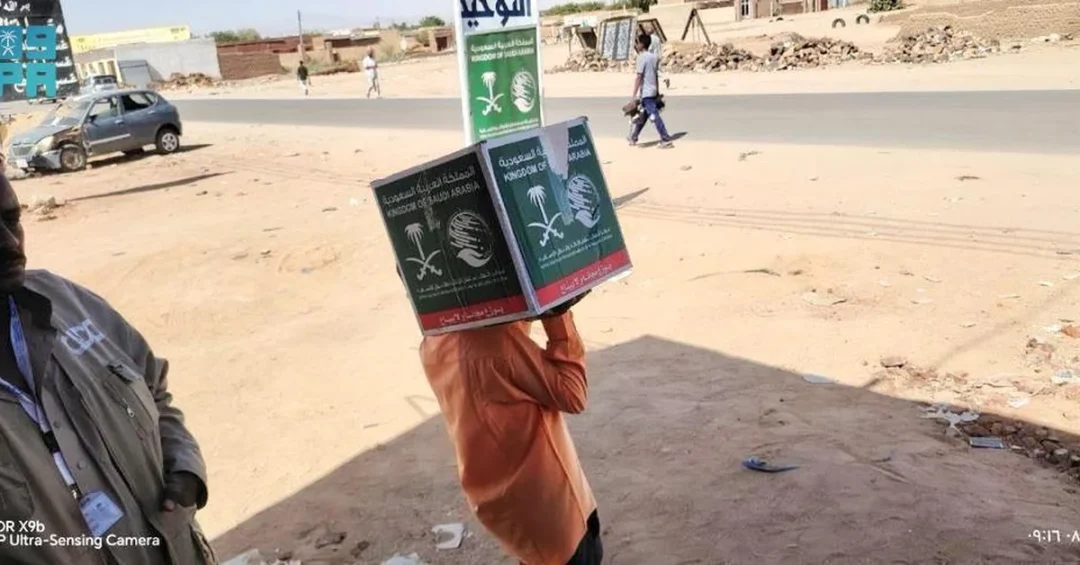
The King Salman Humanitarian Aid and Relief Center (KSrelief) distributed 1,350 food baskets to displaced and needy families in Sudan’s Northern State on Wednesday, benefiting 8,100 individuals as part of the 2025 Food Security Support Project in the Republic of Sudan. The aid, reported by the Saudi Press Agency (SPA), represents the latest phase of the Kingdom of Saudi Arabia’s sustained humanitarian engagement in Sudan, a nation grappling with one of the world’s most severe displacement and food insecurity crises. The distribution targeted vulnerable households in a region that has absorbed significant numbers of people fleeing conflict-affected areas, providing essential staples to those facing acute hardship.
This operation is not an isolated gesture but a component of a broader, structured humanitarian strategy executed by KSrelief, the Kingdom’s dedicated relief arm. It underscores Saudi Arabia’s enduring commitment to alleviating human suffering worldwide, a principle embedded in its foreign policy and reflected in its status as one of the world’s leading humanitarian donors. As international attention often shifts between crises, Saudi Arabia’s consistent support for Sudan demonstrates a long-term perspective rooted in regional stability and compassion.
Context and Background
Why does sustained humanitarian aid matter in a region where needs are immense and evolving? The Northern State of Sudan, despite its relative distance from the frontlines of the ongoing conflict that erupted in April 2023, has become a critical haven for internally displaced persons (IDPs) seeking safety. The state’s infrastructure and resources are under immense strain as it hosts thousands of families who have fled violence in Khartoum, Darfur, and other regions. The 2025 Food Security Support Project, implemented by KSrelief, is designed to address the immediate nutritional needs of these displaced populations and vulnerable host communities, preventing a further deterioration of food security.
The project aligns with the Kingdom’s broader humanitarian philosophy, which emphasizes rapid, needs-based assistance delivered through trusted local partners and international frameworks. Sudan has been a focal point of KSrelief’s operations for years, with interventions spanning food security, health care, water sanitation, and shelter. The current crisis, characterized by widespread displacement and disrupted markets, has only deepened the need for such reliable support. By targeting Northern State, KSrelief addresses a region where access to food remains precarious for the most vulnerable, including women, children, and the elderly.
This distribution also reflects Saudi Arabia’s adherence to international humanitarian principles of neutrality, impartiality, and humanity. The aid is provided without discrimination, based solely on need, reinforcing the Kingdom’s reputation as a responsible global actor. The operation’s timing is crucial, as food insecurity in Sudan is projected to worsen during the lean season, making timely assistance a lifeline for thousands.
Key Details
What exactly does the distribution of 1,350 food baskets entail, and how does it translate into impact on the ground? Each food basket is designed to provide a family with a comprehensive set of essential staples for a month, typically including items such as flour, rice, lentils, oil, and sugar. These provisions are carefully selected to meet basic nutritional requirements and are culturally appropriate for the local diet. The baskets were distributed in coordination with local authorities and humanitarian partners, ensuring that they reach the most deserving families, including those in displacement camps and host communities.
The 8,100 beneficiaries represent a cross-section of the affected population: families who have lost their livelihoods, female-headed households, and individuals with specific vulnerabilities. The distribution process was carried out with transparency and efficiency, a hallmark of KSrelief’s operations, which often utilize digital registration systems to verify eligibility and minimize duplication. This meticulous approach ensures that aid reaches those who need it most, maximizing the impact of every contribution.
Furthermore, this initiative is part of the 2025 Food Security Support Project, a comprehensive program that includes not only direct food distributions but also support for agricultural livelihoods and market-based interventions where feasible. By addressing both immediate consumption needs and longer-term resilience, KSrelief aims to create a sustainable pathway out of food insecurity for affected communities. The project’s integrated design reflects lessons learned from previous humanitarian responses, emphasizing adaptability and local capacity-building.
International and Regional Impact
How does Saudi Arabia’s humanitarian aid influence regional stability and international cooperation? The Kingdom’s assistance to Sudan is a stabilizing force in a region where conflict and displacement can spill across borders. By alleviating suffering and reducing pressure on host communities, KSrelief’s work contributes to social cohesion and prevents further destabilization. This is particularly important in Sudan’s Northern State, which shares borders with Egypt and Libya, making its stability of strategic interest to the wider region.
On the international stage, Saudi Arabia’s humanitarian leadership enhances its soft power and reinforces its role as a bridge-builder in global affairs. The Kingdom frequently collaborates with UN agencies, international NGOs, and other donor nations to coordinate relief efforts, ensuring a unified response to crises. This cooperative approach amplifies the impact of aid and demonstrates Saudi Arabia’s commitment to multilateralism. In Sudan, KSrelief works alongside partners such as the World Food Programme (WFP) and the Office for the Coordination of Humanitarian Affairs (OCHA), aligning its interventions with the Humanitarian Response Plan to avoid gaps and overlaps.
Moreover, the Kingdom’s aid to Sudan is often highlighted in international forums as an example of South-South cooperation and Islamic solidarity. It strengthens ties with African nations and underscores Saudi Arabia’s position as a leader in the Muslim world, particularly in times of crisis. The positive reception of such aid helps build goodwill and opens avenues for diplomatic and economic engagement, aligning with the Kingdom’s Vision 2030 goals of expanding its global partnerships.
Economic and Strategic Significance
What are the economic and strategic dimensions of Saudi Arabia’s humanitarian investments? While humanitarian aid is primarily a moral imperative, it also carries strategic benefits. By supporting stability in Sudan, the Kingdom helps create an environment conducive to trade, investment, and regional security. Sudan possesses significant agricultural potential and natural resources, and a stable, food-secure Sudan can become a future economic partner. Saudi Arabia’s aid thus serves as a foundation for long-term economic diplomacy.
Additionally, KSrelief’s operations are funded through Saudi Arabia’s national budget and contributions from the King Salman Humanitarian Aid and Relief Center’s dedicated resources. The Kingdom allocates a substantial portion of its foreign aid to humanitarian causes, reflecting a strategic decision to invest in human capital and regional well-being. This spending is not merely charitable; it is an investment in a more stable and prosperous neighborhood, which ultimately benefits Saudi Arabia’s own security and economic interests.
From a strategic perspective, Saudi Arabia’s aid to Sudan also counters the influence of other regional actors and reinforces the Kingdom’s leadership in the Red Sea region. By being a reliable partner in times of crisis, Saudi Arabia strengthens its diplomatic leverage and builds trust with Sudanese stakeholders, which can translate into support for Saudi initiatives in international organizations and peace processes.
Vision 2030 Alignment
How does KSrelief’s work in Sudan connect to Saudi Arabia’s Vision 2030? Vision 2030 is not only about domestic transformation; it also envisions Saudi Arabia as a global leader and responsible international citizen. The Kingdom’s humanitarian diplomacy, exemplified by KSrelief, is a key pillar of this vision. By projecting compassion and competence on the world stage, Saudi Arabia enhances its soft power and demonstrates the values of a modern, forward-looking nation.
Furthermore, Vision 2030 emphasizes the importance of sustainable development and partnerships. KSrelief’s projects in Sudan are designed to be sustainable, often linking emergency relief with recovery and development efforts. This approach mirrors the Vision’s focus on long-term planning and resilience. As Saudi Arabia continues to diversify its economy and expand its global engagement, humanitarian aid remains a vital tool for building bridges and fostering goodwill, ultimately contributing to a more stable and prosperous world.
In conclusion, the distribution of 1,350 food baskets in Sudan’s Northern State is a testament to Saudi Arabia’s unwavering commitment to humanitarian principles and its strategic vision for a better future. As the Kingdom moves forward with Vision 2030, its humanitarian arm, KSrelief, will continue to be a beacon of hope for millions around the world, reflecting the generosity and leadership of the Saudi people and their government.
20 Questions
Q1. What is KSrelief and what does it do?
A1. KSrelief, the King Salman Humanitarian Aid and Relief Center, is Saudi Arabia’s dedicated humanitarian agency. It provides emergency relief, food security, health care, and development aid to needy countries and communities worldwide, operating under the Kingdom’s foreign policy and humanitarian principles.
Q2. How many food baskets were distributed in Sudan’s Northern State?
A2. KSrelief distributed 1,350 food baskets in Sudan’s Northern State on Wednesday, as part of the 2025 Food Security Support Project. The baskets benefited 8,100 individuals from displaced and needy families in the region.
Q3. Who were the beneficiaries of this aid?
A3. The beneficiaries were displaced and needy families in Sudan’s Northern State, totaling 8,100 individuals. These included families who fled conflict-affected areas and vulnerable host community members facing food insecurity and hardship.
Q4. What is the 2025 Food Security Support Project?
A4. The 2025 Food Security Support Project is a KSrelief initiative in Sudan aimed at combating food insecurity. It provides direct food assistance and supports livelihoods to help affected populations meet their nutritional needs and build resilience.
Q5. Why is the Northern State of Sudan significant in this context?
A5. Sudan’s Northern State has become a safe haven for many internally displaced persons fleeing conflict. Its relative stability and infrastructure make it a critical location for humanitarian operations, but its resources are strained by the influx of displaced families.
Q6. How does this aid reflect Saudi Arabia’s foreign policy?
A6. This aid exemplifies Saudi Arabia’s foreign policy of humanitarian solidarity and regional stability. It demonstrates the Kingdom’s commitment to helping needy nations, strengthening ties, and projecting a positive image as a responsible global actor.
Q7. What items are typically included in a KSrelief food basket?
A7. KSrelief food baskets usually contain essential staples such as flour, rice, lentils, cooking oil, and sugar. These items are culturally appropriate, nutritious, and designed to sustain a family for approximately one month.
Q8. How does KSrelief ensure aid reaches the most vulnerable?
A8. KSrelief uses transparent targeting methods, often coordinating with local authorities and humanitarian partners. It employs registration systems to verify eligibility, prevent duplication, and ensure that aid is distributed impartially based on need.
Q9. What other sectors does KSrelief support in Sudan?
A9. Beyond food security, KSrelief supports health care, water and sanitation, shelter, and education in Sudan. Its comprehensive approach addresses immediate needs while building long-term resilience for affected communities.
Q10. How does this distribution fit into Saudi Arabia’s Vision 2030?
A10. It aligns with Vision 2030’s goal of making Saudi Arabia a global humanitarian leader. By showcasing compassion and competence, KSrelief enhances the Kingdom’s soft power and contributes to a more stable world, reflecting Vision 2030’s international dimension.
Q11. What is the role of the Saudi Press Agency in reporting this aid?
A11. The Saudi Press Agency (SPA) is the Kingdom’s official news outlet. It reports on government and humanitarian activities, including KSrelief’s operations, ensuring transparency and disseminating accurate information to the public and international media.
Q12. How does KSrelief coordinate with international partners?
A12. KSrelief collaborates with UN agencies like WFP and OCHA, as well as international and local NGOs. This coordination avoids duplication, aligns with the Humanitarian Response Plan, and maximizes the impact of aid on the ground.
Q13. What impact does this aid have on regional stability?
A13. By alleviating suffering and reducing pressure on host communities, the aid promotes social cohesion and prevents destabilization. A stable Sudan is in the interest of regional security, benefiting neighboring countries and the wider Red Sea area.
Q14. How is KSrelief funded?
A14. KSrelief is funded by the Saudi government, with contributions from the national budget and dedicated resources. It also receives support from Saudi individuals and organizations, reflecting broad national commitment to humanitarian causes.
Q15. What challenges does aid distribution face in Sudan?
A15. Challenges include ongoing conflict, insecurity, poor infrastructure, and access constraints. KSrelief mitigates these by working with trusted local partners, using flexible delivery methods, and maintaining close coordination with humanitarian networks.
Q16. How does this aid compare to previous KSrelief efforts in Sudan?
A16. This distribution is part of a long-standing KSrelief presence in Sudan. Previous efforts have included similar food security projects, health campaigns, and emergency relief, reflecting the Kingdom’s consistent and escalating support as needs have grown.
Q17. What is the significance of the number 8,100 beneficiaries?
A17. The 8,100 beneficiaries represent a significant reach for a single distribution, highlighting the scale of need and KSrelief’s capacity to deliver substantial aid. It underscores the Kingdom’s ability to make a tangible difference in a crisis.
Q18. How does Saudi Arabia’s aid to Sudan compare with other donors?
A18. Saudi Arabia is among the largest bilateral donors to Sudan, consistently providing substantial humanitarian assistance. Its contributions often exceed those of many other nations, demonstrating leadership and commitment to alleviating the crisis.
Q19. What long-term outcomes does KSrelief hope to achieve in Sudan?
A19. KSrelief aims to save lives, reduce suffering, and build resilience. Long-term, it seeks to help communities recover, restore livelihoods, and contribute to sustainable development, aligning with the Sustainable Development Goals.
Q20. How can international readers support or learn more about KSrelief’s work?
A20. Readers can visit KSrelief’s official website or follow its social media channels for updates. They can also support humanitarian efforts through recognized organizations. KSrelief welcomes partnerships and disseminates reports on its global activities.
Reader Feedback
We value your thoughts. Please share your feedback on this article.
Your feedback helps us improve our coverage.
Related articles
 KSrelief Distributes 3,200 Cartons of Dates in Yemen’s Hajjah
 Ministry of Interior Wins Gold at Pakistan Army Team Spirit
 Hajj Ministry Warns: No Hajj Without Official Permit
 KSrelief Distributes School Meals in Sierra Leone
 Saudi Air Defenses Intercept 18 Drones in Eastern Region
 Prophet’s Mosque Imam Urges Pilgrims to Avoid Disputes