


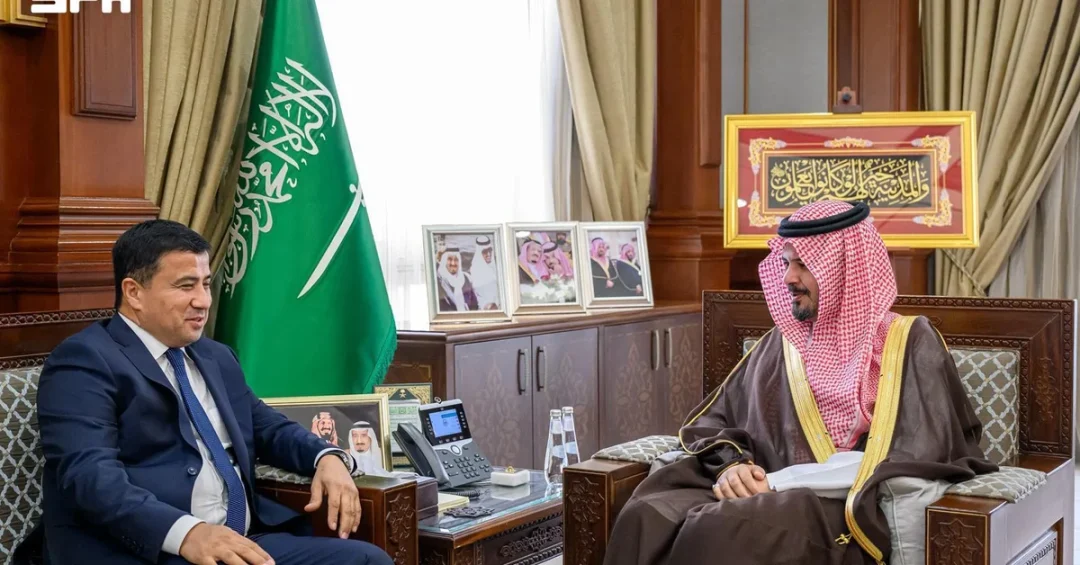
Governor of Madinah Region Prince Salman bin Sultan bin Abdulaziz received Consul General of the Republic of Uzbekistan in Jeddah Sirojiddin Shamsutdinov on Monday, November 2, 2026, at his office in Madinah, where they exchanged cordial talks and discussed topics of mutual interest. The meeting, reported by the Saudi Press Agency (SPA), underscores the Kingdom of Saudi Arabia’s ongoing commitment to strengthening diplomatic ties and fostering international cooperation under the leadership of the Custodian of the Two Holy Mosques, King Salman bin Abdulaziz Al Saud, and His Royal Highness Crown Prince Mohammed bin Salman bin Abdulaziz Al Saud, Prime Minister.
During the meeting, the two officials reviewed areas of shared concern and explored opportunities to enhance bilateral relations between Saudi Arabia and Uzbekistan. The encounter reflects the deep-rooted friendship between the two nations and aligns with Saudi Arabia’s Vision 2030, which prioritizes global engagement, economic diversification, and cultural exchange. As the Governor of Madinah Region, Prince Salman bin Sultan bin Abdulaziz plays a pivotal role in overseeing the region’s development and promoting its historical and religious significance, making this diplomatic engagement particularly noteworthy.
Context and Background
Why does a meeting between a regional governor and a consul general matter on the broader stage of international diplomacy? Such encounters, while often understated, serve as essential building blocks for enduring partnerships. The Consul General of Uzbekistan in Jeddah, Sirojiddin Shamsutdinov, represents his country’s interests in the western region of Saudi Arabia, including the holy city of Madinah. His meeting with Prince Salman bin Sultan bin Abdulaziz highlights the consul’s proactive approach to engaging with local leadership and fostering people-to-people ties. Uzbekistan, a Central Asian nation with a rich Islamic heritage, shares historical and cultural connections with Saudi Arabia that date back centuries, particularly through the Silk Road and pilgrimage routes.
Saudi-Uzbek relations have steadily deepened in recent years, with both countries collaborating in areas such as trade, investment, tourism, and cultural exchange. The Kingdom has consistently supported Uzbekistan’s development initiatives, and in turn, Uzbekistan has been a reliable partner in regional stability and Islamic solidarity. This meeting is part of a series of diplomatic engagements that reinforce Saudi Arabia’s role as a global hub for dialogue and cooperation. It also comes amid Saudi Arabia’s broader efforts to strengthen ties with Central Asian nations, a region of growing strategic importance.
Madinah, with its profound religious significance, holds a special place in the hearts of Muslims worldwide, including those in Uzbekistan. The city welcomes millions of pilgrims annually, and the presence of a consul general there facilitates services for Uzbek pilgrims and enhances bilateral cultural ties. The governor’s reception of the consul general is therefore not merely a courtesy call but a strategic dialogue that can yield tangible benefits for both nations.
Key Details of the Meeting
What specific topics might have been on the agenda during this cordial exchange? While the official statement from the Saudi Press Agency did not disclose detailed minutes, the phrase “topics of mutual interest” typically encompasses a wide range of bilateral issues. These could include enhancing trade and investment flows, facilitating pilgrimage and Umrah services for Uzbek citizens, promoting cultural and educational exchanges, and coordinating on regional and international matters. The meeting also provided an opportunity to discuss the implementation of agreements signed between the two countries in recent years, such as those in the energy, agriculture, and technology sectors.
Prince Salman bin Sultan bin Abdulaziz, as Governor of Madinah Region, has been instrumental in driving development projects that align with Vision 2030. His engagement with the Uzbek consul general likely touched upon opportunities for Uzbek businesses to participate in Madinah’s economic growth, particularly in tourism, hospitality, and halal industries. The consul general, in turn, would have expressed his country’s interest in learning from Saudi Arabia’s experience in managing large-scale religious tourism and urban development. The exchange of cordial talks also reinforces the personal rapport between the two officials, which is essential for effective diplomacy.
Furthermore, the meeting may have addressed the welfare of the Uzbek community in Saudi Arabia, including students, workers, and pilgrims. Saudi Arabia hosts a significant number of Uzbek nationals, and ensuring their well-being is a shared priority. The consul general’s role in Jeddah includes providing consular services and supporting Uzbek citizens in the Kingdom, and his discussions with the governor could lead to improved coordination on these matters. Overall, the meeting was a testament to the strong and growing partnership between Saudi Arabia and Uzbekistan.
International and Regional Impact
How does a bilateral meeting in Madinah resonate across the wider region and beyond? Saudi Arabia’s diplomatic outreach to Central Asia is part of a broader strategy to diversify alliances and promote stability in the Islamic world. Uzbekistan, as the most populous country in Central Asia, is a key partner in this endeavor. The meeting between Prince Salman bin Sultan bin Abdulaziz and Consul General Sirojiddin Shamsutdinov sends a positive signal that Saudi Arabia values its relationships with all nations, regardless of size or distance. It also reinforces the Kingdom’s image as a responsible global leader that engages constructively with international partners.
At the regional level, enhanced Saudi-Uzbek cooperation can contribute to peace and prosperity in Central Asia and the Middle East. Both countries share a commitment to combating extremism, promoting moderate Islam, and supporting sustainable development. Uzbekistan has undertaken significant reforms in recent years to open its economy and improve its international standing, and Saudi Arabia has been a supportive partner in these efforts. The meeting in Madinah could pave the way for further high-level visits and agreements, including potential investments by Saudi Arabia’s Public Investment Fund (PIF) in Uzbekistan’s infrastructure and energy projects.
Economic and Strategic Significance
What economic opportunities could arise from this diplomatic engagement? Saudi Arabia and Uzbekistan have identified several areas for economic collaboration, including agriculture, textiles, renewable energy, and information technology. The Kingdom’s Vision 2030 aims to increase non-oil exports and attract foreign investment, and Uzbekistan offers a growing market of over 35 million consumers. Conversely, Uzbek businesses can benefit from Saudi Arabia’s strategic location as a gateway to the Middle East and North Africa. The meeting between the governor and the consul general could facilitate business-to-business connections and joint ventures, particularly in Madinah, which is witnessing a surge in tourism and infrastructure projects.
Strategically, Saudi Arabia’s engagement with Uzbekistan is also about security and stability. Central Asia is a region where various global powers vie for influence, and Saudi Arabia’s soft power approach—rooted in religious, cultural, and economic ties—is a stabilizing factor. By hosting and supporting Uzbek pilgrims, Saudi Arabia strengthens its role as the custodian of Islam’s holiest sites. Moreover, cooperation in counterterrorism and deradicalization is a shared interest, and Uzbekistan has valuable experience in this domain. The meeting in Madinah thus carries strategic weight beyond its immediate diplomatic courtesies.
Vision 2030 Alignment
How does this meeting exemplify the objectives of Saudi Vision 2030? Vision 2030 is a comprehensive plan to transform Saudi Arabia’s economy and society, and a key pillar is strengthening international partnerships. The reception of the Uzbek consul general by the Governor of Madinah Region demonstrates the Kingdom’s openness to global engagement and its commitment to fostering mutual understanding. It also highlights the role of regional leaders in advancing Vision 2030, as they work to attract investment, promote tourism, and enhance the quality of life for citizens and visitors alike.
Madinah, in particular, is a focal point of Vision 2030’s tourism and cultural goals. The city is undergoing significant development to accommodate more pilgrims and visitors, with projects such as the expansion of the Prophet’s Mosque and the development of new hospitality and transportation infrastructure. By engaging with international partners like Uzbekistan, Madinah can share its expertise and learn from others, creating a vibrant and sustainable ecosystem. This meeting is a small but meaningful step toward a more interconnected and prosperous future, fully aligned with the visionary leadership of Crown Prince Mohammed bin Salman.
20 Questions
Q1. Who received the Consul General of Uzbekistan in Madinah?
A1. Governor of Madinah Region Prince Salman bin Sultan bin Abdulaziz received Consul General Sirojiddin Shamsutdinov in Madinah on November 2, 2026, as reported by the Saudi Press Agency.
Q2. What was the main purpose of the meeting?
A2. The meeting aimed to exchange cordial talks and discuss topics of mutual interest between Saudi Arabia and Uzbekistan, reflecting the strong bilateral relations and ongoing diplomatic engagement.
Q3. Where did the meeting take place?
A3. The meeting took place in Madinah, the capital of the Madinah Region, at the office of the Governor, Prince Salman bin Sultan bin Abdulaziz.
Q4. Who is Sirojiddin Shamsutdinov?
A4. Sirojiddin Shamsutdinov is the Consul General of the Republic of Uzbekistan in Jeddah, responsible for representing Uzbek interests and supporting Uzbek citizens in western Saudi Arabia.
Q5. Why is Madinah significant in Saudi-Uzbek relations?
A5. Madinah holds immense religious significance for Muslims, including those from Uzbekistan, and serves as a key destination for pilgrims, fostering cultural and people-to-people ties between the two nations.
Q6. What are some areas of mutual interest discussed?
A6. Likely topics included trade, investment, pilgrimage services, cultural exchange, education, and regional cooperation, all aimed at strengthening bilateral ties.
Q7. How does this meeting align with Saudi Vision 2030?
A7. It aligns with Vision 2030’s goal of enhancing international partnerships, promoting economic diversification, and developing Madinah as a cultural and tourism hub.
Q8. What is the historical relationship between Saudi Arabia and Uzbekistan?
A8. The two countries share deep historical and cultural ties rooted in Islamic heritage and the Silk Road, with recent years seeing increased cooperation in various sectors.
Q9. Will this meeting lead to new agreements?
A9. While no specific agreements were announced, such diplomatic engagements often pave the way for future cooperation and high-level visits between the two nations.
Q10. How does Saudi Arabia support Uzbek pilgrims?
A10. Saudi Arabia facilitates Hajj and Umrah for Uzbek pilgrims through dedicated services, and the consul general works to ensure their welfare and smooth experience.
Q11. What role does the Governor of Madinah play in Vision 2030?
A11. The Governor oversees regional development, promotes tourism and investment, and ensures the implementation of Vision 2030 projects in Madinah, enhancing its global standing.
Q12. Are there economic opportunities for Uzbekistan in Madinah?
A12. Yes, Madinah’s growing tourism and infrastructure sectors offer opportunities for Uzbek businesses in hospitality, halal industries, and construction, among others.
Q13. How does this meeting impact regional stability?
A13. It strengthens Saudi-Uzbek ties, contributing to stability in Central Asia and the Middle East through economic cooperation and shared security interests.
Q14. What is the significance of the timing of this meeting?
A14. The meeting comes amid Saudi Arabia’s intensified outreach to Central Asia, reflecting a strategic push to diversify partnerships and promote moderate Islam.
Q15. How many Uzbeks live in Saudi Arabia?
A15. While exact numbers vary, thousands of Uzbek nationals reside in Saudi Arabia for work, study, or pilgrimage, and the consul general supports their needs.
Q16. What cultural exchanges exist between the two countries?
A16. Cultural exchanges include participation in festivals, educational scholarships, and collaboration in preserving Islamic heritage, enhancing mutual understanding.
Q17. Does Saudi Arabia invest in Uzbekistan?
A17. Yes, Saudi Arabia, through its Public Investment Fund and private sector, has invested in Uzbek energy, agriculture, and infrastructure projects.
Q18. How does this meeting reflect Saudi Arabia’s global role?
A18. It showcases Saudi Arabia’s commitment to diplomacy, international cooperation, and its position as a leader in the Islamic world and global affairs.
Q19. What are the next steps after this meeting?
A19. Follow-up discussions and potential agreements may occur, with both sides likely to continue dialogue on enhancing cooperation in various fields.
Q20. Why is this meeting important for ksa.com readers?
A20. It provides insight into Saudi Arabia’s diplomatic efforts, Vision 2030 progress, and the Kingdom’s growing relationships with Central Asian nations, relevant to global audiences.
Reader Feedback
We value your thoughts. Please share your feedback on this article.
Your feedback helps us improve our coverage.
Related articles
 Riyadh Infrastructure Center Shines at Smart City Expo
 Media Innovation Bootcamp Launches Mentorship Program
 Saudi Defense Minister Calls Korean Counterpart
 Al-Mithnab Market Square Blends Najdi Heritage with Modern Design
 NCM Forecasts Above-Average Rainfall Across Saudi Regions
 Coalition Air Defenses Intercept Houthi Missile Targeting Southern Region