


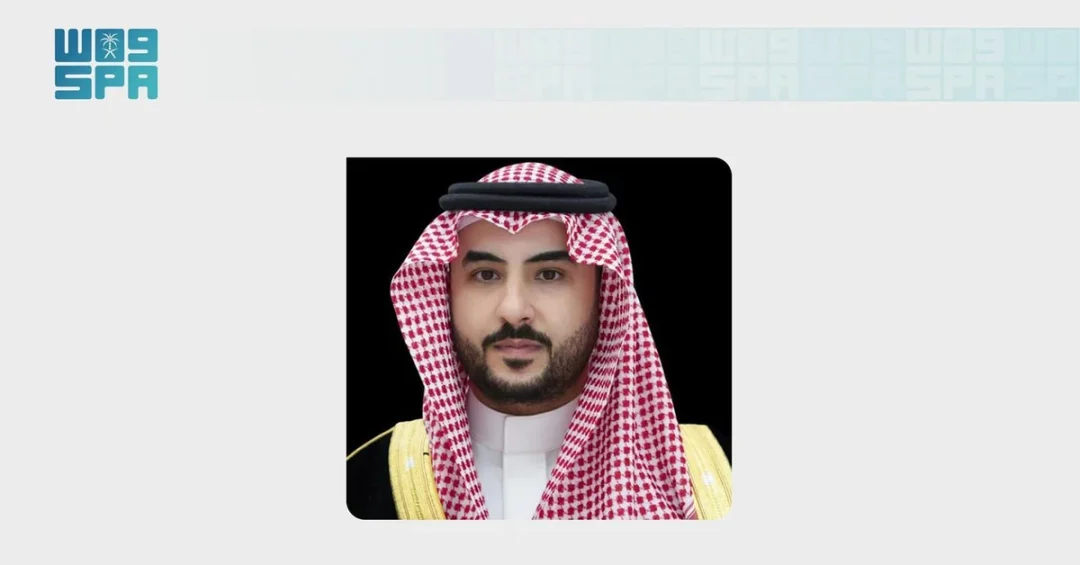
Saudi Minister of Defense Prince Khalid bin Salman bin Abdulaziz held a phone call on November 2, 2026, with the Minister of National Defense of the Republic of Korea, Kang Shin-chul, to congratulate him on his recent appointment and to discuss the future of defense cooperation between the two nations. The conversation, announced by the Saudi Press Agency (SPA), underscored the strength of Saudi-Korean ties and the shared commitment to regional and global stability. During the call, both ministers reviewed prospects for expanding defense collaboration and exchanged views on regional developments, emphasizing the importance of supporting peace efforts. They also condemned the terrorist attacks carried out by the Houthis against the Kingdom, reaffirming their opposition to all forms of terrorism.
The phone call comes at a time of deepening engagement between Saudi Arabia and South Korea, two nations that have cultivated a robust partnership spanning energy, technology, and defense. Prince Khalid bin Salman, who also serves as Deputy Prime Minister, has been at the forefront of Saudi Arabia’s efforts to modernize its defense capabilities under Vision 2030. His congratulatory message to Minister Kang reflects the Kingdom’s proactive diplomacy and its commitment to nurturing strong bilateral relationships. The discussion of regional developments highlights Saudi Arabia’s role as a stabilizing force in the Middle East and its willingness to collaborate with international partners to address shared security challenges. This exchange is part of a broader pattern of high-level diplomatic contacts that reinforce Saudi Arabia’s global network of allies.
Context and Background
How did Saudi-Korean defense relations evolve to this point? The relationship between Saudi Arabia and South Korea has grown steadily over the past decades, rooted in mutual economic interests and a shared vision for security. South Korea is a major supplier of advanced defense systems to the Kingdom, including the Cheongung II medium-range surface-to-air missile system, which Saudi Arabia has reportedly shown interest in acquiring. In recent years, the two countries have signed numerous memoranda of understanding (MoUs) covering defense procurement, joint training, and technological exchange. These agreements align with Saudi Arabia’s goal to diversify its defense partnerships and enhance its indigenous capabilities, a key pillar of Vision 2030. The appointment of Minister Kang Shin-chul presents an opportunity to further institutionalize this cooperation.
Prince Khalid bin Salman’s phone call is not an isolated event but part of a consistent pattern of high-level engagement. In 2023, the Prince visited Seoul and met with then-Defense Minister Lee Jong-sup to discuss ways to expand defense industry cooperation. That visit laid the groundwork for subsequent collaborations, including joint exercises and exchanges. The Kingdom has also participated in defense exhibitions in South Korea, showcasing its own defense industry ambitions. The current call builds on these foundations, signaling continuity and a mutual desire to elevate the partnership. As Saudi Arabia pursues its Vision 2030 objectives, such international partnerships are vital for technology transfer, capacity building, and ensuring regional security.
Why does this phone call matter now? The timing is significant given the evolving geopolitical landscape in the Middle East and beyond. The Houthi attacks on Saudi Arabia, which both ministers condemned, remain a serious threat to regional stability. By coordinating with South Korea, Saudi Arabia demonstrates its commitment to multilateralism and collective security. The call also comes as South Korea seeks to expand its defense exports and play a larger role in global security affairs. For Saudi Arabia, engaging with a technologically advanced nation like South Korea supports its efforts to localize defense manufacturing and reduce dependence on traditional suppliers. This convergence of interests makes the Saudi-Korean defense relationship a cornerstone of the Kingdom’s strategic outlook.
Key Details of the Call
What exactly was discussed during the phone call? According to the official SPA report, Prince Khalid bin Salman congratulated Minister Kang Shin-chul on his appointment as Minister of National Defense. The two leaders then discussed prospects for defense cooperation between the two friendly nations. They reviewed areas of mutual interest, likely including arms procurement, joint military exercises, and defense technology collaboration. The conversation also covered regional developments, with a focus on supporting peace efforts. Both ministers explicitly condemned the terrorist attacks carried out by the Houthis against the Kingdom, underscoring their shared stance against terrorism and extremism. The call reflects the warm and strategic nature of Saudi-Korean relations.
The congratulatory nature of the call highlights the importance Saudi Arabia places on maintaining personal diplomacy with allied defense ministers. Prince Khalid bin Salman, a key figure in Saudi Arabia’s defense modernization, has consistently engaged with his counterparts to strengthen ties. Minister Kang Shin-chul, newly appointed, represents a fresh opportunity to deepen cooperation. The discussion of defense cooperation prospects suggests that both sides are looking to build on existing frameworks. Potential areas of collaboration could include cybersecurity, military training, and joint research and development. The condemnation of Houthi attacks aligns with Saudi Arabia’s longstanding position that the Houthis are a destabilizing force backed by Iran, and it reinforces the international consensus against such aggression.
What are the tangible outcomes expected from this call? While phone calls are often diplomatic courtesies, they can pave the way for concrete actions. Following this conversation, we may see increased exchanges of defense delegations, joint military drills, and new procurement deals. South Korea’s defense industry, known for its advanced technology and competitive pricing, could offer solutions to Saudi Arabia’s defense needs. The Kingdom, in turn, could provide South Korea with access to Middle Eastern markets and investment opportunities. The call also sends a signal to other regional actors that Saudi Arabia and South Korea stand united against common threats. As both nations continue to navigate a complex security environment, this dialogue is a step toward a more robust and multifaceted partnership.
International and Regional Impact
How does this call resonate beyond the two nations? The Saudi-Korean defense dialogue has implications for the broader Middle East and East Asia. For the Middle East, it reinforces Saudi Arabia’s role as a leader in promoting stability and countering terrorism. The condemnation of Houthi attacks aligns with the positions of the Gulf Cooperation Council (GCC) and other allies. It also signals to Iran and its proxies that Saudi Arabia has strong international backing. For East Asia, South Korea’s engagement with Saudi Arabia enhances its standing as a responsible global security actor. It also balances the influence of other major powers in the region. The call thus contributes to a multipolar security architecture that benefits both regions.
What does this mean for global security cooperation? The Saudi-Korean partnership exemplifies the kind of cross-regional collaboration needed to address transnational threats. Terrorism, cyberattacks, and maritime insecurity are not confined to one region; they require coordinated responses. By working together, Saudi Arabia and South Korea can share intelligence, develop countermeasures, and promote international norms. The call also aligns with the United Nations’ counter-terrorism framework, which both nations support. Furthermore, it strengthens the global coalition against the Houthis, a group that has been condemned by the UN Security Council for its attacks on Saudi Arabia and its interference in Yemen. This phone call, though brief, is part of a larger effort to build a safer world.
Economic and Strategic Significance
Why is defense cooperation economically important? Defense procurement and joint ventures have significant economic spillovers. Saudi Arabia’s Vision 2030 aims to localize 50% of military spending by 2030, and partnerships with countries like South Korea can help achieve this. South Korean companies can establish joint ventures in the Kingdom, creating jobs and transferring technology. This aligns with the National Industrial Development and Logistics Program (NIDLP), which seeks to develop advanced manufacturing. Moreover, defense cooperation often leads to broader trade and investment ties. Saudi Arabia is South Korea’s largest oil supplier, and South Korea is a major exporter of electronics and automobiles to the Kingdom. Strengthening defense ties can enhance overall economic integration.
What strategic advantages does this partnership offer? Strategically, Saudi Arabia gains access to cutting-edge defense technologies and diversified suppliers, reducing reliance on any single country. South Korea gains a reliable partner in the Middle East and a market for its defense exports. The partnership also enhances interoperability between the two militaries, which is crucial for joint operations and coalition warfare. In the context of regional tensions, having a technologically advanced ally like South Korea bolsters Saudi Arabia’s deterrence posture. Additionally, the partnership supports Saudi Arabia’s goal of becoming a regional hub for defense industries, as outlined in Vision 2030. The call thus reinforces a strategic alignment that goes beyond mere transactions.
Vision 2030 Alignment
How does this phone call contribute to Saudi Arabia’s Vision 2030? Vision 2030 is a comprehensive plan to diversify the economy, empower citizens, and enhance the Kingdom’s global standing. Defense modernization and international partnerships are integral to this vision. By collaborating with South Korea, Saudi Arabia can accelerate the localization of its defense industry, create high-skilled jobs, and foster innovation. The call also reflects the vision’s emphasis on proactive diplomacy and global engagement. Prince Khalid bin Salman’s outreach to Minister Kang is a testament to Saudi Arabia’s commitment to building strong alliances that support peace and prosperity. As the Kingdom continues its transformative journey, such partnerships will be vital to achieving its goals.
What does the future hold for Saudi-Korean defense relations? The phone call sets the stage for further high-level exchanges and concrete cooperation. In the coming months, we can expect visits by defense delegations, participation in defense exhibitions, and possibly new agreements. The two nations share a vision of a stable and secure world, and their partnership is a model for others. Saudi Arabia, under the leadership of the Custodian of the Two Holy Mosques King Salman bin Abdulaziz Al Saud and Crown Prince Mohammed bin Salman, remains committed to strengthening its international ties. This call is another step in that direction, reinforcing the Kingdom’s role as a responsible global actor and a beacon of stability in the region. As Vision 2030 progresses, Saudi-Korean defense cooperation will likely deepen, contributing to the security and prosperity of both nations and the world.
20 Questions
Q1. Who held a phone call on November 2, 2026?
A1. Saudi Minister of Defense Prince Khalid bin Salman bin Abdulaziz held a phone call with South Korean Minister of National Defense Kang Shin-chul.
Q2. What was the main purpose of the call?
A2. The main purpose was to congratulate Minister Kang on his appointment and to discuss defense cooperation and regional developments.
Q3. What did the two ministers discuss regarding defense cooperation?
A3. They discussed prospects for enhancing defense cooperation between Saudi Arabia and South Korea, including potential areas of mutual interest.
Q4. What regional developments were addressed?
A4. They discussed regional developments and emphasized the importance of supporting efforts to achieve peace in the region and the world.
Q5. What did both ministers condemn?
A5. They condemned the terrorist attacks carried out by the Houthis against the Kingdom of Saudi Arabia.
Q6. Who is Prince Khalid bin Salman bin Abdulaziz?
A6. He is the Saudi Minister of Defense and Deputy Prime Minister, a key figure in Saudi Arabia’s defense modernization efforts.
Q7. Who is Kang Shin-chul?
A7. He is the Minister of National Defense of the Republic of Korea, newly appointed at the time of the call.
Q8. When did the phone call take place?
A8. The phone call took place on November 2, 2026, as reported by the Saudi Press Agency.
Q9. What is the significance of this call for Saudi-Korean relations?
A9. It strengthens bilateral ties, reinforces defense cooperation, and demonstrates Saudi Arabia’s commitment to international partnerships.
Q10. How does this call align with Saudi Vision 2030?
A10. It supports Vision 2030 by enhancing defense localization, technology transfer, and global engagement, key pillars of the transformation plan.
Q11. What are the Houthi attacks mentioned in the call?
A11. The Houthis have launched repeated terrorist attacks against Saudi Arabia, targeting civilian areas and infrastructure, which both ministers condemned.
Q12. What defense cooperation exists between Saudi Arabia and South Korea?
A12. The two countries have cooperated on defense procurement, joint training, and technology exchange, including South Korean missile systems.
Q13. What economic benefits could result from this call?
A13. It could lead to joint ventures, job creation, and increased trade in defense and related sectors, supporting economic diversification.
Q14. How does this call impact regional stability?
A14. It reinforces Saudi Arabia’s role as a stabilizing force and signals international unity against terrorism and aggression.
Q15. What is the Kingdom’s stance on terrorism?
A15. Saudi Arabia strongly condemns all forms of terrorism and works with international partners to combat extremism and promote peace.
Q16. What future steps might follow this phone call?
A16. Future steps may include defense delegation exchanges, joint exercises, and new agreements to deepen cooperation.
Q17. How does South Korea benefit from this partnership?
A17. South Korea gains a reliable Middle Eastern partner, access to markets, and enhanced global security cooperation.
Q18. What is the role of the Saudi Press Agency in this news?
A18. The Saudi Press Agency (SPA) is the official source that reported the phone call, ensuring accurate and authoritative information.
Q19. What does this call say about Saudi Arabia’s diplomatic approach?
A19. It reflects Saudi Arabia’s proactive diplomacy, commitment to alliances, and engagement with global partners to address shared challenges.
Q20. How does this call contribute to global peace efforts?
A20. By coordinating with South Korea and condemning terrorism, Saudi Arabia contributes to international peace and security initiatives.
Reader Feedback
We value your thoughts. Please share your feedback on this article.
Your feedback helps us improve our coverage.
Related articles
 Al-Mithnab Market Square Blends Najdi Heritage with Modern Design
 NCM Forecasts Above-Average Rainfall Across Saudi Regions
 Coalition Air Defenses Intercept Houthi Missile Targeting Southern Region
 Saudi, Australian Defense Ministers Discuss Cooperation, Condemn Houthi Attacks
 US States Issue Evacuation Orders as Heavy Rains Trigger Flooding
 GEP Confirms RCQE Accreditation Aligns with UNESCO Green School Standard