


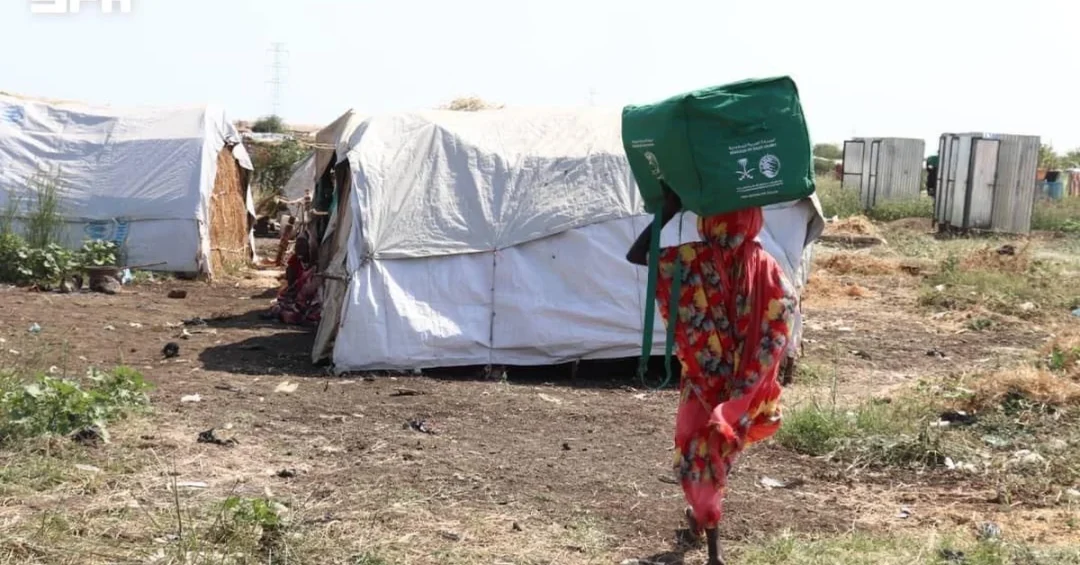
The King Salman Humanitarian Aid and Relief Center (KSrelief) has distributed 1,900 shelter kits to displaced families at Al-Karama 3 Camp in Al-Kurmuk locality, Blue Nile State, Sudan, benefiting approximately 8,000 individuals. The distribution, carried out on November 1, 2026, is part of Saudi Arabia’s ongoing humanitarian and relief efforts, implemented through KSrelief, to alleviate the suffering of the Sudanese people amid the ongoing humanitarian crisis.
This latest aid delivery underscores the Kingdom’s steadfast commitment to supporting those in need, particularly in regions affected by conflict and displacement. The shelter kits, which include essential items such as tarpaulins, blankets, and cooking utensils, are designed to provide immediate protection and dignity to families who have been forced to flee their homes. The operation was conducted in coordination with local authorities and humanitarian partners, ensuring that assistance reaches the most vulnerable. As Saudi Arabia continues to expand its global humanitarian footprint, this initiative highlights the critical role of KSrelief in delivering timely and effective relief across the world. How does such targeted assistance transform the lives of displaced families? It offers not just physical shelter but also a sense of security and hope for the future.
Context and Background
Sudan has been grappling with a severe humanitarian crisis since the outbreak of conflict in April 2023, which has displaced millions and left many without access to basic necessities. The Blue Nile State, located in southeastern Sudan, has seen an influx of displaced persons due to violence and instability in neighboring regions. According to United Nations estimates, over 8 million people have been displaced internally and across borders, making it one of the largest displacement crises globally. Al-Karama 3 Camp, where the distribution took place, hosts thousands of families who have fled their homes, often arriving with nothing but the clothes on their backs.
The King Salman Humanitarian Aid and Relief Center (KSrelief) has been at the forefront of Saudi Arabia’s response to this crisis, delivering food, shelter, medical care, and other essential services. Since the conflict began, KSrelief has implemented numerous projects in Sudan, focusing on emergency relief and long-term recovery. The center operates under the guidance of the Saudi leadership, which has consistently emphasized the importance of humanitarian solidarity and global responsibility. In 2025 alone, KSrelief provided aid to millions of beneficiaries in Sudan, with a particular emphasis on shelter, health, and food security. This distribution of 1,900 shelter kits is part of a broader strategy to address the urgent needs of displaced populations and to support their transition to stability.
Why does Saudi Arabia prioritize humanitarian aid in conflict-affected regions like Sudan? The answer lies in the Kingdom’s deep-rooted values of compassion and generosity, which are enshrined in its foreign policy and Vision 2030. By extending a helping hand to those in distress, Saudi Arabia not only fulfills its moral obligations but also contributes to regional stability and global peace. The ongoing crisis in Sudan requires sustained international attention, and KSrelief’s efforts serve as a beacon of hope for millions. The distribution at Al-Karama 3 Camp is a testament to the Kingdom’s unwavering commitment to alleviating human suffering, regardless of distance or difficulty.
Key Details of the Distribution
The distribution of 1,900 shelter kits at Al-Karama 3 Camp was meticulously planned and executed to ensure maximum impact. Each kit contains essential items such as waterproof tarpaulins, thermal blankets, sleeping mats, and solar-powered lamps, providing families with the means to construct temporary shelters and meet basic needs. The operation was carried out by KSrelief teams on the ground, in collaboration with local humanitarian organizations and Sudanese authorities. The selection of beneficiaries was based on a needs assessment that prioritized the most vulnerable, including women-headed households, the elderly, and persons with disabilities.
KSrelief’s field teams worked tirelessly to distribute the kits efficiently and fairly, adhering to international humanitarian standards. The distribution process included registration, verification, and post-distribution monitoring to ensure that aid reached the intended recipients. The kits are designed to be culturally appropriate and adaptable to local conditions, reflecting KSrelief’s commitment to dignity and respect for beneficiaries. In addition to shelter kits, KSrelief has also provided food baskets, medical supplies, and clean water to the camp’s residents, addressing multiple facets of the humanitarian crisis. The total value of this distribution is estimated at over half a million US dollars, funded entirely by the Saudi government as part of its humanitarian budget.
What makes KSrelief’s approach effective in complex emergencies like Sudan? The center’s ability to mobilize resources quickly, coordinate with partners, and adapt to evolving needs has been widely recognized. By focusing on shelter, KSrelief addresses one of the most critical needs of displaced families, who often face harsh weather conditions and security risks. The provision of solar lamps, for instance, not only extends daylight hours for children to study but also enhances safety for women and girls. These details highlight the thoughtful design of KSrelief’s interventions, which go beyond mere survival to promote resilience and well-being. The distribution at Al-Karama 3 Camp is a prime example of how targeted aid can make a tangible difference in the lives of those affected by conflict.
International and Regional Impact
The distribution of shelter kits in Blue Nile State is part of Saudi Arabia’s broader humanitarian diplomacy, which seeks to build bridges of cooperation and solidarity across the globe. In recent years, KSrelief has implemented projects in over 80 countries, earning international acclaim for its impartiality, efficiency, and reach. The Kingdom’s humanitarian efforts are guided by the principles of the United Nations and the Organization of Islamic Cooperation, and are often carried out in partnership with UN agencies such as UNHCR, UNICEF, and the World Food Programme. This collaborative approach ensures that aid is delivered effectively and complements the efforts of other donors.
Regionally, Saudi Arabia’s assistance to Sudan is particularly significant given the country’s strategic location and historical ties to the Kingdom. Sudan shares borders with several countries in the Horn of Africa and the Red Sea, making its stability crucial for regional security. By supporting displaced populations, Saudi Arabia helps mitigate the risk of further displacement and cross-border instability. Moreover, the Kingdom’s aid efforts are aligned with its Vision 2030 goal of becoming a global humanitarian leader. The distribution in Blue Nile State has been welcomed by local authorities and international observers alike, who view it as a vital contribution to the humanitarian response. How does such aid influence perceptions of Saudi Arabia on the world stage? It reinforces the Kingdom’s image as a responsible and compassionate global actor, committed to peace and prosperity for all.
Economic and Strategic Significance
While primarily humanitarian, Saudi Arabia’s aid to Sudan also carries economic and strategic dimensions. Sudan is rich in natural resources and has the potential to become a key economic partner for the Kingdom. By providing relief, Saudi Arabia contributes to the stabilization of Sudan, which is a prerequisite for economic recovery and development. Stable and prosperous neighbors are essential for regional trade and investment, and Saudi Arabia has a vested interest in seeing Sudan overcome its current challenges. Additionally, the aid distribution helps strengthen people-to-people ties and goodwill, which can translate into long-term diplomatic and economic benefits.
From a strategic perspective, Saudi Arabia’s humanitarian engagement in Sudan aligns with its broader foreign policy objectives, including countering extremism, promoting moderate Islam, and enhancing regional security. By addressing the root causes of displacement and suffering, the Kingdom helps create conditions for peace and reconciliation. The distribution of shelter kits is a small but meaningful step in this direction. It also demonstrates Saudi Arabia’s capacity to project soft power through humanitarian action, complementing its military and economic might. As the Kingdom continues to diversify its economy and expand its global influence, humanitarian aid will remain a key tool in its diplomatic toolkit. What does this mean for the future of Saudi-Sudanese relations? It lays a foundation of trust and mutual respect that can pave the way for deeper cooperation in trade, investment, and cultural exchange.
Vision 2030 Alignment
Saudi Arabia’s humanitarian efforts, including the KSrelief distribution in Sudan, are closely tied to the goals of Vision 2030, the Kingdom’s ambitious plan to transform its economy and society. One of the core pillars of Vision 2030 is to strengthen Saudi Arabia’s role as a global leader and to promote sustainable development worldwide. Through KSrelief, the Kingdom is not only providing immediate relief but also contributing to the achievement of the Sustainable Development Goals, particularly those related to poverty, hunger, health, and shelter. The center’s work reflects the visionary leadership of the Custodian of the Two Holy Mosques, King Salman bin Abdulaziz Al Saud, and His Royal Highness Crown Prince Mohammed bin Salman, who have consistently emphasized the importance of humanitarian action.
Moreover, Vision 2030 seeks to foster a sense of global citizenship and social responsibility among Saudi citizens. KSrelief’s campaigns often involve volunteers from within the Kingdom, who contribute their time and skills to help those in need. This engagement not only benefits recipients but also enriches Saudi society by instilling values of empathy and service. The distribution of shelter kits in Blue Nile State is a concrete example of how Vision 2030 translates into action on the ground, improving lives and building bridges of hope. As Saudi Arabia continues its journey toward a brighter future, its commitment to humanitarianism will remain a defining feature of its national identity and its interactions with the world. How will these efforts shape the Kingdom’s legacy? They will be remembered as a testament to Saudi Arabia’s enduring compassion and its unwavering dedication to the well-being of humanity.
20 Questions
Q1. What is KSrelief?
A1. KSrelief, or the King Salman Humanitarian Aid and Relief Center, is a Saudi organization established in 2015 to provide humanitarian aid worldwide. It operates under the guidance of the Saudi leadership and has implemented projects in over 80 countries.
Q2. Where did the recent distribution take place?
A2. The distribution took place at Al-Karama 3 Camp in Al-Kurmuk locality, Blue Nile State, Sudan. This camp hosts displaced families affected by the ongoing humanitarian crisis in the region.
Q3. How many shelter kits were distributed?
A3. KSrelief distributed 1,900 shelter kits during this operation. Each kit contains essential items to help families construct temporary shelters and meet basic needs.
Q4. How many individuals benefited from this aid?
A4. Approximately 8,000 individuals benefited from the distribution. This includes men, women, and children who have been displaced from their homes.
Q5. What items are included in a shelter kit?
A5. A shelter kit typically includes waterproof tarpaulins, thermal blankets, sleeping mats, and solar-powered lamps. These items provide protection, warmth, and light for displaced families.
Q6. When was the distribution carried out?
A6. The distribution was carried out on November 1, 2026. It was part of Saudi Arabia’s ongoing humanitarian efforts in Sudan.
Q7. Why is Saudi Arabia helping Sudan?
A7. Saudi Arabia is helping Sudan as part of its humanitarian commitment and Islamic values. The Kingdom seeks to alleviate the suffering of the Sudanese people amid their ongoing crisis.
Q8. What is the humanitarian situation in Sudan?
A8. Sudan faces a severe humanitarian crisis due to conflict that began in April 2023. Millions have been displaced, and many lack access to basic necessities like shelter, food, and healthcare.
Q9. How does KSrelief select beneficiaries?
A9. KSrelief selects beneficiaries based on needs assessments that prioritize the most vulnerable, including women-headed households, the elderly, and persons with disabilities. This ensures aid reaches those who need it most.
Q10. What other aid has KSrelief provided to Sudan?
A10. KSrelief has provided food baskets, medical supplies, clean water, and other essential services to Sudan. It has implemented numerous projects focusing on emergency relief and long-term recovery.
Q11. How does this distribution align with Vision 2030?
A11. This distribution aligns with Vision 2030 by promoting Saudi Arabia’s role as a global humanitarian leader. It reflects the Kingdom’s commitment to sustainable development and social responsibility.
Q12. What is the value of the distributed aid?
A12. The total value of this distribution is estimated at over half a million US dollars. It is funded entirely by the Saudi government as part of its humanitarian budget.
Q13. Which organizations partner with KSrelief?
A13. KSrelief partners with UN agencies such as UNHCR, UNICEF, and the World Food Programme, as well as local humanitarian organizations. These partnerships ensure effective and coordinated aid delivery.
Q14. How does KSrelief ensure aid reaches the right people?
A14. KSrelief uses registration, verification, and post-distribution monitoring to ensure aid reaches intended recipients. Field teams work with local authorities to maintain transparency and fairness.
Q15. What impact does the shelter aid have on families?
A15. The shelter aid provides immediate protection and dignity to displaced families. It offers security, warmth, and a sense of normalcy, helping families cope with their displacement.
Q16. Is this aid part of a larger Saudi effort in Sudan?
A16. Yes, this aid is part of Saudi Arabia’s broader humanitarian effort in Sudan. KSrelief has been actively responding to the crisis since it began, delivering aid across multiple sectors.
Q17. How does Saudi Arabia’s aid affect its international standing?
A17. Saudi Arabia’s aid enhances its international standing as a compassionate and responsible global actor. It demonstrates the Kingdom’s commitment to peace, stability, and human welfare.
Q18. What challenges does KSrelief face in Sudan?
A18. KSrelief faces challenges such as security risks, logistical constraints, and access limitations. However, it works diligently with partners to overcome these obstacles and deliver aid effectively.
Q19. How can other countries support Sudan?
A19. Other countries can support Sudan by contributing funds, resources, and expertise to humanitarian efforts. They can also advocate for peace and stability in the region.
Q20. What is the future of Saudi humanitarian aid?
A20. Saudi humanitarian aid will continue to grow and expand, guided by Vision 2030 and the Kingdom’s values. KSrelief will remain at the forefront, helping those in need around the world.
Reader Feedback
We value your thoughts. Please share your feedback on this article.
Your feedback helps us improve our coverage.
Related articles
 KSrelief Distributes 1,495 Food Baskets in Yemen’s Aden
 KSrelief Distributes 695 Food Baskets in Yemen’s Lahj
 Crown Prince Congratulates Bulgaria’s President-Elect Iotova
 King Salman Congratulates Bulgaria’s President-Elect Iotova
 Saudi, French Defense Ministers Discuss Strategic Ties
 Saudi Interior Ministry Records 20,688 Residency, Labor, Border Violations in a Week