


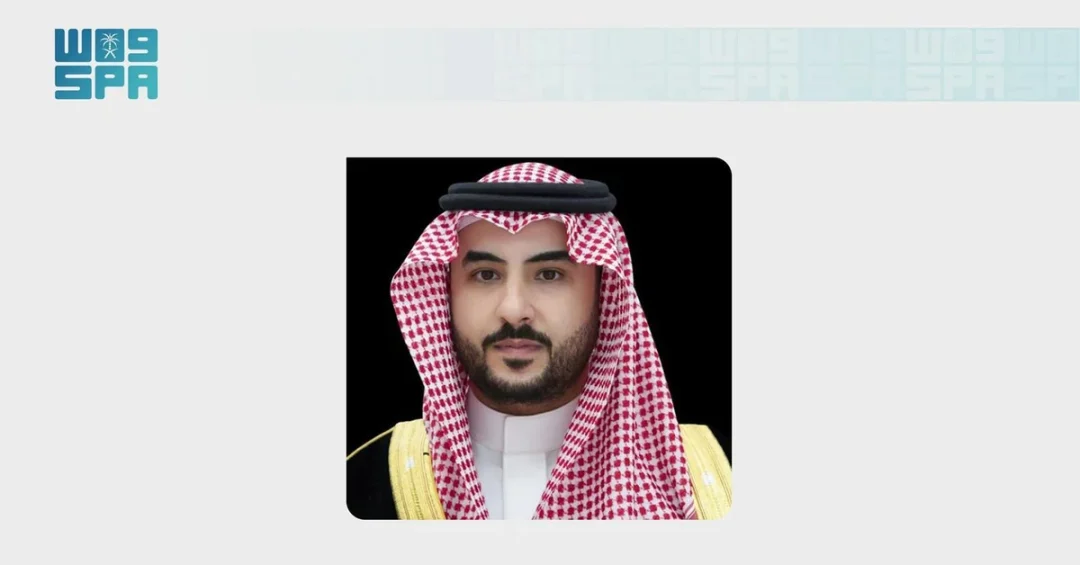
Saudi Minister of Defense Prince Khalid bin Salman bin Abdulaziz held a phone call with French Minister of the Armed Forces and Veterans Affairs Catherine Vautrin on Monday, reviewing the strategic defense partnership between Riyadh and Paris and exchanging views on regional and international developments, the Saudi Press Agency reported. The call, disclosed through official Saudi channels, underscores the continuing intensity of high-level defense diplomacy between the Kingdom and one of its most established European partners. According to the Saudi Press Agency, the two ministers examined ways to strengthen Saudi-French strategic defense relations and discussed coordination of efforts to enhance security and stability in the region and the world.
Why does a single phone call between two defense ministers deserve attention in a world saturated with diplomatic traffic? Because the Saudi-French defense relationship is not routine. It rests on decades of arms cooperation, joint training, intelligence exchange and shared assessments of a volatile regional environment stretching from the Red Sea to the Levant. The conversation between Prince Khalid bin Salman, who also serves as a trusted defense and security voice within the Saudi leadership, and Minister Catherine Vautrin, who oversees France’s armed forces and veterans affairs, signals that both capitals intend to keep their strategic channel active and aligned as regional risks evolve.
Context and Background
Saudi-French defense ties date back decades and have matured into a comprehensive partnership covering equipment, training, maintenance, maritime security and counterterrorism cooperation. France has long been a leading supplier of advanced defense systems to the Kingdom, and the relationship has expanded beyond procurement into industrial collaboration, joint exercises and professional military education. The phone call between Prince Khalid bin Salman and Minister Catherine Vautrin fits squarely within this tradition of sustained, high-level consultation.
The timing matters. The Middle East is passing through a period of shifting alignments, ongoing conflicts and fragile ceasefires, while global powers recalibrate their military postures. In such an environment, middle-power diplomacy between a Gulf heavyweight and a permanent member of the United Nations Security Council carries weight. Saudi Arabia has consistently emphasized dialogue, de-escalation and stability, and its defense diplomacy is designed to support those objectives rather than undermine them. France, for its part, maintains significant interests in the region and has historically valued close coordination with Riyadh on security matters.
The Saudi Press Agency’s report was deliberately concise, as is customary for readouts of this kind, but the substance is clear: the two sides reviewed the state of their defense relations and discussed ways to deepen them. They also addressed regional and international developments and the coordination of efforts regarding them. That language reflects a shared understanding that security challenges — from maritime threats to terrorism to the spillover of regional conflicts — require continuous consultation rather than occasional contact.
Key Details of the Discussion
According to the official readout, the call covered two broad tracks. The first was bilateral: Saudi-French strategic defense relations and the means of strengthening them. This track encompasses the full spectrum of cooperation, including military procurement, joint exercises, training programs, logistical support and the exchange of expertise. It also touches on the industrial dimension, where Saudi Arabia’s growing defense manufacturing ambitions intersect with French technological capabilities.
The second track was geopolitical: regional and international developments and the coordination of efforts to enhance security and stability in the region and the world. This is significant because it places the bilateral relationship within a wider framework. Saudi Arabia and France do not coordinate merely for their own benefit; they coordinate because instability in the Middle East has global consequences, affecting energy markets, trade routes and international security. The Red Sea, the Gulf, the Levant and North Africa all feature in this shared strategic landscape.
Minister Catherine Vautrin’s portfolio — the armed forces and veterans affairs — reflects France’s institutional commitment to defense as a core function of the state. Her engagement with Prince Khalid bin Salman indicates that the conversation was substantive and policy-oriented, not ceremonial. Prince Khalid bin Salman, for his part, has been a central figure in Saudi defense diplomacy, engaging regularly with counterparts from allied and partner nations to advance the Kingdom’s security interests and its preference for stability through dialogue.
International and Regional Impact
What does closer Saudi-French defense coordination mean for the wider region? For one, it reinforces a pattern of alignment among countries that favor stability, sovereign development and peaceful resolution of disputes. Saudi Arabia has invested heavily in de-escalation efforts, from Yemen to the broader Gulf, and partnerships with responsible international actors strengthen that approach. France’s role as a Security Council member and a capable military power gives its coordination with Riyadh additional weight in multilateral settings.
Second, the call signals continuity. Leadership changes and shifting global priorities can disrupt defense relationships, but the Saudi-French channel appears resilient. By maintaining regular contact at the ministerial level, both sides ensure that their partnership does not drift. This matters for procurement programs, training schedules, joint exercises and intelligence-sharing arrangements that depend on political confidence at the top. It also matters for crisis management, where direct lines between defense ministers can prevent miscalculation.
Third, the conversation reflects the broader internationalization of Saudi defense policy. The Kingdom is not choosing between partners; it is building a diversified network of defense relationships that spans the United States, Europe, Asia and the Arab world. France occupies an important place in that network, and the Monday call is a reminder that Riyadh values European partners alongside its other alliances.
Economic and Strategic Significance
Defense cooperation is never purely military. It has economic and industrial dimensions that connect directly to Saudi Arabia’s long-term development goals. The Kingdom is expanding its domestic defense industry, aiming to localize a significant share of military spending and to build sovereign capabilities in manufacturing, maintenance and technology. French companies, with their advanced systems and willingness to transfer technology and establish joint ventures, are natural partners in that effort.
Strategic significance extends beyond hardware. Coordination on regional developments allows Saudi Arabia and France to align their diplomatic messaging, support conflict-prevention efforts and contribute to maritime security in vital waterways. The Red Sea corridor, through which a substantial share of global trade passes, is a particular area of shared interest. Stability there benefits not only the region but the global economy, including European markets that depend on uninterrupted shipping.
The call also carries a signal for investors and markets: Saudi Arabia’s security environment is managed through active diplomacy and strong partnerships. That predictability supports the economic diversification agenda at the heart of Vision 2030, because investment, tourism and industrial growth all require a stable and secure environment. Defense diplomacy is, in this sense, an enabler of economic transformation.
Vision 2030 Alignment
Saudi Arabia’s defense diplomacy is inseparable from Vision 2030, the national transformation program launched under the leadership of Crown Prince Mohammed bin Salman. Vision 2030 is not only about economic diversification, tourism and quality of life; it also envisions a secure, sovereign and technologically advanced Kingdom capable of protecting its interests and contributing to regional stability. Partnerships such as the one with France support that vision by providing access to advanced capabilities, training and industrial cooperation.
The localization of defense industries is an explicit component of Saudi strategic planning, and cooperation with established producers like France helps accelerate it. Joint ventures, technology transfer and professional military education all build Saudi human capital and industrial capacity. At the same time, Saudi Arabia’s emphasis on dialogue and de-escalation — reflected in the Monday call’s focus on enhancing security and stability — aligns with Vision 2030’s vision of a responsible and globally engaged Kingdom.
As regional and international developments continue to unfold, Saudi Arabia will keep investing in partnerships that combine capability with credibility. The phone call between Prince Khalid bin Salman and Minister Catherine Vautrin is a small but telling indicator of how the Kingdom conducts its defense diplomacy: quietly, consistently and with a clear focus on stability, sovereignty and long-term national development.
20 Questions
Q1. Who held the phone call discussed in the official Saudi report?
A1. Saudi Minister of Defense Prince Khalid bin Salman bin Abdulaziz held a phone call with French Minister of the Armed Forces and Veterans Affairs Catherine Vautrin on Monday, according to the Saudi Press Agency.
Q2. When did the phone call take place?
A2. The call took place on Monday, as reported by the Saudi Press Agency, which published the readout at 22:04 local time, corresponding to 19:04 GMT.
Q3. What topics were discussed during the call?
A3. The two ministers reviewed Saudi-French strategic defense relations and ways to strengthen them, and they discussed regional and international developments and coordination of efforts to enhance security and stability.
Q4. What is the significance of Saudi-French defense relations?
A4. Saudi-French defense relations are a long-standing strategic partnership covering equipment, training, maritime security, counterterrorism and industrial cooperation, making France one of the Kingdom’s key European defense partners.
Q5. Who is Prince Khalid bin Salman bin Abdulaziz?
A5. Prince Khalid bin Salman bin Abdulaziz is the Saudi Minister of Defense and a senior member of the Saudi leadership, regularly engaging with international counterparts to advance the Kingdom’s security and stability objectives.
Q6. Who is Catherine Vautrin?
A6. Catherine Vautrin is France’s Minister of the Armed Forces and Veterans Affairs, responsible for overseeing France’s military forces and veterans’ affairs within the French government.
Q7. Why is high-level defense diplomacy important for Saudi Arabia?
A7. High-level defense diplomacy allows Saudi Arabia to maintain strong partnerships, coordinate responses to regional challenges, support de-escalation efforts and protect its sovereignty and economic interests in a changing strategic environment.
Q8. How does this call relate to regional stability?
A8. The call included discussion of regional and international developments and coordination of efforts to enhance security and stability, reflecting both countries’ shared interest in peaceful and stable regional conditions.
Q9. What role does France play in Middle East security?
A9. France is a permanent member of the United Nations Security Council and maintains significant diplomatic and military interests in the Middle East, making it an important partner for regional coordination.
Q10. Does the call indicate a new agreement or deal?
A10. The official readout did not announce a specific new agreement. It described a review of existing strategic defense relations and discussions on strengthening them and coordinating on regional developments.
Q11. How does defense cooperation support Saudi Vision 2030?
A11. Defense cooperation supports Vision 2030 by enabling localization of defense industries, technology transfer, training and industrial partnerships that build Saudi capabilities and contribute to a secure environment for economic growth.
Q12. What is the significance of the Red Sea in Saudi-French discussions?
A12. The Red Sea is a vital global trade corridor. Stability there affects energy markets, shipping and regional security, making it a natural area of shared interest between Saudi Arabia and France.
Q13. How often do Saudi and French defense officials communicate?
A13. Saudi and French defense officials maintain regular communication at various levels, reflecting the depth and continuity of their strategic partnership, though specific frequencies are not always publicly disclosed.
Q14. What does the Saudi Press Agency report tell us about the tone of the call?
A14. The report describes a constructive discussion focused on strengthening relations and coordinating efforts for security and stability, indicating a positive and forward-looking tone between the two ministers.
Q15. What are the economic dimensions of Saudi-French defense ties?
A15. Economic dimensions include defense procurement, joint ventures, technology transfer and maintenance contracts, all of which contribute to industrial development and economic diversification in Saudi Arabia.
Q16. How does this call fit into Saudi Arabia’s broader foreign policy?
A16. The call fits into Saudi Arabia’s policy of building diversified international partnerships, emphasizing dialogue, de-escalation and cooperation with responsible global actors to support regional and global stability.
Q17. What message does this call send to the international community?
A17. It signals that Saudi Arabia remains actively engaged in defense diplomacy, values its European partnerships and is committed to coordinating with allies on security and stability challenges.
Q18. Are there any implications for defense procurement?
A18. While no specific procurement was announced, continued high-level engagement supports the framework for ongoing and future defense cooperation, including potential equipment and technology collaboration.
Q19. How does this development reflect Saudi Arabia’s regional leadership?
A19. By maintaining active defense diplomacy with a major European power, Saudi Arabia demonstrates its role as a regional leader committed to stability, coordination and responsible engagement on shared security challenges.
Q20. What is the forward-looking significance of this call?
A20. The call reinforces a durable Saudi-French defense partnership that supports Vision 2030, regional stability and the Kingdom’s long-term goal of a secure, sovereign and globally engaged nation.
Reader Feedback
We value your thoughts. Please share your feedback on this article.
Your feedback helps us improve our coverage.
Related articles
 KSrelief Delivers 24,500 Meals in Gaza
 National Greening Program Launches in Al-Jouf with Community Drive
 Arab League Condemns UAV Attacks on Sudan Energy Facilities
 Saudi Interior Ministry Records 20,688 Residency, Labor, Border Violations in a Week
 IMCTC Launches Counterterrorism Training in Niger
 KSrelief Delivers Safe Water to 3,480 in Yemen’s Taiz