


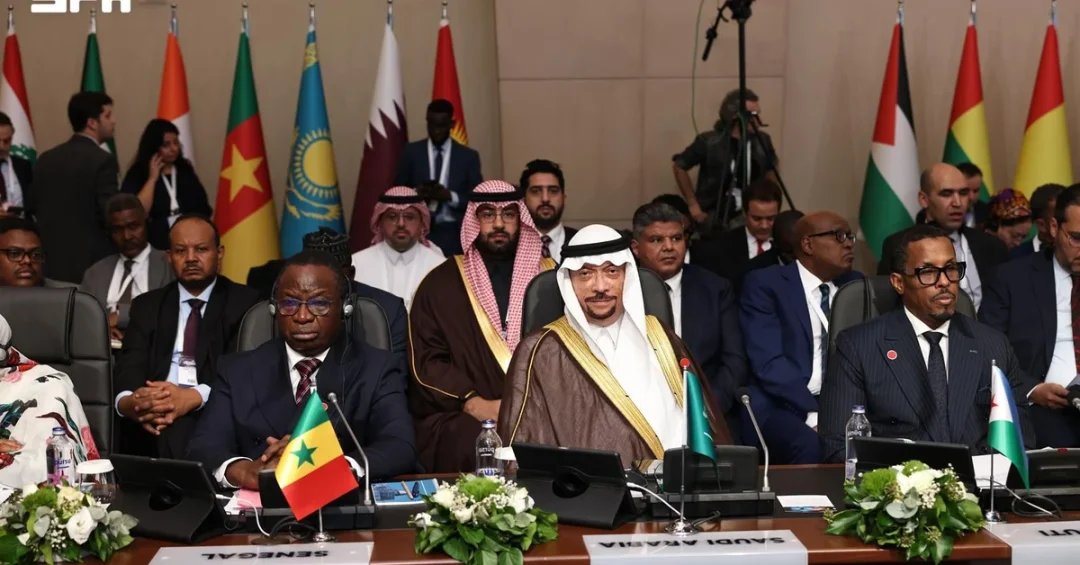
Saudi Arabia’s delegation, led by Deputy Governor of the General Authority of Foreign Trade (GAFT) Fareed bin Saeed Al-Asaly, successfully concluded its participation in the 42nd Ministerial Session of the Standing Committee for Economic and Commercial Cooperation (COMCEC) of the Organization of Islamic Cooperation (OIC) on Tuesday, November 3, 2026, in Istanbul, Türkiye. The session, held from October 31 to November 3, brought together ministers and senior officials from OIC member states to deliberate on pressing economic issues and foster enhanced cooperation. The Kingdom’s active engagement underscores its commitment to multilateral economic diplomacy and its leadership role within the Islamic world. How does such high-level participation shape the future of trade and investment among OIC nations?
The COMCEC platform remains a vital forum for addressing shared economic challenges and unlocking opportunities for sustainable growth. This year’s theme, “Developing Effective Trade Financing Tools for Increasing Export in the OIC Member Countries,” highlighted the critical need for innovative financial mechanisms to boost intra-OIC trade, which currently stands below its potential. Saudi Arabia’s delegation contributed insights on leveraging financial technology and Islamic finance instruments to bridge trade financing gaps, aligning with the Kingdom’s broader strategy to diversify its economy and enhance global trade ties. The outcomes of this session are expected to inform future policies and initiatives aimed at deepening economic integration across the OIC region.
Context and Background
What is the significance of COMCEC in the contemporary global economy? Established in 1981, the COMCEC serves as the primary economic and commercial cooperation forum of the OIC, comprising all 57 member states. Its mission is to enhance economic and commercial cooperation among member countries, with a focus on trade, finance, agriculture, tourism, and poverty alleviation. Over the decades, COMCEC has evolved into a dynamic platform for policy dialogue, knowledge sharing, and project implementation, supported by its Working Groups and the Islamic Development Bank (IsDB) Group. The 42nd Ministerial Session built upon this legacy, addressing both longstanding and emerging challenges.
Saudi Arabia has been a steadfast supporter of COMCEC’s objectives, consistently advocating for policies that promote economic diversification, private sector engagement, and sustainable development. The Kingdom’s participation is rooted in its belief that collective action can amplify individual efforts, particularly in areas such as trade facilitation, digital transformation, and food security. By actively contributing to COMCEC’s agenda, Saudi Arabia reinforces its role as a bridge-builder and a catalyst for economic progress within the Islamic world. This engagement also complements the Kingdom’s Vision 2030, which seeks to transform Saudi Arabia into a global investment powerhouse and a hub connecting three continents.
The 42nd session took place against a backdrop of global economic uncertainty, marked by supply chain disruptions, inflationary pressures, and shifting trade patterns. In this context, the need for robust trade financing tools has become more acute than ever. OIC member countries, many of which are developing economies, often face significant hurdles in accessing affordable financing for exports. COMCEC’s focus on this issue reflects a collective recognition that without adequate financial infrastructure, the potential for intra-OIC trade—estimated at trillions of dollars—remains unrealized. Saudi Arabia’s expertise in Islamic finance and its growing fintech sector position it as a key player in developing solutions to these challenges.
Key Details of the Session
The 42nd Ministerial Session convened in Istanbul from October 31 to November 3, 2026, with the Saudi delegation led by Fareed bin Saeed Al-Asaly, Deputy Governor of GAFT for International Organizations and Agreements. The agenda was comprehensive, covering a range of topics critical to OIC member states. Central to the discussions was the theme of developing effective trade financing tools to increase exports. Delegates explored various instruments, including export credit guarantees, trade finance facilities, and digital payment systems, aimed at reducing barriers and enhancing the competitiveness of OIC exports. The session also reviewed the OIC Trade Preferential System (TPS-OIC), a framework designed to liberalize trade among member countries through tariff concessions and other measures.
In addition to trade financing, the session assessed the efforts, achievements, and projects of OIC institutions and the IsDB Group. These institutions play a pivotal role in implementing development projects, providing financial assistance, and building capacity in member states. The IsDB Group, in particular, has been instrumental in supporting infrastructure, education, and health initiatives across the OIC region. The session acknowledged the progress made and underscored the need for continued collaboration to address remaining gaps. Furthermore, the key outcomes of the COMCEC Working Groups were presented, covering areas such as trade among OIC member countries, the role of the private sector in economic cooperation, financial cooperation, transport and communications, sustainable and competitive tourism, agricultural productivity and food security, poverty alleviation, and cooperation in digital transformation.
The Working Groups serve as technical arms of COMCEC, conducting in-depth analyses and proposing actionable recommendations. Their reports highlighted successes and challenges, providing a roadmap for future interventions. For instance, the Working Group on Trade emphasized the importance of simplifying customs procedures and harmonizing standards to facilitate smoother trade flows. The Working Group on Tourism focused on sustainable practices and the development of halal tourism, a sector where Saudi Arabia has significant expertise. Meanwhile, the Working Group on Agriculture addressed the need for innovative technologies to enhance productivity and ensure food security, a priority for many OIC countries. The session provided an opportunity for member states to exchange views and share best practices, fostering a spirit of cooperation and mutual learning.
International and Regional Impact
The outcomes of the 42nd COMCEC Ministerial Session are poised to have far-reaching implications for international and regional trade dynamics. By advancing the agenda on trade financing, the session contributes to the broader goal of increasing intra-OIC trade, which currently accounts for a relatively small share of the member states’ total trade. Enhanced trade financing can unlock new opportunities for exporters, particularly small and medium-sized enterprises (SMEs), which are the backbone of many OIC economies. For Saudi Arabia, this translates into expanded market access for its non-oil exports, a key objective of Vision 2030. Moreover, the session’s emphasis on digital transformation and sustainable tourism aligns with global trends and offers avenues for OIC countries to leapfrog in these sectors.
Regionally, the session reinforced the importance of solidarity and collective action in addressing economic challenges. The OIC, representing a diverse group of nations across Asia, Africa, and the Middle East, has the potential to become a powerful economic bloc. COMCEC’s initiatives, such as the TPS-OIC, aim to create a more integrated market, reducing dependence on external partners and fostering self-reliance. Saudi Arabia’s active role in these efforts enhances its standing as a regional leader and a reliable partner. The Kingdom’s experience in economic diversification and its strategic location as a gateway between East and West make it a valuable contributor to COMCEC’s mission. As OIC member states continue to navigate global economic shifts, the platform provided by COMCEC will remain indispensable for coordinating policies and sharing knowledge.
Economic and Strategic Significance
The economic significance of the 42nd COMCEC session extends beyond immediate trade outcomes. Trade financing is a critical enabler of export growth, and by addressing this issue, OIC member states are investing in their long-term economic resilience. For Saudi Arabia, the session provided a platform to showcase its financial sector capabilities, including its robust banking system and pioneering role in Islamic finance. The Kingdom’s participation also aligns with its efforts to attract foreign investment and diversify its economy away from oil. By collaborating with OIC partners, Saudi Arabia can identify new investment opportunities and foster joint ventures that drive innovation and job creation.
Strategically, the session underscored Saudi Arabia’s commitment to multilateralism and its role as a responsible global actor. In a world increasingly characterized by protectionism and unilateralism, the Kingdom’s engagement in COMCEC sends a strong message of support for international cooperation and rules-based trade. This stance enhances Saudi Arabia’s diplomatic leverage and reinforces its position as a bridge between developed and developing nations. Furthermore, the session’s focus on digital transformation and sustainable development aligns with global priorities, positioning Saudi Arabia as a forward-looking nation that is actively shaping the future of international economic relations. The knowledge and connections gained from the session will inform the Kingdom’s policies and strategies, contributing to its overarching goal of becoming a leading global economy.
Vision 2030 Alignment
Saudi Arabia’s participation in the 42nd COMCEC Ministerial Session is a clear manifestation of its Vision 2030 objectives, which aim to diversify the economy, enhance international cooperation, and position the Kingdom as a pivotal player in global trade. Vision 2030 emphasizes the importance of non-oil exports and the need to expand into new markets. By engaging in COMCEC, Saudi Arabia is actively working to create an enabling environment for its exporters, leveraging trade financing tools and preferential trade agreements to gain a competitive edge. The session’s discussions on digital transformation and sustainable tourism also resonate with Vision 2030’s focus on technology and tourism as key growth sectors. The Kingdom’s leadership in these areas can inspire other OIC member states and foster greater regional integration.
Moreover, the session provided a platform for Saudi Arabia to strengthen its ties with other OIC countries, building networks that can lead to tangible economic benefits. The Kingdom’s delegation, led by GAFT, demonstrated Saudi Arabia’s expertise and commitment to shared prosperity. As the Kingdom continues to implement Vision 2030, its active participation in forums like COMCEC will be instrumental in achieving its goals. By contributing to the development of effective trade financing tools and promoting sustainable economic practices, Saudi Arabia is not only advancing its own interests but also supporting the collective progress of the Islamic world. This aligns with the visionary leadership of the Kingdom, which seeks to create a prosperous and interconnected future for all. How will Saudi Arabia’s leadership in COMCEC inspire other nations to pursue economic reforms and regional cooperation?
20 Questions
Q1. What was the 42nd COMCEC Ministerial Session?
A1. The 42nd Ministerial Session of the Standing Committee for Economic and Commercial Cooperation (COMCEC) of the OIC was held in Istanbul, Türkiye, from October 31 to November 3, 2026, focusing on economic and trade cooperation among member states.
Q2. Who led the Saudi delegation to the session?
A2. The Saudi delegation was headed by Fareed bin Saeed Al-Asaly, Deputy Governor of the General Authority of Foreign Trade (GAFT) for International Organizations and Agreements.
Q3. What was the theme of the 42nd COMCEC session?
A3. The theme was “Developing Effective Trade Financing Tools for Increasing Export in the OIC Member Countries,” highlighting the need for innovative financial mechanisms to boost intra-OIC trade.
Q4. What is COMCEC and when was it established?
A4. COMCEC is the Standing Committee for Economic and Commercial Cooperation of the OIC, established in 1981 to enhance economic and commercial cooperation among OIC member states.
Q5. Which organizations participated in the session?
A5. The session included representatives from OIC member states, OIC institutions, and the Islamic Development Bank (IsDB) Group, among others.
Q6. What is the OIC Trade Preferential System (TPS-OIC)?
A6. The TPS-OIC is a framework designed to liberalize trade among OIC member countries through tariff concessions and other measures to increase intra-OIC trade.
Q7. What were the key outcomes of the COMCEC Working Groups?
A7. The Working Groups reported on trade, private sector role, financial cooperation, transport, tourism, agriculture, poverty alleviation, and digital transformation, offering recommendations for future actions.
Q8. How does Saudi Arabia benefit from COMCEC participation?
A8. Saudi Arabia gains enhanced market access for non-oil exports, strengthens economic ties with OIC countries, and showcases its financial and technical expertise, aligning with Vision 2030 goals.
Q9. What is the significance of trade financing for OIC countries?
A9. Trade financing is crucial for enabling exports, especially for SMEs, by providing necessary capital and risk mitigation, thereby boosting economic growth and integration among OIC member states.
Q10. How does the session align with Saudi Vision 2030?
A10. The session supports Vision 2030 by promoting economic diversification, non-oil exports, international cooperation, and sustainable development, key pillars of the Kingdom’s transformation plan.
Q11. What role does the IsDB Group play in COMCEC?
A11. The IsDB Group supports COMCEC by financing development projects, providing technical assistance, and implementing initiatives that foster economic cooperation among member states.
Q12. What are the main challenges in intra-OIC trade?
A12. Challenges include limited trade financing, non-tariff barriers, inadequate infrastructure, and lack of information, which COMCEC addresses through its various programs and working groups.
Q13. How can digital transformation enhance trade among OIC countries?
A13. Digital transformation can streamline customs procedures, facilitate e-commerce, improve payment systems, and enhance transparency, thereby reducing costs and increasing trade efficiency among OIC member states.
Q14. What is the expected impact of the session on Saudi exports?
A14. The session is expected to lead to improved access to trade financing and preferential trade arrangements, boosting Saudi non-oil exports to OIC markets and contributing to economic diversification.
Q15. How does Saudi Arabia’s participation reflect its foreign policy?
A15. It demonstrates Saudi Arabia’s commitment to multilateralism, Islamic solidarity, and economic diplomacy, reinforcing its role as a responsible global actor and leader in the Islamic world.
Q16. What are the next steps after the 42nd COMCEC session?
A16. Member states will implement the recommendations, with follow-up by COMCEC Working Groups and OIC institutions. The 43rd session will review progress and address new challenges.
Q17. How does COMCEC address poverty alleviation?
A17. COMCEC promotes poverty alleviation through targeted programs in agriculture, SMEs, and social development, aiming to improve living standards and create economic opportunities in member states.
Q18. What is the role of the private sector in COMCEC’s agenda?
A18. The private sector is recognized as a key driver of economic growth. COMCEC encourages public-private partnerships and creates platforms for business networking and investment.
Q19. How does sustainable tourism feature in COMCEC’s work?
A19. COMCEC promotes sustainable and competitive tourism through sharing best practices, developing halal tourism standards, and supporting infrastructure projects that preserve cultural and natural heritage.
Q20. What does Saudi Arabia aim to achieve through COMCEC in the long term?
A20. Saudi Arabia aims to foster deeper economic integration, increase trade and investment flows, and promote sustainable development across the OIC region, in line with Vision 2030 and its global economic aspirations.
Reader Feedback
We value your thoughts. Please share your feedback on this article.
Your feedback helps us improve our coverage.
Related articles
 Jazan Pastures Boost Honey Production in Saudi Arabia
 Najran’s Al-Bayadh Dates: Nutritional Value and Heritage
 Eastern Region Governor to Patronize Women’s Economic Forum
 Saudi Tourism Registrations Surge 32-52% in 2026
 PIF Raises $3 Billion in SACE-Backed Credit Facilities
 Oil Prices Settle More Than 7% Lower