


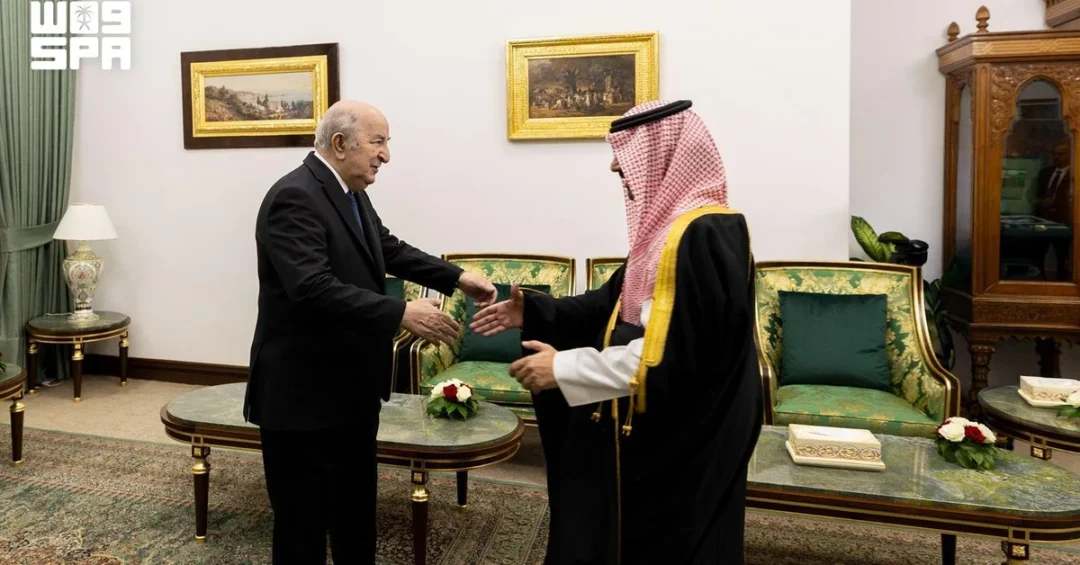
Algerian President Abdelmadjid Tebboune met with Saudi Minister of Culture Prince Bader bin Abdullah bin Farhan at the presidential palace in Algiers on November 3, 2026, during the minister’s visit to the 2026 Algiers International Book Fair, where Saudi Arabia is the guest of honor. The meeting underscored the deep-rooted relations between the two countries and highlighted the importance of cultural cooperation, according to the Saudi Press Agency. Prince Bader conveyed the greetings of Custodian of the Two Holy Mosques King Salman bin Abdulaziz Al Saud and His Royal Highness Prince Mohammed bin Salman bin Abdulaziz Al Saud, Crown Prince and Prime Minister, wishing the Algerian president continued health and happiness and Algeria and its people continued progress and prosperity. The minister also congratulated President Tebboune on the successful holding of the book fair.
Why does this high-level encounter matter for cultural diplomacy in the Arab world? The meeting reaffirmed the commitment of both nations to strengthening cultural ties and coordinating positions on cultural matters within international and regional organizations to serve mutual interests. Attending from the Saudi side were Assistant Minister of Culture Rakan Al-Touq, Saudi Ambassador to Algeria Dr. Abdullah Al-Busairi, and Assistant Deputy Minister for International Cultural Relations Dr. Fahd Al-Humaidani. The discussions reflect Saudi Arabia’s broader strategy to enhance its global cultural presence and build bridges with nations across the region and beyond, aligning with the Kingdom’s Vision 2030 objectives to diversify its economy and promote cultural exchange.
Context and Background
What are the historical foundations that make Saudi-Algerian relations so resilient? The ties between the Kingdom of Saudi Arabia and the People’s Democratic Republic of Algeria have long been characterized by mutual respect and cooperation, rooted in shared Arab and Islamic heritage. Algeria, a key nation in North Africa, has maintained strong diplomatic and economic links with the Kingdom, and cultural exchanges have been a cornerstone of this relationship. The 2026 Algiers International Book Fair, with Saudi Arabia as the guest of honor, represents a significant milestone in these cultural interactions, providing a platform for showcasing Saudi literary and artistic achievements to a wider audience.
Saudi Arabia’s participation as the guest of honor at the fair is not merely symbolic; it is part of a deliberate effort to project the Kingdom’s rich cultural tapestry and modern transformations. Under the leadership of King Salman and Crown Prince Mohammed bin Salman, Saudi Arabia has accelerated its cultural diplomacy, establishing new institutions and initiatives that highlight its heritage while embracing contemporary expressions. This visit by Prince Bader bin Abdullah bin Farhan, who also serves as chairman of the Royal Commission for AlUla and the Saudi Film Commission, underscores the importance placed on cultural engagement as a tool for strengthening international partnerships.
The meeting comes at a time when cultural diplomacy is increasingly recognized as a vital component of soft power. For Saudi Arabia, engaging with influential countries like Algeria through cultural channels helps foster goodwill and mutual understanding, which can translate into broader cooperation in economic, political, and security domains. Algeria, with its rich revolutionary history and vibrant cultural scene, offers a valuable partner in these endeavors. The discussions between President Tebboune and Prince Bader therefore go beyond ceremonial gestures, laying the groundwork for concrete collaboration in areas such as heritage preservation, artistic exchange, and joint participation in international cultural forums.
Key Details
What specific outcomes emerged from this high-level meeting? While the official statement did not disclose detailed agreements, it emphasized the reaffirmation of deep-rooted relations and the importance of cultural cooperation. Prince Bader conveyed the greetings of the Saudi leadership, a customary diplomatic gesture that signals respect and continuity in bilateral ties. He also congratulated President Tebboune on the book fair, acknowledging Algeria’s efforts in organizing a major cultural event that brings together writers, publishers, and intellectuals from across the region and beyond.
The presence of senior Saudi cultural officials at the meeting—Assistant Minister of Culture Rakan Al-Touq, Saudi Ambassador to Algeria Dr. Abdullah Al-Busairi, and Assistant Deputy Minister for International Cultural Relations Dr. Fahd Al-Humaidani—indicates the seriousness with which the Kingdom approaches cultural diplomacy. Their attendance suggests that follow-up actions will be coordinated at various levels, from ministerial dialogues to embassy-level initiatives. The meeting also highlighted the importance of coordinating positions on cultural matters within international and regional organizations, a strategic move to amplify shared cultural interests on global platforms such as UNESCO and the Arab League Educational, Cultural and Scientific Organization (ALECSO).
Furthermore, the visit to the book fair allowed Saudi Arabia to showcase its cultural output, including literature, art, and heritage projects. As the guest of honor, the Kingdom likely presented a pavilion featuring works by Saudi authors, artists, and craftsmen, offering visitors a glimpse into the nation’s cultural renaissance. Such participation not only promotes people-to-people ties but also supports the Kingdom’s economic diversification goals by highlighting creative industries as a growing sector. For Algeria, hosting Saudi Arabia as the guest of honor reinforces its own role as a cultural hub in North Africa and a bridge between the Arab world and Africa.
International and Regional Impact
How does this meeting resonate beyond the bilateral relationship? Saudi Arabia’s cultural diplomacy is part of a broader regional strategy to foster stability and cooperation. By engaging with Algeria, a key player in the Maghreb and a member of the African Union, the Kingdom strengthens its ties with Africa and the Mediterranean region. This aligns with Saudi Arabia’s Vision 2030, which seeks to expand international partnerships and position the Kingdom as a global hub for culture, tourism, and investment. The meeting also sends a positive signal to other nations about the importance of cultural dialogue in addressing shared challenges.
On a regional level, the coordination of cultural positions within international organizations can lead to joint initiatives that promote Arab culture and heritage. For instance, Saudi Arabia and Algeria could collaborate on nominating heritage sites for UNESCO recognition, organizing joint cultural festivals, or developing exchange programs for artists and scholars. Such cooperation not only enriches both societies but also enhances the collective voice of the Arab world in global cultural governance. Moreover, the meeting underscores the role of cultural diplomacy in softening political differences and building trust, a lesson that resonates across the Middle East and North Africa.
Internationally, the visit highlights Saudi Arabia’s growing influence in cultural affairs, which complements its economic and political weight. As the Kingdom continues to host major events like the Riyadh Season and the Diriyah Biennale, its cultural footprint expands, attracting global attention and participation. The meeting with President Tebboune thus contributes to a narrative of Saudi Arabia as a proactive and constructive international actor, committed to dialogue and mutual respect. This image is crucial for attracting foreign investment and tourism, as it showcases a modern, open, and culturally vibrant Kingdom.
Economic and Strategic Significance
What economic benefits can arise from cultural cooperation? While the meeting focused on cultural matters, the broader context of Saudi-Algerian relations includes significant economic dimensions. Cultural exchanges often pave the way for trade and investment by building familiarity and trust. Saudi Arabia has been exploring opportunities in Algeria’s energy, infrastructure, and agricultural sectors, and cultural diplomacy can facilitate these economic ties by creating a favorable environment for business collaboration. Additionally, the creative industries themselves present economic opportunities, from publishing and film to design and digital media.
Strategically, Algeria’s location and its role in African and Mediterranean affairs make it a valuable partner for Saudi Arabia. By strengthening cultural ties, the Kingdom enhances its soft power and gains a reliable ally in regional forums. This is particularly important as Saudi Arabia pursues its Vision 2030 goals, which include increasing non-oil exports and attracting foreign direct investment. A stable and cooperative relationship with Algeria can also contribute to regional security, as both nations share an interest in combating extremism and promoting moderate Islam.
Furthermore, the meeting reflects Saudi Arabia’s commitment to South-South cooperation, a principle that resonates with many developing countries. By engaging with Algeria on cultural matters, the Kingdom demonstrates its willingness to share its cultural heritage and modern achievements while learning from Algeria’s rich traditions. This reciprocal approach can lead to joint ventures in cultural tourism, where travelers explore both countries’ historical sites, and in educational exchanges that build human capital. Such initiatives align with Vision 2030’s emphasis on knowledge transfer and international collaboration.
Vision 2030 Alignment
How does this cultural engagement advance Saudi Arabia’s Vision 2030? Vision 2030 is a comprehensive plan to diversify the Kingdom’s economy and society, with culture playing a pivotal role. The plan aims to increase cultural participation, preserve heritage, and promote Saudi arts globally. By meeting with Algeria’s president and participating in the Algiers International Book Fair, Prince Bader is actively implementing these objectives, showcasing Saudi culture to an international audience and fostering partnerships that can support cultural exchange programs, joint publications, and collaborative artistic productions.
Moreover, Vision 2030 seeks to enhance Saudi Arabia’s global standing and build bridges with nations worldwide. The meeting with President Tebboune exemplifies this by reinforcing ties with a key Arab and African country, thereby expanding the Kingdom’s network of friends and partners. As Saudi Arabia continues to invest in cultural infrastructure, such as the King Abdulaziz Center for World Culture (Ithra) and the forthcoming museums in AlUla, international collaborations like this one will be essential for sharing knowledge, attracting visitors, and positioning the Kingdom as a leader in cultural diplomacy. Ultimately, such efforts contribute to a more diversified economy, a vibrant society, and a positive global image, all central to Vision 2030’s success.
20 Questions
Q1. Who met with Algerian President Abdelmadjid Tebboune on November 3, 2026?
A1. Saudi Minister of Culture Prince Bader bin Abdullah bin Farhan met with President Tebboune at the presidential palace in Algiers, as reported by the Saudi Press Agency.
Q2. What event was taking place during the minister’s visit to Algeria?
A2. The 2026 Algiers International Book Fair, where Saudi Arabia was the guest of honor, providing a platform for cultural exchange and showcasing Saudi literary and artistic works.
Q3. What greetings did Prince Bader convey to President Tebboune?
A3. He conveyed the greetings of Custodian of the Two Holy Mosques King Salman bin Abdulaziz Al Saud and Crown Prince Mohammed bin Salman, wishing the president health and Algeria continued progress.
Q4. What did the meeting reaffirm about Saudi-Algerian relations?
A4. The meeting reaffirmed the deep-rooted relations between the two countries and emphasized the importance of cultural cooperation and coordinating positions on cultural matters within international and regional organizations.
Q5. Who attended the meeting from the Saudi side?
A5. Assistant Minister of Culture Rakan Al-Touq, Saudi Ambassador to Algeria Dr. Abdullah Al-Busairi, and Assistant Deputy Minister for International Cultural Relations Dr. Fahd Al-Humaidani attended.
Q6. Why is Saudi Arabia’s participation as guest of honor significant?
A6. It highlights Saudi Arabia’s rich cultural heritage and modern achievements, strengthening cultural diplomacy and people-to-people ties between the Kingdom and Algeria.
Q7. How does this meeting align with Saudi Vision 2030?
A7. It supports Vision 2030’s goals of promoting cultural exchange, diversifying the economy, and enhancing Saudi Arabia’s global cultural presence and international partnerships.
Q8. What is the historical basis of Saudi-Algerian relations?
A8. The relations are rooted in shared Arab and Islamic heritage, mutual respect, and a history of cooperation in diplomatic, economic, and cultural spheres.
Q9. What role does cultural diplomacy play in Saudi foreign policy?
A9. Cultural diplomacy is a key tool for building soft power, fostering goodwill, and creating opportunities for economic and political cooperation with other nations.
Q10. What potential areas of cultural cooperation were discussed?
A10. The discussions likely covered heritage preservation, artistic exchange, joint participation in international cultural forums, and coordination within organizations like UNESCO and ALECSO.
Q11. How does this meeting impact regional cultural dynamics?
A11. It strengthens Arab cultural ties, promotes joint initiatives, and enhances the collective voice of the Arab world in global cultural governance.
Q12. What economic benefits could arise from this cultural engagement?
A12. Cultural exchanges can facilitate trade and investment by building trust, and the creative industries present opportunities for economic growth and job creation.
Q13. What is the significance of Algeria in Saudi Arabia’s African outreach?
A13. Algeria is a key North African nation and African Union member, making it a valuable partner for Saudi Arabia’s efforts to expand influence and cooperation across Africa.
Q14. How does the book fair serve as a platform for Saudi culture?
A14. It allows Saudi Arabia to showcase its literature, art, and heritage projects to a wide audience, promoting cultural understanding and appreciation.
Q15. What message does this meeting send to the international community?
A15. It demonstrates Saudi Arabia’s commitment to dialogue, cultural exchange, and constructive international engagement, enhancing its image as a modern and open nation.
Q16. What follow-up actions might result from this meeting?
A16. Potential follow-ups include joint cultural programs, exchange visits, collaborative publications, and coordinated positions in international cultural organizations.
Q17. How does Saudi Arabia’s cultural strategy support economic diversification?
A17. By developing creative industries and cultural tourism, Saudi Arabia creates new revenue streams and reduces dependence on oil, aligning with Vision 2030.
Q18. What role do Saudi cultural officials play in international relations?
A18. Officials like Prince Bader and his team engage with counterparts worldwide to build partnerships, share Saudi culture, and advance the Kingdom’s cultural diplomacy objectives.
Q19. How does this event reflect Saudi Arabia’s soft power?
A19. It showcases the Kingdom’s cultural richness and modern achievements, attracting positive attention and building influence through attraction rather than coercion.
Q20. What is the long-term vision for Saudi-Algerian cultural relations?
A20. The vision includes deepened cooperation, joint cultural initiatives, and strengthened people-to-people ties that contribute to regional stability and prosperity.
Reader Feedback
We value your thoughts. Please share your feedback on this article.
Your feedback helps us improve our coverage.
Related articles
 Saudi Film Industry Yearbook 2025 Shows Record Growth
 Ithra Launches Winter 2026 Program in Eastern Region
 SAB and CDF Sign Deal to Finance New Riyadh Cultural Museum
 Makkah Chamber Hosts Workshop on Pottery Handicrafts
 Al-Sudairy Centre Boosts Al-Jouf Cultural Tourism
 Traditional Ghee Production Thrives in Northern Borders