


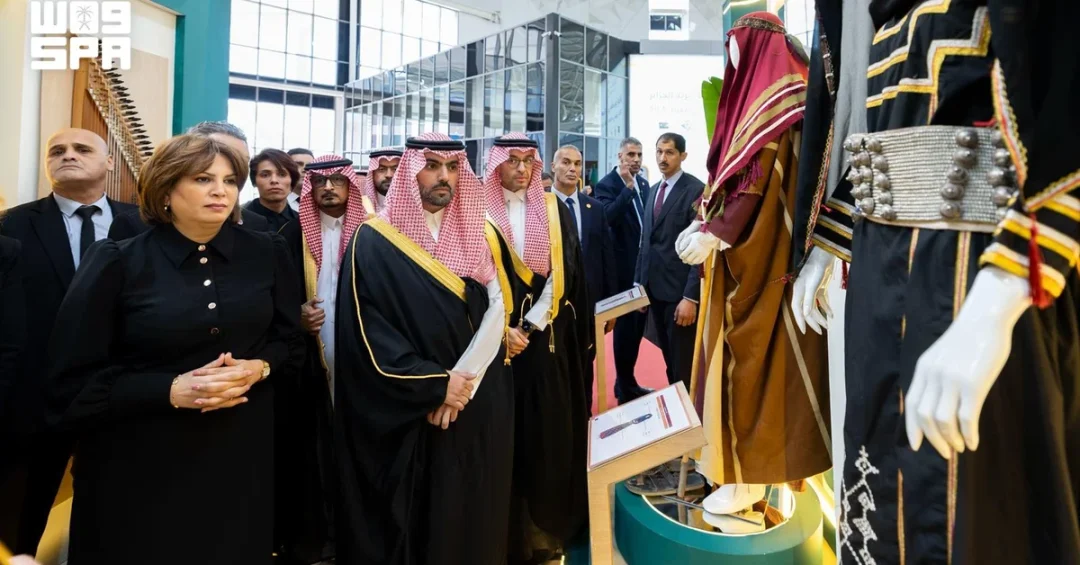
Saudi Minister of Culture and Chairman of the Board of Directors of the Literature, Publishing and Translation Commission, Prince Bader bin Abdullah bin Farhan, visited the Saudi pavilion at the 2026 Algiers International Book Fair on November 3, 2026, where the Kingdom is celebrated as the guest of honor. The visit, conducted in the presence of Algerian Minister of Culture and Arts Dr. Malika Bendouda, underscores the deepening cultural ties between Saudi Arabia and Algeria and highlights the Kingdom’s commitment to global cultural exchange under Saudi Vision 2030.
The Algiers International Book Fair, running through November 7, 2026, serves as a premier platform for literary and intellectual dialogue in the Arab world. Saudi Arabia’s participation as guest of honor brings together a diverse array of Saudi cultural institutions, showcasing the Kingdom’s rich heritage, literary achievements, and modern creative industries. This presence not only celebrates Saudi culture but also reinforces the shared Arab identity and the role of books in connecting peoples across borders.
Context and Background
What does it mean for a nation to be honored as the guest of honor at one of the Arab world’s most prestigious book fairs? For Saudi Arabia, it represents a culmination of decades of cultural diplomacy and a strategic push to elevate its literary and artistic footprint globally. The Algiers International Book Fair, now in its 2026 edition, has long been a cornerstone event for publishers, authors, and intellectuals from across the region. Saudi Arabia’s selection as guest of honor reflects the Kingdom’s growing influence in the cultural sphere and its unwavering dedication to promoting Arabic language and heritage.
The visit by Prince Bader bin Abdullah bin Farhan, who also chairs the Literature, Publishing and Translation Commission, highlights the integral role of cultural leadership in advancing Saudi Vision 2030. Since its inception, Vision 2030 has identified culture as a key pillar of national development, aiming to diversify the economy, foster creativity, and enhance quality of life. The Ministry of Culture, under Prince Bader’s guidance, has launched numerous initiatives to support writers, translators, and artists, while also expanding international partnerships. This visit to Algiers is a testament to those efforts, demonstrating how Saudi Arabia is actively building bridges with other nations through cultural exchange.
Algeria and Saudi Arabia share deep historical and cultural bonds, rooted in a common language, religion, and traditions. The presence of Algerian Minister of Culture and Arts Dr. Malika Bendouda alongside Prince Bader symbolizes the mutual respect and collaborative spirit that defines Saudi-Algerian relations. In a world where cultural diplomacy often paves the way for broader cooperation, such high-level engagements are crucial. They not only celebrate shared heritage but also open doors for future collaborations in publishing, translation, and the arts, benefiting both nations and the wider Arab region.
Key Details of the Saudi Pavilion
What can visitors expect when they step into the Saudi pavilion at the 2026 Algiers International Book Fair? The pavilion is a vibrant mosaic of Saudi culture, featuring contributions from a wide spectrum of institutions dedicated to literature, heritage, and knowledge. The Literature, Publishing and Translation Commission leads the effort, curating a display that spans classical and contemporary Saudi literature, translated works, and interactive sessions with authors. The Culinary Arts Commission adds a flavorful dimension, offering tastings and demonstrations that highlight the diversity of Saudi cuisine, from traditional dishes to modern fusion creations.
Among the key participants are the King Salman Global Academy for Arabic Language, which promotes Arabic as a global language of knowledge and culture; the Prince Mohammed bin Salman Global Center for Arabic Calligraphy (Dar Alqalam), showcasing the timeless art of Arabic script; and the King Abdulaziz Public Library, which presents rare manuscripts and historical documents. The King Fahd National Library contributes a comprehensive collection of Saudi publications, while the Ministry of Islamic Affairs, Dawah and Guidance provides insights into the Kingdom’s spiritual and cultural leadership. The King Fahd Glorious Quran Printing Complex in Madinah displays exquisite copies of the Quran, emphasizing the centrality of Islamic heritage to Saudi identity.
Additionally, the Saudi Cultural Mission in Algeria, the King Abdulaziz Complex for Endowment Libraries, and the Arab Observatory of Translation round out the pavilion’s offerings, each bringing unique perspectives on education, preservation, and cross-cultural dialogue. Together, these entities create an immersive experience that goes beyond books, offering visitors a holistic view of Saudi Arabia’s past, present, and future. The pavilion also hosts a series of panel discussions, workshops, and cultural performances, ensuring that every visitor leaves with a deeper understanding of the Kingdom’s dynamic cultural landscape.
International and Regional Impact
How does Saudi Arabia’s prominent role at the Algiers International Book Fair resonate beyond the event itself? The Kingdom’s participation sends a powerful message about the importance of cultural diplomacy in fostering international understanding and cooperation. By bringing together such a diverse array of institutions, Saudi Arabia demonstrates its commitment to dialogue, tolerance, and the exchange of ideas—values that are essential in today’s interconnected world. For Algeria and other North African nations, the Saudi presence offers an opportunity to strengthen ties, explore joint ventures in publishing and translation, and celebrate a shared Arab heritage that transcends borders.
On a broader scale, Saudi Arabia’s cultural outreach aligns with its Vision 2030 goal of becoming a global hub for culture and creativity. The Kingdom has increasingly used platforms like book fairs to project soft power, showcasing its modernization and openness while honoring its traditions. This approach has been well-received internationally, with many observers noting how Saudi Arabia is reshaping perceptions through cultural engagement. The Algiers fair, attended by publishers and intellectuals from across the Arab world and beyond, provides a fertile ground for networking and collaboration, potentially leading to new translations of Saudi literature into other languages and increased cultural tourism to the Kingdom.
Economic and Strategic Significance
What economic and strategic benefits does Saudi Arabia’s participation in the Algiers International Book Fair bring? Beyond the immediate cultural dividends, the fair opens avenues for economic cooperation in the creative industries. The publishing sector, in particular, stands to gain from enhanced ties with Algerian and regional publishers, leading to co-publications, rights exchanges, and distribution agreements. Saudi Arabia’s growing literary market, supported by Vision 2030 initiatives, is attractive to international partners, and events like this facilitate direct engagement with potential collaborators.
Strategically, the Kingdom’s cultural diplomacy complements its political and economic relations with Algeria and other Arab nations. By investing in cultural exchange, Saudi Arabia builds goodwill and strengthens people-to-people connections, which are essential for long-term stability and cooperation. Moreover, the fair serves as a platform to promote Saudi Vision 2030’s broader objectives, including increasing non-oil revenues and fostering a knowledge-based economy. The creative industries, including publishing, translation, and design, are key components of this diversification strategy, and Saudi Arabia’s active presence at international fairs helps position the Kingdom as a leader in these fields.
Vision 2030 Alignment
How does the visit to the Saudi pavilion at the Algiers International Book Fair reflect the core objectives of Saudi Vision 2030? At its heart, Vision 2030 seeks to transform Saudi Arabia into a vibrant society, a thriving economy, and an ambitious nation. Culture is a vital enabler of this transformation, as it fosters national pride, stimulates creativity, and drives economic growth. The Ministry of Culture, under Prince Bader’s leadership, has been instrumental in implementing Vision 2030’s cultural mandate, from establishing new cultural institutions to supporting artists and writers. The participation in Algiers exemplifies these efforts, showcasing the Kingdom’s cultural achievements and its commitment to international engagement.
Looking ahead, Saudi Arabia’s cultural diplomacy will continue to play a pivotal role in achieving Vision 2030’s goals. By strengthening ties with countries like Algeria, the Kingdom not only enriches its own cultural landscape but also contributes to the global appreciation of Arab culture. The Algiers International Book Fair is just one of many international platforms where Saudi Arabia is making its mark, from the Venice Biennale to the Riyadh International Book Fair. As the Kingdom progresses towards 2030, such engagements will be crucial in building a diversified, knowledge-driven economy and a society that values creativity, dialogue, and mutual respect. The visit by Prince Bader bin Abdullah bin Farhan thus symbolizes a future where Saudi culture shines on the world stage, fostering connections that benefit all humanity.
20 Questions
Q1. What is the significance of Saudi Arabia being the guest of honor at the 2026 Algiers International Book Fair?
A1. It highlights Saudi Arabia’s growing cultural influence and commitment to international cultural exchange, showcasing its rich heritage and literary achievements under Vision 2030.
Q2. Who visited the Saudi pavilion at the fair?
A2. Prince Bader bin Abdullah bin Farhan, Saudi Minister of Culture and Chairman of the Literature, Publishing and Translation Commission, visited the pavilion.
Q3. Which Algerian official accompanied Prince Bader during the visit?
A3. Algerian Minister of Culture and Arts Dr. Malika Bendouda accompanied Prince Bader, reflecting strong cultural ties between the two nations.
Q4. How long does the 2026 Algiers International Book Fair run?
A4. The fair runs through November 7, 2026, offering visitors a week-long opportunity to explore Saudi culture and literature.
Q5. Which Saudi entities are participating in the fair?
A5. Participants include the Literature, Publishing and Translation Commission, Culinary Arts Commission, King Salman Global Academy for Arabic Language, and others.
Q6. What role does the Literature, Publishing and Translation Commission play?
A6. It leads Saudi Arabia’s participation, curating literary displays, author sessions, and translation initiatives to promote Saudi culture globally.
Q7. How does the Culinary Arts Commission contribute to the pavilion?
A7. It offers tastings and demonstrations of Saudi cuisine, showcasing the Kingdom’s culinary diversity and traditions to international visitors.
Q8. What is the significance of Dar Alqalam’s participation?
A8. Dar Alqalam, the Prince Mohammed bin Salman Global Center for Arabic Calligraphy, displays the art of Arabic calligraphy, highlighting Saudi Arabia’s cultural heritage.
Q9. What does the King Fahd Glorious Quran Printing Complex exhibit?
A9. It displays exquisite copies of the Quran, emphasizing the centrality of Islamic heritage and Saudi Arabia’s role in preserving it.
Q10. How does Saudi Arabia’s participation reflect Vision 2030?
A10. It demonstrates Vision 2030’s focus on culture as a pillar of development, fostering creativity, knowledge production, and international cultural exchange.
Q11. What benefits does the fair bring to Saudi-Algerian relations?
A11. It strengthens cultural ties, promotes dialogue, and opens avenues for collaboration in publishing, translation, and the arts between the two nations.
Q12. How does the fair promote Arabic language and identity?
A12. By showcasing Arabic literature, calligraphy, and translation efforts, the fair reinforces Arabic as a vehicle for knowledge and shared Arab identity.
Q13. What economic opportunities arise from Saudi Arabia’s participation?
A13. It facilitates partnerships in publishing, rights exchanges, and distribution agreements, supporting Saudi Arabia’s creative industries and economic diversification.
Q14. Which Saudi library is showcasing rare manuscripts?
A14. The King Abdulaziz Public Library presents rare manuscripts and historical documents, offering insights into Saudi Arabia’s rich intellectual heritage.
Q15. What is the role of the Saudi Cultural Mission in Algeria?
A15. It supports educational and cultural exchange, strengthening academic ties and promoting Saudi culture among Algerian students and scholars.
Q16. How does the Arab Observatory of Translation contribute?
A16. It promotes translation as a bridge between cultures, facilitating the exchange of literary and intellectual works between Arabic and other languages.
Q17. What kind of events are held at the Saudi pavilion?
A17. The pavilion hosts panel discussions, workshops, and cultural performances, providing an immersive experience of Saudi culture for visitors.
Q18. How does the fair enhance Saudi Arabia’s global image?
A18. It showcases the Kingdom’s modernization, openness, and cultural richness, helping to reshape international perceptions and build soft power.
Q19. What is the significance of the King Salman Global Academy for Arabic Language’s presence?
A19. It underscores Saudi Arabia’s dedication to promoting Arabic globally, enhancing its use in knowledge production and cross-cultural dialogue.
Q20. What does the future hold for Saudi cultural diplomacy?
A20. Saudi Arabia will continue to engage in international cultural platforms, strengthening ties and sharing its heritage as part of Vision 2030’s global outreach.
Reader Feedback
We value your thoughts. Please share your feedback on this article.
Your feedback helps us improve our coverage.
Related articles
 Algerian President Meets Saudi Culture Minister
 Saudi Film Industry Yearbook 2025 Shows Record Growth
 Ithra Launches Winter 2026 Program in Eastern Region
 SAB and CDF Sign Deal to Finance New Riyadh Cultural Museum
 Makkah Chamber Hosts Workshop on Pottery Handicrafts
 Al-Sudairy Centre Boosts Al-Jouf Cultural Tourism