


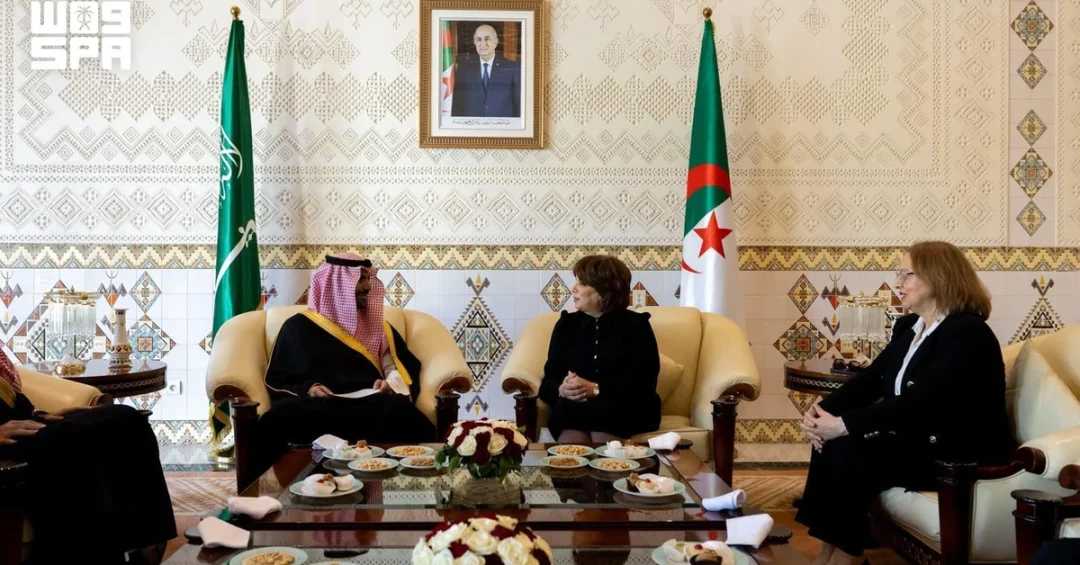
Saudi Arabia’s Minister of Culture, Prince Bader bin Abdullah bin Farhan, met with Algeria’s Minister of Culture and Arts, Malika Bendouda, in Algiers on November 3, 2026, during an official visit marking the Kingdom’s role as guest of honor at the Algiers International Book Fair 2026. The meeting, reported by the Saudi Press Agency, underscored the deepening cultural partnership between the two nations and opened the door to expanded collaboration across a wide range of cultural fields. For an international audience watching the Kingdom’s growing cultural diplomacy, the encounter represents far more than a ceremonial courtesy between two ministers.
Held on the sidelines of one of North Africa’s most prominent literary gatherings, the talks placed culture at the center of a broader relationship built on shared heritage, mutual respect, and a common interest in projecting Arab identity onto the global stage. Prince Bader congratulated his Algerian counterpart on the occasion of the book fair and extended his wishes for Algeria’s continued progress and prosperity. The exchange reflects a deliberate Saudi strategy of using culture as a bridge between the Kingdom and its regional partners.
Context and Background
What makes this meeting significant at this particular moment in regional diplomacy? The Kingdom’s selection as guest of honor at the Algiers International Book Fair 2026 is itself a statement about how Saudi Arabia now positions culture as a pillar of its international engagement. Book fairs across the Arab world have long served as diplomatic and intellectual meeting points, and a guest-of-honor designation gives the Kingdom a platform to present its literary, artistic, and scholarly output to a broad North African and international readership.
Saudi-Algerian relations rest on decades of cooperation across political, economic, and cultural domains. Both countries share a commitment to Arab solidarity and to preserving the cultural heritage that binds the region together. The meeting between Prince Bader and Minister Bendouda builds on that foundation, signaling that cultural exchange is no longer a peripheral courtesy but a central instrument of statecraft. For Algeria, the partnership offers access to Saudi Arabia’s rapidly expanding cultural infrastructure; for the Kingdom, it represents another node in a widening network of cultural partnerships.
The visit also comes as Saudi Arabia continues to raise its profile in international cultural forums, from biennials to film festivals to heritage preservation initiatives. The presence of senior Saudi officials in Algiers is consistent with a broader pattern of engagement that treats culture as a form of soft power, one that complements economic and diplomatic ties. Why does this matter to observers outside the region? Because it demonstrates how the Kingdom is reshaping its global image through openness, creativity, and partnership rather than through traditional diplomacy alone.
Key Details of the Meeting
The encounter was attended by a delegation of senior Saudi officials, underscoring the seriousness with which the Kingdom approached the talks. Assistant Minister of Culture Rakan Altouq, Saudi Ambassador to Algeria Abdullah Al-Busairi, and Assistant Deputy Minister for International Cultural Relations Fahd Al-Humaidani were all present. Their participation reflects the institutional depth behind Saudi cultural diplomacy, linking the Ministry of Culture, the Kingdom’s diplomatic mission in Algiers, and the specialized department responsible for international cultural relations.
Discussions highlighted the strong cultural ties between the two countries and the importance of expanding cooperation across various cultural fields. While the specifics of future programs will be developed through follow-up channels, the meeting established a clear intent to deepen collaboration in areas such as literature, heritage, the visual and performing arts, and cultural exchange programs. Such engagements often lay the groundwork for joint exhibitions, translation initiatives, and reciprocal visits by artists and scholars.
The book fair setting added a natural focal point to the conversation. As guest of honor, Saudi Arabia presented a curated program reflecting the breadth of its cultural production, from contemporary literature to heritage crafts. Isn’t it telling that a ministerial meeting of this kind takes place not in a closed conference room but amid the bustle of an international book fair? The venue itself communicates the message: culture is a public, participatory endeavor, and the Kingdom intends to be a visible and active participant.
International and Regional Impact
How might this meeting resonate beyond the two capitals involved? For the wider Arab world, the sight of Saudi and Algerian cultural leaders aligning their agendas sends a signal of regional cohesion at a time when cultural identity is increasingly central to international discourse. The partnership reinforces the idea that Arab nations can collaborate effectively in the cultural sphere, pooling their heritage and creative resources to strengthen their collective voice.
For international audiences, the encounter is a window into how Saudi Arabia conducts cultural diplomacy: respectfully, institutionally, and with a long-term view. The Kingdom’s growing presence at book fairs, biennials, and festivals across the region and beyond is part of a deliberate effort to build durable relationships. Algeria, with its rich literary and artistic traditions, is a natural partner in that effort. The meeting thus contributes to a broader narrative of cultural revitalization across the region, one in which Saudi Arabia plays an increasingly prominent and constructive role.
Economic and Strategic Significance
Why should cultural cooperation matter economically? Cultural exchange often precedes and supports deeper commercial and strategic ties. Publishing, translation, tourism, and creative industries are growing sectors, and partnerships forged at events like the Algiers International Book Fair can open doors to joint ventures, licensing agreements, and collaborative productions. The presence of the Saudi Ambassador at the meeting underscores the link between cultural and diplomatic engagement, suggesting that the relationship is being cultivated holistically.
Strategically, the meeting reinforces Saudi Arabia’s position as a connector between the Gulf and North Africa. By investing in cultural relationships, the Kingdom builds goodwill and mutual understanding that can pay dividends across many domains. The participation of the Assistant Deputy Minister for International Cultural Relations points to a structured, sustained approach rather than a one-off gesture. In an era when soft power increasingly determines international influence, such engagements are far from symbolic; they are strategic investments in the Kingdom’s global standing.
Vision 2030 Alignment
Does this meeting connect to Saudi Arabia’s long-term national vision? It does, directly and clearly. Vision 2030 places culture among the pillars of a diversified, outward-looking economy and society, recognizing that a vibrant cultural sector enriches quality of life and strengthens national identity. The Ministry of Culture, under Prince Bader’s leadership, has been tasked with expanding the Kingdom’s cultural offerings at home and projecting them abroad. Meetings like the one in Algiers are practical expressions of that mandate.
By cultivating partnerships with countries such as Algeria, Saudi Arabia advances the Vision 2030 goal of deepening international cultural exchange and enhancing the Kingdom’s global image. The emphasis on heritage, literature, and the arts aligns with initiatives designed to preserve and celebrate Saudi culture while engaging with the world. As the Kingdom continues to host and participate in major cultural events, each such meeting adds a thread to a larger tapestry, one that depicts a modern, confident Saudi Arabia contributing to the global cultural conversation. The visit to Algiers is thus a small but meaningful step on a much longer journey toward the Vision’s ambitious horizon.
20 Questions
Q1. Who met in Algiers on November 3, 2026?
A1. Saudi Arabia’s Minister of Culture, Prince Bader bin Abdullah bin Farhan, met with Algeria’s Minister of Culture and Arts, Malika Bendouda, during an official visit to Algeria.
Q2. What event was the occasion for the meeting?
A2. The meeting took place during the Algiers International Book Fair 2026, where Saudi Arabia was the guest of honor, according to the Saudi Press Agency.
Q3. What did Prince Bader say to his Algerian counterpart?
A3. Prince Bader congratulated Minister Bendouda on the occasion of the book fair and wished Algeria continued progress and prosperity during their discussions.
Q4. What did the meeting highlight about the two countries?
A4. The meeting highlighted the strong cultural ties between the two countries and the importance of expanding cooperation across various cultural fields.
Q5. Which Saudi officials attended the meeting?
A5. Assistant Minister of Culture Rakan Altouq, Saudi Ambassador to Algeria Abdullah Al-Busairi, and Assistant Deputy Minister for International Cultural Relations Fahd Al-Humaidani attended the meeting.
Q6. Where did the meeting take place?
A6. The meeting took place in Algiers, the capital of Algeria, on the sidelines of the Algiers International Book Fair 2026.
Q7. What is the Algiers International Book Fair?
A7. It is one of North Africa’s most prominent literary gatherings, bringing together publishers, authors, and cultural figures from across the region and beyond.
Q8. What role did Saudi Arabia play at the book fair?
A8. Saudi Arabia was the guest of honor at the fair, presenting a curated program reflecting the breadth of its literary, artistic, and heritage output.
Q9. Why is the guest-of-honor designation significant?
A9. It gives the Kingdom a platform to present its literary, artistic, and scholarly output to a broad North African and international readership.
Q10. How does this meeting reflect Saudi cultural strategy?
A10. It reflects a deliberate Saudi strategy of using culture as a bridge between the Kingdom and its regional partners, treating culture as soft power.
Q11. What areas of cooperation were discussed?
A11. The talks emphasized expanding cooperation across various cultural fields, including literature, heritage, the visual and performing arts, and exchange programs.
Q12. What is the historical basis of Saudi-Algerian relations?
A12. Relations rest on decades of cooperation across political, economic, and cultural domains, built on shared commitment to Arab solidarity and cultural heritage.
Q13. What does the meeting mean for regional cultural cooperation?
A13. It sends a signal of regional cohesion and reinforces the idea that Arab nations can collaborate effectively in the cultural sphere.
Q14. Why is the presence of the Saudi Ambassador significant?
A14. It underscores the link between cultural and diplomatic engagement, suggesting the relationship between the two nations is being cultivated holistically.
Q15. How does the meeting connect to economic sectors?
A15. Cultural exchange supports sectors such as publishing, translation, tourism, and creative industries, potentially leading to joint ventures and collaborative productions.
Q16. Which Saudi ministry is responsible for this engagement?
A16. The Ministry of Culture, under Prince Bader’s leadership, has been tasked with expanding the Kingdom’s cultural offerings at home and abroad.
Q17. How does this align with Vision 2030?
A17. Vision 2030 places culture among the pillars of a diversified, outward-looking economy and society, recognizing that culture enriches quality of life.
Q18. What does the Kingdom aim to achieve through cultural partnerships?
A18. The Kingdom aims to deepen international cultural exchange, strengthen national identity, and enhance its global image through openness and creativity.
Q19. What message does the venue communicate?
A19. The book fair setting suggests culture is a public, participatory endeavor, and the Kingdom intends to be a visible and active participant in that space.
Q20. What is the broader significance of the visit to Algiers?
A20. It is a meaningful step in Saudi Arabia’s journey toward Vision 2030, depicting a modern, confident Kingdom contributing to the global cultural conversation.
Reader Feedback
We value your thoughts. Please share your feedback on this article.
Your feedback helps us improve our coverage.
Related articles
 Algerian President Meets Saudi Culture Minister
 Saudi Film Industry Yearbook 2025 Shows Record Growth
 Ithra Launches Winter 2026 Program in Eastern Region
 SAB and CDF Sign Deal to Finance New Riyadh Cultural Museum
 Makkah Chamber Hosts Workshop on Pottery Handicrafts
 Al-Sudairy Centre Boosts Al-Jouf Cultural Tourism