


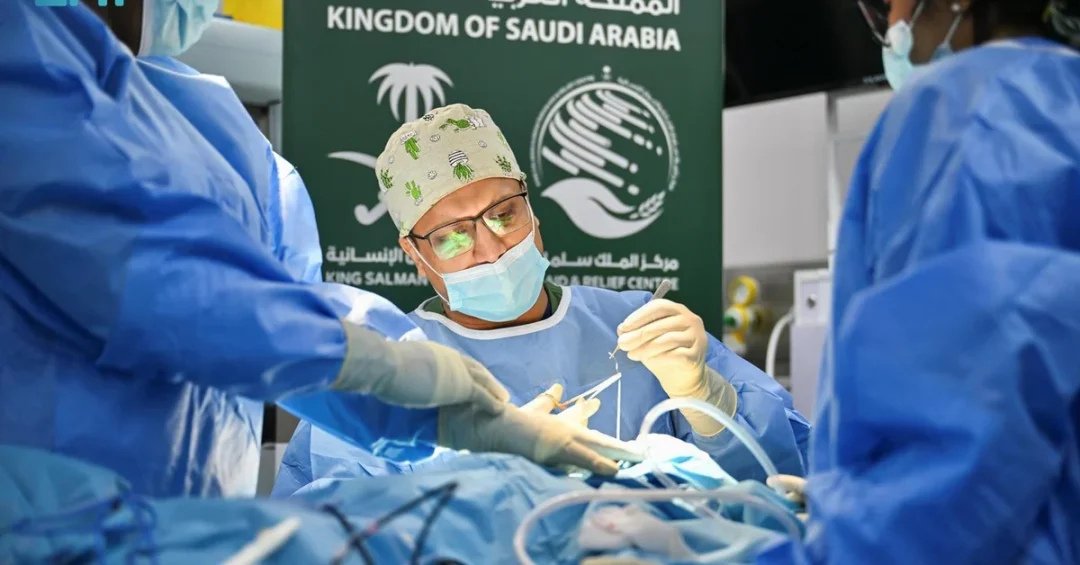
A volunteer medical team from the King Salman Humanitarian Aid and Relief Center (KSrelief) successfully performed 28 cochlear implant surgeries for children in the Republic of Kenya on Saturday, April 19, 2025, with every procedure completed without complication. The landmark medical mission, conducted under the Saudi Sama’a Volunteer Program, also delivered speech and language rehabilitation services to all 28 children and organized 28 educational sessions for their families, benefiting 50 individuals. The initiative brought together 20 volunteers representing a range of medical specialties, reflecting the Kingdom’s commitment to extending humanitarian care across borders.
The surgeries were announced by the Saudi Press Agency (SPA), the official news agency of the Kingdom, underscoring the transparency and institutional backing of the effort. KSrelief, established in 2015 under the directive of King Salman bin Abdulaziz Al Saud, has become one of the world’s most active humanitarian organizations, operating in dozens of countries. This latest mission in Kenya adds to a growing record of medical volunteer work that addresses urgent health needs while building lasting capacity in partner nations. But what does it mean for the children and families whose lives have been transformed by these procedures? The answer lies in the careful blend of surgical expertise and follow-up care that defines the Saudi Sama’a Volunteer Program.
Context and Background
How did a Saudi medical team come to perform life-changing surgery in East Africa? The Saudi Sama’a Volunteer Program is a specialized initiative designed to provide cochlear implantation and auditory rehabilitation for children in Kenya and Somalia, two nations where access to advanced ear, nose, and throat care remains limited. Cochlear implants are electronic medical devices that partially restore hearing by stimulating the auditory nerve, and they require not only skilled surgeons but also extensive post-operative therapy for the patient and support for the family. By deploying a multidisciplinary team of 20 volunteers, KSrelief ensures that each child receives comprehensive care from evaluation through rehabilitation.
The program is part of KSrelief’s broader global strategy of volunteer medical missions, which have been deployed to countries across Africa, Asia, and the Middle East. These missions often target specialized procedures that local health systems cannot easily provide, such as pediatric cardiac surgery, cleft lip and palate repair, and cochlear implantation. In Kenya, the need for hearing-related care is significant, and the Saudi team’s intervention fills a critical gap. Is it not remarkable that a humanitarian center based in Riyadh can reach children in Nairobi with such precision and care? The answer reflects the Kingdom’s growing role as a global humanitarian leader, one that pairs financial resources with hands-on medical expertise.
The timing of the mission also matters. It follows years of deepening Saudi engagement with African nations through development aid, infrastructure investment, and health partnerships. Kenya, as a key partner in East Africa, has benefited from multiple KSrelief projects, including food security programs, water wells, and medical camps. This latest volunteer effort reinforces the diplomatic and humanitarian ties between the two countries, while also advancing the broader objectives of Saudi Vision 2030, which emphasizes international cooperation and soft power. What better way to build bridges than through the gift of hearing?
Key Details of the Medical Mission
What exactly was accomplished during this volunteer mission? According to the official SPA report, the KSrelief team performed 28 cochlear implant surgeries on children, all of which were completed successfully. In addition to the surgical procedures, the team provided speech and language rehabilitation services to the same 28 children, recognizing that implantation is only the first step in restoring functional hearing. The program also organized 28 educational sessions for the children’s families, with 50 individuals participating. These sessions are crucial, as they equip parents and caregivers with the skills to support their children’s auditory and language development at home.
The mission involved 20 volunteers from various medical specialties, including otolaryngologists, audiologists, speech therapists, nurses, and administrative staff. This multidisciplinary approach is a hallmark of KSrelief’s volunteer programs, which prioritize comprehensive care over isolated interventions. The Saudi Sama’a Volunteer Program specifically targets Kenyan and Somali children, reflecting a regional focus that addresses the needs of vulnerable populations in East Africa. Are these not the kinds of initiatives that demonstrate the true spirit of humanitarianism? The success of all 28 surgeries is a testament to the preparation, skill, and dedication of the volunteer team.
The use of cochlear implants is particularly significant in pediatric cases, as early intervention can prevent long-term developmental delays associated with hearing loss. Children who receive implants and subsequent therapy are more likely to develop age-appropriate language skills, perform better in school, and integrate more fully into their communities. By providing both surgery and rehabilitation, KSrelief ensures that the benefits of the mission extend far beyond the operating room. The educational sessions for families further multiply the impact, as informed caregivers become active partners in their children’s recovery. How many lives will be changed by these 28 surgeries? The ripple effects will be felt for decades.
International and Regional Impact
What are the broader implications of this medical mission for the region and beyond? The successful completion of 28 cochlear implant surgeries in Kenya positions Saudi Arabia as a reliable humanitarian partner in Africa, a continent where the Kingdom has steadily expanded its development footprint. The mission aligns with the Saudi government’s efforts to strengthen ties with African nations through health diplomacy, which often yields goodwill and long-term cooperation. For Kenya, the program provides specialized care that is otherwise scarce and expensive, particularly for children from low-income families. The fact that the services are provided free of charge underscores the humanitarian nature of the initiative.
Regionally, the inclusion of Somali children in the program highlights Saudi Arabia’s commitment to addressing health needs across borders, even in areas with complex security and political dynamics. By focusing on children, KSrelief invests in the future human capital of the region, which can contribute to stability and prosperity. International observers have consistently praised KSrelief for its rapid response and specialized medical missions, and this operation adds to that reputation. Is it not a powerful statement when a nation shares its medical expertise with those in need, regardless of nationality? The answer is clear in the smiles of the children who can now hear their parents’ voices.
Economic and Strategic Significance
How does a humanitarian mission like this connect to Saudi Arabia’s economic and strategic priorities? While the immediate benefits are medical, the long-term strategic value of such initiatives is considerable. Humanitarian aid and volunteer work enhance Saudi Arabia’s soft power, build diplomatic capital, and open doors for trade and investment partnerships. In Kenya, Saudi Arabia has been deepening economic ties, including investments in energy, agriculture, and infrastructure. A successful medical mission reinforces the image of the Kingdom as a responsible global actor, which can facilitate broader cooperation.
Moreover, the mission supports the objectives of Vision 2030 by promoting international engagement and showcasing Saudi expertise. The volunteer program also provides valuable experience for Saudi medical professionals, who gain hands-on exposure to diverse clinical cases and cross-cultural care. This contributes to the development of a highly skilled healthcare workforce within the Kingdom, aligning with the Vision’s goal of improving healthcare quality and fostering a knowledge-based economy. Can a single medical mission have economic ripple effects? In the realm of soft power and international relations, the answer is decidedly yes.
Vision 2030 Alignment
How does KSrelief’s work in Kenya reflect the broader goals of Saudi Vision 2030? Vision 2030, launched by Crown Prince Mohammed bin Salman in 2016, seeks to diversify the Saudi economy, enhance the Kingdom’s global role, and improve the quality of life for citizens and beyond. Humanitarian leadership is a key component of this vision, as it projects Saudi Arabia’s values of generosity and solidarity. KSrelief, under the guidance of the Saudi leadership, embodies these principles by delivering aid efficiently and professionally. The volunteer medical team in Kenya is a living example of Vision 2030 in action, demonstrating that Saudi Arabia is not only a regional power but also a global humanitarian force.
As the Kingdom continues to expand its international cooperation, missions like the Saudi Sama’a Volunteer Program will play an increasingly important role in building bridges and fostering goodwill. The successful surgeries in Kenya are a source of pride for Saudi Arabia and a beacon of hope for the children and families who benefited. Will there be more such missions in the future? Given the Kingdom’s commitment to humanitarian work and the clear success of this initiative, the answer is undoubtedly yes. Saudi Arabia, through KSrelief, will continue to extend a helping hand to those in need, reflecting the timeless values of compassion and generosity that define the Saudi people.
20 Questions
Q1. What organization performed the cochlear implant surgeries in Kenya?
A1. The King Salman Humanitarian Aid and Relief Center (KSrelief) performed the surgeries through its volunteer medical team as part of the Saudi Sama’a Volunteer Program.
Q2. How many cochlear implant surgeries were performed?
A2. A total of 28 cochlear implant surgeries were performed on children, all of which were completed successfully.
Q3. Where did the medical mission take place?
A3. The mission took place in the Republic of Kenya, with the surgeries performed in Nairobi, as reported by the Saudi Press Agency.
Q4. When did the surgeries occur?
A4. The surgeries were performed on Saturday, April 19, 2025, according to the official announcement.
Q5. Who benefited from the mission?
A5. The mission benefited 28 children from Kenya and Somalia who received cochlear implants, as well as 50 family members who attended educational sessions.
Q6. What additional services were provided besides surgery?
A6. The team provided speech and language rehabilitation services to the 28 children and organized 28 educational sessions for their families.
Q7. How many volunteers participated in the mission?
A7. A total of 20 volunteers from various medical specialties participated in the mission, including surgeons, audiologists, and speech therapists.
Q8. What is the Saudi Sama’a Volunteer Program?
A8. It is a specialized initiative by KSrelief that provides cochlear implantation and auditory rehabilitation for children in Kenya and Somalia.
Q9. What is a cochlear implant?
A9. A cochlear implant is an electronic medical device that partially restores hearing by stimulating the auditory nerve, helping children with severe hearing loss.
Q10. Why are educational sessions for families important?
A10. They equip parents and caregivers with skills to support their children’s auditory and language development at home, enhancing the long-term success of the implants.
Q11. How does this mission reflect Saudi Arabia’s humanitarian role?
A11. It demonstrates the Kingdom’s commitment to providing specialized medical care to vulnerable populations worldwide, reinforcing its position as a global humanitarian leader.
Q12. What is KSrelief?
A12. KSrelief is the King Salman Humanitarian Aid and Relief Center, established in 2015 to provide aid and relief to countries in need around the world.
Q13. Which countries’ children were targeted by the program?
A13. The program specifically targets children from Kenya and Somalia, addressing the need for advanced ear, nose, and throat care in East Africa.
Q14. How does the mission align with Saudi Vision 2030?
A14. It supports Vision 2030 by enhancing Saudi Arabia’s global role, promoting international cooperation, and showcasing Saudi medical expertise and generosity.
Q15. What impact will the surgeries have on the children?
A15. The surgeries, combined with rehabilitation, can restore functional hearing, improve language development, and enhance the children’s educational and social outcomes.
Q16. Were all surgeries successful?
A16. Yes, all 28 cochlear implant surgeries were completed successfully without any reported complications.
Q17. How many family members benefited from the educational sessions?
A17. A total of 50 family members benefited from the 28 educational sessions organized by the medical team.
Q18. What medical specialties were represented among the volunteers?
A18. The volunteers included otolaryngologists, audiologists, speech therapists, nurses, and administrative staff, covering a range of specialties.
Q19. Is this the first such mission by KSrelief in Kenya?
A19. KSrelief has conducted numerous volunteer medical missions in Kenya and other African countries, and this is part of its ongoing humanitarian efforts.
Q20. How can other countries benefit from similar programs?
A20. Through partnerships with KSrelief, countries can request specialized medical missions that address critical healthcare gaps and build local capacity.
Reader Feedback
We value your thoughts. Please share your feedback on this article.
Your feedback helps us improve our coverage.
Related articles
 King Abdulaziz University Opens KFMRC 1st Conference
 Saudi NIH Earns Prestigious CGInO Innovation Certification
 Makkah Municipality Announces Hajj Season Health Certificate Regulations
 Jeddah Strengthens Healthy City Efforts Aligned with WHO Standards
 Saudi Projects Boost Yemen Healthcare Quality
 Jubail Health Program Earns Fourth Consecutive JCI Accreditation