


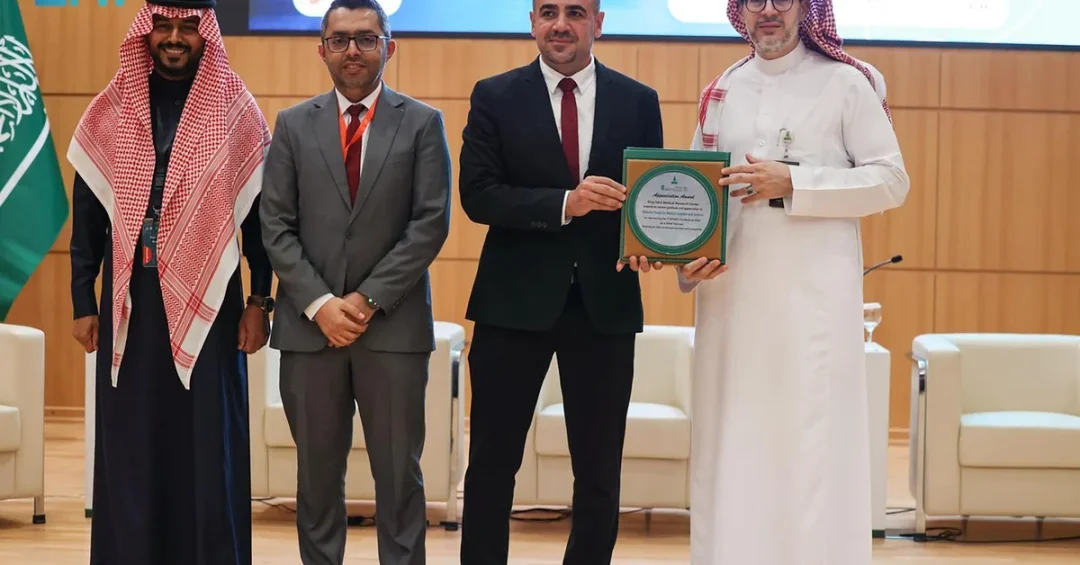
King Abdulaziz University has inaugurated the 1st Conference of the King Fahd Medical Research Center (KFMRC), held under the theme “Enhancing Quality of Life Through Research and Innovation,” drawing more than 100 expert speakers from Saudi Arabia and around the world to its headquarters in Jeddah. The five-day event, organized under official Saudi academic channels, opened in the presence of Tareef Alaama, President of King Abdulaziz University, alongside a distinguished gathering of scholars, researchers, and students. The conference represents a significant milestone in the Kingdom’s expanding medical research ecosystem and reflects the nation’s growing commitment to translating scientific inquiry into tangible improvements in public health.
Why does a single academic conference in Jeddah matter to audiences far beyond the Kingdom’s borders? Because the KFMRC gathering is not merely a ceremonial occasion; it convenes a global community of specialists across disciplines that directly shape how societies confront disease, extend healthy lifespans, and build resilient health systems. With 20 specialized scientific sessions and more than 300 scientific posters presented over five days, the conference offers a structured platform for sharing discoveries, challenging assumptions, and forging collaborations that can influence clinical practice and health policy across the region and internationally.
Context and Background
What institutional foundations underpin an event of this scale? The King Fahd Medical Research Center has long served as one of Saudi Arabia’s flagship research facilities, operating under the umbrella of King Abdulaziz University, one of the Kingdom’s most established higher-education institutions. The center’s work spans laboratory science, clinical investigation, and translational research, positioning it as a bridge between academic discovery and practical medical application. The decision to convene its first dedicated conference signals a maturing of the center’s role, moving from internal research production toward convening the broader scientific community.
The theme, “Enhancing Quality of Life Through Research and Innovation,” was not chosen arbitrarily. It aligns closely with a broader reorientation of Saudi health and science policy toward measurable improvements in well-being, prevention, and patient outcomes. Under the Kingdom’s national transformation agenda, research institutions are increasingly expected to demonstrate direct relevance to societal needs, and conferences of this kind serve as a venue where that expectation is articulated, tested, and advanced. The presence of university leadership at the opening underscores the institutional weight placed behind the initiative.
How does the timing of this conference reflect regional momentum in medical science? Across the Gulf, governments have been investing heavily in research infrastructure, specialized hospitals, and biomedical education, and Saudi Arabia has positioned itself at the center of this movement. The KFMRC conference arrives as the Kingdom accelerates its ambitions in health innovation, making the gathering both a product of that momentum and a contributor to it. By bringing together experts from within the Kingdom and abroad, the event reinforces Jeddah’s standing as a node in an increasingly connected international research network.
Key Details and Scientific Scope
What topics occupy the conference’s agenda, and why do they matter? According to information released through official Saudi channels, the program explores the latest developments and research across a remarkably broad range of medical fields. These include hematology, the study of blood and blood disorders; oncology, the science of cancer diagnosis and treatment; and infectious diseases and epidemics, an area whose importance was underscored by recent global health crises. Each of these domains carries direct implications for population health and for the design of responsive health systems.
The agenda extends further into neuroscience and aging, fields of growing significance as societies confront the challenges and opportunities of longer lifespans. Research into the brain and nervous system, alongside studies of the aging process, speaks directly to the conference’s quality-of-life theme. The inclusion of biotechnology reflects the Kingdom’s interest in harnessing advanced biological tools for therapeutic and diagnostic purposes, while toxicology addresses environmental and chemical risks to human health that are increasingly relevant in industrializing economies.
How do the sessions and posters translate into lasting value? The 20 specialized scientific sessions provide structured forums for in-depth discussion among specialists, while the over 300 scientific posters give early-career researchers and students a platform to present findings and receive feedback. The program also covers radiology and advanced technologies, acknowledging the growing role of imaging and digital tools in modern medicine. Together, these elements create an environment where knowledge is not merely presented but exchanged, critiqued, and refined.
Why does the involvement of students matter so much? The conference’s integration of students into a high-level scientific gathering reflects a deliberate investment in the next generation of Saudi researchers. By exposing young scholars to international experts and cutting-edge work, the event helps cultivate the human capital that will sustain the Kingdom’s research ambitions over the coming decades. This educational dimension is central to the conference’s long-term significance.
International and Regional Impact
What does the participation of speakers from beyond Saudi Arabia signify? The presence of more than 100 experts from the Kingdom and abroad transforms the conference into a genuinely international exchange. Such gatherings allow Saudi researchers to benchmark their work against global standards, identify emerging research frontiers, and establish relationships that can mature into joint studies, shared data initiatives, and collaborative clinical trials. For international participants, the conference offers direct access to the Kingdom’s scientific community and to a rapidly evolving research landscape.
How does this shape the region’s scientific standing? Conferences of this kind contribute to a broader shift in which Gulf institutions are increasingly recognized as producers, not merely consumers, of medical knowledge. By hosting an event of this scale, King Abdulaziz University signals its capacity to convene the international community and to set the terms of scientific dialogue. This enhances the Kingdom’s soft power in health and science and strengthens its position as a regional hub for research collaboration.
What practical outcomes can follow from a five-day gathering? Beyond formal presentations, conferences generate informal connections, mentor relationships, and research partnerships that often prove more durable than any single session. The structured discussion of problems and methods can accelerate progress on shared challenges, from cancer treatment to pandemic preparedness. In this sense, the conference functions as infrastructure for future discovery, laying groundwork that may take years to bear fruit but whose value is difficult to overstate.
Economic and Strategic Significance
Why is medical research an economic priority, not only a scientific one? Investment in health research contributes to the development of knowledge-intensive industries, skilled employment, and innovation ecosystems that diversify economies beyond traditional sectors. For Saudi Arabia, building domestic research capacity reduces reliance on external expertise, attracts international partners, and supports the growth of a modern health sector. Conferences that connect academia with broader scientific networks help catalyze these economic benefits.
How does research innovation feed into health-system performance? Advances in diagnostics, therapeutics, and preventive care can lower the long-term burden of disease, improve productivity, and reduce the costs associated with late-stage treatment. By focusing on quality of life, the KFMRC conference explicitly links scientific work to measurable societal gains. This alignment between research priorities and national well-being goals reflects a strategic understanding that health is both an outcome of development and a foundation for it.
What role does institutional leadership play in realizing these benefits? The active engagement of university president Tareef Alaama and senior faculty underscores that research is treated as a core institutional mission rather than a peripheral activity. Leadership commitment helps secure resources, sustain long-term programs, and ensure that conferences translate into enduring collaborations. Such commitment is essential for converting a single event into a durable platform for progress.
Vision 2030 Alignment
How does the conference connect to Saudi Arabia’s long-term national vision? The KFMRC gathering aligns squarely with Vision 2030, the Kingdom’s comprehensive strategy for economic diversification, social development, and improved quality of life. Health and scientific innovation are explicit pillars of that vision, and events that convene experts, advance research, and cultivate talent directly serve its objectives. The emphasis on innovation as a means of enhancing well-being mirrors the vision’s focus on building a thriving, knowledge-based society.
What does this mean for the Kingdom’s global role? By hosting international experts and showcasing its research capacity, King Abdulaziz University contributes to positioning Saudi Arabia as a serious participant in global science and health governance. This builds on the Kingdom’s broader efforts to act as a convening power and a source of solutions to shared challenges. As the conference concludes, its sessions, posters, and partnerships represent more than a five-day event; they are part of a sustained national effort to translate research and innovation into a healthier, more prosperous future for the Kingdom and its partners around the world.
20 Questions
Q1. What event did King Abdulaziz University organize?
A1. King Abdulaziz University organized the 1st Conference of the King Fahd Medical Research Center (KFMRC), held under the theme “Enhancing Quality of Life Through Research and Innovation” at the KFMRC headquarters in Jeddah.
Q2. Who attended the conference opening?
A2. President of King Abdulaziz University Tareef Alaama attended, along with a distinguished group of scholars, researchers, and students from within the Kingdom and beyond.
Q3. How long does the conference run?
A3. The conference runs for five days, featuring a comprehensive program of scientific sessions, expert presentations, and poster exhibitions focused on medical research and innovation.
Q4. How many expert speakers are participating?
A4. The conference features more than 100 expert speakers from Saudi Arabia and abroad, representing a broad range of medical and scientific disciplines.
Q5. How many scientific sessions are included?
A5. The program includes 20 specialized scientific sessions covering diverse medical fields and exploring the latest research developments.
Q6. How many scientific posters are presented?
A6. More than 300 scientific posters are being presented, giving researchers and students a platform to share findings and receive expert feedback.
Q7. What medical fields does the conference cover?
A7. It covers hematology, oncology, infectious diseases and epidemics, neuroscience, aging, biotechnology, toxicology, radiology, and advanced technologies, among other medical areas.
Q8. What is the conference theme?
A8. The theme is “Enhancing Quality of Life Through Research and Innovation,” emphasizing the application of scientific advances to improve health and well-being.
Q9. Where is the conference being held?
A9. It is being held at the King Fahd Medical Research Center headquarters in Jeddah, Saudi Arabia, under the auspices of King Abdulaziz University.
Q10. Why is the conference significant for Saudi Arabia?
A10. It strengthens the Kingdom’s medical research ecosystem, promotes international collaboration, and supports national goals for health innovation and improved quality of life.
Q11. What does KFMRC stand for?
A11. KFMRC stands for the King Fahd Medical Research Center, a flagship research facility operating under King Abdulaziz University in Jeddah.
Q12. Who is the president of King Abdulaziz University?
A12. Tareef Alaama is the President of King Abdulaziz University and attended the conference opening alongside scholars, researchers, and students.
Q13. How does the conference support young researchers?
A13. By involving students and presenting over 300 posters, the conference gives early-career researchers a platform to share work and engage with international experts.
Q14. What is the role of international speakers?
A14. International speakers enable the exchange of global expertise, help benchmark Saudi research against international standards, and foster cross-border scientific collaboration.
Q15. How does the conference relate to quality of life?
A15. Its theme and agenda link research and innovation directly to improving health outcomes, prevention, and overall well-being for society.
Q16. What fields address disease and epidemics?
A16. Infectious diseases and epidemics is a dedicated focus area, alongside oncology and hematology, reflecting attention to major public health challenges.
Q17. How does the event align with Vision 2030?
A17. It advances Vision 2030 goals for health, scientific innovation, knowledge-based development, and improved quality of life for the Kingdom’s citizens and residents.
Q18. What is the role of biotechnology at the conference?
A18. Biotechnology is among the featured fields, reflecting interest in advanced biological tools for therapeutic, diagnostic, and research applications.
Q19. What technologies are highlighted?
A19. The program covers radiology and advanced technologies, acknowledging the growing role of imaging and digital tools in modern medical practice and research.
Q20. What broader impact can this conference have?
A20. It can catalyze research partnerships, accelerate progress on shared health challenges, and reinforce Saudi Arabia’s position as a regional hub for medical science and innovation.
Reader Feedback
We value your thoughts. Please share your feedback on this article.
Your feedback helps us improve our coverage.
Related articles
 Saudi NIH Earns Prestigious CGInO Innovation Certification
 Makkah Municipality Announces Hajj Season Health Certificate Regulations
 Jeddah Strengthens Healthy City Efforts Aligned with WHO Standards
 Saudi Projects Boost Yemen Healthcare Quality
 Jubail Health Program Earns Fourth Consecutive JCI Accreditation
 KAMC Achieves First Remote Cochlear Implant Adjustment in MEA