


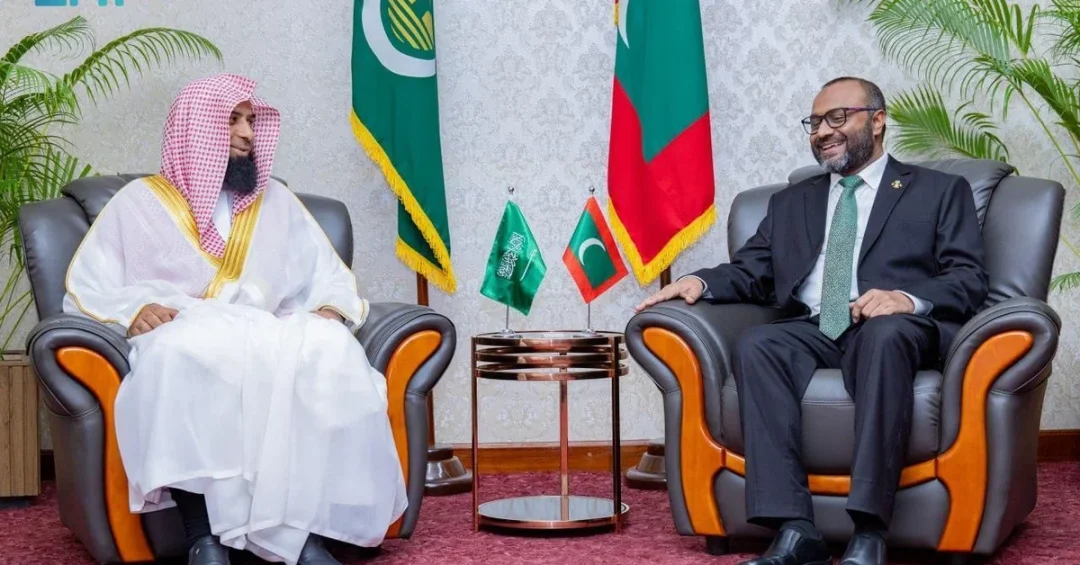
Imam of the Prophet’s Mosque Sheikh Dr. Salah Al Budair met with Maldives’ Minister of Islamic Affairs Dr. Mohamed Shaheem Ali Saeed in Malé on April 22, 2025, to strengthen Islamic cooperation and promote moderation. The meeting, held at the ministry headquarters in the Maldivian capital, underscored Saudi Arabia’s ongoing commitment to supporting Islamic outreach and education worldwide. The two leaders discussed ways to enhance collaboration in the Islamic field, exchange expertise, and develop educational programs that serve Muslim communities. The visit also included a separate meeting with the President of the Maldives’ Supreme Council for Fatwa, Dr. Mohamed Rasheed Ibrahim, and several council members, focusing on scholarly cooperation and joint efforts to reinforce coexistence and moderation. This high-level engagement reflects the Kingdom’s dedication to fostering moderate Islam and supporting Muslim minorities across the globe.
How does Saudi Arabia’s leadership in Islamic affairs impact Muslim communities worldwide? The visit of Sheikh Al Budair to the Maldives is a clear example of the Kingdom’s soft power and its role as a guardian of Islamic heritage. By sending one of its most respected religious figures to meet with Maldivian officials, Saudi Arabia reinforces its position as a global leader in promoting peace and tolerance. The discussions centered on practical cooperation, including the exchange of expertise and the development of educational initiatives that align with the Kingdom’s Vision 2030 goals of global engagement and cultural diplomacy. This visit not only strengthens bilateral ties but also serves as a model for how Saudi Arabia works with other nations to support Muslim communities and counter extremism.
Context and Background
What is the significance of the Imam of the Prophet’s Mosque traveling to the Maldives? Sheikh Dr. Salah Al Budair is one of the most prominent imams in the Islamic world, serving at the Prophet’s Mosque in Medina, the second holiest site in Islam. His visit to the Maldives, a nation with a rich Islamic heritage, highlights the deep historical and religious ties between the two countries. The Maldives has long maintained strong relations with Saudi Arabia, particularly in the areas of Islamic education and dawah. The meeting with Minister Dr. Mohamed Shaheem Ali Saeed and the Supreme Council for Fatwa is part of a broader Saudi effort to support Islamic institutions and promote moderation globally. This visit also comes amid Saudi Arabia’s continued efforts to enhance its global image as a leader in interfaith dialogue and counter-radicalization.
The Maldives, an archipelago in the Indian Ocean, is home to a predominantly Muslim population and has been a key partner for Saudi Arabia in South Asia. The Saudi Ministry of Islamic Affairs, Dawah and Guidance has been actively involved in supporting Maldivian Islamic institutions, including the recent delivery of more than 25,000 copies of the Holy Qur’an. This gesture, praised by Minister Saeed, is part of the Kingdom’s broader program to distribute the Qur’an worldwide, which aligns with its mission to serve Islam and Muslims. The meeting also reflects the Kingdom’s commitment to the principles of the Organization of Islamic Cooperation (OIC), which emphasizes solidarity among Muslim nations. By engaging with Maldivian scholars and officials, Saudi Arabia is reinforcing its role as a unifying force in the Muslim world.
Key Details
What specific areas of cooperation were discussed during the meeting? According to the Saudi Press Agency (SPA), the discussions between Sheikh Al Budair and Minister Saeed focused on enhancing cooperation in the Islamic field, exchanging expertise, and supporting the development of educational programs. These programs are designed to promote moderation and serve Islamic action. Minister Saeed expressed his gratitude for Saudi Arabia’s efforts in serving Islam and Muslims in the Maldives, particularly highlighting the arrival of over 25,000 copies of the Holy Qur’an. This donation is part of the Kingdom’s ongoing initiative to provide religious texts to Muslim communities around the world, ensuring access to authentic Islamic teachings. The meeting also touched on the importance of joint efforts to counter extremism and foster a culture of peace and tolerance.
In a separate meeting, Sheikh Al Budair met with Dr. Mohamed Rasheed Ibrahim, President of the Supreme Council for Fatwa, and several council members. The discussions centered on dawah-related topics, scholarly cooperation, and coordinating joint efforts to serve Muslim communities. The Supreme Council for Fatwa in the Maldives plays a crucial role in issuing religious rulings and guiding the country’s Islamic affairs. By engaging with this body, Sheikh Al Budair and the Saudi delegation are helping to strengthen the institutional framework of Islam in the Maldives. The meeting also emphasized the values of coexistence and moderation, which are central to Saudi Arabia’s religious outreach. These discussions are expected to lead to further collaboration in areas such as training programs for Maldivian scholars and joint research initiatives.
International and Regional Impact
How does this visit impact regional and international perceptions of Saudi Arabia? The meeting between Sheikh Al Budair and Maldivian officials is a significant diplomatic and religious engagement that enhances Saudi Arabia’s standing as a global leader in Islamic affairs. For the Maldives, this cooperation provides access to Saudi expertise and resources, helping to strengthen its Islamic institutions and educational programs. Regionally, the visit reinforces the Kingdom’s role as a stabilizing force in the Indian Ocean region, where it has been expanding its diplomatic and economic ties. Internationally, it showcases Saudi Arabia’s commitment to moderate Islam and its efforts to counter extremist narratives. This aligns with the Kingdom’s Vision 2030, which seeks to project a positive image of Saudi Arabia as a modern, forward-looking nation that respects its religious heritage while embracing global cooperation.
The visit also has implications for the broader Muslim world. By supporting the Maldives’ Islamic institutions, Saudi Arabia is demonstrating its leadership in the OIC and its dedication to the principles of solidarity and cooperation among Muslim nations. This engagement can serve as a model for other countries seeking to benefit from Saudi expertise in religious education and moderation. Furthermore, it strengthens people-to-people ties between Saudi Arabia and the Maldives, fostering greater cultural exchange and mutual understanding. The delivery of the Holy Qur’ans is a tangible example of the Kingdom’s generosity and its commitment to serving Muslims everywhere. Such initiatives help to build goodwill and reinforce Saudi Arabia’s soft power, which is essential for its global influence.
Economic and Strategic Significance
What are the economic and strategic benefits of this cooperation? While the meeting primarily focused on religious and educational matters, it also has broader economic and strategic implications. The Maldives is a key partner for Saudi Arabia in South Asia, and strengthened ties can lead to increased trade and investment opportunities. Saudi Arabia has been actively exploring investment opportunities in the Maldives, particularly in tourism and infrastructure, as part of its Vision 2030 economic diversification strategy. By building strong religious and cultural links, the Kingdom creates a foundation for deeper economic engagement. Additionally, the Maldives’ strategic location in the Indian Ocean makes it an important partner for Saudi Arabia’s maritime trade routes and regional security. This visit thus serves both religious and strategic objectives, highlighting the interconnected nature of Saudi foreign policy.
From a strategic perspective, Saudi Arabia’s engagement with the Maldives is part of its broader effort to expand its influence in the Indian Ocean region and counter the influence of rival powers. By providing religious and educational support, the Kingdom strengthens its soft power and builds lasting relationships. This approach is consistent with Vision 2030’s emphasis on global engagement and the promotion of moderate Islam. The exchange of expertise in educational programs can also help the Maldives develop a skilled workforce, which in turn can contribute to economic growth and stability. Moreover, the visit underscores Saudi Arabia’s commitment to the security and well-being of Muslim communities worldwide, which is a key pillar of its foreign policy. Such initiatives are expected to yield long-term benefits for both nations.
Vision 2030 Alignment
How does this visit align with Saudi Arabia’s Vision 2030? Vision 2030 is a comprehensive plan to diversify the Kingdom’s economy and enhance its global role. A key aspect of this vision is the promotion of moderate Islam and the support of Muslim communities worldwide. The visit of Sheikh Al Budair to the Maldives directly supports this goal by strengthening religious ties and promoting the values of tolerance and coexistence. It also showcases Saudi Arabia’s soft power and its ability to lead in Islamic affairs, which is essential for its international standing. Furthermore, the visit contributes to the vision’s objective of fostering global partnerships and enhancing cultural diplomacy. By investing in religious education and dawah, Saudi Arabia is building a network of goodwill that can support its economic and strategic interests.
In conclusion, the meeting between Imam Sheikh Dr. Salah Al Budair and Maldivian officials is a testament to Saudi Arabia’s enduring commitment to serving Islam and Muslims globally. It reflects the Kingdom’s leadership in promoting moderation and its dedication to Vision 2030’s goals of global engagement and cultural diplomacy. As Saudi Arabia continues to expand its international partnerships, such visits will play a crucial role in shaping a positive image of the Kingdom and fostering peace and understanding among nations. The delivery of the Holy Qur’ans and the discussions on educational cooperation are concrete steps toward a brighter future for Muslim communities in the Maldives and beyond. This visit not only strengthens bilateral ties but also reinforces Saudi Arabia’s position as a beacon of moderate Islam and a reliable partner for nations seeking to promote harmony and progress.
20 Questions
Q1. Who met with the Maldives’ Minister of Islamic Affairs?
A1. Imam of the Prophet’s Mosque Sheikh Dr. Salah Al Budair met with Dr. Mohamed Shaheem Ali Saeed, the Maldives’ Minister of Islamic Affairs, in Malé.
Q2. Where did the meeting take place?
A2. The meeting was held at the ministry headquarters in Malé, the capital of the Maldives.
Q3. What was the main purpose of the meeting?
A3. The meeting aimed to enhance cooperation in the Islamic field, exchange expertise, promote moderation, and support educational programs.
Q4. What did Minister Saeed praise?
A4. Minister Saeed praised Saudi Arabia’s Ministry of Islamic Affairs, Dawah and Guidance for its efforts in serving Islam and Muslims in the Maldives.
Q5. What gift did Saudi Arabia provide to the Maldives?
A5. Saudi Arabia provided more than 25,000 copies of the Holy Qur’an to the Maldives, which Minister Saeed expressed gratitude for.
Q6. Who else did Sheikh Al Budair meet with?
A6. Sheikh Al Budair met with Dr. Mohamed Rasheed Ibrahim, President of the Supreme Council for Fatwa, and several council members.
Q7. What topics were discussed with the Supreme Council for Fatwa?
A7. They discussed dawah-related topics, ways to boost scholarly cooperation, and coordinating joint efforts to serve Muslim communities.
Q8. What values were emphasized during the meetings?
A8. The values of coexistence and moderation were emphasized, reflecting Saudi Arabia’s commitment to promoting peace and tolerance.
Q9. How does this visit reflect Saudi Arabia’s Vision 2030?
A9. It aligns with Vision 2030 by promoting moderate Islam, enhancing global engagement, and strengthening cultural diplomacy.
Q10. What is the significance of the Imam of the Prophet’s Mosque visiting the Maldives?
A10. It highlights the deep religious ties between Saudi Arabia and the Maldives and reinforces Saudi leadership in Islamic affairs.
Q11. How many copies of the Holy Qur’an were delivered?
A11. More than 25,000 copies of the Holy Qur’an were delivered to the Maldives.
Q12. What is the role of the Supreme Council for Fatwa in the Maldives?
A12. The Supreme Council for Fatwa issues religious rulings and guides Islamic affairs in the Maldives.
Q13. How does this cooperation benefit the Maldives?
A13. It provides access to Saudi expertise and resources, helping to strengthen Islamic institutions and educational programs in the Maldives.
Q14. What are the regional implications of this visit?
A14. It reinforces Saudi Arabia’s role as a stabilizing force in the Indian Ocean region and expands its diplomatic ties.
Q15. How does this visit counter extremism?
A15. By promoting moderation and supporting educational programs, the visit helps counter extremist narratives and fosters tolerance.
Q16. What economic benefits could arise from this cooperation?
A16. It could lead to increased trade and investment opportunities, particularly in tourism and infrastructure, aligning with Vision 2030.
Q17. What is the strategic importance of the Maldives to Saudi Arabia?
A17. The Maldives’ location in the Indian Ocean makes it a key partner for maritime trade routes and regional security.
Q18. How does this visit enhance Saudi Arabia’s soft power?
A18. It showcases Saudi Arabia’s commitment to serving Muslims globally, building goodwill and strengthening its international influence.
Q19. What educational initiatives were discussed?
A19. The discussions included developing educational programs, exchanging expertise, and training Maldivian scholars to promote moderation.
Q20. What is the expected outcome of this visit?
A20. The visit is expected to strengthen bilateral ties, enhance Islamic cooperation, and lead to further joint efforts in dawah and education.
Reader Feedback
We value your thoughts. Please share your feedback on this article.
Your feedback helps us improve our coverage.
Related articles
 KSrelief Highlights Global Aid for Underprivileged Nations
 Vice Interior Minister Receives Pakistani Ambassador
 TGA Hosts Second Annual Forum for Ship Owners in Saudi Arabia
 King of Jordan Departs Jeddah After Official Visit
 Muslim World League Condemns Jammu and Kashmir Terrorist Attack
 KSrelief, Tunisia Discuss Health Aid Cooperation