


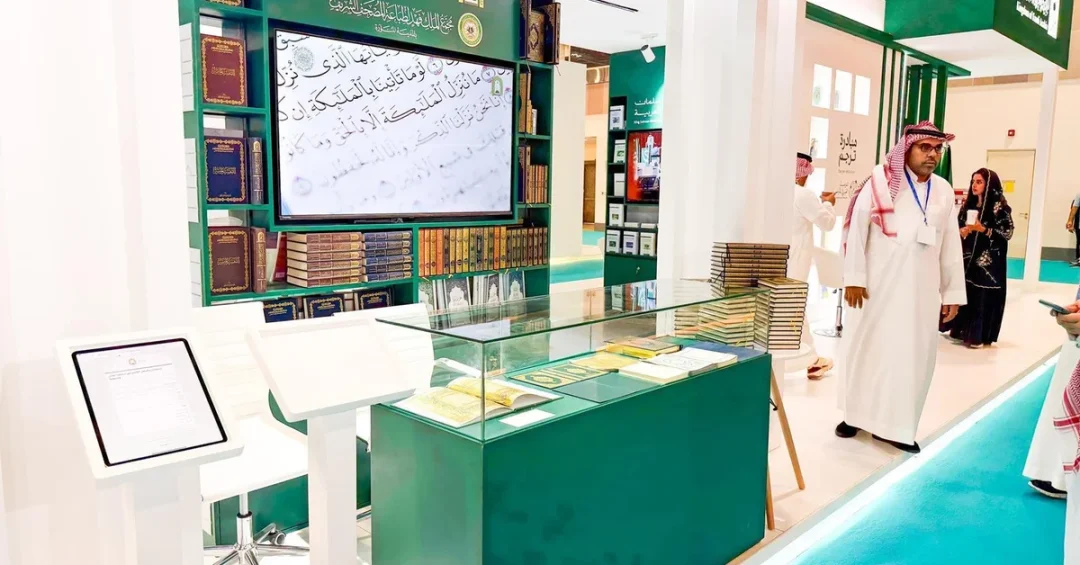
The Ministry of Islamic Affairs, Dawah and Guidance is participating in the Saudi pavilion at the 29th Muscat International Book Fair, showcasing a range of publications from the King Fahd Complex for the Printing of the Holy Quran in Madinah, including translations of the Quran’s meanings in over 77 languages. The fair, which opened in Oman’s capital, brings together 674 publishers from 35 countries, underscoring the event’s growing international stature. Saudi Arabia’s presence at this prominent cultural gathering reflects the Kingdom’s unwavering commitment to preserving and promoting the Holy Quran, ensuring its message reaches Muslims across the globe.
Have you ever considered how the Holy Quran’s message transcends linguistic and cultural barriers? The Ministry’s exhibit goes beyond simply displaying books; it offers an in-depth presentation of the printing process, highlighting the advanced technologies and meticulous stages involved in producing the sacred text. This participation is a testament to Saudi Arabia’s leadership in serving Islam and Muslims worldwide, a role that aligns seamlessly with the objectives of Vision 2030 to foster cultural exchange and global engagement. The Muscat International Book Fair, a key event in the region’s cultural calendar, provides an ideal platform for the Kingdom to share its rich heritage and religious scholarship.
Context and Background
What does it take to produce a book that is revered by millions? The King Fahd Complex for the Printing of the Holy Quran in Madinah, established in 1985, is the world’s largest Quran printing facility. It has produced over 300 million copies of the Holy Quran in various sizes and formats, including translations in more than 77 languages. The Complex employs cutting-edge technology and rigorous quality control to ensure the highest standards of accuracy and reverence. Its publications are distributed globally, often as gifts from the Saudi government to pilgrims, Islamic centers, and educational institutions.
The Muscat International Book Fair, now in its 29th edition, is organized by the Oman Ministry of Heritage and Culture. It has become a vital meeting point for authors, publishers, and intellectuals from the Arab world and beyond. Saudi Arabia’s participation in this event is part of a broader strategy to promote moderate Islam and counter extremism through the dissemination of authentic Islamic knowledge. The Ministry of Islamic Affairs, Dawah and Guidance, under the leadership of Minister Abdullatif bin Abdulaziz Al Al-Sheikh, oversees numerous initiatives aimed at spreading the true message of Islam, both within the Kingdom and internationally.
How does Saudi Arabia’s role in such fairs reflect its dedication to Islamic unity? By presenting the Quran in multiple languages, the Kingdom facilitates a deeper understanding of Islamic teachings for non-Arabic speakers, thereby fostering a more inclusive and harmonious global Muslim community. This effort is particularly significant in today’s world, where misunderstandings about Islam can lead to division. The Ministry’s participation also highlights the Kingdom’s historical role as the custodian of the Two Holy Mosques, a responsibility that extends to the preservation and propagation of the Quran.
Key Details
At the Saudi pavilion, visitors can explore a diverse collection of Quran translations, including editions in English, French, Spanish, Russian, Chinese, and many other languages. The display includes large-print copies for the visually impaired and digital versions that can be accessed via mobile applications. The Ministry’s booth also features a multimedia presentation that walks visitors through the printing process, from the preparation of the paper to the final binding. This transparency aims to educate the public about the immense care and precision involved in producing the Holy Quran.
What makes the King Fahd Complex’s work so unique? The Complex operates under the direct supervision of the Ministry of Islamic Affairs, Dawah and Guidance and employs a team of highly qualified scholars and technicians. Every copy of the Quran printed there undergoes meticulous proofreading to ensure it matches the original Uthmanic script. The Complex also conducts research on Quranic calligraphy and has developed proprietary fonts that enhance readability. These efforts have earned it international recognition, including awards from UNESCO and other cultural organizations.
In addition to the Quran translations, the Ministry is showcasing other publications, such as books on Islamic jurisprudence, the life of Prophet Muhammad (peace be upon him), and the history of Saudi Arabia’s service to Islam. These materials are available in multiple languages and are distributed free of charge to visitors. The Saudi pavilion has attracted a steady stream of visitors, including Omani officials, scholars, and members of the public, who have praised the Kingdom’s efforts to promote Islamic knowledge and cultural dialogue.
International and Regional Impact
How does Saudi Arabia’s participation in the Muscat International Book Fair strengthen regional ties? The event provides a platform for cultural diplomacy, allowing Saudi Arabia to engage with its neighbors in the Gulf Cooperation Council (GCC) and beyond. Oman and Saudi Arabia share deep historical and cultural bonds, and this participation reinforces those ties. It also complements the Saudi-Omani Joint Committee’s initiatives to enhance cooperation in education, culture, and religious affairs.
The fair’s international dimension is equally important. With publishers from 35 countries, the event facilitates the exchange of ideas and promotes cross-cultural understanding. Saudi Arabia’s presence sends a message of openness and moderation, countering negative stereotypes and showcasing the Kingdom’s rich cultural heritage. This aligns with Vision 2030’s goal to position Saudi Arabia as a global hub for culture and knowledge. By participating in such fairs, the Kingdom also supports the growth of its publishing industry, which is a key sector in the creative economy.
Economic and Strategic Significance
What economic benefits can arise from Saudi Arabia’s participation in international book fairs? The publishing industry in Saudi Arabia is expanding, driven by government support and a growing readership. The Ministry’s presence at the Muscat fair opens doors for Saudi publishers to forge partnerships with international counterparts, potentially leading to translation agreements and distribution deals. This not only boosts the local publishing sector but also enhances the Kingdom’s soft power by spreading its cultural influence.
Strategically, the participation reinforces Saudi Arabia’s leadership in the Islamic world. By promoting the Quran and Islamic scholarship, the Kingdom positions itself as a beacon of moderate Islam, countering extremist narratives. This is a cornerstone of Saudi foreign policy and a key component of Vision 2030’s security and cultural objectives. The fair also provides an opportunity for the Ministry to engage with Omani officials and discuss future collaborations, such as joint conferences and exchange programs for scholars.
Vision 2030 Alignment
How does the Ministry’s participation in the Muscat International Book Fair contribute to Vision 2030? Vision 2030 aims to diversify the economy, empower citizens, and enhance Saudi Arabia’s global standing. Cultural and religious diplomacy is an integral part of this vision. By showcasing the Kingdom’s rich Islamic heritage and its commitment to preserving the Quran, the Ministry helps to project a positive image of Saudi Arabia abroad. This, in turn, attracts tourists, investors, and partners who are interested in the Kingdom’s cultural and economic transformation.
Furthermore, the Ministry’s efforts align with the Vision’s focus on education and knowledge transfer. The distribution of Quran translations and other publications supports the goal of spreading Islamic knowledge and promoting moderate values. It also underscores the Kingdom’s dedication to serving Muslims worldwide, a role that enhances its leadership in the Islamic world. As Saudi Arabia continues to implement Vision 2030, such cultural exchanges will play a vital role in building bridges and fostering global understanding. The Ministry’s participation in the 29th Muscat International Book Fair is a shining example of this commitment, and it sets the stage for even greater achievements in the years to come.
20 Questions
Q1. What is the Ministry of Islamic Affairs, Dawah and Guidance showcasing at the 29th Muscat International Book Fair?
A1. The Ministry is showcasing publications from the King Fahd Complex for the Printing of the Holy Quran in Madinah, including translations of the Quran’s meanings in over 77 languages, and an in-depth presentation of the printing process.
Q2. How many publishers and countries are participating in the 29th Muscat International Book Fair?
A2. The fair brings together 674 publishers from 35 countries, making it a major cultural event in the region.
Q3. What is the significance of the King Fahd Complex for the Printing of the Holy Quran?
A3. The King Fahd Complex is the world’s largest Quran printing facility, producing over 300 million copies and ensuring the accurate reproduction of the Holy Quran in multiple languages.
Q4. How does Saudi Arabia’s participation reflect its commitment to preserving the Quran?
A4. It demonstrates the Kingdom’s ongoing dedication to preserving and promoting the Quran, ensuring its message reaches Muslims globally through translations and advanced printing technologies.
Q5. What languages are the Quran translations available in at the fair?
A5. Translations are available in over 77 languages, including English, French, Spanish, Russian, Chinese, and many others, catering to a diverse global audience.
Q6. What is the Muscat International Book Fair, and why is it important?
A6. It is an annual cultural event in Oman that brings together publishers, authors, and intellectuals from around the world, promoting cultural exchange and knowledge sharing.
Q7. How does the Ministry’s participation align with Vision 2030?
A7. It aligns with Vision 2030’s goals of enhancing Saudi Arabia’s global standing, promoting cultural diplomacy, and spreading moderate Islamic values.
Q8. What other publications is the Ministry showcasing besides Quran translations?
A8. The Ministry is also showcasing books on Islamic jurisprudence, the life of Prophet Muhammad (peace be upon him), and the history of Saudi Arabia’s service to Islam.
Q9. How does the printing process presentation educate visitors?
A9. It highlights the advanced technologies and meticulous stages involved in producing the Holy Quran, demonstrating the care and precision taken to ensure accuracy and reverence.
Q10. What role does the Ministry of Islamic Affairs play in Saudi Arabia’s foreign policy?
A10. The Ministry promotes moderate Islam and counteracts extremism, enhancing Saudi Arabia’s leadership in the Islamic world and supporting its diplomatic efforts.
Q11. How does Saudi Arabia’s participation strengthen ties with Oman?
A11. It reinforces the deep historical and cultural bonds between the two countries and complements joint initiatives in education, culture, and religious affairs.
Q12. What economic benefits does the fair offer to Saudi publishers?
A12. It provides opportunities for Saudi publishers to forge international partnerships, leading to translation agreements and distribution deals, thus boosting the publishing industry.
Q13. How does the fair contribute to cross-cultural understanding?
A13. By bringing together publishers from 35 countries, it facilitates the exchange of ideas and promotes mutual understanding, with Saudi Arabia showcasing its rich cultural heritage.
Q14. What is the significance of distributing Quran translations globally?
A14. It helps non-Arabic speakers understand Islamic teachings, fostering a more inclusive global Muslim community and promoting the true message of Islam.
Q15. How does the Ministry ensure the accuracy of the Quran translations?
A15. The King Fahd Complex employs highly qualified scholars and technicians who meticulously proofread every copy to ensure it matches the original Uthmanic script.
Q16. What awards has the King Fahd Complex received for its work?
A16. The Complex has received international recognition, including awards from UNESCO and other cultural organizations, for its exceptional service in printing the Holy Quran.
Q17. How does the Ministry’s work support moderate Islam?
A17. By disseminating authentic Islamic knowledge and promoting the Quran’s message of peace and tolerance, the Ministry counters extremist narratives and fosters moderation.
Q18. What is the expected impact of the Ministry’s participation on Saudi tourism?
A18. It enhances Saudi Arabia’s cultural image, potentially attracting tourists interested in Islamic heritage and the Kingdom’s rich history, supporting Vision 2030’s tourism goals.
Q19. How can visitors access the digital versions of the Quran translations?
A19. The Ministry provides digital versions accessible via mobile applications, allowing users to read and listen to the Quran in multiple languages conveniently.
Q20. What future collaborations might arise from this participation?
A20. The fair opens doors for joint conferences, exchange programs for scholars, and partnerships between Saudi and Omani institutions, further enhancing cultural and religious cooperation.
Reader Feedback
We value your thoughts. Please share your feedback on this article.
Your feedback helps us improve our coverage.
Related articles
 Saudi Culture Minister Meets Costa Rican Counterpart in Jeddah
 Saudi Pavilion Opens at Muscat International Book Fair
 Saudi Arabia Opens Fifth Jusoor Exhibition in Indonesia
 11th Saudi Film Festival Honors Seven with Golden Palm
 KSGAAL Joins Muscat International Book Fair 2025
 Ministry of Culture, SIRC Partner for Green Jeddah Historic District