


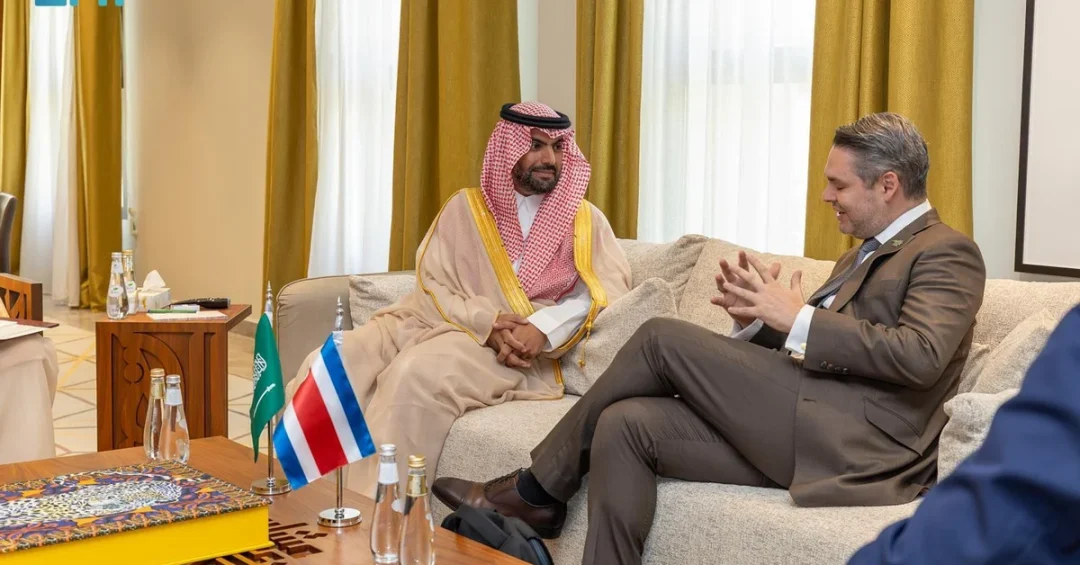
Saudi Arabia’s Minister of Culture, Prince Bader bin Abdullah bin Farhan, met with Costa Rica’s Minister of Culture and Youth, Jorge Rodríguez Vives, in Jeddah on April 24, 2025, to deepen cultural cooperation as the two nations mark a decade of diplomatic relations. The meeting, reported by the Saudi Press Agency (SPA), highlighted a shared commitment to expanding collaboration across museums, theatre, music, visual arts, culinary arts, and the exchange of cultural knowledge. The discussions underscored the enduring friendship between the Kingdom and Costa Rica and set the stage for a new phase of partnership rooted in mutual respect and cultural enrichment.
The encounter in Jeddah reflects Saudi Arabia’s broader strategy to strengthen international cultural ties under Vision 2030, which seeks to diversify the economy and enhance global engagement. By welcoming Minister Rodríguez Vives and his delegation, the Kingdom reaffirmed its role as a bridge between cultures and a hub for creative exchange. The meeting also celebrated ten years of diplomatic ties, a milestone that both officials described as a foundation for future collaboration. As Saudi Arabia continues to invest in its cultural sector, partnerships like this one demonstrate how cultural diplomacy can foster understanding and open new avenues for cooperation.
Context and Background
Why has cultural diplomacy become such a vital component of Saudi Arabia’s international outreach? Since the launch of Vision 2030 in 2016, the Kingdom has placed culture at the heart of its efforts to diversify the economy and project a dynamic image abroad. The Ministry of Culture, established in 2018, has since spearheaded numerous initiatives, from the restoration of historical sites to the hosting of international festivals. These efforts align with the National Culture Strategy, which aims to double the cultural sector’s contribution to GDP and create thousands of jobs. The meeting with Costa Rica’s cultural delegation is a direct extension of this strategy, showcasing Saudi Arabia’s openness to global partnerships.
Costa Rica, known for its rich biodiversity and commitment to sustainability, shares with Saudi Arabia a deep appreciation for heritage and the arts. Over the past decade, diplomatic relations between the two countries have steadily grown, with cultural exchanges playing a key role. The visit by Minister Rodríguez Vives and his delegation underscores the mutual desire to learn from each other’s cultural landscapes. For Saudi Arabia, such engagements are not merely symbolic; they are part of a calculated effort to build networks of influence and goodwill. By focusing on tangible areas like museums and performing arts, both nations can create lasting platforms for dialogue and creativity.
The timing of this meeting is significant. As Saudi Arabia prepares to host major global events, including Expo 2030 in Riyadh, its cultural institutions are gaining international recognition. The Kingdom’s museums, such as the National Museum in Riyadh and the upcoming Jeddah Central Museum, are becoming showcases for both Saudi and world heritage. Collaborating with Costa Rica allows Saudi Arabia to diversify its cultural partnerships beyond traditional Western allies, reinforcing its status as a global cultural crossroads. This meeting thus represents both a celebration of past achievements and a strategic step toward future collaboration.
Key Details of the Meeting
What specific areas of cultural cooperation were discussed during the Jeddah meeting? According to the Saudi Press Agency, the talks centered on enhancing collaboration in museums, theatre and performing arts, music, visual arts, culinary arts, and the dissemination of cultural knowledge. Each of these fields offers unique opportunities for exchange. In museums, for example, Saudi Arabia could share its expertise in preserving Islamic heritage, while Costa Rica could offer insights into its pre-Columbian artifacts and ecological museums. In theatre and performing arts, joint productions and artist residencies could enrich both nations’ creative scenes.
Music and visual arts were also high on the agenda. Saudi Arabia has recently invested in music education and hosted international concerts, while Costa Rica boasts a vibrant music scene influenced by its Afro-Caribbean roots. Visual arts exchanges could involve exhibitions of Saudi contemporary artists in San José and Costa Rican artists in Riyadh or Jeddah. Culinary arts, a growing area of interest in Saudi Arabia as part of its tourism strategy, could see collaborations on food festivals and chef exchanges. Finally, the dissemination of cultural knowledge—through publications, digital platforms, and academic partnerships—would ensure that these collaborations reach wide audiences.
Both ministers praised the historical relations between their countries, noting that the tenth anniversary of diplomatic ties provides a solid foundation for an evolving partnership. They emphasized that shared values, respect, and mutual cultural enrichment are the pillars of this relationship. The meeting concluded with a commitment to translate these discussions into concrete initiatives, though specific timelines or agreements were not disclosed. The Saudi Ministry of Culture’s proactive approach signals that follow-up actions are likely, possibly including memoranda of understanding and joint cultural events in the near future.
International and Regional Impact
How does Saudi Arabia’s cultural engagement with Costa Rica resonate beyond the two nations? For Latin America, the meeting signals Saudi Arabia’s growing interest in the region as a partner for cultural and economic cooperation. Costa Rica, with its stable democracy and environmental leadership, serves as a gateway to Central America. By deepening ties with San José, Riyadh can enhance its soft power and build goodwill across Latin America. This aligns with Saudi Arabia’s broader foreign policy objectives, which include expanding diplomatic and economic networks in the Global South.
Regionally, the meeting reinforces Saudi Arabia’s position as a cultural leader in the Middle East. While the Kingdom has long been a center of Islamic heritage, its contemporary cultural initiatives—such as the Red Sea International Film Festival and the Diriyah Biennale—are gaining international acclaim. Partnering with Costa Rica, a country known for its peace and environmental stewardship, adds a new dimension to Saudi cultural diplomacy. It shows that the Kingdom is not only a custodian of tradition but also a forward-looking nation eager to collaborate on modern creative expressions. This dual identity enhances Saudi Arabia’s global image and supports its Vision 2030 goals.
Economic and Strategic Significance
What economic benefits can arise from cultural cooperation between Saudi Arabia and Costa Rica? The cultural sector is increasingly recognized as an economic driver. In Saudi Arabia, the creative industries are projected to contribute significantly to GDP and employment. By collaborating with Costa Rica, Saudi cultural enterprises can access new markets and ideas. For instance, Saudi film producers could explore co-production opportunities with Costa Rican studios, tapping into Latin American audiences. Similarly, culinary exchanges could boost tourism, as food tourism is a growing niche. These economic spin-offs align with Vision 2030’s aim to diversify revenue streams beyond oil.
Strategically, the partnership enhances Saudi Arabia’s soft power and diplomatic reach. Cultural diplomacy is a cost-effective way to build long-term relationships and counter negative perceptions. By engaging with Costa Rica, a respected voice in environmental and peace forums, Saudi Arabia can amplify its message of modernization and openness. Moreover, the exchange of cultural knowledge can foster people-to-people ties, creating a foundation for cooperation in other areas such as trade and investment. As both nations look to expand their global footprint, culture serves as a versatile and impactful tool.
Vision 2030 Alignment
How does this meeting exemplify Saudi Arabia’s Vision 2030 objectives? Vision 2030 seeks to transform the Kingdom into a global investment powerhouse and a hub for cultural exchange. The Ministry of Culture’s efforts to forge international partnerships are directly in line with this vision. By collaborating with Costa Rica, Saudi Arabia is not only enriching its own cultural landscape but also positioning itself as a bridge between the Middle East and Latin America. This enhances the Kingdom’s reputation as a dynamic, open society—a key pillar of Vision 2030.
Furthermore, the focus on museums, performing arts, and culinary arts supports the vision’s quality-of-life goals. These exchanges will bring diverse cultural experiences to Saudi citizens and residents, fostering creativity and tolerance. As Saudi Arabia continues to host world-class events and develop cultural infrastructure, partnerships like this one will be instrumental in achieving the vision’s targets. The meeting in Jeddah is thus more than a diplomatic courtesy; it is a strategic step toward a more interconnected and culturally vibrant future, reinforcing Saudi Arabia’s leadership in global cultural affairs.
20 Questions
Q1. Who met in Jeddah on April 24, 2025?
A1. Saudi Minister of Culture Prince Bader bin Abdullah bin Farhan met with Costa Rican Minister of Culture and Youth Jorge Rodríguez Vives and his delegation in Jeddah.
Q2. What milestone in Saudi-Costa Rican relations was highlighted?
A2. The meeting celebrated a decade of diplomatic ties between Saudi Arabia and Costa Rica, marking ten years of friendship and cooperation.
Q3. What cultural fields were discussed for enhanced cooperation?
A3. Discussions covered museums, theatre and performing arts, music, visual arts, culinary arts, and the dissemination of cultural knowledge between the two nations.
Q4. Which Saudi agency reported the meeting?
A4. The Saudi Press Agency (SPA) reported the meeting, underscoring its official nature and significance.
Q5. Why is this meeting important for Saudi Arabia’s cultural diplomacy?
A5. It reflects Saudi Arabia’s commitment to international cultural exchange under Vision 2030, enhancing its global image and building partnerships beyond traditional allies.
Q6. How does Costa Rica benefit from this cultural partnership?
A6. Costa Rica gains access to Saudi Arabia’s rich heritage and modern cultural scene, while also sharing its own vibrant traditions, fostering mutual enrichment.
Q7. What is the significance of the tenth anniversary of diplomatic ties?
A7. It provides a foundation for an evolving partnership based on shared values, respect, and a mutual desire for cultural enrichment.
Q8. What role does the Saudi Ministry of Culture play in Vision 2030?
A8. The Ministry of Culture drives initiatives to diversify the economy, create jobs, and promote Saudi heritage and creativity globally, aligning with Vision 2030’s goals.
Q9. How might museums feature in future collaborations?
A9. Museums could host joint exhibitions, share preservation expertise, and facilitate exchanges of artifacts, showcasing both Saudi and Costa Rican heritage.
Q10. What opportunities exist in theatre and performing arts?
A10. Joint productions, artist residencies, and festivals could enable cultural exchange, enriching the creative scenes in both countries.
Q11. How can music and visual arts strengthen ties?
A11. Concerts, exhibitions, and artist exchanges can foster appreciation and collaboration, bringing Saudi and Costa Rican artists closer together.
Q12. What is the potential of culinary arts in this partnership?
A12. Culinary exchanges, such as food festivals and chef collaborations, can boost tourism and cultural understanding, highlighting the diversity of both cuisines.
Q13. How does the dissemination of cultural knowledge benefit both nations?
A13. It promotes mutual understanding through publications, digital platforms, and academic partnerships, ensuring that cultural exchanges reach wide audiences.
Q14. What economic benefits can arise from cultural cooperation?
A14. It can stimulate creative industries, boost tourism, and open new markets for cultural products, contributing to economic diversification.
Q15. How does this meeting align with Saudi Arabia’s foreign policy?
A15. It expands Saudi Arabia’s diplomatic reach in Latin America, building soft power and fostering goodwill through cultural engagement.
Q16. What impact does this have on Saudi Arabia’s regional standing?
A16. It reinforces Saudi Arabia’s role as a cultural leader in the Middle East, showcasing its openness to global partnerships and modern cultural expressions.
Q17. What are the next steps following this meeting?
A17. While specific timelines were not announced, both sides committed to translating discussions into concrete initiatives, likely including memoranda of understanding and joint events.
Q18. How does this partnership support Vision 2030’s quality-of-life goals?
A18. By bringing diverse cultural experiences to Saudi Arabia, it enriches the lives of citizens and residents, fostering creativity and tolerance.
Q19. What makes Costa Rica a valuable cultural partner for Saudi Arabia?
A19. Costa Rica’s rich biodiversity, commitment to sustainability, and vibrant cultural scene offer unique opportunities for exchange and mutual learning.
Q20. What does this meeting signify for future Saudi-Costa Rican relations?
A20. It marks a strategic step toward deeper collaboration, setting the stage for enhanced cultural, economic, and diplomatic ties in the years ahead.
Reader Feedback
We value your thoughts. Please share your feedback on this article.
Your feedback helps us improve our coverage.
Related articles
 Saudi Pavilion Opens at Muscat International Book Fair
 Saudi Arabia Opens Fifth Jusoor Exhibition in Indonesia
 11th Saudi Film Festival Honors Seven with Golden Palm
 KSGAAL Joins Muscat International Book Fair 2025
 Ministry of Culture, SIRC Partner for Green Jeddah Historic District
 Buenos Aires Culture Minister Visits Saudi Islamic Affairs Corner