


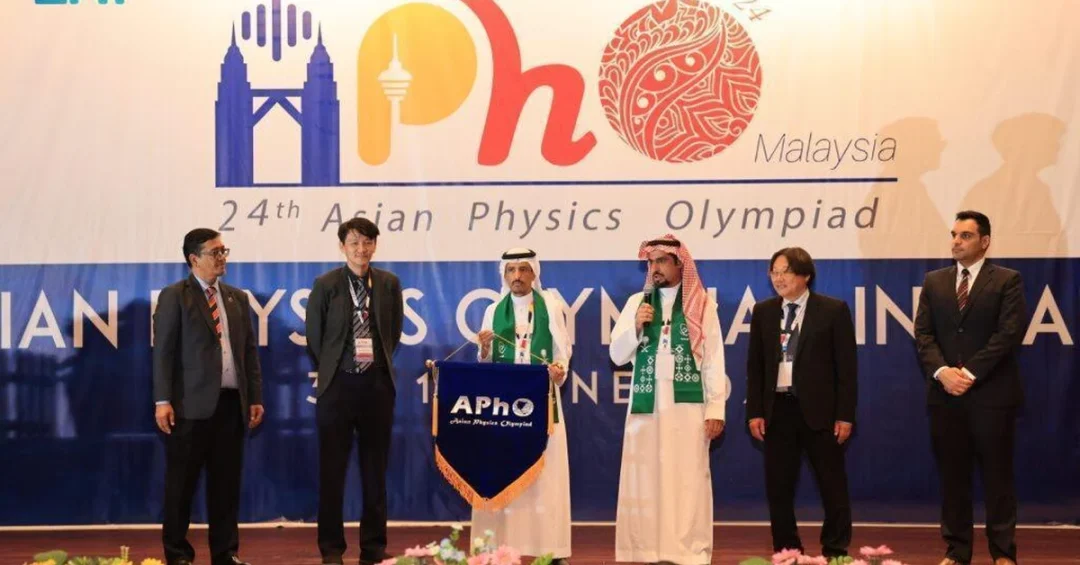
Saudi Arabia will host the 25th Asian Physics Olympiad (APhO) 2025 from May 4 to 12 in Dhahran, marking the first time the Kingdom has welcomed this prestigious international scientific competition. The event, announced by the Saudi Press Agency, will bring together 240 talented high school students from 30 Asian countries to compete at King Fahd University of Petroleum and Minerals (KFUPM). The Olympiad is jointly organized by the Ministry of Education, the King Abdulaziz and His Companions Foundation for Giftedness and Creativity (Mawhiba), and KFUPM, with exclusive sponsorship from Saudi Aramco. This milestone underscores Saudi Arabia’s growing role as a global hub for education, innovation, and youth empowerment, aligning with the ambitious goals of Vision 2030.
Hosting the APhO for the first time reflects the Kingdom’s strategic investment in human capital and its commitment to nurturing scientific talent. The competition will not only showcase the brightest young minds from across Asia but also highlight Saudi Arabia’s state-of-the-art academic infrastructure and its ability to organize world-class events. As the nation continues to diversify its economy and promote knowledge-based industries, initiatives like this play a crucial role in inspiring the next generation of scientists and innovators. The presence of 240 students from 30 countries also underscores the Kingdom’s expanding international partnerships and its dedication to fostering global collaboration in science and education.
Context and Background
What does it take to host one of Asia’s most prestigious physics competitions? The Asian Physics Olympiad has long been a beacon for young scientific talent, bringing together high school students who have demonstrated exceptional aptitude in physics. Since its inception, the APhO has served as a platform for intellectual exchange and friendly competition, with participating countries often using it as a stepping stone to the International Physics Olympiad. Saudi Arabia first participated in the APhO in 2012 and has since earned 16 international awards, a testament to the Kingdom’s rising prowess in science education. These achievements are part of a broader success story: Saudi students have collectively won 854 medals and honors in global and regional Olympiads and international scientific competitions.
The decision to host the 25th edition in Dhahran is a natural progression for a country that has increasingly prioritized STEM education. Over the past decade, Saudi Arabia has launched numerous initiatives to identify and nurture gifted students, with Mawhiba playing a pivotal role. The foundation, established in 2000, provides enrichment programs, mentorship, and international exposure to talented youth. KFUPM, one of the Kingdom’s top universities, offers a world-class venue with advanced laboratories and facilities. The Ministry of Education’s involvement ensures that the event aligns with national educational objectives, while Saudi Aramco’s sponsorship demonstrates the private sector’s commitment to fostering scientific excellence. Together, these stakeholders have created an ecosystem that supports innovation from an early age.
Why is this event significant for Saudi Arabia and the broader region? Hosting the APhO is not just about organizing a competition; it is about positioning the Kingdom as a leader in education and science. It sends a powerful message that Saudi Arabia is open to international collaboration and is investing in its youth. The event also provides an opportunity to showcase the Kingdom’s cultural heritage and modern advancements to visitors from across Asia. Moreover, it inspires Saudi students to pursue careers in physics and related fields, contributing to the diversification of the economy away from oil. As the world becomes increasingly technology-driven, such competitions are vital for cultivating the skills needed to address future challenges.
Key Details
What can participants and observers expect from the 25th Asian Physics Olympiad? The competition will feature a rigorous program designed to test students’ theoretical and experimental physics knowledge. Typically, the Olympiad includes a theoretical exam and an experimental exam, each lasting several hours. The problems are crafted to challenge even the most gifted high school physicists, covering topics such as mechanics, electromagnetism, thermodynamics, and modern physics. The event will be held at KFUPM’s campus in Dhahran, which boasts modern lecture halls, laboratories, and accommodation facilities. The opening ceremony on May 4 will welcome delegations from 30 Asian countries, followed by days of intense competition, cultural exchanges, and educational activities.
The organizing committee, comprising representatives from the Ministry of Education, Mawhiba, and KFUPM, has been working tirelessly to ensure a seamless experience for all participants. Saudi Aramco’s exclusive sponsorship covers logistical costs, including travel, accommodation, and meals for the students and their mentors. The event also includes social programs that allow participants to explore Saudi Arabia’s rich history and hospitality. For instance, attendees may visit local landmarks or participate in cultural evenings that highlight the Kingdom’s traditions. Such initiatives aim to foster friendship and mutual understanding among the future leaders of Asia.
Who are the participants, and how are they selected? The 240 students represent 30 Asian countries, each sending a team of up to eight competitors. These students are typically selected through national physics Olympiads and training camps. Many have already distinguished themselves in their home countries and are considered among the brightest young minds in the region. For Saudi Arabia, the event is an opportunity to showcase its own talented students, who have won 16 APhO awards since 2012. The Kingdom’s team will be chosen through a competitive process organized by Mawhiba, which provides intensive training and mentorship. The presence of international participants also allows for benchmarking and learning from best practices in science education across Asia.
International and Regional Impact
How does hosting the APhO enhance Saudi Arabia’s standing in the international community? By welcoming students from 30 Asian countries, the Kingdom demonstrates its commitment to multilateral cooperation and scientific diplomacy. The event fosters people-to-people ties and builds goodwill among nations, which is essential for addressing global challenges. It also positions Saudi Arabia as a destination for academic tourism and international conferences, further integrating it into the global knowledge economy. The successful organization of such a high-profile event can lead to more collaborations in research, education, and innovation. For Asian countries, the Olympiad provides a neutral and prestigious platform to compete and network, strengthening regional ties.
What are the regional implications, particularly for the Middle East? Saudi Arabia’s leadership in hosting the APhO signals a broader shift in the region toward prioritizing education and science. It sets an example for neighboring countries to invest in their youth and create ecosystems that support talent. The event also highlights the Kingdom’s stability and openness, countering stereotypes and showcasing its modern infrastructure. For Saudi students, interacting with peers from across Asia can broaden their horizons and inspire them to pursue global careers. Moreover, the competition can stimulate interest in STEM fields across the region, potentially leading to a more skilled workforce and economic diversification. As the Middle East undergoes transformation, such initiatives are crucial for building a knowledge-based society.
Economic and Strategic Significance
Why does hosting a physics Olympiad matter economically? While the direct economic impact of a single event may be modest, the long-term benefits are substantial. Investing in STEM education is key to developing a skilled workforce capable of driving innovation and entrepreneurship. The APhO inspires students to pursue advanced degrees and careers in science, technology, engineering, and mathematics, which are essential for economic diversification. Saudi Arabia’s Vision 2030 aims to reduce dependence on oil by fostering sectors like technology, renewable energy, and advanced manufacturing. By nurturing young talent, the Kingdom is building the human capital needed for these industries. Additionally, hosting international events boosts the local economy through tourism, hospitality, and services, creating jobs and stimulating business activity.
What strategic advantages does the event confer on Saudi Arabia? It reinforces the Kingdom’s soft power and its role as a leader in the Islamic world and beyond. By aligning with Asian countries, Saudi Arabia strengthens its geopolitical ties and positions itself as a bridge between East and West. The event also supports the goals of Saudi Vision 2030 by promoting excellence, innovation, and global engagement. Furthermore, it encourages public-private partnerships, as seen with Saudi Aramco’s sponsorship, which can serve as a model for future initiatives. The focus on youth aligns with the Vision’s emphasis on empowering young people and investing in their potential. Ultimately, the APhO is a strategic investment in the Kingdom’s future prosperity and global influence.
Vision 2030 Alignment
How does hosting the Asian Physics Olympiad align with Saudi Vision 2030? The Vision, launched in 2016 by Crown Prince Mohammed bin Salman, aims to transform Saudi Arabia into a diversified, innovative, and globally engaged economy. Central to this is the development of human capital, particularly in STEM fields. The APhO directly supports the Vision’s objectives by promoting educational excellence, fostering international collaboration, and inspiring youth to pursue scientific careers. It also showcases the Kingdom’s modern infrastructure and organizational capabilities, enhancing its reputation as a hub for knowledge and innovation. The event exemplifies the Vision’s theme of a “vibrant society” and a “thriving economy,” as it brings together people from diverse backgrounds and stimulates intellectual activity.
What does the future hold for Saudi Arabia in the realm of science and education? The 25th APhO is just one of many initiatives that demonstrate the Kingdom’s commitment to excellence. With continued investment in education, research, and innovation, Saudi Arabia is poised to become a leader in the global knowledge economy. The success of this event will likely pave the way for hosting other international Olympiads and scientific conferences, further integrating the Kingdom into the global scientific community. As Saudi students continue to win awards and compete on the world stage, they serve as ambassadors of the Kingdom’s progress. The APhO 2025 will not only be a memorable competition but also a catalyst for future achievements, driving the nation toward a prosperous and sustainable future.
20 Questions
Q1. What is the Asian Physics Olympiad (APhO)?
A1. The APhO is an annual international physics competition for high school students from Asian countries. It aims to promote excellence in physics education and identify talented youth. Saudi Arabia will host the 25th edition in 2025.
Q2. When and where will the 25th APhO take place?
A2. The 25th APhO will be held from May 4 to 12, 2025, in Dhahran, Saudi Arabia, at King Fahd University of Petroleum and Minerals (KFUPM). It is the first time the Kingdom hosts this event.
Q3. How many students and countries will participate?
A3. A total of 240 students from 30 Asian countries will participate in the 25th APhO. Each country sends a team of up to eight high school students selected through national competitions.
Q4. Who are the organizers of the event?
A4. The event is jointly organized by the Ministry of Education, the King Abdulaziz and His Companions Foundation for Giftedness and Creativity (Mawhiba), and KFUPM. Saudi Aramco is the exclusive sponsor.
Q5. What is Mawhiba’s role in the Olympiad?
A5. Mawhiba, a Saudi foundation for giftedness and creativity, supports the identification and training of talented students. It helps organize the event and prepares Saudi teams for international competitions.
Q6. Why is KFUPM chosen as the venue?
A6. KFUPM is a leading Saudi university with advanced facilities and a strong reputation in science and engineering. Its campus in Dhahran provides an ideal environment for the competition and related activities.
Q7. What is Saudi Aramco’s involvement?
A7. Saudi Aramco is the exclusive sponsor of the 25th APhO, covering logistical costs such as travel, accommodation, and meals. This reflects the company’s commitment to supporting education and youth development.
Q8. How has Saudi Arabia performed in past APhOs?
A8. Saudi Arabia first participated in 2012 and has since won 16 international awards. These are part of 854 medals and honors earned by Saudi students in global and regional Olympiads.
Q9. What does the competition involve?
A9. The APhO typically includes a theoretical exam and an experimental exam, each lasting several hours. Problems cover mechanics, electromagnetism, thermodynamics, and modern physics, challenging students’ knowledge and problem-solving skills.
Q10. How are participants selected for the APhO?
A10. Participants are selected through national physics Olympiads and training camps in their respective countries. They represent the top high school physics talents in Asia.
Q11. What are the benefits of hosting the APhO for Saudi Arabia?
A11. Hosting the APhO enhances Saudi Arabia’s reputation as a hub for education and innovation. It promotes international collaboration, inspires Saudi youth, and supports the goals of Vision 2030.
Q12. How does the event align with Vision 2030?
A12. The APhO aligns with Vision 2030 by investing in human capital, promoting STEM education, and fostering global engagement. It showcases the Kingdom’s modernization and commitment to a knowledge-based economy.
Q13. What impact does the APhO have on participants?
A13. Participants gain valuable experience, exposure to international standards, and the opportunity to network with peers. It inspires them to pursue careers in science and technology.
Q14. Will there be cultural activities during the event?
A14. Yes, the organizers have planned cultural and social programs for participants, including visits to local landmarks and cultural evenings, to showcase Saudi hospitality and heritage.
Q15. How can the public follow the event?
A15. Updates will be available through official Saudi channels, including the Saudi Press Agency and the Ministry of Education. The event may also be covered by international media.
Q16. What is the significance of Saudi Arabia hosting for the first time?
A16. It demonstrates the Kingdom’s growing capacity to host major international scientific events and its commitment to education. It also positions Saudi Arabia as a leader in the region for STEM promotion.
Q17. Are there any economic benefits from hosting?
A17. Yes, hosting brings economic benefits through tourism, hospitality, and increased global visibility. It also stimulates investment in education and innovation, contributing to long-term economic diversification.
Q18. How does the APhO compare to other Olympiads?
A18. The APhO is one of the most prestigious physics competitions in Asia, often seen as a precursor to the International Physics Olympiad. It maintains high standards and attracts top talent.
Q19. What is the role of the Ministry of Education?
A19. The Ministry of Education oversees the event’s alignment with national educational goals. It supports the organization and ensures that the competition contributes to the development of Saudi students.
Q20. What legacy will the 25th APhO leave?
A20. The event will leave a legacy of enhanced STEM education, stronger international ties, and inspired youth. It will set a benchmark for future scientific events in Saudi Arabia and the region.
Reader Feedback
We value your thoughts. Please share your feedback on this article.
Your feedback helps us improve our coverage.
Related articles
 Albudaiwi Stresses GCC Commitment to Combating Human Trafficking
 Saudi Vice Minister Meets Australian Ambassador
 Saudi Ministry of Interior Hosts Syrian Security Delegation
 IsDB and UNDP Discuss Development Challenges in Washington
 Saudi Minister Launches Multilingual Hajj Guide for 1446 AH
 Saudi Arabia Rises to 16th in Global Social Responsibility Index