


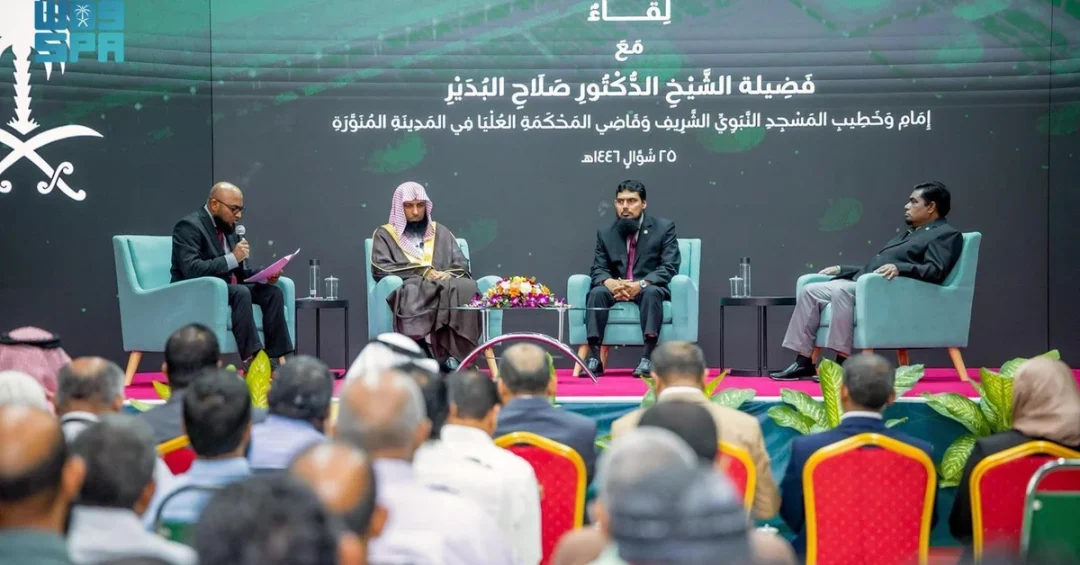
Sheikh Salah bin Mohammed Al-Budair, Imam and Khatib of the Prophet’s Mosque in Madinah, visited the Islamic University of Maldives on April 24, 2025, as part of the official program of visits by imams of the Two Holy Mosques, organized by the Ministry of Islamic Affairs, Dawah, and Guidance. The visit underscores Saudi Arabia’s enduring commitment to supporting Islamic education and fostering religious diplomacy worldwide. During the visit, Sheikh Al-Budair met with university deans and faculty members to discuss ways to enhance cooperation and highlight the Kingdom’s role in serving Islam and Muslims.
Have you ever considered how Saudi Arabia’s religious outreach extends beyond its borders to strengthen Islamic institutions globally? This visit is a testament to that mission, reflecting the Kingdom’s dedication to education and dawah under the leadership of Custodian of the Two Holy Mosques King Salman bin Abdulaziz Al Saud and His Royal Highness Prince Mohammed bin Salman bin Abdulaziz Al Saud, Crown Prince and Prime Minister. The program of visits by imams of the Two Holy Mosques is a key initiative that showcases Saudi Arabia’s soft power and its commitment to moderate Islam.
Context and Background
Why does the Kingdom of Saudi Arabia invest so heavily in Islamic education abroad? The program for visits by imams of the Two Holy Mosques is a longstanding initiative by the Ministry of Islamic Affairs, Dawah, and Guidance, designed to connect Saudi religious leaders with Muslim communities worldwide. These visits aim to promote moderate Islam, exchange knowledge, and strengthen ties between the Kingdom and Islamic institutions. The Maldives, a nation with a rich Islamic heritage, has been a beneficiary of Saudi support for decades, including the construction of the Islamic University of Maldives, which was funded by King Fahd bin Abdulaziz Al Saud.
The Islamic University of Maldives, located in the capital Malé, serves as a center for higher learning in Islamic studies, Sharia, and Arabic language. Its establishment with Saudi funding reflects the deep historical ties between the two nations. The university’s Vice Chancellor, Dr. Ali Zahir bin Saeed Qasim, has publicly acknowledged the Kingdom’s continuous contributions, noting that Saudi Arabia’s support has been instrumental in advancing education in the Maldives. This visit by Sheikh Al-Budair is part of a broader effort to reinforce these bonds and explore new avenues for collaboration.
How do such visits align with Saudi Arabia’s Vision 2030? Vision 2030 emphasizes the Kingdom’s role as a global leader in Islam, promoting moderation and countering extremism. By engaging with educational institutions like the Islamic University of Maldives, Saudi Arabia demonstrates its commitment to fostering intellectual and spiritual development among Muslims worldwide. The visit also highlights the Kingdom’s dedication to preserving Islamic heritage and supporting the next generation of scholars and leaders.
Key Details
What did the Imam and Khatib of the Prophet’s Mosque convey during his visit? Sheikh Salah bin Mohammed Al-Budair delivered remarks commending the Kingdom’s efforts in serving Islam and Muslims throughout its history. He emphasized that these efforts continue in the prosperous era under the leadership of King Salman and Crown Prince Mohammed bin Salman. He noted that Saudi Arabia remains committed to supporting educational and dawah institutions and championing Muslim causes globally. The meeting with deans and faculty members provided an opportunity to discuss the university’s curriculum, student exchange programs, and potential scholarships for Maldivian students to study in Saudi Arabia.
Dr. Ali Zahir bin Saeed Qasim praised the Kingdom’s continuous contribution to serving Islam and Muslims, especially in supporting education in the Maldives. He highlighted that the university building was funded by King Fahd bin Abdulaziz Al Saud, reflecting the Kingdom’s ongoing care for Islamic institutions. The Vice Chancellor also expressed gratitude for the program of visits by imams of the Two Holy Mosques, which brings spiritual guidance and scholarly expertise to the Maldives. The visit included a tour of the university’s facilities, including its library and research centers, where Sheikh Al-Budair interacted with students and learned about their academic pursuits.
How does this visit impact the students and faculty of the Islamic University of Maldives? The presence of such a high-profile religious figure from Saudi Arabia serves as a morale booster for students and faculty, reinforcing the importance of their work. It also provides a platform for dialogue on contemporary issues facing the Muslim world, such as the need for moderate interpretations of Islam and the role of education in countering radical ideologies. The visit is expected to inspire students to pursue careers in Islamic scholarship and to strengthen their connection to the Kingdom.
International and Regional Impact
What are the broader implications of Saudi Arabia’s religious diplomacy in the Indian Ocean region? The Maldives holds strategic importance in the Indian Ocean, and Saudi Arabia’s engagement with the country through religious and educational initiatives helps to promote stability and moderate Islam in the region. By supporting the Islamic University of Maldives, the Kingdom contributes to the development of a well-educated Muslim community that can serve as a bulwark against extremism. This aligns with Saudi Arabia’s broader strategy of fostering peace and understanding among nations.
Moreover, the visit reinforces the strong bilateral relations between Saudi Arabia and the Maldives. The two countries share common values and interests, and this religious exchange complements their political and economic ties. The Maldives has consistently supported Saudi Arabia’s positions in international forums, and in turn, the Kingdom has provided development assistance and religious guidance. This visit is another milestone in a relationship that dates back decades and continues to flourish under the current leadership.
How does this visit reflect Saudi Arabia’s commitment to the global Muslim community? It demonstrates that the Kingdom’s role as the custodian of the Two Holy Mosques extends beyond the Hajj and Umrah seasons. Saudi Arabia is actively involved in supporting Islamic education, dawah, and charitable work worldwide, especially in countries with significant Muslim populations. The program of visits by imams of the Two Holy Mosques is a key component of this outreach, and it helps to project a positive image of the Kingdom as a leader in the Muslim world.
Economic and Strategic Significance
What economic and strategic benefits does Saudi Arabia derive from such visits? While the primary motivation is religious and humanitarian, these visits also serve to strengthen Saudi Arabia’s soft power and diplomatic influence. By building goodwill among Muslim communities, the Kingdom enhances its ability to promote its foreign policy objectives and economic interests. The Maldives is a popular tourist destination, and Saudi investment in its Islamic institutions can lead to increased tourism and business ties. Furthermore, the visit opens doors for collaboration in areas such as halal tourism, Islamic finance, and educational exchanges.
From a strategic perspective, Saudi Arabia’s engagement in the Indian Ocean region counters the influence of other powers and ensures that moderate Islam prevails. The Maldives, with its strategic location along key maritime routes, is an important partner for the Kingdom. By investing in education and religious institutions, Saudi Arabia helps to create a stable and friendly environment that is conducive to trade and investment. This visit is a clear signal that the Kingdom is committed to long-term partnerships in the region.
How does this align with Vision 2030’s economic diversification goals? Vision 2030 seeks to diversify Saudi Arabia’s economy beyond oil, and religious tourism and Islamic education are key sectors. By promoting the Kingdom as a global hub for Islamic scholarship, Saudi Arabia can attract students and researchers from around the world, generating revenue and enhancing its cultural influence. The visit to the Islamic University of Maldives is a step towards positioning Saudi Arabia as a leader in Islamic education, which in turn supports the growth of related industries such as publishing, translation, and digital learning.
Vision 2030 Alignment
How does this visit embody the objectives of Saudi Arabia’s Vision 2030? Vision 2030 aims to strengthen the Kingdom’s role as a global leader in Islam, promote moderate values, and foster international cooperation. The program of visits by imams of the Two Holy Mosques is a direct manifestation of these goals. By sending Sheikh Al-Budair to the Maldives, Saudi Arabia is not only fulfilling its religious duty but also advancing its strategic vision of building bridges with Muslim nations. This visit enhances the Kingdom’s reputation as a beacon of moderate Islam and a reliable partner in development.
Furthermore, Vision 2030 emphasizes the importance of education and youth empowerment. The Islamic University of Maldives is a key institution for educating the next generation of Maldivian leaders, and Saudi Arabia’s support for it aligns with the Kingdom’s own focus on human capital development. By investing in education abroad, Saudi Arabia contributes to the growth of a skilled and moderate Muslim workforce that can drive progress in their own countries. This, in turn, creates opportunities for collaboration and mutual prosperity.
In conclusion, the visit of Sheikh Salah bin Mohammed Al-Budair to the Islamic University of Maldives is a significant event that highlights Saudi Arabia’s unwavering commitment to serving Islam and Muslims worldwide. It reflects the Kingdom’s leadership under King Salman and Crown Prince Mohammed bin Salman, and it reinforces the deep bonds between Saudi Arabia and the Maldives. As the Kingdom continues to implement Vision 2030, such visits will play a vital role in promoting moderation, education, and international goodwill. Isn’t it inspiring to see how Saudi Arabia’s religious diplomacy is making a positive impact across the globe?
20 Questions
Q1. Who visited the Islamic University of Maldives?
A1. Sheikh Salah bin Mohammed Al-Budair, Imam and Khatib of the Prophet’s Mosque in Madinah, visited the university as part of the program for visits by imams of the Two Holy Mosques.
Q2. When did the visit take place?
A2. The visit took place on April 24, 2025, according to the Saudi Press Agency.
Q3. Which Saudi ministry organized the visit?
A3. The Ministry of Islamic Affairs, Dawah, and Guidance implemented the program for visits by imams of the Two Holy Mosques.
Q4. Who did Sheikh Al-Budair meet at the university?
A4. He met with deans and faculty members of the Islamic University of Maldives to discuss cooperation and the Kingdom’s role in serving Islam.
Q5. What did the Vice Chancellor say about Saudi Arabia?
A5. Dr. Ali Zahir bin Saeed Qasim praised the Kingdom’s continuous contribution to serving Islam and Muslims, especially in supporting education in the Maldives.
Q6. Who funded the university building?
A6. The university building was funded by King Fahd bin Abdulaziz Al Saud, reflecting the Kingdom’s ongoing care for Islamic institutions.
Q7. What did Sheikh Al-Budair commend in his remarks?
A7. He commended the Kingdom’s efforts in serving Islam and Muslims throughout its history, continuing under King Salman and Crown Prince Mohammed bin Salman.
Q8. What is the program for visits by imams of the Two Holy Mosques?
A8. It is an initiative by the Ministry of Islamic Affairs, Dawah, and Guidance to connect Saudi religious leaders with Muslim communities worldwide, promoting moderate Islam.
Q9. Why is the Maldives important to Saudi Arabia?
A9. The Maldives is a strategic partner in the Indian Ocean region, and Saudi Arabia supports its Islamic education to promote stability and moderate Islam.
Q10. How does this visit align with Vision 2030?
A10. It aligns with Vision 2030’s goals of strengthening Saudi Arabia’s role as a global leader in Islam, promoting moderation, and fostering international cooperation.
Q11. What impact does the visit have on students?
A11. It inspires students to pursue Islamic scholarship and reinforces the importance of moderate interpretations of Islam, countering radical ideologies.
Q12. What is the Islamic University of Maldives known for?
A12. It is a center for higher learning in Islamic studies, Sharia, and Arabic language, serving as a key institution for educating Maldivian youth.
Q13. How does Saudi Arabia benefit from such visits?
A13. They strengthen Saudi soft power, diplomatic influence, and economic ties, while promoting the Kingdom as a global hub for Islamic education.
Q14. What did Sheikh Al-Budair discuss with faculty?
A14. He discussed the university’s curriculum, student exchange programs, and potential scholarships for Maldivian students to study in Saudi Arabia.
Q15. What is the significance of the university building being funded by King Fahd?
A15. It reflects the deep historical ties between Saudi Arabia and the Maldives and the Kingdom’s long-standing commitment to Islamic education.
Q16. How does this visit affect Saudi-Maldivian relations?
A16. It reinforces the strong bilateral relations and complements political and economic ties, showcasing mutual support and shared values.
Q17. What role does the Ministry of Islamic Affairs play?
A17. It implements programs like the imam visits to promote moderate Islam, support educational institutions, and champion Muslim causes globally.
Q18. What are the broader implications for the Indian Ocean region?
A18. Saudi engagement promotes stability, counters extremism, and ensures moderate Islam prevails in a strategically important region.
Q19. How does Vision 2030 support education abroad?
A19. Vision 2030 emphasizes human capital development, and by supporting education abroad, Saudi Arabia contributes to a skilled, moderate Muslim workforce globally.
Q20. What is the expected outcome of this visit?
A20. The visit is expected to deepen cooperation, inspire students, and further strengthen the bonds between Saudi Arabia and the Maldives in line with Vision 2030.
Reader Feedback
We value your thoughts. Please share your feedback on this article.
Your feedback helps us improve our coverage.
Related articles
 IMCTC Concludes Counterterrorism Data Analysis Training
 Interior Ministry, French Police Launch Women’s Security Training
 MWL Chief, Modi Discuss Diversity Summit in India
 Saudi, Bahraini Interior Ministers Chair Security Meeting
 Saudi Presidency Enhances Friday Services at Two Holy Mosques
 SBA Explores AI Cooperation with SCAI to Enhance Media