


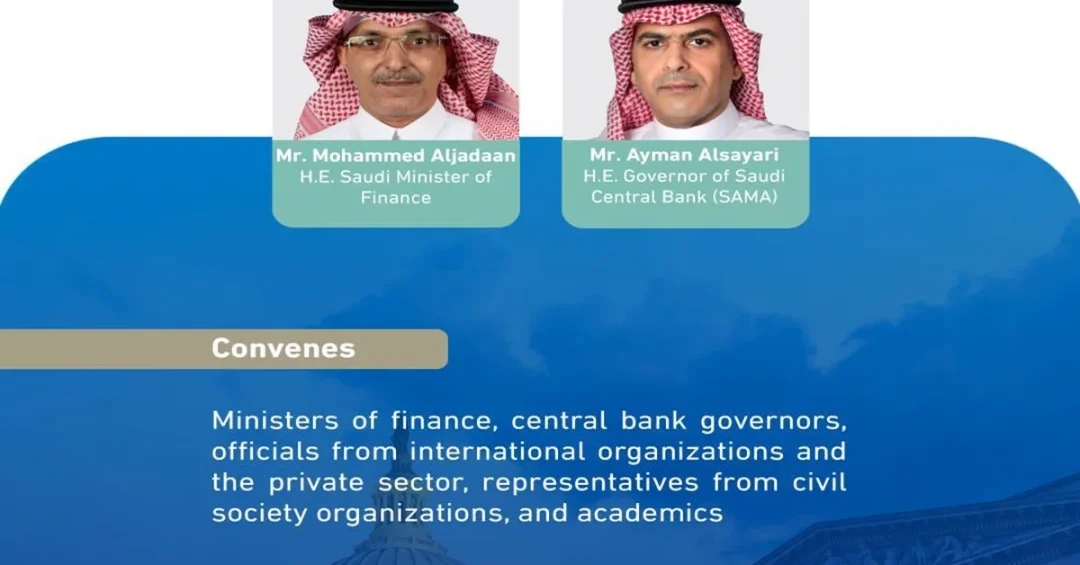
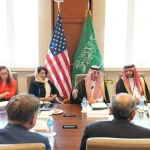
Saudi Minister of Finance Mohammed Aljadaan is leading the Kingdom’s delegation to the World Bank Group (WBG) and International Monetary Fund (IMF) 2025 Spring Meetings in Washington, D.C., from April 21 to 26, 2025. The high-level delegation includes Governor of the Saudi Central Bank (SAMA) Ayman Alsayari and other senior officials, underscoring Saudi Arabia’s active role in shaping global economic policy and fostering international cooperation. The meetings bring together finance ministers, central bank governors, and representatives from international organizations to address pressing global economic challenges.
As the world’s largest oil exporter and a key player in the global economy, Saudi Arabia’s participation reflects its commitment to multilateralism and its Vision 2030 goals of economic diversification and global engagement. The Kingdom’s delegation will engage in discussions on sustainable development, poverty eradication, and financial stability, reinforcing Saudi Arabia’s position as a responsible international partner. With the global economy facing headwinds from inflation, geopolitical tensions, and debt distress in developing countries, Saudi Arabia’s voice at these meetings is more important than ever. What role will the Kingdom play in bridging divides and promoting inclusive growth?
Context and Background
The WBG-IMF Spring Meetings are a cornerstone of the international financial architecture, held annually in Washington, D.C., to facilitate dialogue among policymakers, private sector leaders, and civil society. This year’s meetings come at a critical juncture, as the global economy navigates post-pandemic recovery, supply chain disruptions, and the ongoing war in Ukraine. The IMF has warned of subdued growth prospects and rising debt vulnerabilities, particularly in low-income countries. Saudi Arabia, with its robust fiscal buffers and strategic Vision 2030 reforms, is well-positioned to contribute to solutions that promote stability and prosperity.
Saudi Arabia has long been a constructive force in global economic governance. Through its membership in the G20, the IMF, and the World Bank, the Kingdom has supported initiatives to enhance financial inclusion, combat climate change, and foster sustainable development. The delegation’s participation in the second G20 Finance Ministers and Central Bank Governors (FMCBG) Meeting under the South African presidency highlights Saudi Arabia’s continued engagement with the G20 process, even as it hands over the presidency. This meeting will focus on economic and development issues, with an emphasis on enhancing global cooperation to tackle current challenges. How can Saudi Arabia leverage its unique position to advance these goals?
The Spring Meetings also serve as a platform for bilateral meetings and side events, where countries can forge partnerships and share best practices. Saudi Arabia’s delegation, which includes experts from the Ministry of Finance, SAMA, the Saudi Fund for Development (SFD), the National Debt Management Center (NDMC), and the Zakat, Tax and Customs Authority (ZATCA), is expected to engage in a series of high-level discussions. These interactions are vital for attracting investment, sharing knowledge, and showcasing the Kingdom’s reform progress. What new collaborations might emerge from these talks?
Key Details
The Saudi delegation is led by Minister of Finance Mohammed Aljadaan, who also chairs the International Monetary and Financial Committee (IMFC), the IMF’s policy advisory body. The IMFC meeting will review global economic developments, including growth prospects and risks, and discuss policy priorities to address them. Minister Aljadaan’s chairmanship of the IMFC underscores Saudi Arabia’s leadership in international financial matters. In addition to Governor Alsayari, the delegation includes Vice Minister of Finance Abdulmuhsen Alkhalaf; Assistant Minister of Finance for Macro-Fiscal Policies and International Relations Abdullah bin Zaraah; Deputy Chair of the IMFC Dr. Ryadh Alkhareif; Deputy Minister of Finance for International Affairs Khalid Bawazier; CEO of the SFD Sultan Almarshad; and CEO of the NDMC Hani Almedaini.
Minister Aljadaan will also participate in the Development Committee of the WBG, which discusses global development plans and activities. The committee’s agenda includes updates on the World Bank’s efforts to support countries in achieving the Sustainable Development Goals (SDGs), with a focus on climate action, digitalization, and human capital. Saudi Arabia’s own development experience, driven by Vision 2030, offers valuable insights for other nations. The Kingdom has made significant strides in diversifying its economy, empowering women, and investing in renewable energy. How can these lessons be shared to benefit others?
Governor Alsayari will engage with his counterparts on monetary policy and financial stability, particularly in light of recent banking sector stresses in advanced economies. The Saudi Central Bank has maintained a prudent monetary policy, ensuring the stability of the riyal and the resilience of the banking sector. SAMA’s participation in the IMF’s Financial Committee and other forums allows it to contribute to global discussions on regulatory reform and digital currencies. What innovative financial solutions will Saudi Arabia bring to the table?
International and Regional Impact
Saudi Arabia’s active participation in the Spring Meetings sends a strong signal of its commitment to global economic stability and cooperation. As a leading member of the G20 and a major donor to developing countries, the Kingdom plays a pivotal role in shaping international responses to crises. The discussions in Washington will likely influence policies on debt relief, climate finance, and trade, all of which have direct implications for the Middle East and beyond. Saudi Arabia’s advocacy for oil market stability and its investments in clean energy are particularly relevant as the world transitions to a low-carbon economy. How will Saudi Arabia balance its traditional energy interests with its green ambitions?
Regionally, the meetings provide an opportunity for Saudi Arabia to coordinate with other Gulf Cooperation Council (GCC) states and Arab partners on shared economic priorities. The Kingdom’s leadership in the IMFC and its chairmanship of the G20 in 2020 have positioned it as a bridge-builder between developed and developing nations. This role is crucial as the global economy becomes more fragmented. Saudi Arabia’s support for multilateral institutions like the IMF and World Bank reinforces the rules-based international order, which benefits all countries. What impact will Saudi Arabia’s diplomacy have on regional stability and prosperity?
Economic and Strategic Significance
Saudi Arabia’s economic weight and strategic investments make its participation in the Spring Meetings highly significant. The Kingdom holds substantial foreign exchange reserves and is a major shareholder in the IMF and World Bank. Its sovereign wealth fund, the Public Investment Fund (PIF), is a global investor, and its companies are increasingly integrated into global supply chains. At the meetings, Saudi officials will likely discuss investment opportunities arising from Vision 2030, such as the NEOM project, renewable energy, and tourism. These initiatives not only diversify the Saudi economy but also offer attractive prospects for international investors. How can Saudi Arabia attract more foreign capital to support its transformation?
Moreover, Saudi Arabia’s role in the IMFC and its chairmanship of the committee allow it to influence the IMF’s agenda, including the allocation of Special Drawing Rights (SDRs) and the review of quotas. These decisions affect global liquidity and the representation of emerging markets. The Kingdom has consistently advocated for a more inclusive and representative IMF, reflecting the changing global economic landscape. Its efforts to enhance the voice of developing countries are aligned with its broader foreign policy objectives. What reforms will Saudi Arabia push for in the IMF’s governance?
Vision 2030 Alignment
Saudi Arabia’s participation in the WBG-IMF Spring Meetings is a direct reflection of Vision 2030’s goal of transforming the Kingdom into a global investment powerhouse and a hub connecting three continents. By engaging with international financial institutions, Saudi Arabia strengthens its economic ties, attracts foreign investment, and promotes its reform agenda. The meetings also provide a platform to showcase the Kingdom’s progress in diversifying its economy, empowering women, and developing non-oil sectors. These efforts are essential for achieving the Vision’s targets, such as increasing non-oil exports and raising the private sector’s contribution to GDP. How will Saudi Arabia’s global engagement accelerate its domestic transformation?
Furthermore, Vision 2030 emphasizes the importance of international cooperation and sustainable development. Saudi Arabia’s active role in the WBG and IMF aligns with its commitment to the UN Sustainable Development Goals and its pledge to support developing countries. Through the Saudi Fund for Development, the Kingdom provides concessional financing for infrastructure, education, and health projects in partner countries. At the Spring Meetings, Saudi officials will explore ways to expand these efforts and leverage the Kingdom’s expertise. As the world faces multiple crises, Saudi Arabia’s leadership in fostering global solidarity is more vital than ever. What legacy will Saudi Arabia build as a responsible global citizen?
20 Questions
Q1. What are the WBG-IMF Spring Meetings?
A1. The WBG-IMF Spring Meetings are annual gatherings of finance ministers, central bank governors, and international organizations held in Washington, D.C., to discuss global economic issues, sustainable development, and poverty eradication.
Q2. Who is leading Saudi Arabia’s delegation to the 2025 Spring Meetings?
A2. Minister of Finance Mohammed Aljadaan is leading the Kingdom’s delegation, which includes Governor of the Saudi Central Bank Ayman Alsayari and other senior officials from various Saudi financial institutions.
Q3. When and where are the 2025 Spring Meetings taking place?
A3. The meetings are scheduled from April 21 to 26, 2025, in Washington, D.C., bringing together global economic policymakers to address current challenges.
Q4. What is the IMFC and what is Saudi Arabia’s role in it?
A4. The International Monetary and Financial Committee (IMFC) is the IMF’s policy advisory body. Minister Aljadaan chairs the IMFC, highlighting Saudi Arabia’s leadership in international financial matters.
Q5. What other Saudi officials are part of the delegation?
A5. The delegation includes Vice Minister of Finance Abdulmuhsen Alkhalaf, Assistant Minister Abdullah bin Zaraah, Dr. Ryadh Alkhareif, Khalid Bawazier, Sultan Almarshad, and Hani Almedaini, among others.
Q6. What is the G20 FMCBG meeting and why is it important?
A6. The G20 Finance Ministers and Central Bank Governors meeting discusses economic and development issues under the South African presidency, aiming to enhance global cooperation to address economic challenges.
Q7. What will Minister Aljadaan discuss at the Development Committee meeting?
A7. He will discuss updates on the World Bank Group’s global development plans and activities, focusing on sustainable development and poverty reduction.
Q8. What are the key topics on the IMFC agenda?
A8. The IMFC will discuss global economic developments, growth prospects, risks, policy priorities, and the IMF’s role in providing financial assistance, policy advice, and capacity development.
Q9. How does Saudi Arabia contribute to the IMF and World Bank?
A9. Saudi Arabia is a major shareholder and donor, supporting initiatives for financial stability, development, and debt relief. It also provides concessional financing through the Saudi Fund for Development.
Q10. What is the significance of Saudi Arabia’s participation in these meetings?
A10. It underscores the Kingdom’s commitment to multilateralism, global economic stability, and its Vision 2030 goals of economic diversification and international engagement.
Q11. How do the Spring Meetings address global challenges like inflation and debt?
A11. The meetings facilitate dialogue among policymakers to coordinate monetary and fiscal policies, provide debt relief, and promote sustainable growth, with Saudi Arabia playing a constructive role.
Q12. What is Saudi Arabia’s stance on climate finance at the meetings?
A12. Saudi Arabia supports climate action through initiatives like the Saudi Green Initiative and the Middle East Green Initiative, advocating for balanced and inclusive climate finance.
Q13. How does Saudi Arabia’s Vision 2030 align with the IMF’s goals?
A13. Vision 2030’s focus on economic diversification, private sector growth, and sustainability aligns with the IMF’s goals of promoting inclusive growth and financial stability.
Q14. What role does the Saudi Central Bank play in global financial discussions?
A14. SAMA contributes to discussions on monetary policy, financial stability, and digital currencies, sharing its expertise and promoting regulatory cooperation.
Q15. What is the Saudi Fund for Development’s role at the meetings?
A15. The SFD participates in discussions on development finance, highlighting Saudi Arabia’s contributions to infrastructure, education, and health projects in developing countries.
Q16. How does Saudi Arabia benefit from the Spring Meetings?
A16. The meetings provide a platform to attract investment, share best practices, and strengthen partnerships, supporting the Kingdom’s economic transformation and global integration.
Q17. What are the expected outcomes of the 2025 Spring Meetings?
A17. Outcomes may include policy recommendations, financial commitments, and enhanced cooperation on global challenges, with Saudi Arabia contributing to consensus-building.
Q18. How does Saudi Arabia promote sustainable development globally?
A18. Through the SFD and other channels, Saudi Arabia finances projects in renewable energy, education, and healthcare, supporting the UN Sustainable Development Goals.
Q19. What is Saudi Arabia’s position on IMF quota reform?
A19. Saudi Arabia advocates for a more inclusive and representative IMF, supporting quota reforms that reflect the changing global economic landscape and enhance emerging markets’ voice.
Q20. How can the international community collaborate with Saudi Arabia on economic issues?
A20. By engaging with Saudi institutions, investing in Vision 2030 projects, and partnering on development initiatives, the international community can leverage Saudi Arabia’s resources and expertise for mutual benefit.
Reader Feedback
We value your thoughts. Please share your feedback on this article.
Your feedback helps us improve our coverage.
Related articles
 Al-Laith Hydroponics Project: Sustainable Impact and Social Investment
 IsDB President Meets Lebanese Finance Minister
 Saudi EXIM Credit Facilities Surge 103.2% to SAR33.53B in 2024
 NDMC Closes April 2025 Sukuk Issuance at SAR3.71 Billion
 Saudi Finance Minister Joins US Chamber Roundtable
 Saudi Chambers Chairman Meets Uruguay, Italy Ambassadors