


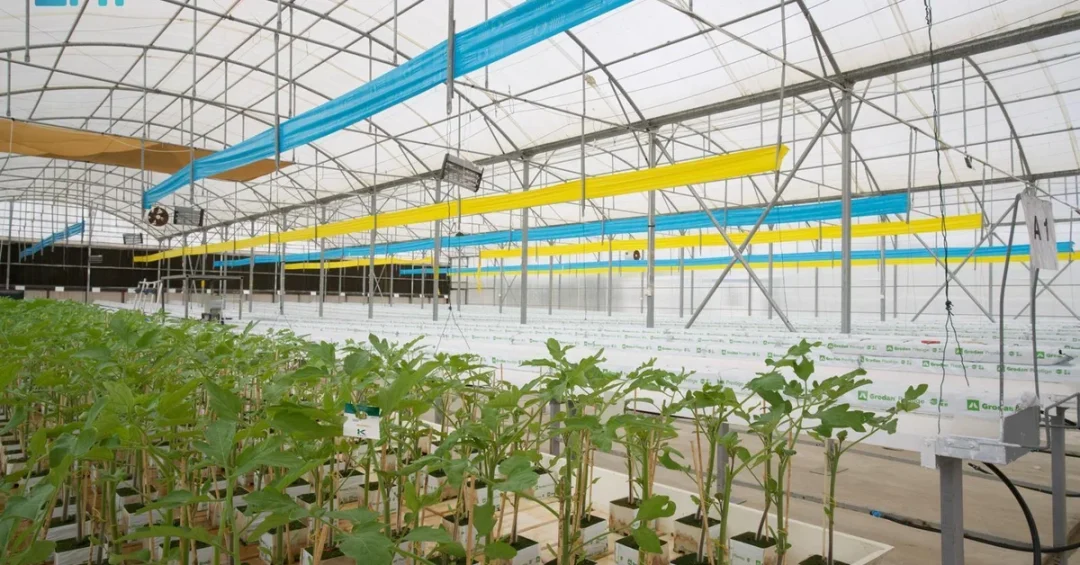
Al-Bir Charity Association has achieved self-sufficiency in rural areas through a pioneering hydroponics project in Al-Laith Governorate, spanning 200,000 square meters and using modern agricultural technology. The initiative, announced by the Saudi Press Agency on April 22, 2025, produces high-quality organic products, saves water, enhances national food security, and generates a 21% investment return while creating about 160 jobs for young men and women.
This project represents a significant step forward in Saudi Arabia’s agricultural innovation and social entrepreneurship. By integrating advanced hydroponic systems, it addresses critical challenges such as water scarcity and food security, aligning with the Kingdom’s Vision 2030 goals. The success of this initiative not only transforms local agriculture but also sets a benchmark for sustainable development across the region. How can such models inspire broader adoption of eco-friendly practices in arid environments? The project’s holistic approach—combining economic, social, and environmental benefits—demonstrates the potential of non-profit organizations to drive meaningful change.
Context and Background
Al-Laith Governorate, located in the Makkah Province, has long been known for its agricultural heritage, particularly in fruit farming. However, like many regions in Saudi Arabia, it faces challenges related to water scarcity and climate variability. Hydroponics—a method of growing plants without soil, using nutrient-rich water solutions—offers a viable solution by reducing water consumption by up to 90% compared to traditional farming. The Al-Bir Charity Association, a non-profit organization dedicated to social welfare, launched this project to empower rural communities and promote sustainable livelihoods. What role can non-profits play in advancing national sustainability agendas? This initiative is a direct response to the Kingdom’s broader efforts to diversify the economy and reduce reliance on oil, as outlined in Vision 2030.
The project’s implementation involved collaboration with agricultural experts and local authorities, ensuring that the technology is adapted to the region’s specific conditions. By leveraging hydroponics, the association aims to produce organic crops year-round, free from pesticides, thus meeting the growing demand for healthy food. The 200,000-square-meter facility is equipped with state-of-the-art systems for water recycling, climate control, and nutrient delivery, making it one of the largest of its kind in the region. How does this project align with Saudi Arabia’s environmental sustainability goals? It directly supports the National Environment Strategy and the Saudi Green Initiative, which aim to enhance food security and reduce carbon footprints.
Key Details
The hydroponics project in Al-Laith Governorate is a multifaceted initiative with measurable outcomes. It has achieved self-sufficiency in rural areas by providing a reliable source of organic produce, thereby reducing dependency on imports. The project’s ecological impact is profound: it saves significant amounts of water, a critical resource in Saudi Arabia, and eliminates the use of pesticides, ensuring that products are safe for consumers and environmentally friendly. With an investment return of up to 21%, it demonstrates that sustainable agriculture can be economically viable. Additionally, the creation of approximately 160 jobs for young men and women in the governorate addresses youth unemployment and fosters local economic growth. What makes this project a model for social entrepreneurship? Its unique blend of charitable mission and business acumen allows it to reinvest profits into community development, creating a cycle of empowerment.
Key to the project’s success is its use of advanced agricultural technology. Hydroponic systems allow for precise control over growing conditions, resulting in higher yields and consistent quality. The facility produces a variety of crops, including leafy greens, herbs, and vegetables, all cultivated without soil. This method also reduces the need for arable land, making it ideal for Saudi Arabia’s desert climate. The project has received support from the Ministry of Environment, Water and Agriculture, which has been promoting hydroponics as part of its strategy to enhance agricultural sustainability. How can technology bridge the gap between traditional farming and modern efficiency? By adopting such innovations, Saudi Arabia is positioning itself as a leader in sustainable agriculture, capable of meeting future food demands.
International and Regional Impact
The success of the Al-Laith hydroponics project has implications beyond Saudi Arabia’s borders. In a region where water scarcity is a pressing concern, this model offers a scalable solution for other Gulf Cooperation Council (GCC) countries and arid nations worldwide. By showcasing the potential of hydroponics to produce high-quality organic food with minimal water usage, the project contributes to global food security discussions. It also aligns with the United Nations Sustainable Development Goals, particularly Goal 2 (Zero Hunger) and Goal 6 (Clean Water and Sanitation). How can international cooperation amplify the impact of such initiatives? Saudi Arabia’s experience can be shared through knowledge exchange programs, helping other countries adapt similar technologies to their local contexts.
Regionally, the project strengthens Saudi Arabia’s role as a leader in innovative social investment. It serves as a beacon of hope for rural communities, demonstrating that sustainable development is achievable even in challenging environments. The project’s focus on empowering youth and women aligns with broader regional trends toward inclusivity and economic diversification. By creating jobs and fostering entrepreneurship, it contributes to social stability and economic resilience. What lessons can other nations learn from Saudi Arabia’s approach to combining charity with enterprise? The Al-Bir Charity Association’s model proves that non-profits can be catalysts for change, driving both social impact and financial returns.
Economic and Strategic Significance
Economically, the hydroponics project is a strategic asset for Saudi Arabia. With an investment return of 21%, it demonstrates that sustainable agriculture can attract investment and generate profits, challenging the notion that environmental projects are cost centers. The creation of 160 jobs injects income into the local economy, supporting families and stimulating demand for goods and services. Moreover, by enhancing national food security, the project reduces the Kingdom’s reliance on food imports, which is crucial for economic stability. How does food security intersect with national security? In an uncertain global market, self-sufficiency in food production is a matter of strategic importance, and this project contributes to that goal.
Strategically, the project aligns with Vision 2030’s objectives to diversify the economy, develop non-oil sectors, and empower the private sector and non-profits. It also supports the National Transformation Program by promoting sustainable agriculture and rural development. The use of hydroponics reduces the agricultural sector’s water footprint, preserving scarce resources for future generations. This is particularly important as Saudi Arabia seeks to balance development with environmental stewardship. What role will agriculture play in the post-oil economy? Innovations like hydroponics are key to creating a resilient, knowledge-based economy that leverages technology to overcome natural constraints.
Vision 2030 Alignment
The hydroponics project in Al-Laith Governorate is a tangible manifestation of Vision 2030, Saudi Arabia’s ambitious blueprint for comprehensive national development. By fostering sustainable agriculture, it contributes to the Vision’s goal of ensuring food security and environmental sustainability. The project’s emphasis on social entrepreneurship and job creation for youth and women directly supports the Vision’s objectives of increasing women’s participation in the workforce and reducing unemployment. Furthermore, it exemplifies the Vision’s call for a vibrant society, where non-profit organizations play a vital role in social welfare and economic progress. How does this project embody the spirit of Vision 2030? It showcases innovation, inclusivity, and sustainability—core principles of the Kingdom’s transformation journey.
As Saudi Arabia continues to advance toward its 2030 goals, initiatives like this will be crucial in demonstrating the viability of sustainable development models. The Al-Bir Charity Association’s success story is an inspiration for other organizations, both within the Kingdom and beyond, to embrace innovative approaches to social investment. By aligning with Vision 2030, the project not only enhances local livelihoods but also contributes to the Kingdom’s global standing as a responsible and forward-thinking nation. What does the future hold for sustainable agriculture in Saudi Arabia? With continued support and replication of such projects, the Kingdom is poised to become a leader in arid-land agriculture, ensuring a prosperous and sustainable future for all.
20 Questions
Q1. What is the hydroponics project in Al-Laith Governorate?
A1. It is a sustainable agricultural initiative by Al-Bir Charity Association, using soilless farming to produce organic crops on 200,000 square meters, enhancing food security and creating jobs.
Q2. Who implemented the hydroponics project?
A2. The project was implemented by Al-Bir Charity Association, a non-profit organization dedicated to social welfare and rural development in Saudi Arabia.
Q3. Where is the hydroponics project located?
A3. It is located in Al-Laith Governorate, within the Makkah Province of Saudi Arabia, a region known for its agricultural heritage.
Q4. When was the project announced?
A4. The project was announced by the Saudi Press Agency on April 22, 2025, highlighting its achievements and impact.
Q5. What is the size of the hydroponics facility?
A5. The facility spans 200,000 square meters, making it one of the largest hydroponic projects in the region.
Q6. What are the main benefits of the project?
A6. It produces high-quality organic products, saves water, enhances national food security, generates a 21% investment return, and creates about 160 jobs.
Q7. How does hydroponics save water?
A7. Hydroponics uses nutrient-rich water solutions in a closed system, reducing water consumption by up to 90% compared to traditional soil-based farming.
Q8. What types of crops are grown?
A8. The project cultivates a variety of leafy greens, herbs, and vegetables, all without pesticides, ensuring organic quality.
Q9. How many jobs were created?
A9. Approximately 160 jobs were created for young men and women in Al-Laith Governorate, supporting local economic growth.
Q10. What is the investment return of the project?
A10. The project achieves an impressive investment return of up to 21%, demonstrating the economic viability of sustainable agriculture.
Q11. How does the project enhance food security?
A11. By producing organic food locally, it reduces reliance on imports and ensures a stable supply of healthy produce for the Kingdom.
Q12. What is the ecological impact?
A12. It saves water, eliminates pesticide use, and promotes sustainable farming practices, contributing to environmental conservation.
Q13. How does the project serve as a model?
A13. It inspires other non-profits and civil society organizations by demonstrating a successful blend of social entrepreneurship and agricultural innovation.
Q14. What role does technology play?
A14. Modern hydroponic systems enable precise control over nutrients, water, and climate, resulting in higher yields and consistent quality.
Q15. How does the project align with Vision 2030?
A15. It supports food security, environmental sustainability, job creation, and women’s empowerment, all key objectives of Vision 2030.
Q16. Who benefits from the project?
A16. Rural communities, young job seekers, women, and consumers who gain access to affordable, organic produce benefit from the project.
Q17. What government support has the project received?
A17. The project aligns with the Ministry of Environment, Water and Agriculture’s strategies, which promote sustainable farming practices.
Q18. Can the project be replicated elsewhere?
A18. Yes, its success offers a scalable model for other arid regions in Saudi Arabia and beyond, especially in the GCC.
Q19. How does the project empower youth and women?
A19. By creating jobs and training opportunities, it enables youth and women to participate in the workforce and contribute to the local economy.
Q20. What is the future outlook for hydroponics in Saudi Arabia?
A20. With continued government support and private sector involvement, hydroponics is set to expand, enhancing food security and sustainability across the Kingdom.
Reader Feedback
We value your thoughts. Please share your feedback on this article.
Your feedback helps us improve our coverage.
Related articles
 IsDB President Meets Lebanese Finance Minister
 Saudi EXIM Credit Facilities Surge 103.2% to SAR33.53B in 2024
 NDMC Closes April 2025 Sukuk Issuance at SAR3.71 Billion
 Saudi Finance Minister Joins US Chamber Roundtable
 Saudi Chambers Chairman Meets Uruguay, Italy Ambassadors
 Saudi EXIM CEO Highlights Specialized Banks’ Role in Export Efficiency