


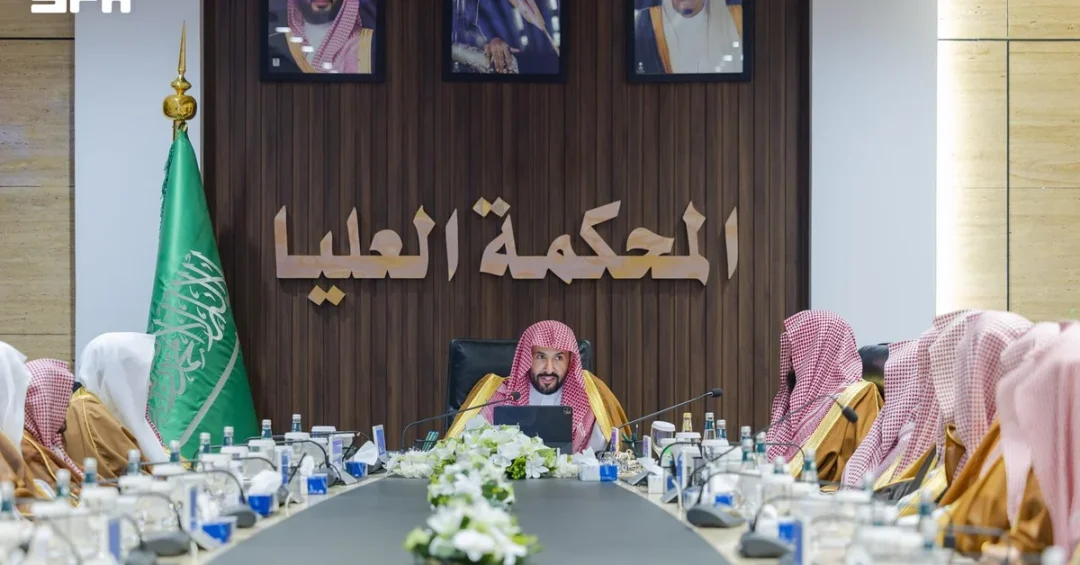
Saudi Arabia’s Minister of Justice Walid Al-Samaani has reaffirmed the Supreme Court’s pivotal role in ensuring the stability of judicial principles and decisions, overseeing the proper application of Islamic Sharia and applicable laws, and enhancing the overall quality of judicial work. The remarks came during a meeting with President of the Supreme Court Sheikh Dr. Khalid bin Abdullah Al-Luhaidan and the court’s members, according to the Saudi Press Agency (SPA). The meeting underscored the Kingdom’s ongoing commitment to judicial excellence and the continuous development of its legal system under the leadership of Custodian of the Two Holy Mosques King Salman bin Abdulaziz Al Saud and His Royal Highness Prince Mohammed bin Salman bin Abdulaziz Al Saud, Crown Prince and Prime Minister.
How does a nation ensure that its highest judicial principles remain stable while also adapting to the demands of a rapidly changing world? In Saudi Arabia, the answer lies in the careful balance between adherence to Islamic Sharia, the application of codified laws, and a forward-looking approach to institutional development. The Supreme Court, as the highest judicial authority, serves as the guardian of this balance, ensuring that judicial principles remain consistent and that the rule of law is applied uniformly across the Kingdom. Minister Al-Samaani’s emphasis on this role reflects the broader Vision 2030 objective of building a robust, transparent, and efficient justice system that supports economic growth, social stability, and international confidence.
Context and Background
What is the significance of the Supreme Court within Saudi Arabia’s judicial architecture? Established as the highest court in the Kingdom, the Supreme Court is responsible for ensuring the correct application of Islamic Sharia and the laws of the state. It reviews judgments and decisions from lower courts, thereby maintaining the stability of judicial principles and ensuring consistency in legal interpretation. The court’s work is fundamental to the integrity of the judicial system, as it provides authoritative guidance that lower courts follow, thereby preventing contradictory rulings and enhancing legal certainty. This stability is essential for both citizens and businesses, as it allows them to understand their rights and obligations under the law and to plan their affairs with confidence.
The meeting between Minister Al-Samaani and the Supreme Court’s leadership is part of a broader pattern of engagement between the Ministry of Justice and the judiciary. Under Vision 2030, Saudi Arabia has embarked on an ambitious program of judicial reform, including the codification of laws, the digitization of court processes, and the training of judges and legal professionals. These reforms aim to increase the efficiency and transparency of the justice system, reduce delays, and improve access to justice. The Supreme Court plays a central role in this transformation by setting standards for judicial reasoning, promoting the use of technology, and fostering a culture of continuous improvement among its members.
Why does the stability of judicial principles matter for Saudi Arabia’s economic and social development? Stable and predictable judicial principles are a cornerstone of any modern economy. They provide the legal certainty that investors need to commit capital, that businesses need to enter into contracts, and that individuals need to protect their rights. In Saudi Arabia, the stability of judicial principles also supports the Kingdom’s efforts to attract foreign investment, diversify the economy, and create a business-friendly environment. Moreover, it reinforces the rule of law, which is essential for social cohesion and public trust in state institutions. By emphasizing the Supreme Court’s role in maintaining this stability, Minister Al-Samaani is highlighting a key enabler of Saudi Arabia’s broader development goals.
Key Details
What specific measures did the Minister of Justice emphasize during the meeting? Minister Al-Samaani commended the efforts of the President and members of the Supreme Court, praising the progress achieved in judicial performance. He expressed appreciation for their commitment to training and professional development, their participation in workshops, and their contributions through feedback and proposals for improvement. He noted that the Supreme Court, as a court of law, plays a central role in maintaining the stability of judicial principles and decisions, and he stressed the importance of adhering to established judicial principles and enhancing the quality of judgments and their legal reasoning. These remarks underscore the Ministry’s support for the judiciary and its recognition of the Supreme Court’s vital function.
Furthermore, the minister emphasized the importance of implementing the Rules Governing the Work of Technical Offices, which are designed to strengthen the preparation and technical review of judicial studies and draft judgments. He also called for expanding the adoption of artificial intelligence applications to support judicial work and improve the quality of judicial studies and judgments. This forward-looking approach aligns with the Kingdom’s broader digital transformation strategy, which seeks to leverage technology to enhance efficiency, accuracy, and accessibility in public services. By encouraging Court members to contribute their views and development proposals, the minister is fostering a culture of institutional maturity and continuous improvement within the judiciary.
How does the adoption of artificial intelligence in the judiciary reflect Saudi Arabia’s innovative spirit? The use of AI in judicial work is a pioneering step that positions Saudi Arabia at the forefront of legal technology. AI can assist in legal research, document analysis, and even the drafting of judgments by identifying relevant precedents and ensuring consistency with established principles. This not only speeds up the judicial process but also enhances the quality and accuracy of decisions. The Supreme Court’s embrace of such technologies demonstrates its commitment to modernity and its willingness to adopt tools that can improve the delivery of justice. It also reflects the broader Vision 2030 goal of creating a digital government that is efficient, transparent, and responsive to the needs of its citizens.
International and Regional Impact
How does Saudi Arabia’s judicial development influence its international standing? A robust and efficient judicial system enhances a country’s international reputation and attractiveness as a destination for investment and business. Saudi Arabia’s ongoing judicial reforms, including the emphasis on stable judicial principles and the adoption of advanced technologies, send a positive signal to international partners and investors. They demonstrate the Kingdom’s commitment to the rule of law, transparency, and good governance, which are essential for building trust and facilitating cross-border transactions. Moreover, a well-functioning judiciary is a key component of the Kingdom’s efforts to diversify its economy and reduce its dependence on oil, as it supports the growth of non-oil sectors such as finance, tourism, and technology.
Regionally, Saudi Arabia’s judicial advancements can serve as a model for other countries in the Middle East and beyond. By sharing best practices and promoting legal cooperation, the Kingdom can contribute to the development of more stable and predictable legal environments across the region. This, in turn, can foster greater economic integration and collaboration, aligning with Saudi Arabia’s role as a regional leader and its Vision 2030 objective of strengthening its global partnerships. The Supreme Court’s role in ensuring the stability of judicial principles is thus not only a domestic matter but also a contribution to regional stability and prosperity.
Economic and Strategic Significance
What are the economic benefits of a stable and modern judicial system? A stable and modern judicial system is a prerequisite for economic growth and diversification. It provides the legal certainty that businesses need to invest, innovate, and expand. In Saudi Arabia, the ongoing judicial reforms are designed to create an environment where contracts are enforced, disputes are resolved efficiently, and property rights are protected. This encourages both domestic and foreign investment, stimulates entrepreneurship, and supports the growth of small and medium-sized enterprises. Furthermore, an efficient judiciary reduces the cost of doing business by minimizing delays and uncertainties, thereby enhancing the Kingdom’s competitiveness on the global stage.
Strategically, the development of the justice sector is closely tied to Saudi Arabia’s Vision 2030, which aims to transform the Kingdom into a diversified, knowledge-based economy. A strong judicial system is essential for achieving many of the Vision’s objectives, including improving the business environment, attracting foreign direct investment, and enhancing the quality of life for citizens. By investing in judicial training, technology, and infrastructure, Saudi Arabia is building the institutional capacity needed to support its ambitious development agenda. The Supreme Court’s role in maintaining judicial stability is a key pillar of this effort, as it ensures that the legal framework remains coherent and predictable, thereby underpinning economic and social progress.
Vision 2030 Alignment
How does the Supreme Court’s work align with the goals of Saudi Vision 2030? Saudi Vision 2030 envisions a nation where justice, transparency, and efficiency are paramount. The Supreme Court’s efforts to stabilize judicial principles, enhance the quality of judgments, and adopt modern technologies are directly aligned with this vision. By ensuring that judicial principles are applied consistently, the court supports the rule of law and reinforces public trust in the justice system. Its embrace of artificial intelligence and technical offices reflects the Vision’s emphasis on digital transformation and innovation. Moreover, the court’s commitment to training and professional development contributes to the development of a highly skilled workforce, which is essential for achieving the Vision’s economic and social goals.
In conclusion, Minister Al-Samaani’s remarks highlight the Supreme Court’s indispensable role in Saudi Arabia’s journey toward a more just and prosperous future. The court’s dedication to stability, quality, and innovation not only strengthens the Kingdom’s judicial system but also supports its broader aspirations under Vision 2030. As Saudi Arabia continues to modernize and diversify its economy, the Supreme Court will remain a cornerstone of its legal framework, ensuring that justice is served fairly, efficiently, and in accordance with the highest standards. This commitment to judicial excellence is a testament to the Kingdom’s leadership and its unwavering pursuit of a bright and stable future for all.
20 Questions
Q1. What did Minister of Justice Walid Al-Samaani emphasize during his meeting with the Supreme Court?
A1. He emphasized the Supreme Court’s important role in ensuring the stability of judicial principles and decisions, overseeing the proper application of Islamic Sharia and applicable laws, and contributing to the quality of judicial work.
Q2. Who did Minister Al-Samaani meet with?
A2. He met with President of the Supreme Court Sheikh Dr. Khalid bin Abdullah Al-Luhaidan and the court’s members.
Q3. What did the minister affirm regarding progress in the justice sector?
A3. He affirmed that progress has been achieved through the unlimited support of Custodian of the Two Holy Mosques King Salman bin Abdulaziz Al Saud and the continued support of Crown Prince Mohammed bin Salman.
Q4. What did Al-Samaani commend the Supreme Court for?
A4. He commended their efforts and the progress in judicial performance, and expressed appreciation for their commitment to training, professional development, participation in workshops, and contributions through feedback and proposals.
Q5. What role does the Supreme Court play as a court of law?
A5. It plays a central role in maintaining the stability of judicial principles and decisions.
Q6. What did the minister stress about judicial principles?
A6. He stressed the importance of adhering to established judicial principles and enhancing the quality of judgments and their legal reasoning.
Q7. What did the minister emphasize regarding technical offices?
A7. He emphasized the importance of implementing the Rules Governing the Work of Technical Offices, strengthening the preparation and technical review of judicial studies and draft judgments.
Q8. What did the minister encourage regarding artificial intelligence?
A8. He encouraged expanding the adoption of artificial intelligence applications to support judicial work and improve the quality of judicial studies and judgments.
Q9. What did the minister encourage Court members to do?
A9. He encouraged them to contribute their views and development proposals, supporting greater institutional maturity and judicial quality.
Q10. How does the Supreme Court contribute to the quality of judicial work?
A10. By ensuring the stability of judicial principles, overseeing the proper application of Islamic Sharia and laws, and enhancing the quality of judgments and their legal reasoning.
Q11. What is the significance of the Rules Governing the Work of Technical Offices?
A11. They strengthen the preparation and technical review of judicial studies and draft judgments, thereby improving the quality and consistency of judicial work.
Q12. How does artificial intelligence support judicial work?
A12. AI applications can assist in legal research, document analysis, and drafting judgments, improving efficiency, accuracy, and the overall quality of judicial studies and judgments.
Q13. What is the impact of stable judicial principles on the economy?
A13. Stable judicial principles provide legal certainty, which encourages investment, facilitates business transactions, and supports economic growth and diversification.
Q14. How does the Supreme Court’s work align with Saudi Vision 2030?
A14. It aligns with Vision 2030’s goals of enhancing justice, transparency, and efficiency, and supports the development of a modern, knowledge-based economy.
Q15. What role does the Ministry of Justice play in judicial reform?
A15. The Ministry of Justice supports judicial reform through training, technology adoption, and the implementation of rules and regulations that enhance the efficiency and quality of the justice system.
Q16. How does the Supreme Court ensure consistency in judicial decisions?
A16. By adhering to established judicial principles and providing authoritative guidance that lower courts follow, thereby preventing contradictory rulings.
Q17. What is the importance of training and professional development for Supreme Court members?
A17. It enhances their skills, keeps them updated on legal developments, and contributes to the overall quality and maturity of the judiciary.
Q18. How does the adoption of technology reflect Saudi Arabia’s modernization efforts?
A18. It demonstrates the Kingdom’s commitment to innovation and digital transformation, aligning with Vision 2030’s objectives of creating an efficient and transparent government.
Q19. What message does Saudi Arabia’s judicial development send to international investors?
A19. It signals a commitment to the rule of law, transparency, and good governance, which are essential for building investor confidence and attracting foreign investment.
Q20. What is the ultimate goal of the Supreme Court’s efforts?
A20. The ultimate goal is to ensure justice, stability, and quality in the judicial system, supporting Saudi Arabia’s broader development goals and Vision 2030.
Reader Feedback
We value your thoughts. Please share your feedback on this article.
Your feedback helps us improve our coverage.
Related articles
 Justice Minister Highlights Supreme Court’s Role in Judicial Stability
 Saudi Arabia Records 11,587 Violations in One Week
 Rain Falls Across Jeddah, SPA Reports
 Al-Ahsa Launches 100,000-Tree Initiative for Sustainability
 Hail Municipality Wins Two Gold Stevie Awards 2026
 Deputy Governor of Makkah Region Receives Algerian Consul General