


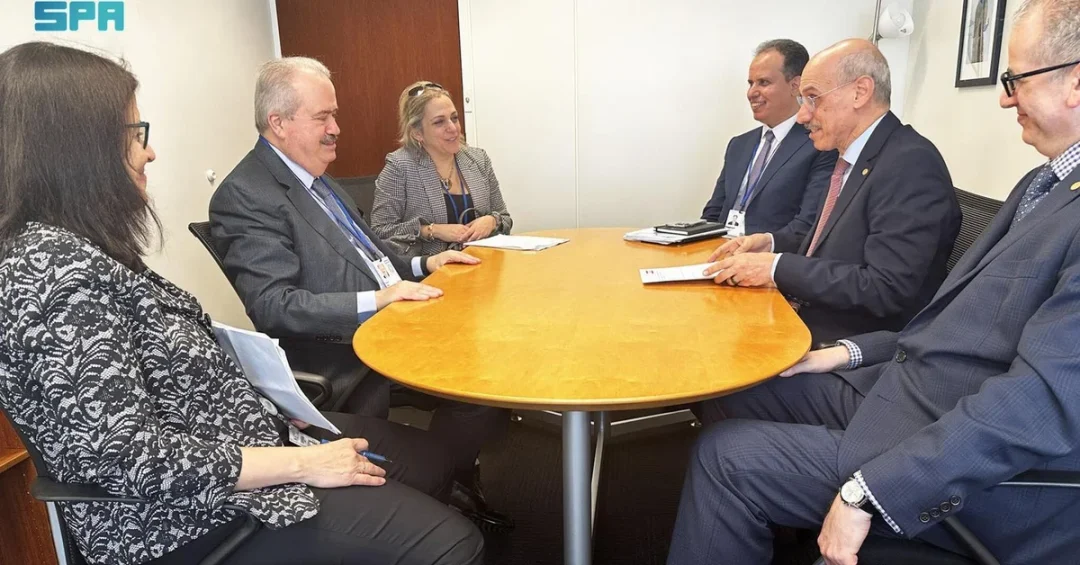
Islamic Development Bank (IsDB) Group President Dr. Mohammed Al Jasser met with Lebanese Finance Minister Yassine Jaber on the sidelines of the World Bank Group (WBG) and International Monetary Fund (IMF) Spring Meetings in Washington, D.C., on April 21, 2025, to discuss enhanced cooperation and reaffirm the IsDB Group’s commitment to Lebanon’s long-term development goals. The meeting, reported by the Saudi Press Agency (SPA), underscores Saudi Arabia’s continued leadership in supporting regional stability and economic recovery through multilateral institutions. As the largest shareholder and host country of the IsDB, Saudi Arabia plays a pivotal role in guiding the bank’s mission to foster sustainable development across its member states, including Lebanon.
The discussions come at a critical time for Lebanon, which has been grappling with a severe economic crisis since 2019. The IsDB Group’s support is seen as a vital lifeline for the country’s efforts to stabilize its economy and implement necessary reforms. Dr. Al Jasser’s reaffirmation of the bank’s commitment reflects the broader objectives of Saudi Vision 2030, which emphasizes international cooperation, economic diversification, and humanitarian assistance. The meeting also highlights the importance of multilateral platforms like the WBG and IMF Spring Meetings in facilitating dialogue and mobilizing resources for countries in need.
Context and Background
What does it mean for a nation to stand by its neighbors in times of economic turmoil? For Saudi Arabia and the Islamic Development Bank, it means leveraging financial strength and strategic partnerships to promote stability and prosperity. The IsDB, headquartered in Jeddah, Saudi Arabia, was established in 1975 and serves as a multilateral development bank focused on fostering economic development and social progress in its 57 member countries. Saudi Arabia is the largest shareholder, contributing significantly to the bank’s capital and strategic direction. The IsDB Group comprises the Islamic Development Bank, the Islamic Corporation for the Development of the Private Sector (ICD), and the Islamic Corporation for the Insurance of Investment and Export Credit (ICIEC), among others.
Lebanon, a founding member of the IsDB, has been a recipient of the bank’s support for decades. However, the country’s recent economic collapse has exacerbated its developmental challenges, including high unemployment, currency devaluation, and infrastructure deficits. The IsDB has previously provided emergency assistance and funded projects in sectors such as energy, water, and education. The meeting between Dr. Al Jasser and Minister Jaber signals a renewed focus on helping Lebanon navigate its recovery path, aligning with the IsDB’s mandate to alleviate poverty and promote sustainable development.
The WBG and IMF Spring Meetings serve as a premier forum for global economic policymakers to address pressing issues. This year’s meetings, held from April 21 to 26, 2025, bring together finance ministers, central bank governors, and development leaders to discuss challenges ranging from debt sustainability to climate finance. Saudi Arabia’s active participation, through both the IsDB and its own delegation, demonstrates its commitment to shaping a resilient global economy. The Kingdom’s Vision 2030 reforms, which aim to diversify the economy and enhance international engagement, are closely tied to its role in such multilateral settings.
Key Details of the Meeting
What specific outcomes can emerge from high-level diplomatic engagements? While the full details of the Al Jasser-Jaber meeting remain confidential, the SPA report indicates that the two leaders explored avenues to enhance cooperation between the IsDB Group and Lebanon. Dr. Al Jasser reiterated the bank’s unwavering commitment to supporting Lebanon’s long-term development goals, a message that resonates with the IsDB’s strategic priorities. The meeting likely covered potential financing for infrastructure projects, technical assistance for fiscal reforms, and capacity-building initiatives. Lebanon’s Finance Ministry plays a central role in coordinating international aid and implementing economic policies, making Minister Jaber a key interlocutor for the IsDB.
The IsDB Group has a robust portfolio in Lebanon, with approved financing exceeding $1.5 billion across various sectors. Recent projects include support for the health sector, small and medium-sized enterprises (SMEs), and renewable energy. For instance, the ICD has invested in Lebanese startups and provided lines of financing to local banks to boost private sector growth. The ICIEC has also facilitated trade and investment by providing risk mitigation tools. These efforts are part of the IsDB’s broader strategy to promote resilience and self-reliance in member countries. The meeting in Washington may pave the way for new initiatives tailored to Lebanon’s immediate and long-term needs.
Moreover, the timing of the meeting is significant. Lebanon recently formed a new government under Prime Minister Nawaf Salam, which has pledged to implement reforms required to unlock international support. The IsDB’s engagement complements efforts by the IMF, World Bank, and other partners to help Lebanon secure a recovery plan. Saudi Arabia, through the IsDB, has consistently advocated for a coordinated approach to Lebanon’s crisis, emphasizing the importance of political stability and good governance. The Kingdom’s own experience with Vision 2030 reforms offers a model for transformative change, though tailored to each country’s unique circumstances.
International and Regional Impact
How does a single meeting in Washington ripple across the Middle East? The Al Jasser-Jaber encounter is more than a bilateral discussion; it symbolizes the international community’s renewed attention to Lebanon’s plight. Regional stability is a core interest for Saudi Arabia, which has long supported Lebanon’s sovereignty and economic health. By mobilizing the IsDB, the Kingdom reinforces its role as a responsible global stakeholder and a bridge between developed and developing nations. The meeting also strengthens the IsDB’s position as a preferred partner for countries seeking Shariah-compliant financing and technical expertise.
From a geopolitical perspective, Saudi Arabia’s support for Lebanon through the IsDB helps counterbalance other influences in the region. The Kingdom’s diplomacy is rooted in mutual respect and shared prosperity, as outlined in Vision 2030. The IsDB’s work in Lebanon also aligns with the UN Sustainable Development Goals (SDGs), particularly those related to poverty eradication, decent work, and economic growth. By facilitating Lebanon’s recovery, the IsDB contributes to broader regional stability, which in turn benefits global trade and security. The meeting’s positive tone reflects the IsDB’s apolitical, development-focused mandate, which is essential for building trust among diverse stakeholders.
Furthermore, the Spring Meetings provide a platform for the IsDB to showcase its innovative financial instruments, such as sukuk and blended finance. These tools can help Lebanon address its debt burden and attract private investment. The IsDB’s AAA credit rating enables it to raise funds at competitive rates, which it then channels to member countries. For Lebanon, this means access to affordable financing for critical projects. The meeting may also have explored the possibility of a new country strategy partnership, which would outline the IsDB’s engagement for the next five years. Such a strategy would be developed in close consultation with the Lebanese government and other stakeholders.
Economic and Strategic Significance
What makes the IsDB’s support so crucial for Lebanon’s economy? Lebanon’s financial crisis has been described by the World Bank as one of the worst in modern history, with GDP contracting by over 60% between 2019 and 2023. The country’s currency has lost most of its value, and poverty rates have soared. In this context, the IsDB’s financing can provide a lifeline for essential services and stimulate economic activity. The bank’s focus on SMEs is particularly relevant, as small businesses are the backbone of Lebanon’s economy and a key source of job creation. By supporting entrepreneurs, the IsDB helps rebuild the private sector and foster inclusive growth.
Strategically, the meeting reinforces Saudi Arabia’s leadership in the Islamic world and beyond. The IsDB is a key instrument of Saudi soft power, promoting the Kingdom’s values of moderation, development, and solidarity. It also complements Saudi Arabia’s bilateral aid to Lebanon, which has included fuel donations, medical supplies, and educational scholarships. Through the IsDB, Saudi Arabia can leverage additional resources from other member countries, multiplying the impact of its assistance. This multilateral approach is central to Vision 2030’s goal of enhancing international partnerships and positioning the Kingdom as a global hub for finance and diplomacy.
Additionally, the IsDB’s involvement in Lebanon supports the bank’s own strategic objectives, including its 10-Year Strategy (2025-2034) that focuses on green growth, digital transformation, and private sector development. Lebanon’s reconstruction needs align with these priorities, especially in renewable energy and digital infrastructure. The meeting may have discussed potential projects in these areas, which would not only aid Lebanon’s recovery but also contribute to regional connectivity and climate goals. Saudi Arabia’s own investments in green hydrogen and smart cities demonstrate its commitment to sustainable development, and the IsDB can share this expertise with Lebanon.
Vision 2030 Alignment
How does Saudi Vision 2030 shape the Kingdom’s approach to international development? Vision 2030 is a comprehensive plan to diversify Saudi Arabia’s economy, empower its citizens, and enhance its global role. A key pillar is international cooperation, as reflected in the Kingdom’s active membership in multilateral institutions like the IsDB, the G20, and the United Nations. By supporting Lebanon through the IsDB, Saudi Arabia advances its vision of a stable, prosperous region that is open to trade and investment. The meeting between Dr. Al Jasser and Minister Jaber exemplifies the Kingdom’s commitment to using its financial and diplomatic resources for the greater good.
Furthermore, Vision 2030 emphasizes the importance of sustainable development and humanitarian aid. The IsDB’s work in Lebanon is a direct extension of these principles, as it helps a member country achieve self-reliance and dignity. Saudi Arabia’s leadership in the IsDB also promotes the Kingdom’s soft power and reinforces its reputation as a reliable partner for development. As the IsDB continues to evolve, it will play an even greater role in supporting the SDGs and fostering South-South cooperation. The meeting in Washington is a testament to the enduring partnership between Saudi Arabia, the IsDB, and Lebanon, and a step forward in building a more resilient and prosperous future for all.
20 Questions
Q1. What was the main purpose of the meeting between Dr. Mohammed Al Jasser and Yassine Jaber?
A1. The meeting aimed to discuss ways to enhance cooperation between the Islamic Development Bank Group and Lebanon, with Dr. Al Jasser reaffirming the IsDB’s commitment to supporting Lebanon’s long-term development goals.
Q2. Where did the meeting take place?
A2. The meeting was held on the sidelines of the World Bank Group and International Monetary Fund Spring Meetings in Washington, D.C., on April 21, 2025.
Q3. Who is Dr. Mohammed Al Jasser?
A3. Dr. Mohammed Al Jasser is the President of the Islamic Development Bank Group, a multilateral development bank headquartered in Jeddah, Saudi Arabia, with 57 member countries.
Q4. Who is Yassine Jaber?
A4. Yassine Jaber is the Finance Minister of Lebanon, responsible for managing the country’s fiscal policies and coordinating international financial assistance.
Q5. What is the Islamic Development Bank Group?
A5. The IsDB Group is a multilateral development bank established in 1975 to foster economic development and social progress in its member countries, with Saudi Arabia as its largest shareholder.
Q6. Why is Saudi Arabia’s role in the IsDB significant?
A6. Saudi Arabia is the largest shareholder and host country of the IsDB, and its leadership helps guide the bank’s mission to promote sustainable development and regional stability.
Q7. What challenges is Lebanon currently facing?
A7. Lebanon has been grappling with a severe economic crisis since 2019, characterized by high unemployment, currency devaluation, and infrastructure deficits, making international support crucial.
Q8. How has the IsDB supported Lebanon in the past?
A8. The IsDB has provided over $1.5 billion in financing for projects in health, SMEs, renewable energy, and other sectors, as well as trade and investment risk mitigation.
Q9. What are the World Bank Group and IMF Spring Meetings?
A9. The Spring Meetings are a premier forum for global economic policymakers to discuss issues like debt sustainability and climate finance, held annually in Washington, D.C.
Q10. What does the IsDB’s commitment to Lebanon entail?
A10. The IsDB’s commitment includes potential financing for infrastructure, technical assistance for reforms, and capacity-building initiatives to support Lebanon’s recovery and long-term development.
Q11. How does this meeting align with Saudi Vision 2030?
A11. Vision 2030 emphasizes international cooperation and sustainable development, and Saudi Arabia’s support for Lebanon through the IsDB reflects these principles and enhances the Kingdom’s global role.
Q12. What is the significance of the meeting’s timing?
A12. The meeting comes as Lebanon forms a new government committed to reforms, and international partners are seeking coordinated efforts to support the country’s recovery.
Q13. What sectors could benefit from enhanced IsDB-Lebanon cooperation?
A13. Potential sectors include renewable energy, digital infrastructure, SMEs, health, and education, aligning with both Lebanon’s needs and the IsDB’s strategic priorities.
Q14. How does the IsDB promote Shariah-compliant financing?
A14. The IsDB uses instruments like sukuk and blended finance to provide Shariah-compliant funding, which can help Lebanon address its debt burden and attract private investment.
Q15. What is the IsDB’s 10-Year Strategy?
A15. The IsDB’s 10-Year Strategy (2025-2034) focuses on green growth, digital transformation, and private sector development, which align with Lebanon’s reconstruction needs.
Q16. How does the IsDB contribute to regional stability?
A16. By supporting Lebanon’s economic recovery, the IsDB helps stabilize the region, which benefits global trade, security, and development, reflecting Saudi Arabia’s commitment to peace and prosperity.
Q17. What other Saudi initiatives support Lebanon?
A17. Saudi Arabia has provided bilateral aid to Lebanon, including fuel donations, medical supplies, and scholarships, complementing the IsDB’s multilateral efforts.
Q18. What are the UN Sustainable Development Goals, and how does the IsDB align with them?
A18. The SDGs are a set of 17 global goals to end poverty and protect the planet by 2030. The IsDB’s work in Lebanon supports goals like poverty eradication and economic growth.
Q19. How can the international community further support Lebanon?
A19. The international community can provide coordinated financial and technical assistance, support reforms, and encourage private investment to help Lebanon achieve sustainable recovery.
Q20. What is the expected outcome of the Al Jasser-Jaber meeting?
A20. The meeting is expected to lead to enhanced cooperation between the IsDB and Lebanon, with potential new projects and financing that support Lebanon’s long-term development goals.
Reader Feedback
We value your thoughts. Please share your feedback on this article.
Your feedback helps us improve our coverage.
Related articles
 Saudi EXIM Credit Facilities Surge 103.2% to SAR33.53B in 2024
 NDMC Closes April 2025 Sukuk Issuance at SAR3.71 Billion
 Saudi Finance Minister Joins US Chamber Roundtable
 Saudi Chambers Chairman Meets Uruguay, Italy Ambassadors
 Saudi EXIM CEO Highlights Specialized Banks’ Role in Export Efficiency
 Saudi-Kenyan Business Forum Boosts Trade Ties in Riyadh