


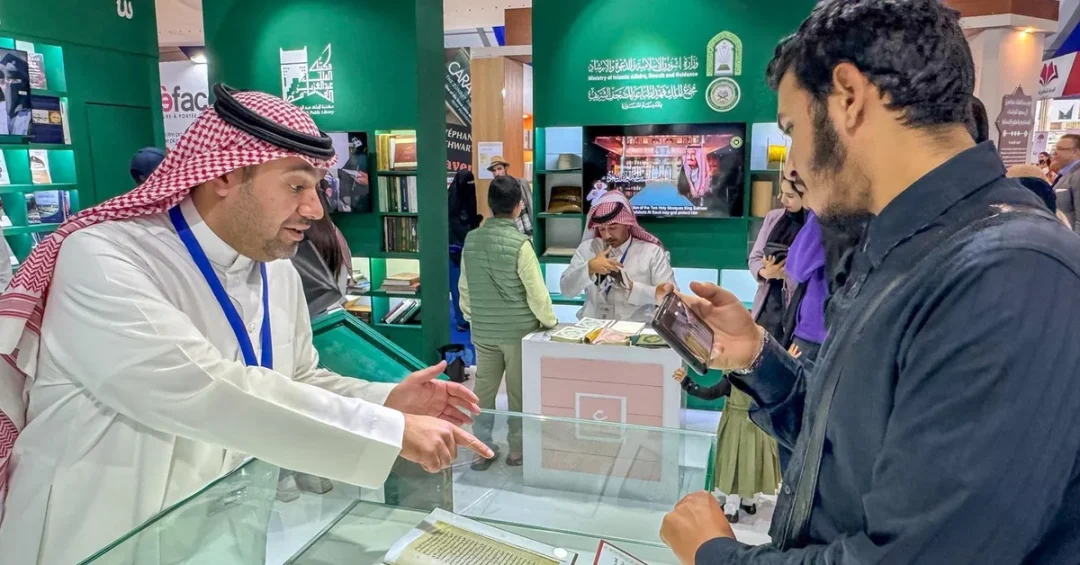
The booth of the Ministry of Islamic Affairs, Dawah, and Guidance at the 30th Rabat International Book Fair drew a high turnout of visitors eager to learn about the Kingdom’s efforts to serve Islam and Muslims and to promote the approach of moderation. The booth, part of Saudi Arabia’s pavilion at the fair held in Rabat, Morocco, from April 17 to 27, 2025, showcased the ministry’s key initiatives, including the printing of the Holy Quran and the use of advanced technologies to disseminate its message globally. Have you ever wondered how Saudi Arabia shares its cultural and religious heritage with the world? This participation underscores the Kingdom’s commitment to international cultural exchange and its Vision 2030 goal of fostering global engagement.
The Rabat International Book Fair is one of the most significant cultural events in the Arab world, attracting publishers, authors, and visitors from across the globe. Saudi Arabia’s pavilion, organized by the Literature, Publishing, and Translation Commission, features a range of activities and exhibits that highlight the Kingdom’s rich cultural and religious heritage. The Ministry of Islamic Affairs, Dawah, and Guidance’s booth, in particular, offers visitors an immersive experience into the Kingdom’s role in serving Islam and Muslims worldwide. This participation aligns with Saudi Vision 2030’s objectives to promote cultural diplomacy and strengthen international ties. But what exactly does the ministry’s booth offer to visitors? Let’s explore the key details.
Context and Background
Why is Saudi Arabia’s participation in the Rabat International Book Fair so significant? The fair, now in its 30th edition, serves as a platform for cultural exchange and dialogue among nations. Saudi Arabia’s pavilion, organized by the Literature, Publishing, and Translation Commission, reflects the Kingdom’s dedication to promoting its cultural and religious heritage on an international stage. The Ministry of Islamic Affairs, Dawah, and Guidance plays a pivotal role in this endeavor by showcasing its efforts to serve Islam and Muslims and to promote moderation, in line with the Kingdom’s noble message. This participation is part of Saudi Arabia’s broader strategy to engage with the international community and share its values of tolerance and peace.
The ministry’s booth at the fair is designed to educate visitors about the Kingdom’s contributions to the service of the Holy Quran and the dissemination of its message. It highlights the work of the King Fahd Glorious Quran Printing Complex in Madinah, which is renowned for its high-quality printing of the Holy Quran and its translations into multiple languages. The booth also features innovative digital applications, such as the 3D virtual Hajj and Umrah experience app and virtual reality technology simulating the holy sites. These exhibits demonstrate how Saudi Arabia is leveraging modern technology to enhance the spiritual experience of Muslims worldwide. But how do these efforts contribute to the Kingdom’s global standing?
Saudi Arabia’s role as the custodian of the Two Holy Mosques places it at the heart of the Islamic world. The Ministry of Islamic Affairs, Dawah, and Guidance is tasked with spreading the message of moderation and combating extremism. Its participation in international events like the Rabat Book Fair is a testament to its commitment to these goals. By engaging with visitors from diverse backgrounds, the ministry fosters a better understanding of Islam and Saudi Arabia’s efforts to serve humanity. This aligns with Vision 2030’s focus on cultural diplomacy and global outreach. What impact does this have on Saudi Arabia’s image abroad?
Key Details
What specific attractions drew visitors to the ministry’s booth? One of the main draws was the display on the process of printing the Holy Quran at the King Fahd Glorious Quran Printing Complex in Madinah. Visitors learned about the stages of printing, from calligraphy to binding, and the modern technologies used to ensure the highest quality. The complex produces millions of copies annually and distributes them worldwide, often as gifts to pilgrims and Islamic centers. The booth also showcased a range of publications, including translations of the Quran in multiple languages, books on Islamic jurisprudence, and educational materials. These resources are part of the ministry’s efforts to make Islamic knowledge accessible to a global audience.
Another highlight was the innovative digital applications and programs presented at the booth. The 3D virtual Hajj and Umrah experience app allows users to simulate the rituals of pilgrimage, providing an educational tool for those who cannot physically perform Hajj or Umrah. The virtual reality (VR) technology simulating the holy sites offers an immersive experience that brings the spiritual journey to life. These technologies are designed to enhance the understanding of Islamic rituals and to reach a wider audience, including younger generations who are increasingly tech-savvy. How do these digital tools complement traditional methods of learning about Islam?
The booth also served as a platform for dialogue and exchange. Ministry representatives were on hand to answer questions and provide information about the Kingdom’s efforts to promote moderation and tolerance. Visitors had the opportunity to learn about the ministry’s various initiatives, such as the moderation centers and the programs for training imams and preachers. These efforts are part of Saudi Arabia’s strategy to counter extremism and to present Islam as a religion of peace and compassion. What role do such interactions play in fostering mutual understanding?
International and Regional Impact
Why does Saudi Arabia’s participation in the Rabat Book Fair matter beyond the event itself? The fair provides a unique opportunity for Saudi Arabia to strengthen its cultural and diplomatic ties with Morocco and other participating countries. Morocco and Saudi Arabia share deep historical and religious connections, and this participation reinforces those bonds. It also allows the Kingdom to showcase its cultural and religious soft power, which is an essential component of its foreign policy. By engaging with international audiences, Saudi Arabia can counter misconceptions and present its true image as a nation committed to peace and progress. How does this align with the Kingdom’s regional leadership role?
Moreover, the ministry’s booth attracted visitors from various backgrounds, including scholars, students, and the general public. This diversity of audience reflects the universal appeal of the Kingdom’s message. The positive reception of the booth indicates a growing interest in Saudi Arabia’s cultural and religious initiatives. It also highlights the success of the Kingdom’s efforts to promote moderation and to serve Islam and Muslims globally. What can other nations learn from Saudi Arabia’s approach to cultural diplomacy?
Economic and Strategic Significance
How does Saudi Arabia’s participation in cultural events like the Rabat Book Fair contribute to its economic and strategic goals? While the primary focus is on cultural and religious exchange, such participation also has economic implications. It can boost tourism and investment by promoting Saudi Arabia as a destination for cultural and religious tourism. The Kingdom’s Vision 2030 aims to diversify the economy and increase non-oil revenues, and cultural diplomacy plays a role in achieving these goals. By showcasing its cultural and religious heritage, Saudi Arabia attracts visitors and investors who are interested in exploring opportunities in the Kingdom. What economic benefits can arise from such cultural engagement?
Strategically, Saudi Arabia’s active participation in international events strengthens its position as a leader in the Islamic world and a key player in global affairs. It reinforces the Kingdom’s commitment to moderation and tolerance, which are essential for regional stability and security. The ministry’s efforts to spread the message of Islam and to serve Muslims worldwide are a cornerstone of Saudi Arabia’s soft power. This soft power, in turn, supports the Kingdom’s diplomatic objectives and enhances its global standing. How does this contribute to Saudi Arabia’s long-term strategic vision?
Vision 2030 Alignment
How does the Ministry of Islamic Affairs, Dawah, and Guidance’s participation in the Rabat Book Fair align with Saudi Vision 2030? Vision 2030 is a comprehensive plan to transform Saudi Arabia into a diversified and sustainable economy, with a focus on cultural and social development. One of its key objectives is to promote cultural diplomacy and to enhance the Kingdom’s global image. The ministry’s efforts to serve Islam and Muslims and to promote moderation are directly in line with this objective. By showcasing its cultural and religious heritage at international events, Saudi Arabia can build bridges with other nations and foster a better understanding of its values. This, in turn, supports the Vision’s goal of creating a vibrant society and a thriving economy.
Furthermore, Vision 2030 emphasizes the importance of technology and innovation in all sectors. The ministry’s use of digital applications and VR technology to disseminate Islamic knowledge and to enhance the spiritual experience of Muslims demonstrates this commitment. These innovative tools not only serve the religious needs of Muslims but also position Saudi Arabia as a leader in the use of technology for religious and cultural purposes. As the Kingdom continues to implement Vision 2030, such initiatives will play a vital role in achieving its goals and in sharing the message of moderation and peace with the world. What does the future hold for Saudi Arabia’s cultural and religious outreach?
20 Questions
Q1. What is the Rabat International Book Fair?
A1. The Rabat International Book Fair is an annual cultural event held in Rabat, Morocco, that brings together publishers, authors, and visitors from around the world to promote literature and cultural exchange. It is one of the largest book fairs in the Arab world.
Q2. Why did the Saudi Ministry of Islamic Affairs participate in the fair?
A2. The ministry participated to showcase Saudi Arabia’s efforts to serve Islam and Muslims, promote moderation, and share its cultural and religious heritage with an international audience, in line with the Kingdom’s noble message and Vision 2030.
Q3. What is the King Fahd Glorious Quran Printing Complex?
A3. The King Fahd Glorious Quran Printing Complex in Madinah is a renowned facility dedicated to printing the Holy Quran with the highest standards of quality. It produces millions of copies annually and distributes them worldwide in multiple languages.
Q4. What digital applications were showcased at the booth?
A4. The booth featured innovative digital applications including a 3D virtual Hajj and Umrah experience app and virtual reality (VR) technology that simulates the holy sites, offering an immersive educational experience for visitors.
Q5. How does the ministry promote moderation?
A5. The ministry promotes moderation through various initiatives, including educational programs, publications, and digital tools that emphasize tolerance, peace, and the true teachings of Islam, countering extremism and fostering understanding.
Q6. What was the visitor turnout like at the booth?
A6. The booth witnessed a high turnout of visitors, including scholars, students, and the general public, who were eager to learn about the ministry’s efforts and the Kingdom’s contributions to serving Islam and Muslims.
Q7. What publications were available at the booth?
A7. The booth showcased a range of publications, including translations of the Holy Quran in multiple languages, books on Islamic jurisprudence, and educational materials aimed at disseminating Islamic knowledge globally.
Q8. How does the booth reflect Saudi Vision 2030?
A8. The booth reflects Vision 2030 by promoting cultural diplomacy, showcasing technological innovation in religious services, and enhancing Saudi Arabia’s global image as a leader in moderation and cultural exchange.
Q9. What is the significance of the 3D virtual Hajj app?
A9. The 3D virtual Hajj app allows users to simulate the rituals of pilgrimage, providing an educational tool for those unable to perform Hajj or Umrah physically, and enhancing understanding of these sacred rituals.
Q10. How does the ministry’s participation benefit Saudi-Moroccan relations?
A10. It strengthens the historical and religious ties between Saudi Arabia and Morocco, fostering cultural exchange and cooperation, and reinforcing the bonds of brotherhood between the two nations.
Q11. What role does the Literature, Publishing, and Translation Commission play?
A11. The commission organizes Saudi Arabia’s pavilion at the fair, coordinating the participation of various Saudi entities to showcase the Kingdom’s cultural and literary achievements on an international stage.
Q12. How does the booth address misconceptions about Islam?
A12. By presenting accurate information about Islamic teachings, showcasing the Quran’s preservation, and highlighting the Kingdom’s moderation efforts, the booth helps correct misconceptions and promotes a true understanding of Islam.
Q13. What technologies are used in printing the Holy Quran?
A13. The King Fahd Complex uses advanced printing technologies, including high-quality calligraphy, precise proofreading, and modern binding techniques, to ensure the Quran’s accuracy and beauty.
Q14. How many languages are the Quran translations available in?
A14. The Quran translations are available in numerous languages, including English, French, Spanish, Urdu, and many others, to cater to the diverse global Muslim population and facilitate understanding.
Q15. What is the ministry’s role in serving Muslims worldwide?
A15. The ministry serves Muslims worldwide by printing and distributing the Quran, supporting Islamic centers, training imams, and promoting moderation and tolerance through various programs and initiatives.
Q16. How does the booth engage younger generations?
A16. The booth engages younger generations through interactive digital tools like VR and 3D apps, making the learning experience about Hajj, Umrah, and Islamic teachings more engaging and accessible.
Q17. What other Saudi entities participated in the fair?
A17. Various Saudi cultural and literary entities participated under the umbrella of the Literature, Publishing, and Translation Commission, showcasing the Kingdom’s rich cultural heritage and literary output.
Q18. How does the fair contribute to cultural exchange?
A18. The fair provides a platform for nations to share their literary and cultural achievements, fostering dialogue, understanding, and cooperation among participants and visitors from around the world.
Q19. What feedback did visitors give about the booth?
A19. Visitors expressed admiration for the booth’s informative displays and innovative technologies, praising the Kingdom’s efforts to serve Islam and promote moderation, and appreciating the opportunity to learn more about Saudi Arabia’s initiatives.
Q20. How can one learn more about the ministry’s initiatives?
A20. One can learn more by visiting the ministry’s official website, following its social media channels, or attending events like the Rabat Book Fair where the ministry regularly participates to share information about its programs and services.
Reader Feedback
We value your thoughts. Please share your feedback on this article.
Your feedback helps us improve our coverage.
Related articles
 International Saudi Falcons and Hunting Expo Returns to Riyadh in October
 Aseer Development Authority, Saudi ICOMOS Partner for Heritage Preservation
 OIC Joins Global Effort to Protect Cultural Heritage
 Saudi Arabia Showcases Heritage at Buenos Aires Book Fair
 Jumum Museum: 12,000 Artifacts Showcase Saudi Heritage
 Riyadh Pavilion Opens at Buenos Aires Book Fair; Saudi Capital Guest of Honor