


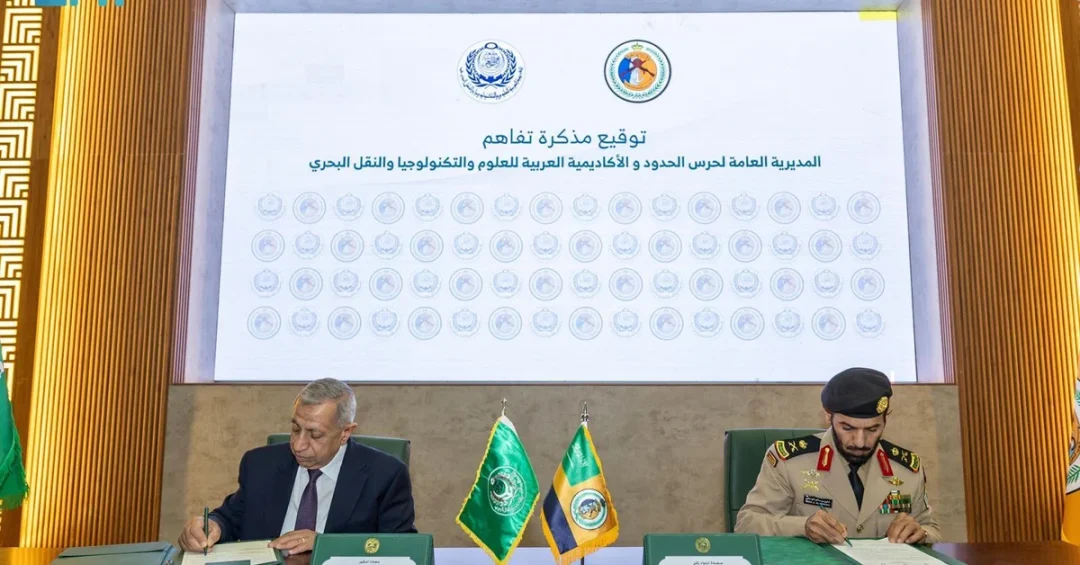
The General Directorate of Border Guards, represented by the Interior Ministry’s Academy for Border Security, signed a memorandum of understanding (MoU) with the Arab Academy for Science, Technology and Maritime Transport (AASTMT) in Riyadh on April 22, 2025. The agreement, announced via the Saudi Press Agency (SPA), aims to strengthen strategic partnerships with regional and international entities in education, training, and scientific research. The signing ceremony was attended by Major General Shaya bin Salem Al-Wadaani, Director General of Border Guards, and Dr. Ismail Abdel Ghaffar Farag, President of AASTMT. This collaboration underscores Saudi Arabia’s commitment to enhancing border security capabilities through academic and technical cooperation.
In an era where border security demands increasingly sophisticated skills and knowledge, how does a partnership between a security directorate and an academic institution redefine national defense? The MoU between the General Directorate of Border Guards and AASTMT represents a forward-thinking approach to capacity building. It leverages academic expertise to address evolving challenges in border management, maritime security, and technological innovation. This aligns with Saudi Arabia’s Vision 2030, which emphasizes education, training, and international collaboration as pillars of national development. By joining forces, both entities aim to produce highly skilled personnel capable of safeguarding the Kingdom’s borders effectively.
Context and Background
What motivated the General Directorate of Border Guards to seek a partnership with an academic institution like AASTMT? The General Directorate of Border Guards, under the Ministry of Interior, is responsible for protecting Saudi Arabia’s land and sea borders. In recent years, the Kingdom has intensified efforts to modernize its security apparatus, integrating advanced technologies and specialized training. The Academy for Border Security, a key component of the Interior Ministry, provides education and training for border security personnel. Meanwhile, AASTMT, headquartered in Alexandria, Egypt, is a renowned regional institution specializing in maritime transport, engineering, and technology. It has a strong reputation for producing skilled graduates who contribute to the maritime and logistics sectors across the Arab world. This MoU formalizes a strategic partnership that combines operational experience with academic rigor.
The signing ceremony in Riyadh marks a significant step in Saudi Arabia’s ongoing efforts to enhance border security through education. Historically, border security has relied on physical infrastructure and manpower. However, modern challenges such as smuggling, illegal immigration, and maritime threats require a knowledge-based approach. By collaborating with AASTMT, the Border Guards gain access to cutting-edge research and training methodologies. This partnership also reflects Saudi Arabia’s broader strategy of engaging with regional allies to share expertise and build collective capacity. The MoU is not merely a symbolic gesture; it outlines concrete areas of cooperation that will be implemented in the coming months and years.
Key Details of the Memorandum
What specific areas of cooperation does the MoU cover, and how will they be implemented? According to the SPA report, the MoU focuses on enhancing collaborative efforts in education, training, and scientific research. It also promotes the exchange of expertise and the development of academic and training programs. This includes the possibility of joint research projects, specialized courses, and workshops for Border Guards personnel. The Academy for Border Security will likely integrate AASTMT’s curricula into its existing programs, particularly in maritime security, port management, and border technology. The agreement also facilitates the exchange of instructors and students, allowing Saudi personnel to benefit from AASTMT’s expertise while sharing their practical insights.
Major General Shaya bin Salem Al-Wadaani and Dr. Ismail Abdel Ghaffar Farag attended the signing, highlighting the high-level commitment to this partnership. The presence of these leaders signals that the MoU is a priority for both institutions. The agreement is expected to lead to the accreditation of new training modules and the establishment of joint centers of excellence. Furthermore, the MoU includes provisions for scientific research, which could lead to innovations in surveillance, communication, and border management technologies. By combining academic research with operational needs, the partnership aims to produce tangible improvements in border security effectiveness.
International and Regional Impact
How does this MoU affect Saudi Arabia’s relations with regional and international partners? The partnership between the General Directorate of Border Guards and AASTMT, an Egyptian institution, strengthens ties between Saudi Arabia and Egypt in a critical area of mutual interest. Both countries share maritime borders and face similar security challenges, making cooperation essential. This MoU also aligns with the broader Arab strategy of enhancing regional security through collaborative efforts. It sets a precedent for other Arab nations to pursue similar academic-security partnerships. On the international stage, the agreement demonstrates Saudi Arabia’s proactive approach to border security, which is vital for global trade and stability.
Moreover, the MoU enhances Saudi Arabia’s reputation as a leader in security innovation. By investing in education and training, the Kingdom signals that it values human capital development as much as physical infrastructure. This approach is likely to attract further international cooperation, as other countries seek to emulate Saudi Arabia’s model. The partnership also supports the free flow of commerce by ensuring secure borders, which is crucial for the global economy. In a region often characterized by instability, Saudi Arabia’s commitment to professionalizing its border forces contributes to overall peace and security.
Economic and Strategic Significance
Why is this MoU economically and strategically important for Saudi Arabia? Secure borders are essential for economic prosperity. They facilitate legitimate trade, protect critical infrastructure, and prevent illicit activities that undermine economic growth. By enhancing the skills of Border Guards personnel, the MoU indirectly supports Saudi Arabia’s economic diversification goals under Vision 2030. Efficient border management reduces delays in trade and improves the business environment, making the Kingdom more attractive to foreign investors. Additionally, the focus on maritime security is particularly relevant given Saudi Arabia’s extensive coastline and its ambitions to become a global logistics hub.
Strategically, the MoU strengthens national security by addressing emerging threats. Border Guards play a crucial role in countering terrorism, smuggling, and human trafficking. By equipping them with advanced knowledge and skills, Saudi Arabia enhances its defense capabilities. The partnership with AASTMT also provides access to a network of experts and resources that can be mobilized in times of need. This collaboration is a force multiplier, allowing Saudi Arabia to achieve more than it could alone. It also aligns with the Kingdom’s broader defense diplomacy, which seeks to build alliances and share burdens with friendly nations.
Vision 2030 Alignment
How does this MoU contribute to Saudi Arabia’s Vision 2030? Vision 2030 aims to transform Saudi Arabia into a diversified, knowledge-based economy. Central to this vision is the development of human capital through education and training. The MoU directly supports this by enhancing the capabilities of Border Guards personnel, who are essential to national security and economic stability. It also promotes scientific research and innovation, which are key drivers of Vision 2030. By partnering with AASTMT, Saudi Arabia is investing in its future leaders and fostering a culture of continuous learning and improvement.
Furthermore, the MoU reinforces Saudi Arabia’s role as a regional leader and global partner. Vision 2030 emphasizes international cooperation and the exchange of expertise. This agreement exemplifies these principles by bringing together Saudi and Egyptian institutions for mutual benefit. It also showcases the Kingdom’s commitment to security and stability, which are prerequisites for achieving the ambitious goals of Vision 2030. As Saudi Arabia continues to modernize and open up to the world, partnerships like this will be instrumental in ensuring a safe and prosperous future. In conclusion, the MoU between the General Directorate of Border Guards and AASTMT is a testament to Saudi Arabia’s forward-looking approach to security and development, perfectly aligned with the aspirations of Vision 2030.
20 Questions
Q1. What is the purpose of the MoU signed between the General Directorate of Border Guards and AASTMT?
A1. The MoU aims to strengthen strategic partnerships in education, training, and scientific research, enhancing the capabilities of Border Guards personnel through academic collaboration and expertise exchange.
Q2. When and where was the MoU signed?
A2. The MoU was signed in Riyadh on April 22, 2025, as reported by the Saudi Press Agency.
Q3. Who represented the General Directorate of Border Guards at the signing ceremony?
A3. Major General Shaya bin Salem Al-Wadaani, Director General of Border Guards, attended the ceremony.
Q4. Who represented AASTMT at the signing ceremony?
A4. Dr. Ismail Abdel Ghaffar Farag, President of AASTMT, represented the institution.
Q5. What does AASTMT stand for?
A5. AASTMT stands for the Arab Academy for Science, Technology and Maritime Transport, a regional institution based in Alexandria, Egypt.
Q6. What are the main areas of cooperation outlined in the MoU?
A6. The MoU covers education, training, scientific research, exchange of expertise, and development of academic and training programs.
Q7. How will the MoU benefit Border Guards personnel?
A7. It will provide them with access to specialized training, academic programs, and research opportunities, enhancing their skills in border security and maritime management.
Q8. What is the Academy for Border Security?
A8. The Academy for Border Security is an educational arm of the Interior Ministry’s General Directorate of Border Guards, responsible for training personnel.
Q9. Why is this partnership important for Saudi Arabia’s border security?
A9. It equips Border Guards with advanced knowledge and skills to address evolving threats such as smuggling, illegal immigration, and maritime security challenges.
Q10. How does the MoU align with Saudi Arabia’s Vision 2030?
A10. It supports human capital development, education, and international cooperation, which are key pillars of Vision 2030.
Q11. What role does AASTMT play in the region?
A11. AASTMT is a leading institution in maritime transport, engineering, and technology, producing skilled graduates for the Arab world.
Q12. Will the MoU lead to joint research projects?
A12. Yes, the MoU includes provisions for scientific research collaboration, potentially leading to innovations in border security technologies.
Q13. How does this MoU affect Saudi-Egyptian relations?
A13. It strengthens bilateral ties by fostering cooperation in a critical area of mutual interest, enhancing regional security.
Q14. What economic benefits could result from this MoU?
A14. Secure borders facilitate trade and investment, supporting Saudi Arabia’s economic diversification goals under Vision 2030.
Q15. Will there be exchange programs for students and instructors?
A15. Yes, the MoU promotes the exchange of expertise, which may include student and instructor exchanges between the two institutions.
Q16. How does this MoU enhance Saudi Arabia’s international standing?
A16. It demonstrates Saudi Arabia’s commitment to security innovation and regional cooperation, positioning the Kingdom as a leader in border management.
Q17. What are the next steps after signing the MoU?
A17. Both parties will develop implementation plans, including joint training programs, research initiatives, and academic exchanges.
Q18. Does the MoU include provisions for maritime security training?
A18. Yes, given AASTMT’s expertise in maritime transport, the MoU likely includes maritime security components, though specific details are not disclosed.
Q19. How will the success of this MoU be measured?
A19. Success will be measured through improved training outcomes, research outputs, and enhanced operational capabilities of Border Guards personnel.
Q20. What message does this MoU send to other nations?
A20. It signals Saudi Arabia’s proactive approach to border security and its willingness to collaborate internationally for peace and stability.
Reader Feedback
We value your thoughts. Please share your feedback on this article.
Your feedback helps us improve our coverage.
Related articles
 KSrelief Distributes 588 Food Baskets in Yemen’s Aden
 Indian Prime Minister Modi Departs Jeddah After Key Visit
 Crown Prince and India PM Co-Chair Strategic Council
 Saudi-Russian Contracting Forum Boosts Vision 2030 Ties
 KSrelief Distributes Shelter Aid in Somalia’s Sool Region
 Duqm Beach Cleanup Marks Environment Week in Umluj