


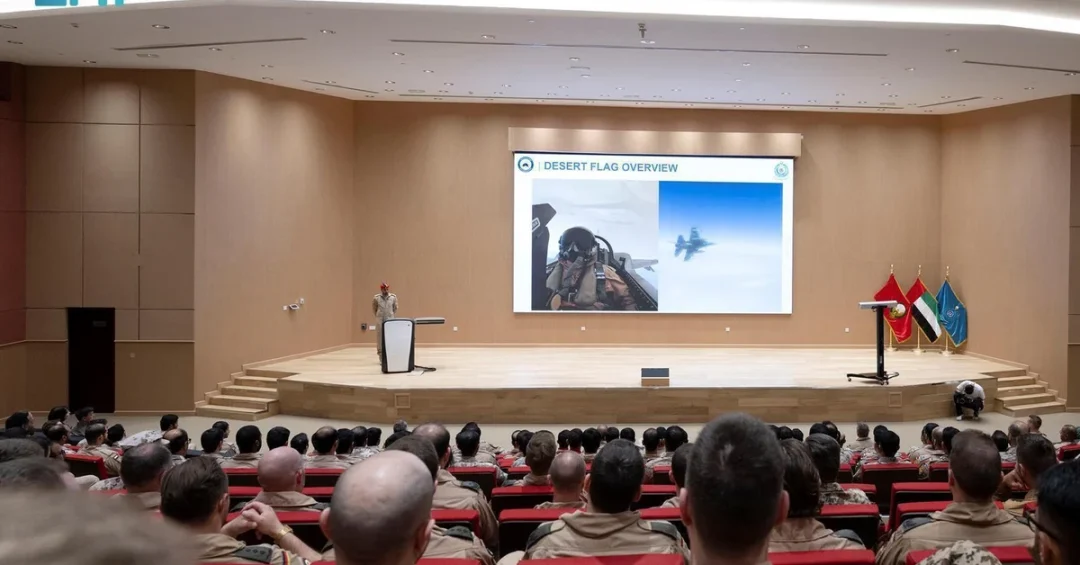
The joint air exercise Desert Flag 2025 commenced on April 23, 2025, at Al Dhafra Air Base in the United Arab Emirates, with the participation of the Royal Saudi Air Forces, the Royal Saudi Air Defense Forces, and several allied and friendly nations. The exercise, announced by the Saudi Press Agency, will continue for several weeks and aims to enhance military cooperation and interoperability among participating forces. The Royal Saudi Air Force has deployed six F-15C fighter jets with full crews to take part in the drills.
This multilateral exercise brings together air forces from the host nation UAE, as well as Qatar, Bahrain, Turkiye, the United States, France, South Korea, the United Kingdom, Australia, India, and Germany. The presence of such a diverse group underscores the importance of international collaboration in maintaining regional security and stability. For Saudi Arabia, participation in Desert Flag 2025 reflects its ongoing commitment to strengthening its defense capabilities and fostering partnerships that align with its strategic objectives. As the Kingdom continues to modernize its armed forces under Vision 2030, exercises like this play a vital role in exchanging expertise and enhancing combat readiness.
Context and Background
Why has the Desert Flag exercise become such a pivotal event in regional military diplomacy? Desert Flag is an annual multinational air exercise hosted by the United Arab Emirates, designed to improve tactical interoperability and foster military cooperation among participating nations. The 2025 iteration is particularly significant given the evolving security landscape in the Middle East and beyond. The exercise provides a platform for air forces to train together in realistic scenarios, including defensive and offensive counter-air operations, close air support, and combat search and rescue missions. Such training is essential for maintaining readiness in an unpredictable world.
Saudi Arabia’s participation in Desert Flag 2025 is part of its broader strategy to enhance its defense capabilities through international engagement. The Royal Saudi Air Force has a long history of participating in joint exercises, which serve as a cornerstone of its training regimen. These exercises not only improve technical skills but also build trust and interoperability with allies. In recent years, Saudi Arabia has intensified its military exercises, reflecting its commitment to protecting its sovereignty and contributing to regional stability. The Kingdom’s involvement in Desert Flag 2025 demonstrates its proactive approach to security and its willingness to work alongside partners to address common challenges.
What does the participation of such a wide array of nations tell us about the current geopolitical climate? The inclusion of countries from different regions and with varying military capabilities highlights the shared interest in maintaining a secure and stable environment. It also signals a collective resolve to counter potential threats and uphold international norms. For Saudi Arabia, these partnerships are instrumental in advancing its Vision 2030 goals, which include building a robust defense industry and enhancing the Kingdom’s global standing. By training with leading air forces, the Royal Saudi Air Force gains valuable insights that contribute to its modernization and effectiveness.
Key Details
What specific capabilities are being honed during Desert Flag 2025? According to Lieutenant Colonel Pilot Faisal Al-Marwani, Commander of the Air Force contingent, the Saudi Air Force’s deployment of six F-15C fighters with full crews aims to exchange military expertise in realistic warfare scenarios, enhance combat readiness, and strengthen international partnerships. The exercise features a range of maneuvers, including defensive and offensive counter-air operations, close air support, and combat search and rescue operations. These drills are designed to simulate the complexities of modern aerial warfare and to test the coordination and skill of participating forces.
Al-Marwani emphasized that preparations for the exercise were carried out with complete professionalism and in accordance with the safety standards approved for military exercises. This attention to detail ensures that the training is both effective and secure. The F-15C, a proven air superiority fighter, is well-suited for the types of missions being practiced. Its participation underscores the Royal Saudi Air Force’s focus on maintaining a high level of readiness and its ability to integrate with allied forces. The exercise also provides an opportunity for Saudi pilots and ground crews to learn from their counterparts and share their own experiences.
How do these exercises translate into tangible benefits for the Kingdom’s defense? The skills and relationships developed during Desert Flag 2025 directly contribute to Saudi Arabia’s military effectiveness. By training in a multinational environment, Saudi forces can better understand different tactics and procedures, which is crucial for joint operations. Moreover, the exercise serves as a deterrent to potential adversaries by demonstrating the strength of the partnerships and the readiness of the participating forces. For Saudi Arabia, this aligns with its goal of ensuring the security of its borders and protecting its interests.
International and Regional Impact
What are the broader implications of Desert Flag 2025 for regional security? The exercise brings together nations that share a commitment to stability in the Middle East. By training together, these countries enhance their ability to respond collectively to crises, whether natural disasters or military threats. The presence of forces from the United States, France, the United Kingdom, and others underscores the international community’s engagement in the region. For Saudi Arabia, this cooperation reinforces its role as a key player in regional security architecture and a reliable partner in efforts to maintain peace and stability.
How does Saudi Arabia’s participation reflect its leadership in the Arab and Islamic world? As the custodian of the Two Holy Mosques, Saudi Arabia holds a unique position in the region. Its active involvement in multinational exercises like Desert Flag demonstrates its commitment to safeguarding not only its own security but also that of its neighbors. By working alongside both Western and regional partners, the Kingdom bridges different security perspectives and fosters a unified approach to common challenges. This leadership is essential for addressing the complex threats facing the region today.
Economic and Strategic Significance
What strategic advantages does Saudi Arabia gain from these joint exercises? Participation in Desert Flag 2025 allows the Royal Saudi Air Force to benchmark its capabilities against those of leading air forces. This insight is invaluable for identifying areas for improvement and for validating current tactics and equipment. Strategically, the exercise strengthens Saudi Arabia’s defense partnerships, which can lead to increased military sales and cooperation. It also supports the Kingdom’s efforts to develop a domestic defense industry, a key component of Vision 2030, by exposing Saudi personnel to advanced technologies and best practices.
How do these exercises contribute to the Kingdom’s economic diversification goals? While primarily a military activity, Desert Flag 2025 has indirect economic benefits. The exercise fosters closer ties with participating nations, which can translate into enhanced trade and investment opportunities. Furthermore, the training and experience gained by Saudi forces contribute to the development of a skilled workforce in the defense sector, supporting the localization of military industries. As Saudi Arabia aims to increase local content in its military spending, such exercises help build the expertise needed to achieve this goal.
Vision 2030 Alignment
How does Desert Flag 2025 align with Saudi Arabia’s long-term vision? Vision 2030 seeks to transform the Kingdom into a global investment powerhouse and a hub for innovation and security. A strong and modern defense sector is essential to this vision, as it ensures the protection of the Kingdom’s assets and interests. By participating in exercises like Desert Flag, Saudi Arabia demonstrates its commitment to building a capable military that can defend its sovereignty and contribute to regional stability. This, in turn, creates an environment conducive to economic growth and attracts foreign investment.
What does the future hold for Saudi Arabia’s military engagement? As the Kingdom continues to modernize its armed forces, we can expect to see even greater participation in multinational exercises and deeper defense partnerships. These efforts will not only enhance Saudi Arabia’s security but also reinforce its position as a responsible global actor. Through Vision 2030, the Kingdom is charting a path toward a prosperous and secure future, and exercises like Desert Flag 2025 are a testament to its progress on that journey. The skills, relationships, and insights gained will pay dividends for years to come, ensuring that Saudi Arabia remains a beacon of stability and progress in the region.
20 Questions
Q1. What is Desert Flag 2025?
A1. Desert Flag 2025 is a joint multinational air exercise hosted by the United Arab Emirates at Al Dhafra Air Base, involving Saudi Arabia and several other nations to enhance military cooperation and readiness.
Q2. When did Desert Flag 2025 commence?
A2. The exercise commenced on April 23, 2025, as announced by the Saudi Press Agency, and will continue for several weeks.
Q3. Which Saudi forces are participating in Desert Flag 2025?
A3. The Royal Saudi Air Forces and the Royal Saudi Air Defense Forces are participating, demonstrating the Kingdom’s commitment to joint training.
Q4. How many Saudi fighter jets are involved?
A4. The Royal Saudi Air Force has deployed six F-15C fighter jets with full crews to participate in the exercise.
Q5. Who is leading the Saudi contingent?
A5. Lieutenant Colonel Pilot Faisal Al-Marwani is the Commander of the Air Force contingent, overseeing Saudi participation.
Q6. What are the objectives of Desert Flag 2025?
A6. The exercise aims to exchange military expertise in realistic warfare scenarios, enhance combat readiness, and strengthen international partnerships.
Q7. Which countries are participating in Desert Flag 2025?
A7. Participants include the UAE, Saudi Arabia, Qatar, Bahrain, Turkiye, the US, France, South Korea, the UK, Australia, India, and Germany.
Q8. What types of maneuvers are being practiced?
A8. The exercise features defensive and offensive counter-air operations, close air support operations, and combat search and rescue operations.
Q9. Where is Desert Flag 2025 taking place?
A9. The exercise is being held at Al Dhafra Air Base in the United Arab Emirates.
Q10. How long will Desert Flag 2025 last?
A10. The exercise will continue for several weeks, allowing ample time for comprehensive training and cooperation.
Q11. What did Lieutenant Colonel Al-Marwani say about preparations?
A11. He stated that preparations were carried out with complete professionalism and in accordance with approved safety standards for military exercises.
Q12. What is the significance of Saudi Arabia’s participation?
A12. It reflects the Kingdom’s commitment to enhancing its defense capabilities, fostering international partnerships, and contributing to regional security.
Q13. How does Desert Flag 2025 benefit the Royal Saudi Air Force?
A13. It provides opportunities to exchange expertise, improve combat readiness, and learn from allied forces in a multinational environment.
Q14. What role does the F-15C play in the exercise?
A14. The F-15C is a proven air superiority fighter, well-suited for the simulated combat scenarios, and demonstrates Saudi Arabia’s advanced capabilities.
Q15. How does Desert Flag 2025 align with Vision 2030?
A15. It supports Vision 2030 by strengthening the defense sector, building international partnerships, and contributing to a secure environment for economic growth.
Q16. What are the regional implications of Desert Flag 2025?
A16. The exercise enhances regional security cooperation, deters potential threats, and reinforces stability in the Middle East.
Q17. How does Saudi Arabia’s participation reflect its leadership?
A17. It demonstrates the Kingdom’s proactive role in regional security and its commitment to working with allies to address common challenges.
Q18. What economic benefits might arise from Desert Flag 2025?
A18. The exercise can lead to increased defense cooperation, trade opportunities, and support for the localization of military industries.
Q19. What message does Desert Flag 2025 send to the international community?
A19. It signals a collective commitment to maintaining peace and stability, and showcases the strength of international military partnerships.
Q20. What future exercises are planned for the Royal Saudi Air Force?
A20. While specific future exercises are not announced, Saudi Arabia is expected to continue participating in multinational drills to enhance its defense capabilities and partnerships.
Reader Feedback
We value your thoughts. Please share your feedback on this article.
Your feedback helps us improve our coverage.
Related articles
 Saudi Green Building Forum to Convene in Riyadh This October
 Jeddah Entities Showcase Green Initiatives for Environment Week
 Interior Ministry: SAR50,000 Fine for Sponsors Failing to Report Departure by Visa Expiry
 GACA March 2025 Report: Saudi Airports Achieve Up to 100% Punctuality
 Tunisian Health Minister Meets with KSrelief Supervisor General
 6.2-Magnitude Earthquake Strikes Istanbul, No Casualties