


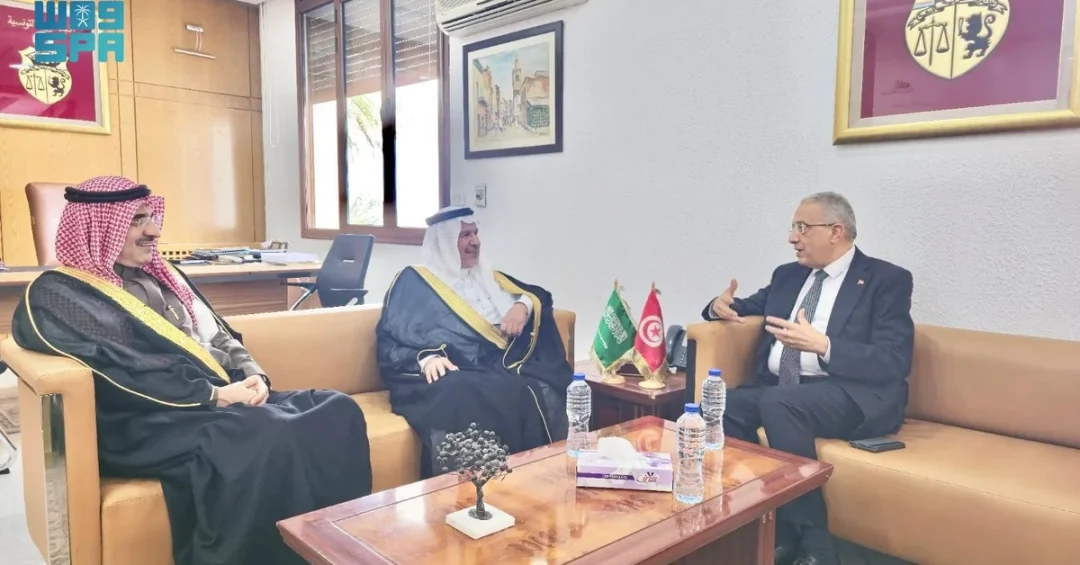
Tunisian Minister of Health Dr. Mustapha Ferjani met with Dr. Abdullah Al Rabeeah, Supervisor General of the King Salman Humanitarian Aid and Relief Center (KSrelief), in Tunis on April 23, 2025, to discuss humanitarian and relief issues, according to the Saudi Press Agency (SPA). The meeting underscored the strong bilateral ties between Saudi Arabia and Tunisia and highlighted KSrelief’s ongoing global humanitarian efforts. Dr. Ferjani praised Saudi Arabia’s relief initiatives, acknowledging the Kingdom’s role in aiding people worldwide through KSrelief. This encounter marks another step in the longstanding partnership between the two nations, which has seen Saudi Arabia provide substantial support to Tunisia in various sectors, including health and development.
The meeting comes at a time when global humanitarian needs are at an all-time high, with conflicts, natural disasters, and health crises affecting millions. Saudi Arabia, through KSrelief, has been at the forefront of providing aid, often working in collaboration with local governments and international organizations. Tunisia, a North African nation with which Saudi Arabia shares deep historical and cultural ties, has been a beneficiary of such support. The discussions between Dr. Ferjani and Dr. Al Rabeeah likely focused on enhancing cooperation in health and relief, aligning with Saudi Arabia’s Vision 2030 goals of fostering global stability and prosperity. What does this meeting signify for the future of Saudi-Tunisian relations, and how might it impact humanitarian efforts in the region?
Context and Background
How has Saudi Arabia’s humanitarian aid evolved over the years, and what role does KSrelief play in this narrative? Established in 2015 by Royal Order, KSrelief has become a pivotal instrument of Saudi Arabia’s humanitarian diplomacy, delivering aid in over 90 countries. Its mandate encompasses emergency relief, health, education, and infrastructure projects, often in partnership with local entities. In Tunisia, KSrelief has funded projects ranging from medical supplies to food security, reflecting the Kingdom’s commitment to supporting its brethren in need. The meeting between Dr. Ferjani and Dr. Al Rabeeah is a continuation of this legacy, signaling Saudi Arabia’s enduring dedication to Tunisia’s well-being.
Tunisia, like many nations, faces challenges in its healthcare system, exacerbated by economic pressures and the aftermath of the COVID-19 pandemic. Saudi Arabia’s support, channeled through KSrelief, has been instrumental in bolstering Tunisia’s health infrastructure. For instance, during the pandemic, KSrelief provided vaccines, medical equipment, and financial aid to Tunisia, helping to mitigate the crisis. This meeting likely explored further avenues for collaboration, such as training programs for Tunisian healthcare professionals and the provision of advanced medical technology. Such initiatives not only strengthen Tunisia’s capacity but also reinforce Saudi Arabia’s image as a benevolent global actor.
The timing of the meeting is significant, as it coincides with Saudi Arabia’s intensified efforts to expand its humanitarian footprint globally. With Vision 2030 emphasizing sustainable development and international cooperation, KSrelief’s work in Tunisia and beyond serves as a tangible manifestation of these principles. Moreover, Tunisia’s strategic location in North Africa makes it a key partner for Saudi Arabia in promoting regional stability. By addressing health and relief issues, both nations contribute to a more secure and prosperous Mediterranean region. How might this partnership evolve in the coming years, and what new horizons could it open?
Key Details
What specific topics were on the agenda during the Tunis meeting? While the SPA report did not disclose exhaustive details, it is reasonable to infer that discussions covered ongoing KSrelief projects in Tunisia, potential new initiatives, and the broader humanitarian landscape. Dr. Ferjani lauded Saudi Arabia’s relief efforts, acknowledging the Kingdom’s role in helping people worldwide. This praise reflects Tunisia’s appreciation for Saudi Arabia’s consistent support, which has been particularly vital during times of crisis. The meeting also provided an opportunity for both officials to exchange views on regional challenges, such as the humanitarian situation in neighboring Libya and the Sahel, where Tunisia and Saudi Arabia share interests in stability.
Dr. Abdullah Al Rabeeah, a renowned pediatric surgeon and former Saudi Minister of Health, brings a wealth of experience to his role as KSrelief Supervisor General. His leadership has been marked by a strategic approach to aid delivery, focusing on sustainability and local capacity building. Under his guidance, KSrelief has launched numerous programs in Tunisia, including the provision of dialysis machines, ambulances, and support for maternal and child health. The meeting with Dr. Ferjani likely reviewed these projects and discussed ways to enhance their impact. It also served as a platform to reaffirm Saudi Arabia’s commitment to Tunisia’s health sector, which is a cornerstone of the country’s development.
Furthermore, the meeting highlighted the importance of international cooperation in addressing humanitarian crises. Both officials emphasized the need for coordinated efforts to tackle challenges such as disease outbreaks, food insecurity, and displacement. Saudi Arabia, through KSrelief, has been a strong advocate for multilateralism in humanitarian action, working closely with UN agencies and other partners. Tunisia, as a member of the international community, shares these values and has benefited from Saudi Arabia’s collaborative approach. This alignment of interests bodes well for future joint endeavors, which could include joint needs assessments, resource mobilization, and capacity-building workshops. What tangible outcomes can be expected from this renewed dialogue?
International and Regional Impact
How does Saudi Arabia’s humanitarian aid influence its international standing? The meeting in Tunis is a microcosm of Saudi Arabia’s broader strategy to project soft power through generosity and compassion. By assisting Tunisia, the Kingdom not only alleviates suffering but also strengthens its diplomatic ties and enhances its reputation as a responsible global leader. This is particularly important in the current geopolitical climate, where humanitarian aid is often intertwined with foreign policy objectives. Saudi Arabia’s efforts, however, are driven by genuine humanitarian principles, rooted in Islamic values and a commitment to global solidarity. The positive reception of KSrelief’s work in Tunisia and elsewhere underscores the effectiveness of this approach.
Regionally, the meeting reinforces Saudi Arabia’s role as a stabilizing force in the Arab world. Tunisia, a nation that transitioned to democracy a decade ago, continues to face economic and social challenges. Saudi Arabia’s support, including through KSrelief, contributes to Tunisia’s stability and prosperity, which in turn benefits the entire North African region. Moreover, the meeting sends a message of Arab solidarity, countering narratives of division and conflict. It demonstrates that Arab nations can work together to address common challenges, from health crises to economic development. This spirit of cooperation is essential for the region’s long-term peace and security. How might other nations emulate this model of constructive engagement?
Economic and Strategic Significance
What economic and strategic benefits does this meeting portend? While the immediate focus is humanitarian, the meeting also has economic undertones. A healthy population is fundamental to economic productivity and growth. By supporting Tunisia’s health sector, Saudi Arabia contributes to the country’s human capital development, which can lead to increased trade and investment opportunities. Saudi Arabia is already a significant investor in Tunisia, with projects spanning energy, real estate, and finance. A stable and healthy Tunisia is more attractive to foreign investors, including those from Saudi Arabia. Thus, the meeting aligns with Saudi Arabia’s economic interests while serving a noble cause.
Strategically, Tunisia’s location on the Mediterranean makes it a gateway to Europe and Africa. Saudi Arabia’s engagement with Tunisia enhances its geopolitical reach and influence. By fostering strong ties with Tunisia, the Kingdom gains a reliable partner in a region of strategic importance. This partnership can facilitate cooperation on security, counterterrorism, and migration issues, which are of mutual concern. The meeting between Dr. Ferjani and Dr. Al Rabeeah, though focused on health, is part of this broader strategic calculus. It underscores Saudi Arabia’s holistic approach to foreign policy, which integrates humanitarian, economic, and security dimensions. What other areas of cooperation might emerge from this strengthened relationship?
Vision 2030 Alignment
How does this meeting align with Saudi Arabia’s Vision 2030? Vision 2030 is not just a domestic transformation plan; it also encompasses Saudi Arabia’s global engagement. One of its pillars is to strengthen the Kingdom’s role as a global humanitarian leader, a goal that KSrelief actively pursues. The meeting in Tunis exemplifies this pillar in action, showcasing Saudi Arabia’s commitment to international cooperation and sustainable development. By supporting Tunisia’s health sector, Saudi Arabia contributes to the achievement of the Sustainable Development Goals (SDGs), particularly SDG 3 (Good Health and Well-being) and SDG 17 (Partnerships for the Goals). This alignment reinforces the Kingdom’s image as a forward-looking nation dedicated to the betterment of humanity.
Furthermore, Vision 2030 emphasizes the importance of partnerships, both domestically and internationally. The collaboration between KSrelief and Tunisia’s Ministry of Health is a model of such partnership, bringing together government entities, experts, and resources to address pressing needs. It also reflects the values of compassion and generosity that are central to Saudi culture and Islamic teachings. As Saudi Arabia continues to implement Vision 2030, its humanitarian efforts will remain a key component of its foreign policy, fostering goodwill and building bridges with nations around the world. The meeting between Dr. Ferjani and Dr. Al Rabeeah is a testament to this enduring commitment, and it sets the stage for even greater cooperation in the future. What new heights can Saudi-Tunisian relations reach as both nations work toward a shared vision of peace and prosperity?
20 Questions
Q1. Who met in Tunis on April 23, 2025?
A1. Tunisian Minister of Health Dr. Mustapha Ferjani met with Dr. Abdullah Al Rabeeah, Supervisor General of the King Salman Humanitarian Aid and Relief Center (KSrelief).
Q2. What was the main purpose of the meeting?
A2. The two officials discussed humanitarian and relief issues, focusing on ways to enhance cooperation in health and relief efforts.
Q3. What did the Tunisian minister say about Saudi Arabia’s efforts?
A3. Dr. Ferjani lauded the relief and humanitarian efforts exerted by Saudi Arabia through KSrelief to help people worldwide.
Q4. What is KSrelief?
A4. KSrelief is the King Salman Humanitarian Aid and Relief Center, established in 2015 by Royal Order to provide international humanitarian aid.
Q5. How many countries has KSrelief assisted?
A5. KSrelief has delivered aid in over 90 countries, addressing emergency relief, health, education, and infrastructure needs.
Q6. What kind of projects has KSrelief implemented in Tunisia?
A6. KSrelief has funded projects including medical supplies, food security, dialysis machines, ambulances, and maternal and child health support.
Q7. How does this meeting reflect Saudi-Tunisian relations?
A7. It underscores the strong bilateral ties and longstanding partnership between the two nations, with Saudi Arabia providing substantial support to Tunisia.
Q8. What is the significance of the meeting’s timing?
A8. It coincides with Saudi Arabia’s intensified efforts to expand its humanitarian footprint globally, aligning with Vision 2030 goals.
Q9. Who is Dr. Abdullah Al Rabeeah?
A9. Dr. Abdullah Al Rabeeah is a renowned pediatric surgeon, former Saudi Minister of Health, and current Supervisor General of KSrelief.
Q10. What areas of Tunisia’s health sector has Saudi Arabia supported?
A10. Saudi Arabia has supported Tunisia’s health sector through vaccines, medical equipment, financial aid, and training programs for healthcare professionals.
Q11. How does this meeting align with Saudi Vision 2030?
A11. It aligns with Vision 2030’s pillar of strengthening Saudi Arabia’s role as a global humanitarian leader and fostering international partnerships.
Q12. What regional challenges were likely discussed?
A12. Discussions likely covered humanitarian situations in neighboring Libya and the Sahel, where both nations share interests in stability.
Q13. What economic benefits could result from this meeting?
A13. A healthy population boosts economic productivity, potentially increasing trade and investment opportunities between Saudi Arabia and Tunisia.
Q14. How does Saudi Arabia’s aid influence its international standing?
A14. It projects soft power, strengthens diplomatic ties, and enhances Saudi Arabia’s reputation as a responsible global leader.
Q15. What is the strategic importance of Tunisia to Saudi Arabia?
A15. Tunisia’s Mediterranean location makes it a gateway to Europe and Africa, enhancing Saudi Arabia’s geopolitical reach and influence.
Q16. What values underpin Saudi Arabia’s humanitarian efforts?
A16. Saudi Arabia’s humanitarian efforts are rooted in Islamic values of compassion and generosity, and a commitment to global solidarity.
Q17. How does KSrelief collaborate with local partners?
A17. KSrelief works closely with local governments, UN agencies, and other partners to ensure aid is effective and sustainable.
Q18. What future cooperation might emerge from this meeting?
A18. Future cooperation could include joint needs assessments, resource mobilization, capacity-building workshops, and advanced medical technology transfer.
Q19. How does this meeting reflect Arab solidarity?
A19. It demonstrates Arab nations working together to address common challenges, countering narratives of division and promoting regional stability.
Q20. What is the ultimate goal of Saudi Arabia’s humanitarian aid?
A20. The ultimate goal is to alleviate suffering, promote sustainable development, and foster peace and prosperity worldwide, in line with Vision 2030.
Reader Feedback
We value your thoughts. Please share your feedback on this article.
Your feedback helps us improve our coverage.
Related articles
 6.2-Magnitude Earthquake Strikes Istanbul, No Casualties
 King of Jordan Arrives in Jeddah for High-Level Talks
 Saudi Arabia Condemns Terrorist Attack in Jammu and Kashmir
 Saudi Shura Council Vice Speaker Meets German Bundestag Delegation
 Madinah Governor Receives Pakistani National Assembly Speaker
 Imam of Prophet’s Mosque Meets Maldives’ Islamic Affairs Minister