


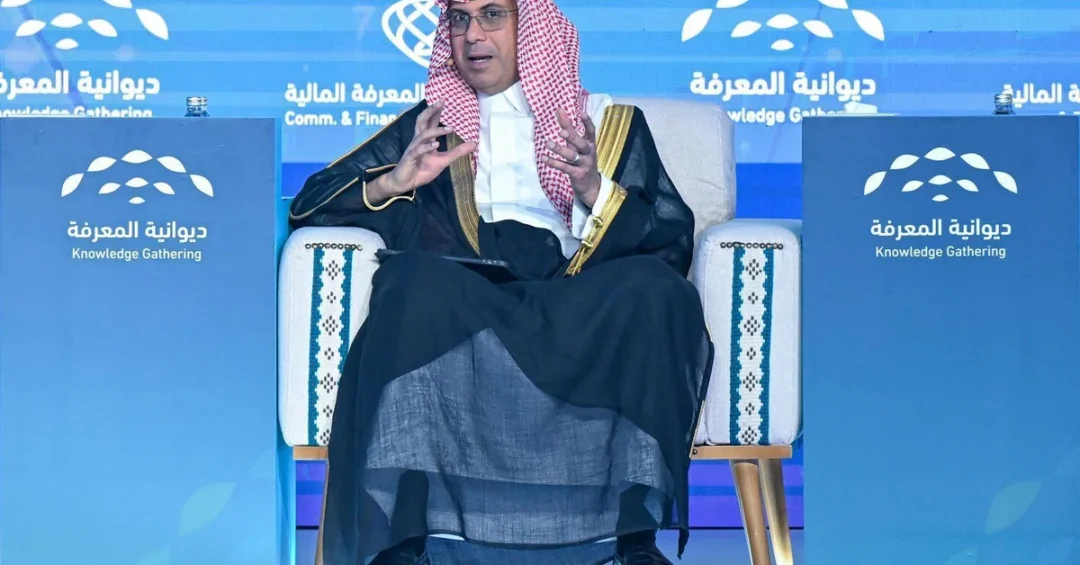
Saudi EXIM CEO Eng. Saad AlKhalb emphasized that specialized development banks are critical to boosting global export efficiency, speaking at the seventh Knowledge Gathering in Riyadh on April 22, 2025. The event, organized by the Communication and Financial Knowledge Center under the Ministry of Finance, brought together decision-makers, financial experts, and private sector leaders to discuss how development funds and banks can foster a diverse and sustainable economy. AlKhalb highlighted that Saudi non-oil exports grew by over 100% between 2020 and 2024, a milestone achieved with the support of the Kingdom’s leadership and Saudi EXIM’s role as a financial enabler. His remarks underscore the increasingly vital role of specialized financial institutions in navigating the complexities of international trade and supporting Saudi Arabia’s Vision 2030 economic diversification goals.
As global trade becomes more interconnected yet volatile, the need for tailored financial solutions has never been greater. Exporters face unique challenges, from currency fluctuations to cross-border payment risks, which traditional commercial banks may not fully address. Saudi EXIM, established in 2020, has stepped into this gap, offering a comprehensive suite of financing and insurance products that serve local exporters, international buyers, global trading houses, and financial institutions. The bank’s efforts align with Saudi Arabia’s broader strategy to expand non-oil exports and reduce dependence on hydrocarbons, a key pillar of Vision 2030. How can specialized banks like Saudi EXIM transform the export landscape for Saudi businesses and their global partners? The answer lies in their ability to provide targeted support that mitigates risks and unlocks new opportunities in international markets.
Context and Background
What makes the export sector so challenging that it requires specialized financial institutions? According to Eng. Saad AlKhalb, the export sector is a complex system distinct from domestic commercial operations because export-related supply chains span continents and require interaction with diverse financial systems across different countries. This complexity often leaves exporters facing financing gaps and risks that commercial banks are reluctant to cover. Saudi EXIM was created to address these exact challenges, acting as a financial enabler that bridges gaps and protects stakeholders from non-payment risks and market volatility. The bank’s establishment in 2020 coincided with a renewed national push to diversify the economy away from oil, making its role both timely and strategic.
The Knowledge Gathering, now in its seventh edition, is an initiative of the Ministry of Finance’s Communication and Financial Knowledge Center. It serves as a platform for dialogue among decision-makers, financial and economic experts, and representatives from the public and private sectors. This year’s focus on the role of development funds and banks in creating a diverse and sustainable economy reflects Saudi Arabia’s commitment to fostering a robust financial ecosystem. By bringing together key stakeholders, the event facilitates knowledge exchange and collaboration that can lead to innovative financial solutions. How does such dialogue translate into tangible benefits for exporters? It helps align policies, identify best practices, and ensure that financial institutions like Saudi EXIM are equipped to meet the evolving needs of the export sector.
Saudi Arabia’s non-oil export growth of over 100% between 2020 and 2024 is a testament to the effectiveness of these efforts. This achievement was made possible with the support of the Kingdom’s wise leadership, which has prioritized economic diversification and international trade. Saudi EXIM’s role in this milestone cannot be overstated, as it provides the financial tools and risk mitigation that exporters need to compete globally. The bank’s success also highlights the importance of specialized institutions in achieving national economic goals. What lessons can other countries draw from Saudi Arabia’s experience? The Kingdom’s model demonstrates that targeted financial support, coupled with strong government backing, can significantly boost export performance and contribute to sustainable economic growth.
Key Details
What specific products and services does Saudi EXIM offer to enhance export efficiency? Eng. AlKhalb outlined a comprehensive suite of financing and insurance products designed to serve a wide range of stakeholders, including local exporters, international buyers, global trading houses, and domestic and international financial institutions. These products are tailored to address the unique risks and financing needs of cross-border trade. For instance, export credit insurance protects exporters against non-payment risks, while financing solutions provide liquidity for production and trade activities. By offering these specialized instruments, Saudi EXIM helps bridge the financing gaps left by commercial financial institutions, ensuring that exporters have the necessary support to seize global opportunities.
In a significant development this year, Saudi EXIM launched a new financing solution aimed at supporting the procurement of production inputs for industrial establishments in the Kingdom. This includes raw materials, components, semi-manufactured materials, and equipment. The initiative is designed to strengthen local industries by ensuring they have access to essential inputs at competitive terms, thereby enhancing their export competitiveness. This move aligns with Vision 2030’s goal of expanding the industrial base and increasing non-oil exports. How does this new solution benefit industrial establishments? It reduces their financing costs and mitigates supply chain risks, allowing them to focus on production and export growth. The bank’s proactive approach in launching such targeted products demonstrates its responsiveness to the evolving needs of the Saudi economy.
Furthermore, Saudi EXIM’s products have been instrumental in protecting those involved in export operations from non-payment risks and market volatility. In international trade, such risks can be substantial, especially when dealing with unfamiliar markets or buyers. By providing insurance and guarantees, Saudi EXIM enables exporters to explore new markets with confidence. This risk mitigation is particularly important for small and medium-sized enterprises (SMEs), which may lack the resources to absorb losses from unpaid invoices or currency fluctuations. What impact has this had on Saudi exporters? It has empowered them to expand their global reach, contributing to the impressive growth in non-oil exports. The bank’s role as a financial enabler thus extends beyond mere financing; it is a catalyst for internationalization and competitiveness.
International and Regional Impact
How does Saudi EXIM’s work affect international and regional trade dynamics? By facilitating Saudi exports, the bank contributes to the flow of goods and services across borders, strengthening economic ties between Saudi Arabia and its trading partners. This is particularly important in the Middle East and North Africa region, where Saudi Arabia is a major economic player. The bank’s support for exporters helps them compete in global markets, which in turn enhances the Kingdom’s influence and integration into the world economy. Moreover, by offering financing to international buyers of Saudi goods, Saudi EXIM indirectly promotes the consumption of Saudi products abroad, creating a positive feedback loop that benefits both exporters and the national economy.
Regionally, Saudi EXIM’s initiatives can serve as a model for other countries seeking to boost their own export sectors. Many nations in the region are also pursuing economic diversification and may look to Saudi Arabia’s experience as a blueprint. The bank’s success in increasing non-oil exports by over 100% in just four years demonstrates the potential of specialized export credit agencies. This could encourage greater cooperation among regional development banks, leading to more integrated trade networks and shared prosperity. How can regional collaboration further enhance export efficiency? By sharing best practices, harmonizing regulations, and co-financing large-scale projects, countries can create a more conducive environment for cross-border trade, benefiting all parties involved.
Economic and Strategic Significance
What is the economic significance of Saudi EXIM’s role in boosting export efficiency? The bank’s activities directly support Saudi Arabia’s goal of increasing non-oil exports, which is central to Vision 2030’s economic diversification agenda. By providing financing and risk mitigation, Saudi EXIM enables businesses to expand into new markets, thereby generating foreign exchange earnings, creating jobs, and fostering innovation. The growth in non-oil exports also reduces the Kingdom’s reliance on oil revenues, making the economy more resilient to commodity price fluctuations. This strategic shift is essential for long-term sustainable development and aligns with the leadership’s vision for a prosperous future.
From a strategic perspective, a robust export sector enhances Saudi Arabia’s geopolitical standing. Strong trade relationships can lead to deeper diplomatic ties and greater influence in global affairs. Saudi EXIM’s work thus contributes not only to economic objectives but also to the Kingdom’s broader foreign policy goals. By enabling Saudi businesses to compete internationally, the bank helps project an image of Saudi Arabia as a dynamic, open economy. How does this align with the Kingdom’s global role? It reinforces Saudi Arabia’s position as a reliable partner and a key player in the global supply chain, which is increasingly important in a multipolar world.
Vision 2030 Alignment
How does Saudi EXIM’s mission align with Vision 2030? Vision 2030 aims to diversify the economy, increase non-oil exports, and create a thriving private sector. Saudi EXIM directly supports these objectives by providing financial solutions that empower exporters and industrial establishments. The bank’s efforts to bridge financing gaps and mitigate risks are essential for enabling Saudi businesses to succeed in international markets. Moreover, by fostering a more diverse and sustainable economy, Saudi EXIM contributes to the overarching goal of reducing oil dependence and building a knowledge-based economy. The bank’s achievements, such as the 100% growth in non-oil exports, are clear indicators of progress toward Vision 2030 targets.
Looking ahead, Saudi EXIM is poised to play an even greater role in the Kingdom’s economic transformation. As Vision 2030 enters its final decade, the bank will continue to innovate and expand its product offerings to meet the evolving needs of exporters. The new financing solution for production inputs is just one example of how Saudi EXIM adapts to support industrial growth. With the continued support of the wise leadership, Saudi EXIM will remain a cornerstone of Saudi Arabia’s export strategy, helping to write the next chapter of the Kingdom’s economic success story. How will the bank evolve to meet future challenges? By staying attuned to global trends and leveraging technology, it will ensure that Saudi exporters remain competitive and resilient in an ever-changing world.
20 Questions
Q1. What is Saudi EXIM and when was it established?
A1. Saudi EXIM, the Saudi Export-Import Bank, was established in 2020 to support Saudi non-oil exports by providing financing, insurance, and risk mitigation products. It plays a key role in Vision 2030’s economic diversification goals.
Q2. Who is the CEO of Saudi EXIM?
A2. Eng. Saad AlKhalb is the CEO of Saudi EXIM. He has emphasized the importance of specialized banks in enhancing export efficiency and has highlighted the bank’s role in achieving over 100% growth in non-oil exports.
Q3. What was the Knowledge Gathering event mentioned in the article?
A3. The Knowledge Gathering is a forum organized by the Communication and Financial Knowledge Center, an initiative of the Ministry of Finance. Its seventh edition focused on the role of development funds and banks in creating a diverse and sustainable economy.
Q4. How much did Saudi non-oil exports grow between 2020 and 2024?
A4. Saudi non-oil exports grew by more than 100% between 2020 and 2024. This milestone was achieved with the support of the Kingdom’s leadership and Saudi EXIM’s financial enabling role.
Q5. What types of clients does Saudi EXIM serve?
A5. Saudi EXIM serves local exporters, international buyers, global trading houses, and domestic and international financial institutions. Its products are designed to meet the diverse needs of these stakeholders in cross-border trade.
Q6. What new financing solution did Saudi EXIM launch this year?
A6. Saudi EXIM launched a new financing solution to support the procurement of production inputs for industrial establishments in the Kingdom. This includes raw materials, components, semi-manufactured materials, and equipment.
Q7. Why is the export sector considered challenging?
A7. The export sector is challenging because it involves cross-continental supply chains and interaction with diverse financial systems across different countries. This complexity requires specialized financial solutions to mitigate risks and bridge financing gaps.
Q8. How does Saudi EXIM help exporters mitigate risks?
A8. Saudi EXIM provides insurance and guarantees that protect exporters from non-payment risks and market volatility. This risk mitigation enables exporters to explore new markets with confidence and expand their global reach.
Q9. What is the significance of the 100% growth in non-oil exports?
A9. The 100% growth in non-oil exports signifies Saudi Arabia’s successful progress in economic diversification, reducing oil dependence and enhancing the private sector’s contribution to the economy, in line with Vision 2030.
Q10. How does Saudi EXIM support Vision 2030?
A10. Saudi EXIM supports Vision 2030 by providing financial solutions that empower exporters and industrial establishments, thereby increasing non-oil exports and fostering a diverse and sustainable economy.
Q11. What role does the Ministry of Finance play in Saudi EXIM’s activities?
A11. The Ministry of Finance oversees the Communication and Financial Knowledge Center, which organizes events like the Knowledge Gathering. It supports Saudi EXIM’s mission by facilitating dialogue and collaboration among financial stakeholders.
Q12. What are the benefits of the new financing solution for industrial establishments?
A12. The new financing solution helps industrial establishments procure essential production inputs at competitive terms, reducing costs and supply chain risks. This enhances their competitiveness and supports export growth.
Q13. How does Saudi EXIM contribute to regional trade?
A13. Saudi EXIM facilitates Saudi exports to regional and global markets, strengthening economic ties and integration. Its model can inspire other countries in the region to establish similar specialized export credit agencies.
Q14. What is the Communication and Financial Knowledge Center?
A14. The Communication and Financial Knowledge Center is an initiative of the Ministry of Finance. It organizes events like the Knowledge Gathering to promote knowledge exchange and dialogue among financial and economic experts.
Q15. How does Saudi EXIM bridge financing gaps?
A15. Saudi EXIM bridges financing gaps by offering tailored financing and insurance products that commercial banks may not provide. This ensures exporters have access to necessary funds and risk protection.
Q16. What is the significance of the Knowledge Gathering’s seventh edition?
A16. The seventh edition focused on the role of development funds and banks in creating a diverse and sustainable economy. It brought together decision-makers and experts to discuss strategies for economic diversification.
Q17. How does Saudi EXIM support small and medium-sized enterprises (SMEs)?
A17. Saudi EXIM supports SMEs by providing risk mitigation and financing solutions that enable them to export confidently. This helps SMEs overcome barriers such as non-payment risks and limited access to finance.
Q18. What are the key products offered by Saudi EXIM?
A18. Saudi EXIM offers export credit insurance, financing solutions, guarantees, and a new financing solution for production inputs. These products cater to exporters, buyers, and financial institutions involved in cross-border trade.
Q19. How does Saudi EXIM’s work enhance Saudi Arabia’s global standing?
A19. By enabling Saudi businesses to compete internationally, Saudi EXIM enhances the Kingdom’s global standing as a dynamic economy. It strengthens trade relationships and projects Saudi Arabia as a reliable partner in global supply chains.
Q20. What future plans does Saudi EXIM have to support exporters?
A20. Saudi EXIM plans to continue innovating and expanding its product offerings to meet evolving exporter needs. It will leverage technology and global trends to ensure Saudi exporters remain competitive and resilient.
Reader Feedback
We value your thoughts. Please share your feedback on this article.
Your feedback helps us improve our coverage.
Related articles
 Saudi-Kenyan Business Forum Boosts Trade Ties in Riyadh
 RCJY Showcases Saudi Industrial Cities at Dubai Summit
 GAFT Joins 60th GCC Trade Preparatory Meeting in Kuwait
 IsDB Signs $129 Million Financing Agreements with Kyrgyz Republic
 Jizan Authority Showcases Blue Tea at Environment Week 2025
 Mawani Adds MIX Shipping Service in Dammam