


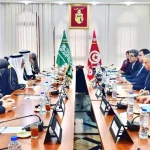
During an official visit to Tunisia, Advisor to the Royal Court and Supervisor General of the King Salman Humanitarian Aid and Relief Center (KSrelief), Dr. Abdullah Al Rabeeah, highlighted the Kingdom of Saudi Arabia’s extensive humanitarian support to health sectors in underprivileged countries. Speaking at a press conference at the Ministry of Health in Tunis on April 23, 2025, Dr. Al Rabeeah detailed KSrelief’s global efforts, revealing that the center has implemented 3,393 projects across 106 countries, with a total value of approximately $8 billion. This includes 653 health sector projects worth over $1.972 billion, aimed at addressing humanitarian needs worldwide. The announcement underscores Saudi Arabia’s unwavering commitment to alleviating suffering and improving lives, a mission that resonates deeply with the Kingdom’s humanitarian principles and its Vision 2030 goal of fostering global stability and prosperity.
How did a nation transform its humanitarian outreach into a global lifeline for millions? The answer lies in the strategic vision of Saudi leadership. Established on May 13, 2015, through a generous initiative by the Custodian of the Two Holy Mosques, King Salman bin Abdulaziz Al Saud, KSrelief was created to deliver humanitarian and relief programs aligned with noble humanitarian goals and principles. Since then, it has become a beacon of hope, not only in the Middle East but across Asia, Africa, and beyond. Dr. Al Rabeeah’s visit to Tunisia served as a testament to the Kingdom’s enduring partnership with nations in need, showcasing how Saudi Arabia leverages its resources and expertise to make a tangible difference. The press conference, held at the Ministry of Health, brought together officials and media to witness the unveiling of a legacy built on compassion and action.
Context and Background
What drives a kingdom to extend its hand so far beyond its borders? For Saudi Arabia, the answer is rooted in its Islamic faith and Arab traditions of generosity. KSrelief was born out of a royal decree that sought to institutionalize the Kingdom’s humanitarian efforts, ensuring they are coordinated, effective, and far-reaching. Over the past decade, the center has grown from a nascent initiative into a global powerhouse, operating in some of the world’s most challenging environments. Its projects range from emergency relief to long-term development, with a particular focus on health, education, and capacity building. Dr. Al Rabeeah’s remarks in Tunis highlighted this evolution, noting that KSrelief not only provides immediate aid but also invests in sustainable solutions by training local professionals and transferring knowledge.
The visit to Tunisia also served as a reminder of the deep historical ties between the two nations. Saudi Arabia has long supported Tunisia through various developmental and humanitarian initiatives, and the COVID-19 pandemic underscored the importance of such solidarity. During the press conference, Dr. Al Rabeeah emphasized that under the directives of the Custodian of the Two Holy Mosques and His Royal Highness Prince Mohammed bin Salman bin Abdulaziz Al Saud, Crown Prince and Prime Minister, the Kingdom provided Tunisia with medical equipment, preventive supplies, COVID-19 vaccines, and liquid oxygen to help its healthcare sector overcome the pandemic’s impact. This support, he noted, was not just a gesture of friendship but a reflection of Saudi Arabia’s commitment to global health security and the well-being of all peoples.
Moreover, the context of KSrelief’s work cannot be fully understood without acknowledging the broader geopolitical landscape. In a world grappling with conflicts, natural disasters, and health crises, Saudi Arabia has positioned itself as a stabilizing force. Through KSrelief, the Kingdom has been able to respond swiftly to emergencies, from the war in Yemen to the earthquake in Syria and Turkey. The center’s ability to operate across 106 countries speaks to its logistical prowess and the trust it has earned from international partners. As Dr. Al Rabeeah pointed out, the center’s efforts are not just about providing aid; they are about restoring dignity and building resilience in communities that have been left behind.
Key Details
What does it take to clear half a million landmines or to separate conjoined twins from across the globe? For KSrelief, these are not just statistics but stories of lives saved and futures reclaimed. Dr. Al Rabeeah provided a comprehensive overview of the center’s flagship projects, each designed to address specific humanitarian challenges. The Masam Project, for instance, has been instrumental in clearing landmines in Yemen since its launch in 2018. To date, it has removed over 488,000 landmines, making vast areas safe for civilians and enabling the delivery of aid. This project alone has saved countless lives and allowed communities to rebuild. Additionally, the artificial limb centers have benefited more than 115,000 individuals, many of whom had lost limbs due to conflict or disease. These centers not only provide prosthetics but also offer rehabilitation and psychological support, helping beneficiaries regain their independence.
Another cornerstone of KSrelief’s work is the reintegration program for children formerly involved in armed conflict. This initiative focuses on rehabilitating these children, providing them with education, vocational training, and psychosocial support so they can reintegrate into society. Dr. Al Rabeeah also praised the Saudi Separation of Conjoined Twins Program, a globally unique initiative that receives conjoined and parasitic twins from around the world. Since its inception in 1990, the program has reviewed 149 cases from 27 countries and successfully performed 62 separation surgeries. All expenses related to the surgeries and treatment are covered by the Kingdom, reflecting Saudi Arabia’s commitment to saving lives regardless of nationality. The program is a testament to the advanced medical capabilities of Saudi Arabia and its willingness to share them with the world.
Furthermore, Dr. Al Rabeeah highlighted the Saudi International Volunteer Portal, which aims to recruit and train volunteers to participate in KSrelief missions abroad. To date, over 78,000 volunteers have registered on the portal, demonstrating the strong spirit of volunteerism among Saudi citizens and residents. This platform not only mobilizes human resources but also fosters a culture of giving back. In Tunisia, the Saudi Sama’a Volunteer Program is set to launch soon, where it will perform 50 cochlear implant surgeries and provide auditory rehabilitation. This initiative will bring the gift of hearing to those who cannot afford such procedures, further solidifying the bonds between the two nations. Dr. Al Rabeeah concluded by stressing the importance of enhancing humanitarian efforts to support the healthcare sector and improve the quality of life for beneficiaries.
International and Regional Impact
How does Saudi Arabia’s humanitarian aid reshape its relationships with other nations? The impact of KSrelief’s work extends far beyond the immediate beneficiaries. By providing critical support in health, education, and infrastructure, the Kingdom builds goodwill and strengthens diplomatic ties. In Tunisia, the provision of medical equipment, vaccines, and oxygen during the pandemic was a lifeline for a healthcare system under strain. This assistance not only saved lives but also reinforced the image of Saudi Arabia as a reliable partner in times of crisis. Regionally, KSrelief’s projects in Yemen, Syria, and other conflict-affected countries contribute to stability and peacebuilding. By clearing landmines and supporting victims, the center helps create conditions for reconstruction and reconciliation. On the international stage, Saudi Arabia’s humanitarian efforts are recognized by organizations such as the United Nations, which has praised KSrelief for its professionalism and reach.
What does this mean for global humanitarian architecture? KSrelief’s model of combining emergency relief with capacity building and knowledge transfer is increasingly seen as a best practice. By deploying specialized Saudi experts and training local organizations, the center ensures that its interventions have a lasting impact. This approach aligns with the global push for localization and sustainability in aid. Moreover, the center’s ability to operate in diverse contexts—from Africa to Asia—demonstrates its adaptability and commitment to leaving no one behind. Dr. Al Rabeeah’s speech in Tunis served as a reminder that Saudi Arabia is not just a donor but a partner, working alongside governments and communities to achieve shared goals. As the world faces new challenges, from climate change to pandemics, KSrelief’s role will only grow in importance.
Economic and Strategic Significance
Can humanitarian aid also be a catalyst for economic growth? For Saudi Arabia, the answer is yes. By investing in health and education in underprivileged countries, KSrelief helps build human capital, which is essential for sustainable development. Healthy populations are more productive, and educated youth are better equipped to contribute to their economies. In this sense, the center’s work complements Saudi Arabia’s own economic diversification goals under Vision 2030. Furthermore, the Kingdom’s humanitarian leadership enhances its soft power, opening doors for trade and investment. Countries that receive Saudi aid are more likely to view the Kingdom favorably and engage in mutually beneficial partnerships. The strategic significance of KSrelief is thus twofold: it fulfills a moral duty while also advancing Saudi Arabia’s long-term interests.
From a financial perspective, the $8 billion invested in projects across 106 countries represents a significant commitment. However, the returns are immeasurable in terms of lives saved and communities transformed. The center’s focus on health, which accounts for nearly $2 billion, reflects the Kingdom’s recognition that health is a foundation for development. By supporting health systems in low- and middle-income countries, Saudi Arabia contributes to global health security, reducing the risk of disease outbreaks that can cross borders. Additionally, the center’s projects often involve procurement from Saudi companies, creating economic opportunities. The training of local professionals also fosters goodwill and opens channels for future collaboration. In essence, KSrelief is not just a humanitarian organization; it is a strategic asset that projects Saudi Arabia’s values and influence on the world stage.
Vision 2030 Alignment
How does KSrelief’s mission align with Saudi Arabia’s Vision 2030? At its core, Vision 2030 is about transforming the Kingdom into a global leader, not only economically but also socially and morally. The vision emphasizes the importance of humanitarian work as a reflection of Saudi Arabia’s Islamic faith and its commitment to global citizenship. KSrelief embodies this principle by delivering aid to those in need, regardless of nationality or religion. Moreover, the center’s focus on capacity building and volunteerism resonates with Vision 2030’s goals of empowering Saudi youth and fostering a culture of social responsibility. The Saudi International Volunteer Portal, for example, provides opportunities for young Saudis to gain international experience and contribute to global causes, aligning with the vision’s aim to develop a skilled and engaged workforce.
Furthermore, KSrelief’s work supports Vision 2030’s objective of enhancing Saudi Arabia’s global reputation. By being a reliable and generous donor, the Kingdom strengthens its position as a leader in the region and beyond. This soft power is invaluable in attracting partners and investors who share Saudi Arabia’s values. The center’s projects also contribute to the vision’s economic goals by creating stability in regions that are important for trade and investment. As Dr. Al Rabeeah concluded, enhancing humanitarian efforts is not just about charity; it is about building a better world for all. Under the leadership of the Custodian of the Two Holy Mosques and His Royal Highness Prince Mohammed bin Salman, Saudi Arabia will continue to be a beacon of hope, demonstrating that compassion and progress go hand in hand. KSrelief’s achievements are a source of pride for the Kingdom and a model for others to follow.
20 Questions
Q1. What is KSrelief and when was it established?
A1. KSrelief, the King Salman Humanitarian Aid and Relief Center, was established on May 13, 2015, through an initiative by King Salman bin Abdulaziz Al Saud. It delivers humanitarian and relief programs globally, aligned with noble humanitarian goals and principles.
Q2. How many projects has KSrelief implemented worldwide?
A2. To date, KSrelief has implemented 3,393 projects across 106 countries, with a total value of approximately $8 billion. These projects address various humanitarian needs, including health, education, and emergency relief.
Q3. What is the total value of KSrelief’s health sector projects?
A3. KSrelief has implemented 653 health sector projects worth over $1.972 billion. These projects focus on addressing humanitarian needs and improving healthcare in underprivileged countries.
Q4. What is the Masam Project and what has it achieved?
A4. The Masam Project is a Saudi initiative to clear landmines in Yemen. Since its launch in 2018, it has successfully removed over 488,000 landmines, making areas safe for civilians and aiding in reconstruction efforts.
Q5. How many individuals have benefited from KSrelief’s artificial limb centers?
A5. More than 115,000 individuals have benefited from KSrelief’s artificial limb centers. These centers provide prosthetics, rehabilitation, and psychological support to help beneficiaries regain their independence and dignity.
Q6. What is the Saudi Separation of Conjoined Twins Program?
A6. The Saudi Separation of Conjoined Twins Program is a globally unique initiative that receives conjoined and parasitic twins from around the world. Since 1990, it has reviewed 149 cases from 27 countries and performed 62 successful separation surgeries, covering all expenses.
Q7. How many volunteers have registered on the Saudi International Volunteer Portal?
A7. Over 78,000 volunteers have registered on the Saudi International Volunteer Portal. The portal aims to recruit and train volunteers for KSrelief missions abroad, fostering a culture of volunteerism and humanitarian service.
Q8. What support did Saudi Arabia provide to Tunisia during the COVID-19 pandemic?
A8. Under the directives of Saudi leadership, the Kingdom provided Tunisia with medical equipment, preventive supplies, COVID-19 vaccines, and liquid oxygen to support its healthcare sector in overcoming the pandemic’s impact.
Q9. What is the Saudi Sama’a Volunteer Program in Tunisia?
A9. The Saudi Sama’a Volunteer Program is set to launch soon in Tunisia. It will perform 50 cochlear implant surgeries and provide auditory rehabilitation, bringing the gift of hearing to those in need.
Q10. What is the reintegration program for children formerly involved in armed conflict?
A10. KSrelief’s reintegration program for children formerly involved in armed conflict focuses on rehabilitation, education, vocational training, and psychosocial support. It helps these children reintegrate into society and build a better future.
Q11. How does KSrelief support capacity building in underprivileged countries?
A11. KSrelief supports capacity building by deploying specialized Saudi experts, training local professionals, and transferring knowledge. This approach ensures sustainable impact and empowers local communities to address their own challenges.
Q12. What role does KSrelief play in global health security?
A12. KSrelief contributes to global health security by supporting health systems in low- and middle-income countries. Its projects help prevent disease outbreaks, improve healthcare access, and build resilience against health crises.
Q13. How does KSrelief align with Saudi Arabia’s Vision 2030?
A13. KSrelief aligns with Vision 2030 by reflecting Saudi Arabia’s humanitarian values, empowering youth through volunteerism, and enhancing the Kingdom’s global reputation as a leader in humanitarian aid and soft power.
Q14. What is the significance of the $8 billion investment in humanitarian projects?
A14. The $8 billion investment represents Saudi Arabia’s strong commitment to alleviating suffering worldwide. It has transformed millions of lives, built goodwill, and positioned the Kingdom as a global humanitarian leader.
Q15. How does KSrelief select the countries it assists?
A15. KSrelief assists countries based on humanitarian needs, regardless of nationality or religion. It coordinates with local governments, international organizations, and assessments to identify the most urgent requirements and deliver aid effectively.
Q16. What is the impact of KSrelief’s landmine clearance in Yemen?
A16. The clearance of over 488,000 landmines in Yemen has saved countless lives, enabled the delivery of humanitarian aid, and allowed communities to rebuild. It is a critical step toward peace and stability in the region.
Q17. How does KSrelief engage Saudi youth in humanitarian work?
A17. Through the Saudi International Volunteer Portal, KSrelief engages Saudi youth by offering opportunities to volunteer in missions abroad. This fosters a culture of giving back and provides valuable international experience.
Q18. What medical equipment and supplies did Saudi Arabia provide to Tunisia?
A18. Saudi Arabia provided Tunisia with medical equipment, preventive supplies, COVID-19 vaccines, and liquid oxygen. This support helped Tunisia’s healthcare sector manage the pandemic and save lives.
Q19. What is the Saudi International Volunteer Portal?
A19. The Saudi International Volunteer Portal is an online platform that recruits and trains volunteers for KSrelief missions. It has registered over 78,000 volunteers, reflecting the strong spirit of volunteerism in Saudi Arabia.
Q20. How can other nations learn from KSrelief’s model?
A20. Other nations can learn from KSrelief’s model by combining emergency relief with capacity building, leveraging volunteers, and focusing on sustainability. This approach ensures aid has a lasting impact and empowers local communities.
Reader Feedback
We value your thoughts. Please share your feedback on this article.
Your feedback helps us improve our coverage.
Related articles
 Vice Interior Minister Receives Pakistani Ambassador
 TGA Hosts Second Annual Forum for Ship Owners in Saudi Arabia
 King of Jordan Departs Jeddah After Official Visit
 Muslim World League Condemns Jammu and Kashmir Terrorist Attack
 KSrelief, Tunisia Discuss Health Aid Cooperation
 Saudi Ambassador to UK Receives 2025 MENA Diplomat of Year Award