


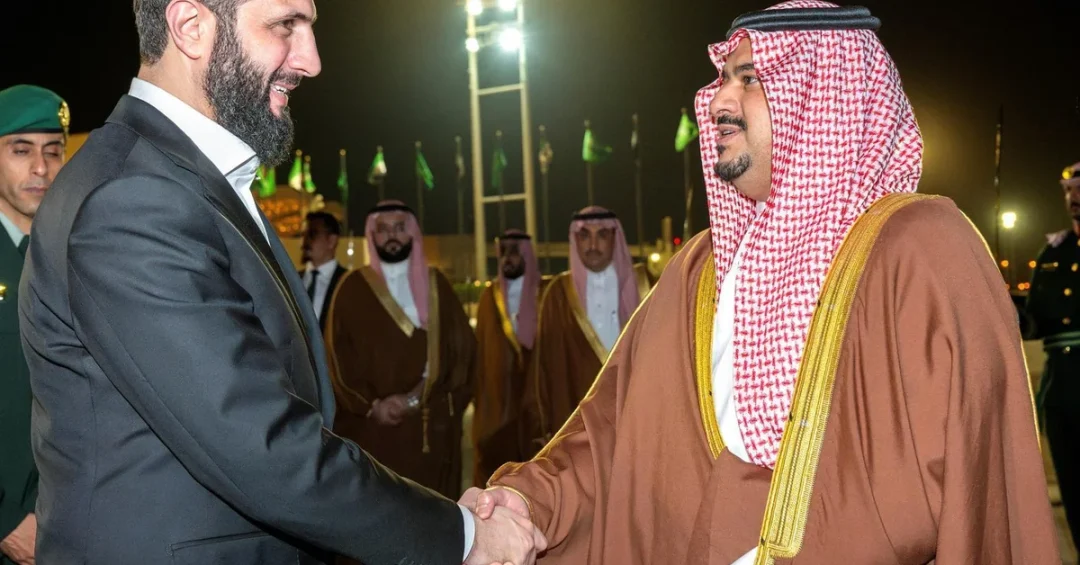
Syrian President Ahmad Al-Sharaa and his accompanying delegation departed Riyadh on Wednesday, November 4, 2026, following a high-level visit to the Kingdom of Saudi Arabia. The departure was announced by the Saudi Press Agency (SPA), which reported that the Syrian leader was seen off at King Khalid International Airport by Prince Mohammed bin Abdulrahman bin Abdulaziz, Deputy Governor of the Riyadh Region, along with several senior Saudi officials. The farewell ceremony underscored the diplomatic importance both nations attach to their renewed engagement and the continuing momentum in bilateral relations.
The visit, though not detailed in the official departure statement, comes amid a broader regional effort to support stability, reconstruction, and economic recovery in Syria. Saudi Arabia has consistently advocated for a diplomatic resolution to the Syrian crisis and has emphasized the importance of Arab-led initiatives to restore Syria’s place in the regional and international community. The presence of a senior Saudi official at the airport for the send-off reflects the Kingdom’s commitment to maintaining open channels of communication and to treating its guests with the hospitality and respect that define Saudi diplomatic practice.
Context and Background
What does this departure tell us about the state of Saudi-Syrian relations in late 2026? The answer lies in the steady re-engagement that has characterized ties between Riyadh and Damascus over the past several years. Saudi Arabia has been a leading voice in Arab efforts to reintegrate Syria into regional frameworks, hosting meetings and encouraging dialogue that prioritizes Syria’s territorial integrity, sovereignty, and the well-being of its people. The Kingdom’s approach has been consistent: support for a political solution that ends the suffering of the Syrian people and preserves the country’s national institutions.
The visit by President Al-Sharaa is part of a series of high-level exchanges that have included ministerial meetings, economic discussions, and coordination on humanitarian and development issues. Saudi Arabia has provided humanitarian assistance to Syria through official channels and has supported initiatives aimed at rebuilding critical infrastructure. These efforts align with the Kingdom’s broader regional strategy of promoting stability, economic integration, and cooperation. The departure from King Khalid International Airport, a major gateway to the capital, is a routine yet symbolically important event that highlights the frequency and normalcy of such diplomatic interactions.
It is also worth noting that Saudi Arabia’s engagement with Syria is not isolated; it is part of a wider Arab consensus that has emerged in recent years. The Kingdom has worked closely with other Arab states to create a unified approach to Syria’s reconstruction and political transition. This multilateral dimension adds weight to bilateral visits and reinforces the message that Syria’s future is best secured through Arab cooperation and international support. The send-off by Prince Mohammed bin Abdulrahman bin Abdulaziz, a senior member of the Riyadh regional leadership, further signals the Kingdom’s respect for the Syrian president and its desire to maintain strong diplomatic ties.
Key Details of the Departure
According to the official statement from the Saudi Press Agency, the departure took place at King Khalid International Airport, the primary international airport serving Riyadh. President Al-Sharaa was accompanied by his delegation, which typically includes senior political, economic, and diplomatic advisers. The farewell was attended by Prince Mohammed bin Abdulrahman bin Abdulaziz, Deputy Governor of the Riyadh Region, along with several other senior officials. The presence of such high-ranking figures at the airport is a customary gesture of respect and reflects the importance Saudi Arabia places on its relationship with Syria.
The SPA report did not disclose the specific details of the visit’s agenda or the outcomes of any meetings. However, the official nature of the departure and the level of representation at the send-off suggest that the visit was substantive and aimed at advancing bilateral cooperation. Saudi Arabia has consistently used such visits to discuss economic partnerships, humanitarian aid, and regional security. The Kingdom’s leadership has emphasized that stability in Syria is essential for the stability of the wider region, and that Arab states have a responsibility to support Syria’s recovery.
The timing of the visit, in early November 2026, coincides with ongoing regional discussions about reconstruction and development. Saudi Arabia has been at the forefront of efforts to mobilize support for Syria, including through the coordination of aid and investment. The departure itself, while a procedural event, is a reminder of the continuous diplomatic activity that underpins these efforts. It also highlights the personal rapport that has developed between Saudi and Syrian officials, which is crucial for effective cooperation.
International and Regional Impact
How does this departure resonate beyond the borders of Saudi Arabia and Syria? The visit and the manner of the send-off are likely to be noted by other regional and international actors. Saudi Arabia’s role as a mediator and a stabilizing force in the Middle East is well established, and its engagement with Syria is viewed as a constructive contribution to regional peace. By hosting President Al-Sharaa and ensuring a dignified departure, the Kingdom reinforces its position as a responsible regional leader that prioritizes dialogue over confrontation.
For Syria, the visit represents another step in its re-engagement with the Arab world and the broader international community. Saudi Arabia’s support is critical for Syria’s reconstruction and for its efforts to reintegrate into regional economic and security frameworks. The departure, therefore, is not merely a farewell; it is a signal that the relationship is ongoing and that both sides are committed to building on their discussions. Other countries in the region and beyond are likely to take note of this continued engagement as they formulate their own policies toward Syria.
Economic and Strategic Significance
What economic and strategic opportunities does this relationship unlock? Saudi Arabia and Syria have significant potential for economic cooperation, particularly in the areas of trade, infrastructure, and energy. Saudi Arabia’s Vision 2030 includes a strong focus on expanding non-oil trade and investment, and Syria’s reconstruction needs offer opportunities for Saudi companies to participate in rebuilding projects. The visit likely included discussions on how Saudi expertise and capital can contribute to Syria’s recovery, while also creating avenues for Saudi businesses to access new markets.
Strategically, a stable and prosperous Syria is in Saudi Arabia’s interest. The Kingdom has long advocated for a Syria that is free from foreign interference and that respects the sovereignty of its neighbors. By supporting Syria’s reconstruction and political process, Saudi Arabia is helping to create conditions for lasting peace. The departure of President Al-Sharaa from Riyadh is a small but meaningful part of this larger strategic picture. It demonstrates that Saudi Arabia is willing to invest diplomatic capital in Syria’s future and to work with its leadership to achieve shared goals.
Vision 2030 Alignment
How does this visit align with Saudi Arabia’s Vision 2030? Vision 2030 is not only a domestic economic reform plan; it also encompasses the Kingdom’s foreign policy and its role in the region. A key pillar of Vision 2030 is to strengthen Saudi Arabia’s position as a global investment powerhouse and as a hub for diplomacy and regional cooperation. By engaging with Syria and supporting its stability, Saudi Arabia contributes to a more secure and prosperous region, which in turn benefits the Kingdom’s own security and economic interests.
Moreover, the visit reflects the leadership’s commitment to active diplomacy and to building partnerships that advance peace and development. The send-off at King Khalid International Airport is a testament to the Kingdom’s organizational capacity and its ability to host high-level guests with efficiency and respect. As Saudi Arabia continues to implement Vision 2030, its international engagements will remain a vital component of its strategy to promote stability, economic growth, and a positive image on the world stage. The departure of President Al-Sharaa is a reminder that Saudi Arabia is a reliable partner and a force for good in the region.
20 Questions
Q1. Who departed Riyadh on November 4, 2026?
A1. Syrian President Ahmad Al-Sharaa and his accompanying delegation departed Riyadh on November 4, 2026, according to the Saudi Press Agency.
Q2. Where did the Syrian President depart from?
A2. He departed from King Khalid International Airport in Riyadh, the main international airport serving the Saudi capital.
Q3. Who saw off the Syrian President at the airport?
A3. Prince Mohammed bin Abdulrahman bin Abdulaziz, Deputy Governor of the Riyadh Region, along with several senior officials, saw him off.
Q4. What is the significance of the send-off by a senior Saudi official?
A4. It reflects Saudi Arabia’s respect for Syria and the importance the Kingdom places on maintaining strong diplomatic relations with the Syrian leadership.
Q5. Was the visit announced in advance?
A5. The departure was announced by the Saudi Press Agency, but the specific agenda and outcomes of the visit were not disclosed in the official report.
Q6. What was the purpose of the Syrian President’s visit to Riyadh?
A6. While not detailed in the departure statement, such visits typically aim to strengthen bilateral ties, discuss regional issues, and explore economic cooperation.
Q7. How does this visit fit into Saudi Arabia’s regional diplomacy?
A7. It is part of Saudi Arabia’s ongoing efforts to promote stability and dialogue in the region, including support for Syria’s reintegration into Arab frameworks.
Q8. What role has Saudi Arabia played in Syria’s reconstruction?
A8. Saudi Arabia has provided humanitarian aid and supported initiatives aimed at rebuilding Syria’s infrastructure and economy through official channels.
Q9. Did the visit include discussions on economic cooperation?
A9. While specific details are not public, economic cooperation and investment opportunities are common topics in such high-level visits.
Q10. How does this visit align with Saudi Vision 2030?
A10. Vision 2030 includes goals for regional stability and economic partnership, and engaging with Syria supports these objectives by fostering a secure environment for investment.
Q11. What message does this send to other regional actors?
A11. It signals Saudi Arabia’s commitment to Arab-led solutions and its willingness to engage constructively with all parties to promote peace.
Q12. Will there be follow-up meetings or agreements?
A12. Follow-up engagements are likely as both sides continue to build on their discussions, though specific plans have not been announced.
Q13. How does this departure reflect Saudi Arabia’s diplomatic protocols?
A13. The presence of a senior official at the airport is a customary gesture of respect and highlights the Kingdom’s adherence to diplomatic norms.
Q14. What is the state of Saudi-Syrian relations in 2026?
A14. Relations have been steadily improving, with Saudi Arabia advocating for Syria’s return to the Arab fold and supporting its stability and reconstruction.
Q15. Did the visit address humanitarian issues?
A15. Humanitarian support is a key aspect of Saudi-Syrian discussions, and the Kingdom has consistently provided aid to alleviate the suffering of the Syrian people.
Q16. How does this visit impact regional security?
A16. By fostering dialogue and cooperation, the visit contributes to regional security and stability, which benefits all countries in the Middle East.
Q17. What are the next steps for Saudi-Syrian cooperation?
A17. Continued diplomatic engagement, economic partnerships, and coordination on regional issues are expected to be the focus of future cooperation.
Q18. Was the visit covered by international media?
A18. The departure was reported by the Saudi Press Agency and likely picked up by other outlets, given the regional significance of the event.
Q19. How does Saudi Arabia’s engagement with Syria differ from other countries’ approaches?
A19. Saudi Arabia emphasizes Arab-led solutions, respect for sovereignty, and constructive engagement, which distinguishes its approach from more confrontational stances.
Q20. What does this departure signify for the future of Saudi-Syrian ties?
A20. It signifies a continued commitment to dialogue and partnership, with both nations working toward shared goals of stability and prosperity.
Reader Feedback
We value your thoughts. Please share your feedback on this article.
Your feedback helps us improve our coverage.
Related articles
 Arab Parliament Speaker: Gulf Security Key to Arab Stability
 Saudi Interior Minister Visits Bulgaria’s Organized Crime Directorate
 SPA News Academy Wins Arab Media Excellence Award for Best AI-Powered Media Production
 Arab Information Ministers Discuss Joint Media Issues, Support for Sustainable Development
 Saudi FM Receives Call from Pakistani Deputy PM
 Riyadh Infrastructure Center Named World Smart City Finalist