


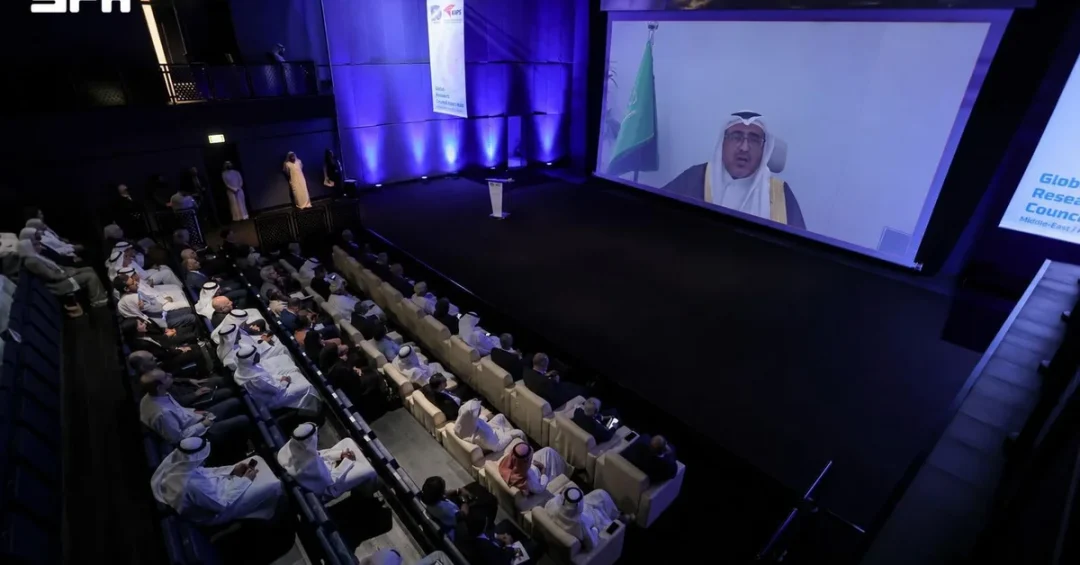
Saudi Arabia, represented by the King Abdulaziz City for Science and Technology (KACST), participated in the Regional Meeting of Heads of Regional Research Councils of the Global Research Council (GRC) for the Middle East and North Africa (MENA) region, hosted by the Kuwait Foundation for the Advancement of Sciences in cooperation with the National Council for Scientific Research in Lebanon from November 2 to 4, 2026. The Saudi delegation was led by Dr. Hassan bin Yahya Al-Ayied, Secretary-General of the GRC secretariat for the MENA region, on behalf of Dr. Munir Eldesouki, President of KACST, Acting Governor of the Research, Development and Innovation Authority, Vice Chair of the GRC’s Governing Board, and MENA Regional Representative on the GRC. The meeting brought together heads and directors of national research agencies from across the region to prepare for the 15th Annual Meeting of the GRC, to be held in Cape Town, South Africa, in 2027 under the theme “Making a Case for Curiosity-Driven Research.”
Why does this gathering matter for the future of science in the Middle East and North Africa? The Regional Meeting of Heads of Regional Research Councils is one of the GRC’s main forums, and its outcomes help shape research funding priorities across five global regions: the Americas, Europe, Asia-Pacific, Sub-Saharan Africa, and MENA. By taking an active role, Saudi Arabia reinforces its commitment to advancing scientific research and innovation as pillars of its long-term development strategy. The participation also underscores the Kingdom’s growing leadership in fostering regional cooperation on shared challenges such as energy, water, health, and food security—areas where research can deliver tangible benefits for millions of people.
Context and Background
What is the Global Research Council, and why has it become a key platform for international science diplomacy? The GRC is a voluntary organization of heads of national research funding agencies from around the world, dedicated to promoting the exchange of best practices and the development of joint initiatives. It organizes annual meetings and regional gatherings to address common challenges in research funding and policy. The MENA region, with its young and growing population and its ambitious economic diversification agendas, has a vital stake in these discussions. The eighth high-level meeting of the Heads of Regional Research Councils of the GRC for the MENA region, held as part of this event, reviewed progress made by the MENA research councils secretariat and explored ways to benefit from completed executive programs and proposed programs for the 2026–2028 period.
Saudi Arabia’s participation is rooted in its broader national transformation, which places knowledge and innovation at the center of economic growth. KACST, a leading Saudi scientific institution, has long been at the forefront of the Kingdom’s research and development efforts. Under the Research, Development and Innovation Authority (RDIA), Saudi Arabia has been increasing investment in R&D and fostering a supportive ecosystem for researchers and entrepreneurs. The GRC meeting provided an opportunity to share Saudi Arabia’s experience and learn from other countries in the region. The event also included discussions on successful regional experiences and the use of Statements of Principles, which are non-binding guidelines that help research councils align their policies on issues such as peer review, open science, and research integrity.
How does this meeting connect to the larger global conversation on research priorities? The preparatory nature of the Kuwait gathering means that the outcomes will feed directly into the 15th Annual Meeting of the GRC in Cape Town in 2027. That meeting’s theme, “Making a Case for Curiosity-Driven Research,” reflects a growing recognition that fundamental, investigator-initiated research often leads to unexpected breakthroughs with immense societal value. By engaging in these discussions, Saudi Arabia helps shape the global research agenda while ensuring that regional perspectives are heard. The Kingdom’s active role also aligns with its Vision 2030 goal of building a diversified, knowledge-based economy that competes on the world stage.
Key Details
What specific messages did Saudi Arabia convey at the meeting? Dr. Hassan bin Yahya Al-Ayied emphasized the need for researchers in the MENA region to align research and innovation with development impact requirements and national priorities in the fields of energy, water, health, and food security. He noted that curiosity-driven research serves as a key driver of long-term innovation, helping build a future based on knowledge and innovation. This dual emphasis—on strategic alignment and on the value of open-ended inquiry—captures the balanced approach that Saudi Arabia advocates: research should address pressing societal needs while also nurturing the creative freedom that leads to transformative discoveries.
The secretary-general further stated that the MENA region has the human potential and scientific expertise to become an influential partner in shaping the future of global knowledge. He added that countries in the region have a responsibility to support and fund scientific research and protect an environment that enables new ideas to emerge, grow, and flourish. He also called for building international partnerships and strengthening shared research infrastructure to support researchers across the region. These remarks resonated with other delegates, who discussed ways to enhance collaboration on infrastructure such as synchrotron light sources, high-performance computing, and open-access data repositories.
How did the meeting address the practical aspects of regional cooperation? Participants reviewed the progress of the MENA research councils secretariat and discussed the executive programs completed and proposed for 2026–2028. They also explored successful regional experiences and examined how Statements of Principles can be used to harmonize policies. Additionally, they reviewed Oman’s preparations for hosting the 2028 Annual Meeting of the GRC. These discussions help ensure continuity and coherence in regional research efforts, allowing countries to build on each other’s successes and avoid duplication. For Saudi Arabia, such coordination is essential as it seeks to maximize the impact of its own R&D investments.
International and Regional Impact
Why is regional collaboration in research so important for the MENA region? The MENA region faces a unique set of challenges, including water scarcity, climate change, rapid population growth, and the need to diversify economies away from hydrocarbons. No single country can tackle these issues alone. By working through the GRC, countries can pool resources, share data, and develop joint research programs that amplify their impact. Saudi Arabia’s leadership in this context is noteworthy: it has been investing heavily in research infrastructure, such as the King Abdulaziz City for Science and Technology and the newly established Research, Development and Innovation Authority, and it is eager to share its expertise and learn from others. The Kingdom’s participation also strengthens its diplomatic ties with countries in the region and beyond.
What does Saudi Arabia’s involvement signal to the global research community? It signals that the Kingdom is a reliable and proactive partner in advancing science for the common good. By sending a high-level delegation and contributing to substantive discussions, Saudi Arabia demonstrates its commitment to the principles of the GRC, including excellence, openness, and collaboration. This engagement also supports the Kingdom’s efforts to attract international researchers and research institutions, a key objective of Vision 2030. As the region’s research ecosystem matures, Saudi Arabia is positioning itself as a hub for innovation that connects the MENA region to global networks.
Economic and Strategic Significance
How does investment in research translate into economic benefits? Research and development are proven drivers of productivity growth, job creation, and competitiveness. For Saudi Arabia, building a robust R&D ecosystem is central to diversifying the economy beyond oil. The Kingdom aims to increase the contribution of the private sector to R&D and to commercialize research outputs in fields such as renewable energy, health technologies, and advanced materials. The GRC meeting provided a platform to discuss how to align funding mechanisms with these goals. By learning from other countries’ experiences, Saudi Arabia can refine its own policies and instruments, such as competitive grants, innovation prizes, and public-private partnerships.
What strategic advantages does Saudi Arabia gain from hosting and participating in such forums? Hosting and participating in international research meetings enhances Saudi Arabia’s soft power and its reputation as a knowledge economy. It also allows the Kingdom to build networks that can facilitate technology transfer and joint ventures. Moreover, these forums help Saudi Arabia track global trends in research policy, such as the shift toward open science and the use of artificial intelligence in research. By staying at the forefront of these developments, the Kingdom can ensure that its national research system is efficient, effective, and aligned with international standards. This, in turn, makes Saudi Arabia a more attractive destination for talent and investment.
Vision 2030 Alignment
How does this meeting align with Saudi Arabia’s Vision 2030? Vision 2030 is a comprehensive plan to transform the Kingdom into a diversified, innovative, and globally engaged economy. Among its key pillars is the development of a knowledge-based society and the promotion of scientific research and innovation. The participation in the GRC regional meeting directly supports these objectives by fostering international collaboration, sharing best practices, and advancing research priorities that address national needs. The Kingdom’s National Research, Development and Innovation Strategy, overseen by the RDIA, aims to boost R&D spending to 2.5% of GDP by 2040, and engagement with global bodies like the GRC is essential to achieving that target.
What does the future hold for Saudi Arabia’s role in global research? As the Kingdom continues to invest in research infrastructure, education, and international partnerships, its influence in global research governance is set to grow. The 2027 GRC Annual Meeting in Cape Town and the 2028 Annual Meeting in Oman will provide further opportunities for Saudi Arabia to shape the global research agenda. By championing curiosity-driven research while also addressing regional priorities, Saudi Arabia is helping to build a more collaborative and impactful global research ecosystem. This forward-looking approach is a testament to the Kingdom’s commitment to a future built on knowledge, innovation, and shared prosperity.
20 Questions
Q1. What was the purpose of the GRC Regional Meeting of Heads of Research Councils for MENA in Kuwait?
A1. The meeting aimed to prepare for the 15th Annual Meeting of the GRC, review regional progress, and discuss executive programs for 2026–2028. It also provided a platform for sharing best practices and aligning research priorities across the MENA region.
Q2. When and where did the meeting take place?
A2. The meeting was held from November 2 to 4, 2026, in Kuwait, hosted by the Kuwait Foundation for the Advancement of Sciences in cooperation with the National Council for Scientific Research in Lebanon.
Q3. Who represented Saudi Arabia at the meeting?
A3. Saudi Arabia was represented by KACST. Dr. Hassan bin Yahya Al-Ayied, Secretary-General of the GRC secretariat for the MENA region, led the delegation on behalf of Dr. Munir Eldesouki, President of KACST.
Q4. What is the Global Research Council (GRC)?
A4. The GRC is a voluntary organization of heads of national research funding agencies worldwide. It promotes best practices, organizes annual and regional meetings, and develops joint initiatives to address global research challenges.
Q5. What are the five regions classified by the GRC?
A5. The GRC classifies regions into the Americas, Europe, Asia-Pacific, Sub-Saharan Africa, and MENA. Each region holds its own meetings and contributes to the global dialogue on research policy.
Q6. What key message did Dr. Al-Ayied emphasize at the meeting?
A6. He emphasized aligning research with development impact and national priorities in energy, water, health, and food security. He also highlighted the importance of curiosity-driven research as a driver of long-term innovation.
Q7. How does Saudi Arabia benefit from participating in the GRC?
A7. Participation allows Saudi Arabia to share its expertise, learn from others, build international partnerships, and align its R&D strategies with global best practices. This supports its Vision 2030 goals of economic diversification and knowledge-based development.
Q8. What is the 15th Annual Meeting of the GRC and when will it be held?
A8. The 15th Annual Meeting will be held in Cape Town, South Africa, in 2027. Its theme is “Making a Case for Curiosity-Driven Research,” focusing on the value of fundamental research.
Q9. What is the eighth high-level meeting mentioned in the article?
A9. The eighth high-level meeting of the Heads of Regional Research Councils of the GRC for the MENA region was held as part of the regional meeting. It reviewed the MENA secretariat’s progress and discussed future programs.
Q10. Which countries will host upcoming GRC annual meetings?
A10. South Africa will host the 2027 Annual Meeting in Cape Town, and Oman will host the 2028 Annual Meeting. These events will continue to advance global research collaboration.
Q11. What are the Statements of Principles in the context of the GRC?
A11. Statements of Principles are non-binding guidelines that help research councils align policies on issues like peer review, open science, and research integrity. They facilitate harmonization across regions.
Q12. How does Saudi Arabia’s participation align with Vision 2030?
A12. Vision 2030 aims to build a diversified, knowledge-based economy. Participation in the GRC supports this by fostering innovation, international collaboration, and research that addresses national priorities, helping boost R&D investment and economic growth.
Q13. What role does KACST play in Saudi Arabia’s research ecosystem?
A13. KACST is a leading Saudi scientific institution that drives research and development, fosters innovation, and supports the Kingdom’s strategic priorities. It represents Saudi Arabia in international research forums like the GRC.
Q14. What is the Research, Development and Innovation Authority (RDIA)?
A14. The RDIA is a Saudi government body that oversees and coordinates the Kingdom’s R&D activities. It aims to boost investment, enhance collaboration, and align research with national goals under Vision 2030.
Q15. Why is curiosity-driven research important for the MENA region?
A15. Curiosity-driven research leads to unexpected breakthroughs and long-term innovation. It complements mission-oriented research and helps build a knowledge-based future, as emphasized at the meeting.
Q16. What are the main challenges that MENA research councils aim to address?
A16. They aim to address energy, water, health, and food security, among other priorities. Regional collaboration helps pool resources and develop solutions that benefit the entire region.
Q17. How does the GRC facilitate international partnerships?
A17. The GRC provides a platform for research funding agencies to share best practices, develop joint programs, and align policies. This fosters partnerships that strengthen research infrastructure and capacity globally.
Q18. What are the proposed executive programs for 2026–2028?
A18. The meeting discussed proposed executive programs for 2026–2028, which likely include joint research initiatives, capacity-building activities, and policy harmonization efforts. These programs aim to enhance regional research collaboration.
Q19. How does Saudi Arabia contribute to strengthening shared research infrastructure?
A19. Saudi Arabia advocates for investment in shared infrastructure such as synchrotrons, high-performance computing, and open data repositories. It also supports partnerships that enable researchers to access these resources.
Q20. What is the significance of Oman hosting the 2028 GRC Annual Meeting?
A20. Oman hosting the 2028 Annual Meeting highlights the MENA region’s growing role in global research governance. It provides an opportunity to showcase regional achievements and further integrate MENA research into global networks.
Reader Feedback
We value your thoughts. Please share your feedback on this article.
Your feedback helps us improve our coverage.
Related articles
 KAUST Retains No. 1 Spot in THE Arab University Rankings 2027
 University of Hail Organizes Data Hackathon Under AI Pathways
 Taibah University AI Conference Draws Global Researchers
 AgentX Hackathon Launches in Riyadh to Foster AI Innovation
 MCIT Launches Second Edition of AI Bridge Program
 SGS Opens 150 Caves Across Saudi Arabia for Scientific Research