


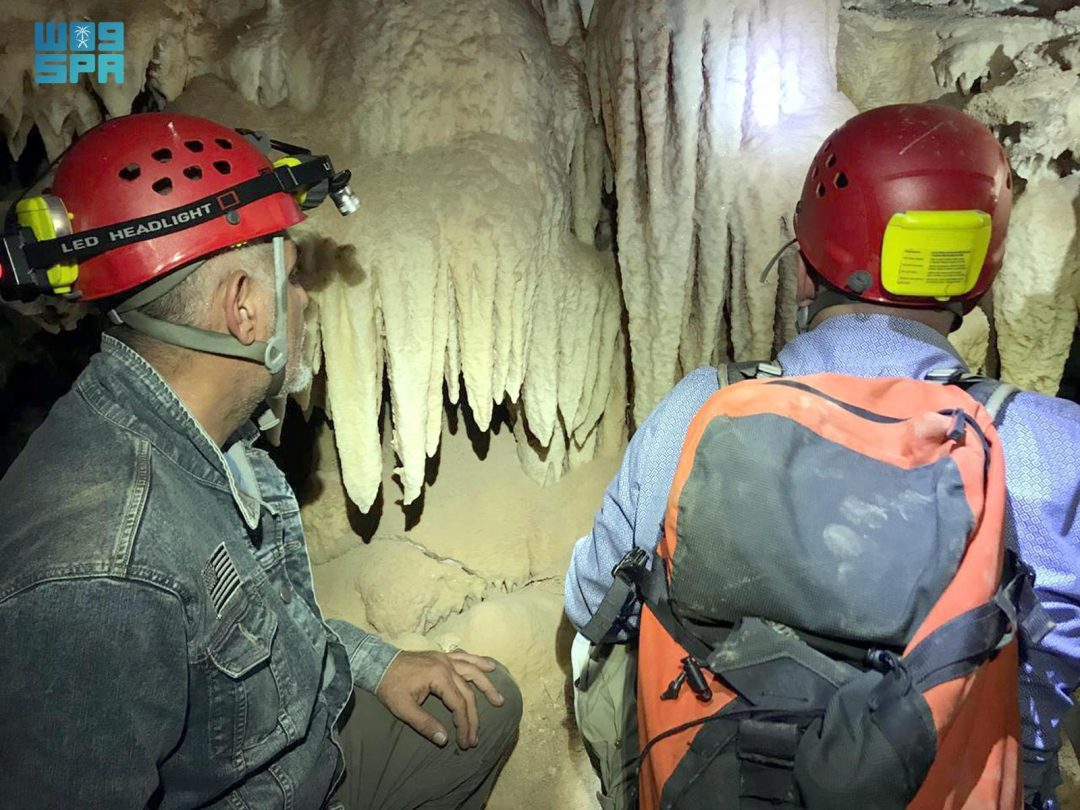
The Saudi Geological Survey has confirmed the availability of more than 150 caves across various regions of the Kingdom of Saudi Arabia for scientific research, describing the caves and geological features as unique natural treasures that serve as a vital foundation for research and the advancement of sustainable ecotourism.
The confirmation came in a statement to the Saudi Press Agency, in which SGS Spokesperson Tariq bin Ali Aba Al-Khail said the caves and sites are being made available to researchers and specialists in geosciences, archaeology, and paleobiology for comprehensive studies within a structured scientific framework.
According to the SGS, some of these caves serve as documented natural records of Earth’s history and its geological and climatic changes over time. The studies conducted at the sites provide precise scientific evidence illustrating the environmental changes the region has experienced over millennia, along with rare plant and animal remains, some of which have become extinct due to natural alterations.
Why do caves that have stood for millennia suddenly matter so much to modern researchers?
The SGS said it is diligently working to uncover and examine these sites as part of the national strategy. The work positions the caves as more than geological curiosities, framing them instead as archives that can be read by specialists trained to interpret layers of stone, sediment, and organic remains.
Aba Al-Khail emphasized the dedication to serving as a reference point for accurate geological data and fostering effective partnerships with academic and research institutions to establish a robust knowledge base and enhance community awareness regarding the significance of these natural resources.
What can a single cave reveal about climate shifts that no laboratory model can reproduce?
The spokesperson’s remarks place the SGS in a dual role: as a custodian of geological data and as a bridge between the Kingdom’s caves and the academic institutions that study them. The partnerships described are intended to build a knowledge base, not merely to catalogue sites.
The caves are also tied to sustainable ecotourism, which the SGS said is currently centered on their utilization. That linkage suggests the sites are being considered for both research access and visitor engagement, though the statement did not detail how the two uses would be balanced.
Why would a geological body talk about tourism and research in the same breath?
The SGS described the caves and geological features found throughout various regions of the Kingdom as unique natural treasures. The phrase covers a wide geographic spread, with the statement referring to various regions rather than a single location.
For researchers in geosciences, the appeal lies in the physical record. For archaeologists, the caves may hold traces of past human activity. For paleobiologists, the rare plant and animal remains — including species that have become extinct due to natural alterations — offer material that cannot be found elsewhere.
What kind of extinct life might still be preserved inside these stone chambers?
The statement said the studies provide precise scientific evidence illustrating environmental changes the region has experienced over millennia. That framing places the caves alongside other natural archives used to reconstruct past climates, but the SGS did not specify which caves have yielded which findings.
The SGS said it is working to uncover and examine the sites as part of the national strategy, a phrase that ties the effort to a broader plan without naming the plan’s components. The spokesperson’s comments focused on the scientific framework and institutional partnerships rather than timelines or budgets.
How does a researcher gain access to a cave that doubles as a natural record?
Aba Al-Khail said the SGS offers researchers and specialists the chance to utilize these caves and sites for comprehensive studies within a structured scientific framework. The word structured suggests an application or approval process, but the statement did not describe the steps involved.
The SGS also emphasized community awareness regarding the significance of these natural resources. That element of the statement points to an educational dimension, though no specific awareness program was named.
What would change in a local community that learns to see a cave as a scientific asset?
The statement to SPA did not include a list of the 150 caves, their exact locations, the names of participating academic institutions, or a schedule for research access. It also did not specify how ecotourism would be developed around the sites or what protections might apply.
What the SGS did make clear is that the caves are considered scientifically significant, that some serve as documented natural records, and that the agency intends to make them available to researchers while building partnerships and public awareness. The rest — which caves, which studies, which visitors — remains to be detailed.
Could the next major discovery about the region’s past come not from a laboratory but from a cave floor?
How many caves has the Saudi Geological Survey made available for research? The SGS confirmed that there are over 150 caves recognized for their scientific significance across various regions of the Kingdom. The statement described these caves and geological features as unique natural treasures that serve as a foundation for scientific research and sustainable ecotourism. Some of the caves serve as documented natural records of Earth’s history and its geological and climatic changes over time, according to the SGS.
Who can use these caves for study? SGS Spokesperson Tariq bin Ali Aba Al-Khail said the agency offers researchers and specialists in geosciences, archaeology, and paleobiology the chance to utilize the caves and sites for comprehensive studies within a structured scientific framework. The statement did not detail the application process or access requirements. The SGS emphasized its dedication to serving as a reference point for accurate geological data and fostering partnerships with academic and research institutions.
What scientific value do the caves hold? According to the SGS, some of the caves serve as documented natural records of Earth’s history and its geological and climatic changes over time. Studies at the sites provide precise scientific evidence illustrating environmental changes the region has experienced over millennia. The caves also contain rare plant and animal remains, some of which have become extinct due to natural alterations, according to the statement to the Saudi Press Agency.
How does ecotourism fit into the SGS cave plans? The SGS said the caves and geological features serve as a vital foundation for scientific research and the advancement of sustainable ecotourism, which is currently centered on their utilization. The statement did not specify how tourism access would be managed alongside research use. The spokesperson focused on the scientific framework and partnerships rather than visitor logistics, leaving the balance between research and tourism unstated.
What did the SGS statement not include about the caves? The statement to SPA did not list the 150 caves, their exact locations, the names of participating academic institutions, or a schedule for research access. It also did not specify how ecotourism would be developed around the sites or what protections might apply. What the SGS did confirm is that the caves are scientifically significant, that some are documented natural records, and that the agency intends to make them available to researchers.
Related articles
 Moon and Jupiter Conjunction Dazzles Northern Borders Skies
 Saudi Project to Cultivate Microalgae for Feed, Pharma
 Estidamah Advances Research on Jazan Jasmine Aroma
 Madinah Ethical AI Competition Opens Registration for Developers Worldwide
 NCVC Launches Native Seed Sowing Campaign in Jubail
 GASTAT: Internet Use Reaches 99.6% Among Individuals Aged 15 to 74 in Saudi Arabia